


Power Grip Liquid Chalk: Secure Every Hold
A deadlift is loaded, the hands are set, and the first pull feels strong. Then sweat changes the contact between skin and steel. On a climbing wall, the same failure appears when a climber reaches the crux, finds a damp hold, and feels the fingers begin to uncurl. Strength may still be available, but grip reliability has disappeared.
That's where power grip liquid chalk earns its place. It isn't a magic coating that fixes every surface or replaces sound preparation. It's a practical way to control moisture and stabilize the skin-to-equipment interface, whether the athlete is lifting, climbing, training in a dust-sensitive home gym, or working under a venue rule that restricts loose chalk.
Table of Contents
- Why Your Grip Fails When It Matters Most
- The Science Behind Fast-Drying Liquid Formulas
- Comparing Liquid Chalk to Traditional Powder
- Application Strategies for Lifting and Climbing
- Choosing the Right Formula for Your Sport
- Skin Care and Common Application Mistakes
Why Your Grip Fails When It Matters Most
A heavy pull often fails at the hands before it fails at the back or legs. The bar starts to rotate, the fingers open slightly, and the athlete has to fight the load with a contact point that's becoming less secure. The same pattern shows up on rock. A climber can reach a hold with enough power to stay on, but sweat reduces the friction needed to keep the hand settled.
Moisture is the immediate problem, but fatigue makes the problem worse. As an athlete works through repeated lifts or sustained climbing, the hands may produce more sweat while the ability to maintain precise contact declines. A small amount of slip then creates more corrective effort, which makes the next hold or pull feel less certain.
Controlled research gives the mechanism more substance than gym folklore. In a study involving 106 university students, handgrip strength measured with a dynamometer improved when magnesium carbonate powder was used compared with clean hands, while another experiment found that magnesium carbonate reduced variation in sliding velocity and friction force between a rubber-gloved hand and a cylindrical bar in dry and wet conditions. The findings are summarized in this research on magnesium carbonate and grip friction.
Practical rule: Chalk works best when the problem is unstable friction from moisture. It can't compensate for a surface that simply doesn't interact well with the dried coating.
Power grip liquid chalk addresses that friction problem by leaving a thin layer of magnesium carbonate on the hands. For a weightlifter, that can mean a more consistent contact with the bar during a sweaty session. For a climber, it can make the first contact more dependable before powder chalk is added. The right expectation is controlled grip, not unlimited grip.
The Science Behind Fast-Drying Liquid Formulas
Power grip liquid chalk usually combines an isopropyl-alcohol-based suspension of magnesium carbonate, also known as MgCO3. The alcohol spreads the chalk over the skin before evaporating. This leaves a thin film across the palm and fingers instead of a loose layer that can settle unevenly. For climbers, that film works as a base layer before powder chalk. For lifters, it can serve as the primary grip aid when sweat is the main problem.
Drying speed depends on more than the carrier. A dime-sized application typically takes about 10 seconds to dry, while application size, humidity, skin moisture, and ventilation can change the result. The liquid chalk drying guidance illustrates the practical timing. For a closer explanation of carrier evaporation and film formation, see our guide to fast-drying liquid formulas.
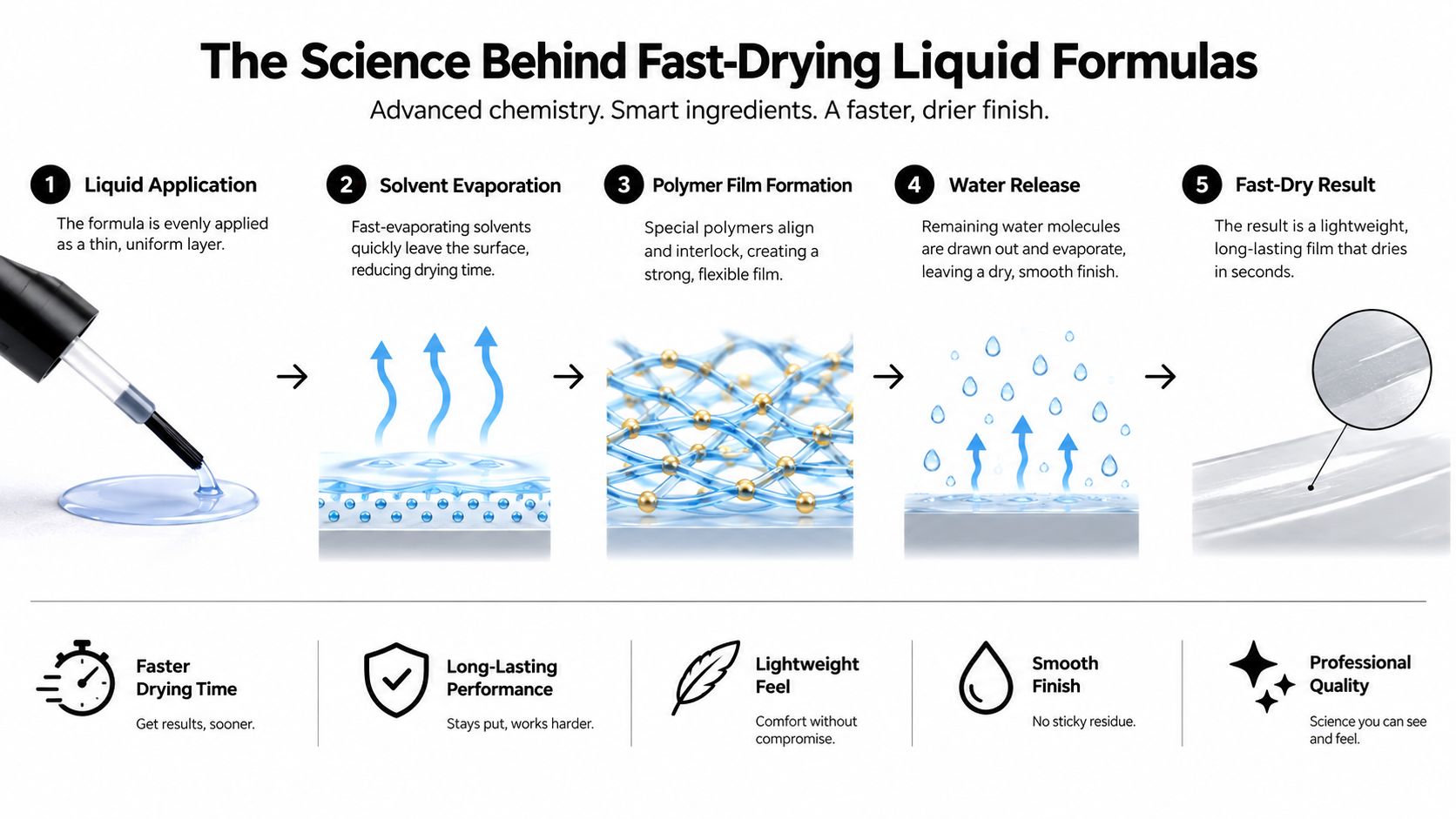
Why an even film matters
The advantage comes from coverage and friction consistency, not from making the hands rigid. Magnesium carbonate helps reduce moisture at the contact zone, creating a drier interface between skin and a bar, hold, or pole. An even film can therefore last better than a light, uneven dusting during high-sweat, high-repetition work.
Formula choice still has limits. One study found liquid chalk performed similarly to no grip aid on dry steel, with friction falling as moisture increased. A separate review reported that powder chalk outperformed liquid chalk on clean surfaces in some conditions, while a cracked dried layer could reduce friction. The review of liquid and powder chalk performance is useful because it shows where a liquid coating can underperform.
The EVMT Liquid Chalk range is described as magnesium-carbonate liquid chalk for weightlifting, gymnastics, rock climbing, and other sports, with 11 variants across its listed options. Choose based on the surface, sweat level, and whether the formula will be used alone or as a climbing primer. A thicker layer is not automatically a grippier one.
Comparing Liquid Chalk to Traditional Powder
Liquid chalk and loose powder solve related problems through different delivery systems. Liquid chalk is applied directly to the hands and allowed to dry. Powder is easier to refresh during a session, but it can spread across floors, clothing, equipment, and shared air. Chalk balls sit between those options, controlling some release while retaining the familiar feel of powder.
The venue rule often decides the matter before personal preference does. One climbing facility bans loose chalk because airborne dust can pollute the air and coat surfaces, while permitting liquid chalk because it's cleaner and long-lasting. Its policy also says that only a pea-sized amount is needed and warns that excessive product can turn into a paste on holds. The facility guidance on liquid chalk and loose chalk reflects a common practical distinction.
| Feature | Liquid Chalk | Loose Powder | Chalk Balls |
|---|---|---|---|
| Dust control | No airborne powder when applied correctly | Can create airborne dust | Reduces release, but doesn't eliminate it |
| Initial coverage | Even film across the applied area | Fast, familiar surface coating | Controlled powder transfer |
| Mid-session refresh | Less convenient during a set or route | Easy to reapply | Easy to reapply |
| Venue compatibility | Often accepted where loose chalk is restricted | May be prohibited | Depends on facility policy |
| Best use | Primary grip aid or climbing base layer | Familiar refresh coat | Lower-mess powder application |
| Main trade-off | Requires drying before contact | More mess and variable coverage | Still produces some loose chalk |
Athletes shouldn't treat liquid chalk as a universal replacement. Lifters who need clean, quick coverage may prefer it as the main grip aid. Climbers who already use powder can apply liquid chalk first and keep powder available for refreshes. That approach is covered in more detail in this comparison of weightlifting chalk formats.
The independent evidence also argues against simple “liquid is always better” claims. On some dry, clean surfaces, powder may produce more friction. Liquid chalk becomes more useful when sweat control, dust reduction, and durable initial coverage matter more than instant reapplication.
Application Strategies for Lifting and Climbing
Application determines whether liquid chalk becomes a dry grip layer or a slippery paste. The hands should be clean and dry before the bottle is opened. A small amount spread across the working surfaces is usually more effective than coating the hands heavily.
For lifting and high-repetition training
A weightlifter, powerlifter, or CrossFit athlete can use this sequence:
- Start with dry skin. Wipe away sweat before application. Liquid chalk shouldn't be placed over visibly wet hands.
- Use a small amount. Cover the palm, fingers, and contact areas with a thin coat rather than a thick white layer.
- Spread it completely. Work the formula into the skin so no wet patches remain.
- Wait for the film to set. A practical lifting window is 10 to 20 seconds, with the shorter end applying when the coat is thin and the hands are already dry.
- Test the contact. If the hands still feel wet, tacky, or pasty, wait longer or use less product next time.
The reason for waiting is mechanical. A wet carrier doesn't provide the finished friction layer, and excess product can create a slick film instead of a dry one. Liquid chalk works as intended only after the alcohol has evaporated and the magnesium carbonate has settled on the skin.
For climbing and bouldering
Climbers generally don't need to abandon powder chalk. The most useful method is to treat liquid chalk as a primer or base layer:
- Apply a thin coat of EVMT Liquid Chalk to dry hands before the climbing session.
- Let the coat set fully. Neutral climbing guidance suggests allowing about 20 to 30 seconds before use in order to let the layer dry completely, as explained in this guide to applying liquid and powder climbing chalk.
- Add powder chalk on top as normal.
- Refresh with powder when the outer layer wears away.
The two-layer approach gives the climber a longer-lasting base coat and can reduce the frequency of re-chalking. It's especially useful on long sport routes, multi-pitch climbing, and humid gyms, where repeated moisture can wear through a single powder layer more quickly. On a short boulder problem, the extra preparation may offer little advantage.
Climbers looking for the full base-layer method can use this guide to liquid climbing chalk. The goal isn't to replace the chalk already in the climber's routine. It's to create a more durable foundation before that powder is added.
Choosing the Right Formula for Your Sport
Choose the formula by the contact problem, coverage required, and amount of sweat involved. A gymnast gripping apparatus, a lifter pulling against a bar, a pole athlete managing skin contact, and a climber loading small holds all need dry hands. Their preferred film and coverage can differ considerably.
Classic for broad use
The Classic formula suits general training, gymnastics, and athletes who want a straightforward liquid grip aid. It provides an even coating for changing movements without demanding a highly specialized application method. Gymnasts and cheer athletes may also prefer its low-dust format when a facility controls airborne residue and shared equipment cleanliness.
Weightlifting for broad bar contact
The Weightlifting formula is designed for broad palm and finger contact during heavy pulls, repeated bar work, and movements that shift pressure across the hand. Powerlifters, Olympic lifters, bodybuilders, and CrossFit athletes typically need consistent coverage through changing repetitions. A thin, even coat remains the practical starting point. More product can create a thicker film without improving contact.
Rock Climbing for precise contact
The Rock Climbing formula fits climbers who load fingertips and small contact zones. Its thinner, fingertip-focused film makes it a more precise primer for small holds than a broad-coverage formula. Apply it using the preparation method described earlier, while treating formula choice as the factor that determines where the coating sits and how much palm coverage it leaves.
That distinction matters on technical boulders and routes with edges, pockets, or narrow pinches. A broad palm film can feel excessive when only the fingertips contact the hold. The climbing formula also suits humid gyms and longer routes where controlled chalk coverage helps reduce interruptions to rhythm.

Pole fitness adds a separate constraint. Liquid chalk dries after the alcohol evaporates, produces no airborne dust, and can leave a thin white residue that transfers to clothing or equipment. Use a controlled amount and account for how the formula affects both contact and studio cleanup.
For athletes with sweaty hands, select the formula that matches the session's contact demands without requiring thick coverage. Sweat resistance, drying behavior, venue rules, and the ability to layer with powder should guide the decision more than a general promise of universal performance.
Skin Care and Common Application Mistakes
Repeated chalk use can dry the hands because chalk removes moisture and natural oils from the skin. Liquid chalk may feel harsher for sensitive athletes because of its alcohol content, especially when applied several times a day or used over compromised skin. Athletes with persistent irritation, cracking, or suspected dermatitis should stop using the product on affected areas and seek appropriate medical guidance.
The safest routine starts before application. Hands should be clean, fully dry, and free from open cuts. A thin coat is enough, and the athlete should let it dry rather than rubbing on more product because the first layer feels incomplete.
Mistakes that reduce grip
- Applying over sweat: Wet skin dilutes the coating and makes drying less predictable. Wipe the hands first, then apply.
- Using too much: Excess liquid can dry into a thick layer or form a paste on holds and equipment. Start with a small amount and add only if coverage is incomplete.
- Touching equipment too soon: A wet or tacky layer isn't the finished grip surface. Wait until the film feels dry.
- Covering damaged skin: Cuts and irritated areas can sting and worsen with alcohol-based products. Keep those areas clear.
- Skipping the wash-off: Residue left on the skin can contribute to dryness. Wash the hands after training with mild soap and water.
- Ignoring moisture afterward: Apply a suitable moisturizer after washing, particularly when training frequently or when the hands feel tight.
Liquid chalk also needs sensible venue care. It generally spreads less through the air than loose powder, but residue can still transfer when the coating is excessive or not fully dry. A clean application protects the athlete's grip and reduces the chance of leaving visible product on bars, poles, holds, clothing, or shared surfaces.
The useful long-term strategy is moderation. Use liquid chalk where sweat and venue rules make it valuable, allow the coat to dry, reserve powder for climbing refreshes when appropriate, and give the skin time to recover between sessions. That approach preserves the mechanical benefit without treating the hands as if they can absorb unlimited product.
Evermost LLC offers EVMT Liquid Chalk in single bottles and multi-packs for weightlifting, climbing, gymnastics, pole fitness, and other grip-intensive training. Athletes can visit Evermost LLC to choose a liquid chalk format for cleaner, sweat-conscious grip at the gym, studio, home, or climbing facility.