


A Complete Guide to Liquid Climbing Chalk for Better Grip
At its core, liquid climbing chalk is a straightforward but highly effective mix of magnesium carbonate suspended in alcohol. This simple blend creates a fast-drying, long-lasting coat on your hands, giving athletes a serious grip advantage when it matters most. It’s a clean, efficient, and increasingly gym-friendly way to maintain peak performance without the mess of traditional powder.
The Grip Revolution: Why Top Athletes Use Liquid Chalk
In high-pressure competition or training, grip isn't just a detail—it's the critical link between an athlete and their equipment.
Think of a boulderer on their final attempt at a national competition, fingers barely hanging onto a tiny crimp. Or picture an Olympic weightlifter preparing for a new clean and jerk PR, where the slightest slip of the bar means a failed lift. In these moments, grip cannot be a question mark.
This is exactly where liquid chalk has evolved from a niche product to an essential tool for serious athletes. It's not just another option; for many, it's a strategic advantage in a high-pressure environment.
A Cleaner, More Reliable Grip Solution
The performance advantage of liquid chalk is in its application. The alcohol in the formula performs two jobs at once: it cleanses the hands by stripping away sweat and oils, then evaporates almost instantly.
What’s left is a perfect, uniform layer of magnesium carbonate that bonds directly to the skin. This creates a durable, sweat-resistant base that lasts significantly longer than a quick dip in a chalk bucket.
For athletes, this translates to tangible performance benefits:
- Fewer Interruptions: Less time spent re-chalking in the middle of a climb or a high-rep set.
- Consistent Performance: Grip stays reliable from the first move to the very last one.
- Minimal Mess: No airborne chalk clouds, which is why so many commercial gyms and home gym owners prefer it.
This shift is reflected in market data. The global liquid chalk market was valued at around USD 100 million in 2023 and is projected to grow, indicating a real change in how athletes approach their gear. With over 60% of adults in the US engaging in regular physical activity, the demand for effective performance tools is on the rise.
To provide a clear overview, here’s a look at why so many athletes are making the switch.
Liquid Chalk At a Glance: Key Benefits for Athletes
| Benefit | Impact on Performance | Best For |
|---|---|---|
| Long-Lasting Grip | Reduces the need to re-chalk, allowing for better focus and flow during workouts or climbs. | Endurance climbing, high-rep weightlifting sets, gymnastics routines. |
| Less Mess | No airborne dust means cleaner air, cleaner gear, and compliance with strict gym rules. | Indoor climbing gyms, home gyms, athletes with respiratory sensitivities. |
| Superior Base Layer | Creates an even, durable foundation that resists sweat better than loose chalk alone. | Humid conditions, athletes who sweat heavily, competitive events. |
| Enhanced Hygiene | The alcohol base helps to sanitize hands by removing oils and killing some germs before application. | Shared training spaces, public gyms, competitions. |
Ultimately, these benefits add up to a more consistent and reliable training experience, allowing athletes to focus on performance instead of grip.
Engineered for High-Pressure Environments
In sports where grip is non-negotiable, liquid chalk provides a clear advantage. Take gymnastics, for example. A secure hold on the uneven bars is critical for executing complex routines safely. Using liquid chalk as a base layer can give gymnasts that crucial confidence, and the clean application ensures no excess dust interferes with their focus.
The real value of liquid chalk is its reliability under pressure. When fatigue sets in and sweat starts to pour, a solid chalk base ensures your grip is the one thing you don't have to worry about.
This dependability makes liquid chalk an essential tool in a modern athlete's kit, providing the confidence needed to push limits and perform at the highest level.
Powder vs. Liquid Chalk: A Head-to-Head Grip Analysis
For any athlete whose performance hangs on their grip, the choice between traditional powder chalk and its liquid counterpart isn't just about preference—it's a performance decision. While both are based on magnesium carbonate, their application and function during a session are vastly different. Understanding these differences is key to selecting the right tool, whether you're halfway up a rock face or grinding out reps under a barbell.
Powder chalk, loose or in a block, is the classic for a reason: it's fast. A quick dip of the hands provides an immediate sense of grip. However, that grip can be frustratingly short-lived, especially during intense, sweaty sessions. The biggest drawback, though, is the dust. It gets everywhere, which is a major issue in gyms and often leads to outright bans.
EVMT Liquid Chalk, on the other hand, is a more deliberate, performance-focused solution. It creates a solid, even base layer that bonds directly to the skin, delivering a more durable grip that stands up to sweat and lasts significantly longer. That means fewer breaks to chalk up and more time focused on your performance.
Performance Comparison: Powder Chalk vs. Liquid Chalk
To get straight to the point, let's break down how these two stack up side-by-side. This is about what works better for your specific training needs, from grip duration to gym etiquette.
| Feature | Liquid Chalk | Powder Chalk (Loose/Block) |
|---|---|---|
| Grip Duration | Excellent; one application lasts a long time | Fair; requires frequent reapplication |
| Moisture Control | Superior; actively creates a sweat barrier | Good; absorbs sweat but can become pasty |
| Residue/Mess | Minimal; no airborne dust, less transfer | High; creates significant dust, leaves residue |
| Application Speed | Slower; requires ~30 seconds to dry | Instant; quick dip and you're ready |
| Gym Friendliness | High; often preferred or required by gyms | Low; frequently restricted or banned |
| Cost-Effectiveness | High; less is needed per session | Varies; seems cheaper but used more quickly |
| Best For | Base layer, long workouts, humid conditions | Quick application, bouldering, hybrid use |
Ultimately, liquid chalk takes the win for longevity and cleanliness, making it a reliable workhorse for sustained effort. Powder chalk still holds its own for speed and convenience, especially for a quick touch-up.
Grip Duration and Moisture Control
The single biggest performance advantage of liquid chalk is its duration. Consider a grueling CrossFit WOD: an athlete using powder might have to stop two or three times to re-chalk, breaking their momentum and adding seconds to their time. In contrast, an athlete who started with a solid liquid chalk base can maintain their pace, holding their grip tight even as muscular fatigue sets in.
This staying power comes from its unique application. The alcohol in the formula cleans away oils and sweat before evaporating, leaving a perfectly uniform layer of chalk bonded to the hand.
For athletes who sweat heavily or train in humid gyms, liquid chalk is a game-changer. It doesn't just dry your hands—it creates a barrier that actively resists moisture, keeping your grip locked in when powder would just turn into a slippery, useless paste.
This makes it an essential for outdoor climbers on multi-pitch routes, where stopping to dig into a chalk bag mid-climb is impractical and inefficient. A long-lasting grip allows them to focus on the moves, not on their hands.
Residue and Gym Etiquette
No one likes a chalk cloud. This is where liquid chalk truly excels. Powder chalk billows into the air, settling on equipment, floors, and clothing, and can degrade the air quality in a busy gym. It's precisely why many commercial facilities have cracked down with strict rules against loose chalk.
- Powder Chalk: Leaves behind a trail of dust, cakes onto bars and holds, and creates more cleanup for everyone.
- Liquid Chalk: Creates virtually zero dust, dries into a thin film, and leaves far less residue on equipment.
EVMT Liquid Chalk was designed specifically to be a gym-approved solution. It lets you get the grip you need without creating a mess or distracting other athletes. It’s simply the more considerate choice for shared training environments. This shift toward cleaner options is significant; the climbing chalk market, valued at USD 532.8 million in 2024, is seeing a major move toward liquid and eco-friendly formulas to reduce residue and environmental impact. For a deeper dive, you can find more insights on climbing gear trends.
This decision tree can help you determine which grip aid is the right call based on your primary goals.
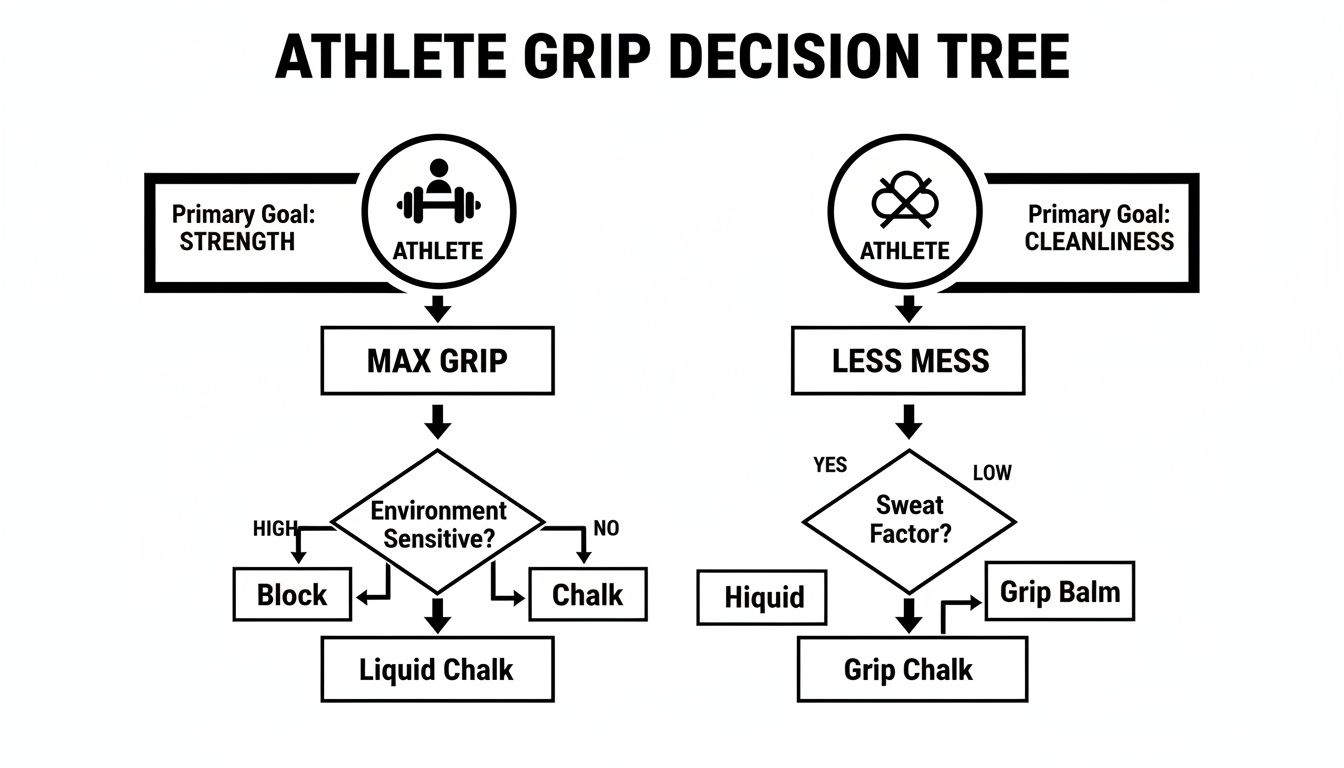
As you can see, if you're prioritizing a long-lasting grip and a clean, hassle-free experience, liquid chalk is the clear winner.
Application and Cost Considerations
While liquid chalk dominates in durability and cleanliness, powder still wins the race for speed. A quick slap of a chalk bag is undeniably faster than waiting 30 seconds for liquid chalk to dry completely. Because of this, some athletes adopt a hybrid strategy: they start with liquid chalk as a durable base layer, then use a tiny amount of powder for a quick boost on particularly tough moves. This is a common practice in elite competitions.
Then there's cost. Ounce for ounce, a bottle of liquid chalk may seem more expensive than a block of powder. But since one application lasts so much longer, a single bottle can easily outlast a much larger amount of powder, making it surprisingly cost-effective over time. It all comes down to efficiency—a tiny, dime-sized drop can provide coverage that would require multiple handfuls of loose chalk. In the end, the right choice depends on your sport, your gym, and what you value most in your performance.
How to Apply Liquid Chalk for Maximum Grip
Applying liquid chalk isn't like a quick dip in your powder bag. It's a specific process that creates a high-performance grip foundation. When you nail the application, you’re left with a durable, sweat-resistant layer that can mean the difference between sending your project and peeling off the wall.
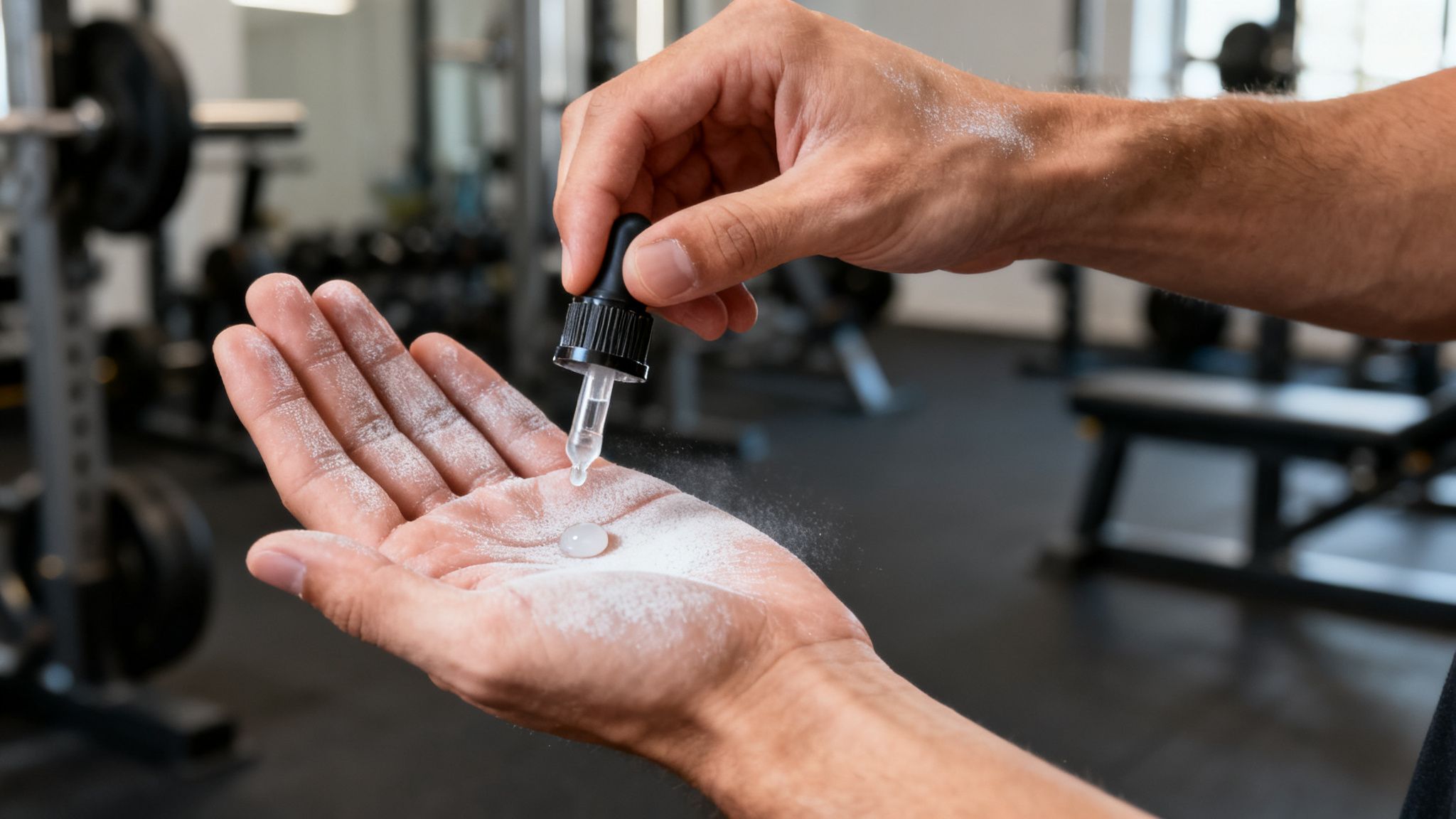
The science behind it is simple but powerful. The alcohol in the formula acts as a cleanser, stripping away the natural oils and sweat that compromise your grip. As it evaporates, it leaves behind a perfectly uniform layer of magnesium carbonate bonded directly to your skin, creating a superior barrier against moisture.
The Step-by-Step Application Process
Rushing the process is the most common mistake climbers and lifters make. Following this sequence ensures you get the full benefit of every application, creating a reliable grip that won't fail you mid-climb or mid-lift.
-
Start with Clean, Dry Hands: Before you even open the bottle, ensure your hands are as clean and dry as possible. Any dirt, grease, or residual sweat will interfere with the chalk's ability to bond to your skin.
-
Apply a Dime-Sized Amount: Squeeze a small, dime-sized dollop into your palm. A little goes a long way. Using too much is wasteful and can lead to a thick, cakey layer that flakes off easily.
-
Distribute Evenly: Rub your hands together, spreading the liquid chalk into a thin, even coat. Cover your palms, the full length of your fingers, and the webbing between them. The goal is complete, consistent coverage.
-
Wait for It to Dry Completely: This is the most crucial—and most often skipped—step. Let your hands air dry for about 30-60 seconds without touching anything. Waving them can speed up the process. You'll know it's ready when the wet, slick feeling is gone and a fine white layer of chalk remains.
Rushing the drying phase is a critical error. If you grab a bar or a hold while the chalk is still wet, you'll create a slick, pasty mess instead of a dry, high-friction surface. Patience here is non-negotiable for building a solid grip foundation.
Pro Tips for Elite Performance
Serious athletes often use liquid chalk not as a standalone product but as part of a broader grip strategy. At elite climbing competitions or during marathon lifting sessions, you’ll see competitors combine different chalk types to maximize endurance and performance. This hybrid approach plays to the strengths of both liquid and powder chalk.
Use liquid chalk to create a durable, sweat-proof base layer. Once it’s completely dry, apply a very light dusting of loose powder chalk over the top. This combination gives you the longevity of liquid with the immediate, dry feel of powder for a truly bulletproof grip.
This technique is a game-changer in hot, humid gyms or for any athlete who battles with excessively sweaty hands. The liquid base creates a barrier that prevents sweat from soaking through the outer powder layer, making your chalk last longer through a tough session.
Common Application Mistakes to Avoid
Even with a simple process, it's easy to fall into bad habits that make your liquid chalk less effective. Steering clear of these common pitfalls will ensure you get maximum grip every single time.
- Applying to Dirty Hands: Putting liquid chalk over greasy or sweaty hands prevents it from bonding properly and just creates a mess.
- Using Too Much Product: More is not better. Over-applying leads to flaking and wasted chalk without actually improving grip.
- Not Waiting for It to Dry: This is the biggest mistake. Touching equipment before the alcohol has fully evaporated undermines the entire application process.
- Neglecting Full Coverage: Forgetting your fingertips or the base of your palms leaves weak spots in your grip just waiting to fail.
By treating the application as a deliberate part of your pre-climb or pre-lift ritual, you can ensure your grip is never the weak link in your performance.
How to Choose the Right Liquid Chalk Formula
Not all liquid climbing chalk is created equal. While the core ingredients are magnesium carbonate and alcohol, subtle differences in the formula can completely change how it feels and performs on your hands. Selecting the right one is like choosing the right tires for a race car—what works on a dry track won't cut it in the rain. Your choice should be dictated by your sport, your skin type, and your training environment.
Reading the label is the first step. A small tweak in viscosity or the type of alcohol used can be the difference between sticking a hold and dry-firing off a crux move. For any athlete whose hands are their primary tool, this isn't a minor detail; it's a critical piece of performance equipment.
Decoding the Ingredients List
At its heart, any liquid chalk is built around magnesium carbonate, the same compound in your chalk bag. The variation comes from the carrier liquid (usually alcohol) and any additional ingredients that fine-tune texture and dry time.
- Alcohol Type: Most formulas use either isopropyl or ethyl alcohol. Both effectively strip oils from the skin and evaporate quickly, leaving a perfect chalky layer. Some athletes find one type less harsh or drying than the other, so it can come down to personal preference.
- Thickeners and Rosins: Some brands add thickeners for a creamier, more paste-like consistency. This can provide a sense of heavy-duty coverage but sometimes leaves a gummy residue on equipment. Rosin, a sticky resin from pine sap, is another common additive for extra grip, but be aware: most gyms ban it because it's extremely difficult to clean off holds.
- Essential Oils and Moisturizers: To counteract the drying effect of alcohol, some formulas include small amounts of skin conditioners or essential oils. These can be beneficial for athletes with sensitive skin, though they might slightly alter the final grip feel.
The U.S. chalk market is expanding, expected to jump from 18 million tons in 2024 to 21 million by 2035. This growth, fueled by a 45% surge in chalk imports last year alone, means more options are available than ever. That makes it critical to know what you’re actually putting on your hands. If you want to dive deeper into these numbers, you can explore more insights about the U.S. chalk market.
Matching the Formula to Your Sport
The ideal liquid chalk for a powerlifter pulling a max deadlift is entirely different from what a boulderer needs for tiny, slick crimps. The specific demands of your sport should guide your choice.
A powerlifter needs total, uniform coverage to lock their hands onto the bar and prevent any slipping or rotation. For them, a thicker, creamier liquid chalk is perfect. It coats the entire hand, filling in every line and crease to create a solid foundation that will last for that one maximal effort.
On the other hand, a boulderer working a technical problem needs precision and feel. A thinner, fast-drying formula is the way to go. It leaves a crisp, dry layer of chalk without gunking up the subtle texture of the holds, which is key for getting maximum feedback when every millimeter of contact matters.
Think of it like this: a thick formula is your full-coverage workhorse for heavy, sustained gripping, while a thin formula is your high-precision tool for delicate, technical work.
Of course, you can get the best of both worlds. A common strategy in both climbing and lifting is to apply liquid chalk as a base layer and then add a light dusting of powder chalk on top. This gives you the sweat-proof, long-lasting foundation of liquid with the instant dryness and touch-up ability of powder.
Packaging and Portability for Training Environments
How you carry your chalk can be just as important as the formula inside. You want packaging that fits your workflow.
- Small, Portable Bottles (50-100ml): These are the go-to for climbers and gymnasts. Many, like the portable EVMT Liquid Chalk bottle, even come with a carabiner clip. Just clip it to your harness or gym bag, and it's always right there when you need it between attempts.
- Large, Bulk Bottles (250ml+): If you have a home gym, run a weightlifting facility, or coach a team, bigger bottles are more economical. You can set one up at a lifting platform or chalk station so there’s always enough to go around for a full session without anyone running low.
Ultimately, choosing the right liquid chalk is about understanding your own needs. By checking the ingredients, matching the formula's thickness to your sport, and picking packaging that works for you, you can turn a simple grip aid into a real performance advantage.
Gym Etiquette and Proper Skin Care for Athletes
Using liquid climbing chalk isn’t just about getting a better grip. It’s also about being a good citizen in your training space and looking after your most important piece of gear—your hands. A truly high-performance mindset goes beyond the lift or the climb; it covers how you manage your tools and your recovery, too.
Let's break down two critical pieces of the puzzle: being a considerate gym member and building a smart skin care routine that keeps your hands ready for the next session. Master both, and you're set up for sustainable, respectful, and seriously effective training.
The Gym-Approved Grip Solution
Walk into almost any commercial gym these days, and you'll probably spot signs banning or restricting traditional powder chalk. The reason is simple: chalk clouds. Loose chalk goes absolutely everywhere, leaving a fine white dust on barbells, dumbbells, pull-up bars, and floors. It impacts air quality and creates a never-ending cleaning job for the staff.
This is where liquid chalk shines as the undisputed champion of gym etiquette. Since you apply it as a liquid that dries right on your skin, it produces virtually zero airborne dust.
- Cleaner Air: No chalk clouds mean a healthier breathing environment for everyone trying to get a workout in.
- Less Residue: Equipment stays much cleaner, so you and everyone else spend less time brushing off bars and holds.
- Respect for Shared Space: Using a clean product like EVMT Liquid Chalk shows you care about the facility and your fellow athletes.
For anyone with a home gym, this just means less time sweeping and vacuuming and more time actually training.
Protecting Your Skin from the Daily Grind
The alcohol in liquid chalk is amazing for creating that dry, durable base for your grip, but it's also very effective at stripping your skin of its natural oils. If you're training multiple times a week, this drying effect can become a problem if not managed properly.
Dry, brittle skin is far more likely to crack. Calluses can become too hard and thick, raising the risk of them tearing clean off—the dreaded "flapper." A torn callus can sideline an athlete for days, forcing them to skip or modify any workout that involves their hands.
Think of hand care as essential maintenance. You wouldn't skip a warm-up before a max-effort lift; you shouldn't skip post-workout skin care if you want to train consistently.
A serious grip athlete must make skin care a priority, just as a lifter prioritizes mobility work to stay healthy.
A Practical Post-Workout Hand Care Routine
Your hands don't clock out the second your workout ends. Taking just a few minutes for aftercare can prevent painful skin issues and ensure you're ready to go for your next session. This routine is straightforward and easy to add to your cooldown.
-
Wash Your Hands Immediately: As soon as you're finished, wash your hands thoroughly with soap and warm water. This removes all chalk residue and sweat, allowing your skin to breathe and begin the recovery process.
-
Moisturize Generously: While your hands are still slightly damp, apply a quality hand balm or moisturizer. Look for ingredients like shea butter, jojoba oil, or beeswax, which create a protective barrier and hydrate the skin deeply.
-
Manage Your Calluses: Don't let your calluses get out of control. A few times a week (immediately after a shower is ideal), use a pumice stone or callus file to gently smooth them down. The goal isn't to remove them, but to keep them level with the surrounding skin so they don't catch and tear.
By making these simple steps part of your routine, you can balance the drying power of liquid chalk with the restorative care your hands need to stay tough and resilient.
Beyond Climbing: Where Else Liquid Chalk Shines
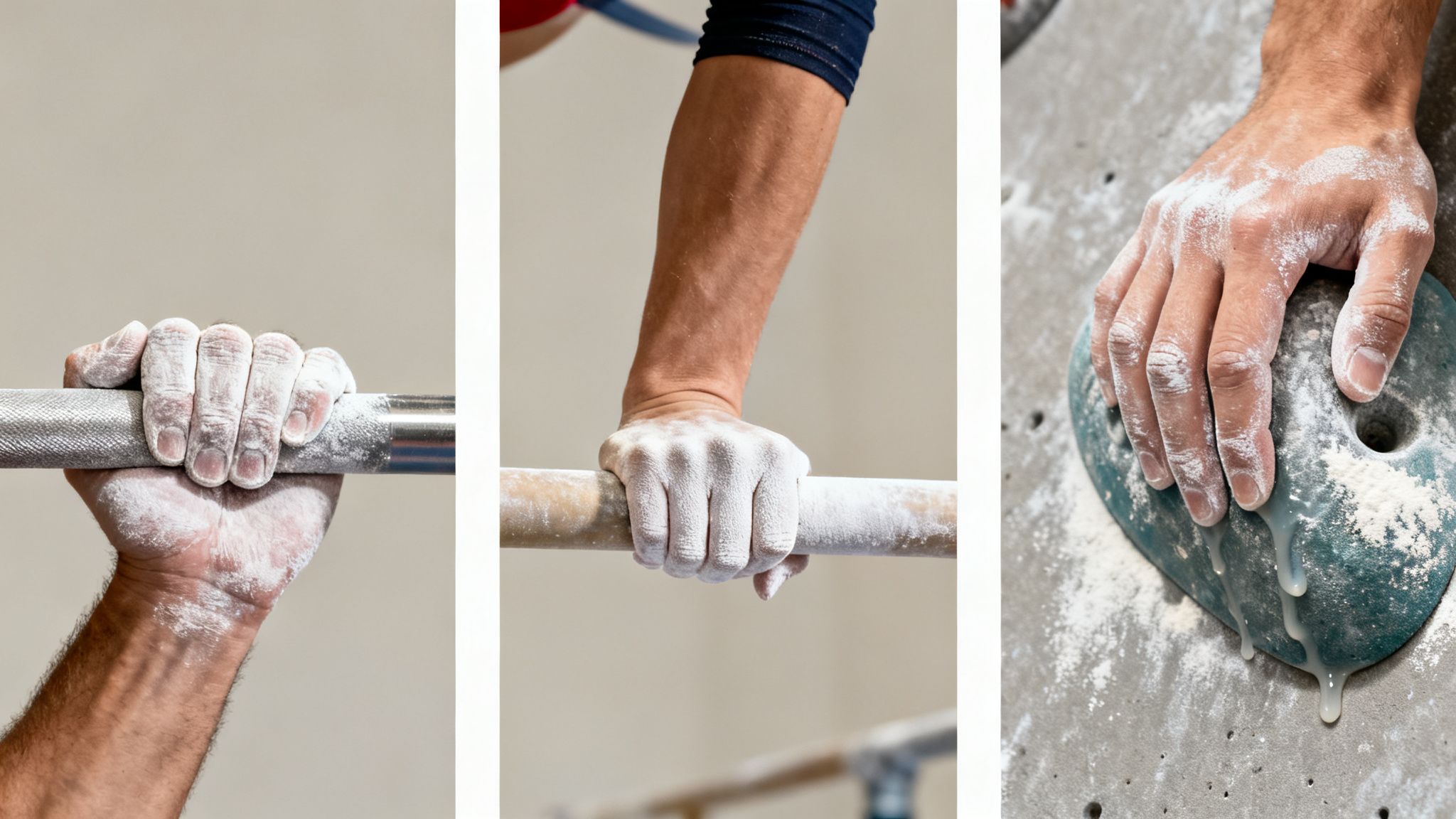
While it has "climbing" in its name, liquid chalk is a game-changer for any sport where a solid, sweat-free grip is the difference between success and failure. It has become essential gear for a wide range of athletes who need their hands to be absolutely reliable in high-stakes situations.
Across these different sports, the challenge is the same: sweaty palms, slipping grips, and a loss of friction at a critical moment. Liquid chalk tackles this head-on, creating a durable base layer of grip that powder simply can't match in every context.
Powerlifting and Weightlifting
When a powerlifter steps up to a 500-pound deadlift, there is zero margin for error. The slightest slip can mean a failed lift or, worse, a serious injury. In this world, grip isn't just a preference; it's a non-negotiable component of safety and peak performance.
Liquid chalk lays down a tacky, even coat across the entire hand, getting deep between the fingers and ensuring maximum contact with the barbell's knurling. It won't cake up or wear off halfway through a heavy pull like powder can. That locked-in grip allows lifters to focus completely on their form and power output. For a deeper dive, check out our guide on how liquid chalk for weightlifting provides that critical edge.
Gymnastics and Calisthenics
Picture a gymnast on the uneven bars or a calisthenics athlete flowing through moves on the parallel bars. Their hands are their primary point of contact. Maintaining perfect form while generating explosive power demands an unwavering grip, where a single slip can ruin an entire routine or lead to a dangerous fall.
Liquid chalk gives gymnasts the clean, reliable grip they need. It keeps their hands bone-dry without creating clouds of dust that can interfere with breathing or vision during a complex sequence.
For athletes in bodyweight disciplines, control and precision are everything. Liquid chalk gives them the confidence to go for those difficult skills by taking the guesswork out of their grip.
Pole Fitness and Aerial Arts
In pole and aerial arts, performers constantly support their entire body weight with just their hands while executing inversions, holds, and dynamic transitions. The slick chrome or steel of the apparatus offers little natural friction, making sweat an immediate performance killer.
This is where liquid chalk is a total game-changer. It creates a dry, dependable surface that lets athletes hold tough positions with confidence and flow through moves without the fear of slipping. One application before a routine can keep their grip consistent from start to finish.
Ultimately, the widespread use of liquid chalk highlights a simple truth: if your sport depends on your hands, this tool should be in your bag. It’s a clean, effective solution to a fundamental problem, allowing athletes in any grip-heavy sport to train harder and perform better.
Your Liquid Chalk Questions, Answered
Even with a clear understanding of the benefits, you might still have a few questions. Let's tackle the most common ones so you can start using liquid chalk effectively.
Can I Use Liquid Chalk for Any Sport?
Absolutely. While climbers were early adopters, liquid chalk is an excellent grip aid for any sport where sweaty palms are a limiting factor.
We see powerlifters use it to lock in their deadlift grip, gymnasts rely on it for bar routines, and pole fitness athletes count on it to stay secure during difficult inversions. The rule of thumb is simple: if your sport demands a dry, secure grip, liquid chalk can provide a significant performance advantage.
Is Liquid Chalk Bad for My Skin?
Liquid chalk is formulated for use on hands, but the alcohol base can be drying, especially with frequent training. The good news is that most athletes find it completely manageable with a consistent post-session skincare routine.
To prevent your hands from becoming overly dry or cracked:
- Wash your hands with soap and water as soon as your session is over to remove all chalk residue.
- Apply a quality moisturizer or hand balm while your skin is still slightly damp to lock in hydration.
- Manage your calluses. Gently file them down to prevent them from catching and tearing. A flapper can derail your training.
This simple routine keeps your hands tough but healthy, ready for the next session.
Think of hand care as part of your recovery protocol. You stretch and foam roll to prevent injuries, right? This is the same concept—a small investment that keeps you in the game long-term.
So, is Liquid Chalk Actually Better Than Powder?
It’s not about which one is "better" overall, but which one is better for the specific application.
Liquid chalk is the clear winner for creating a long-lasting, sweat-proof base layer. It's ideal for long sessions, humid gyms, or any facility with a strict no-powder-cloud policy. Powder chalk, on the other hand, is excellent for quick touch-ups when you need an immediate boost in grip.
Many elite athletes use a hybrid approach: they start with a solid base of liquid chalk and then add a light dusting of powder on top for the best of both worlds.
How Long Does One Application Actually Last?
One of the biggest benefits is its durability. A single, well-applied coat of liquid chalk can easily last an entire bouldering session, a full weightlifting workout, or even a multi-pitch climb.
This longevity means less time chalking up and more time focused on your performance. For extra-long, high-sweat sessions in the summer, you might need a second application, but you’ll be amazed at how long the first one holds up.
Ready to feel the difference a clean, reliable grip can make? EVMT Liquid Chalk is designed for serious athletes who demand performance. Join over 250,000 athletes and lock in your grip today. Shop EVMT Liquid Chalk now and see what you've been missing.