


Weightlifting Chalk: Liquid vs Powder Grip
The bar reaches the knees, the back and legs are still driving, and then the fingers start to open. A heavy deadlift or clean can fail at lockout even when the prime movers have more to give. Often, the missing link isn't strength. It's friction.
Weightlifting chalk helps manage moisture between the hands and the bar, but not every format works equally well in a shared gym. Powder can create an airborne mess, blocks can be awkward to control, and some venues ban both. Liquid chalk offers a cleaner way to prepare sweaty hands, provided it's applied lightly and allowed to dry fully.
Table of Contents
- Why Grip Fails on Heavy Lifts
- The Science of Magnesium Carbonate
- Comparing Powder Block and Liquid Formats
- How to Apply and Remove Chalk Properly
- Navigating Gym Rules and Air Quality
- Skin Health and Equipment Maintenance
- Choosing the Right Grip Aid for Your Training
Why Grip Fails on Heavy Lifts
A barbell doesn't need to leave the hands completely to compromise a lift. A small shift changes the pressure across the fingers, forces the forearms to react, and can make the bar feel as though it's rolling away. During a deadlift, that may happen near lockout. During a clean, it can appear as a premature hand opening while the athlete is trying to keep contact through the pull.
Sweat and skin oils reduce the quality of contact between the palm and knurled steel. The hand still touches the bar, but the interface becomes less predictable. Since grip is the link that transfers force from the body into the bar, inconsistent contact can become the limiting factor before the legs, hips, or back reach their true capacity.
Friction is a surface problem
Chalk's main job isn't to make the hands feel white or dry. It manages surface moisture so the skin can maintain more dependable contact with the bar. Magnesium carbonate is the standard compound used in weightlifting chalk and across other grip-dependent sports, including climbing, gymnastics, and powerlifting. Weightlifting grip guidance is most useful when it treats chalk as part of force transfer rather than as a cosmetic accessory.
That doesn't mean more chalk always creates more grip. A thick, loose layer can move between the skin and steel, especially when sweat, oil, or repeated applications turn it into a granular film. The practical objective is a thin, even contact layer, not the whitest possible palm.
Practical rule: If the fingers are opening because the hand is sliding, address moisture and contact before assuming the lift requires another piece of equipment.
Where chalk helps most
Chalk is particularly useful for deadlifts, cleans, snatches, high-repetition pulling, and barbell work where the hands must stay connected while sweat builds. It won't replace sound loading decisions or solve every grip limitation. It also won't make a slick, contaminated bar safe. The bar and the hands still need to be clean enough for the chalk to do its job.
For athletes training at home, the problem has another dimension. Powder can settle on flooring, storage surfaces, and nearby equipment. A liquid format gives the lifter a way to prepare the hands without releasing a visible cloud every time the palms are refreshed.
The Science of Magnesium Carbonate
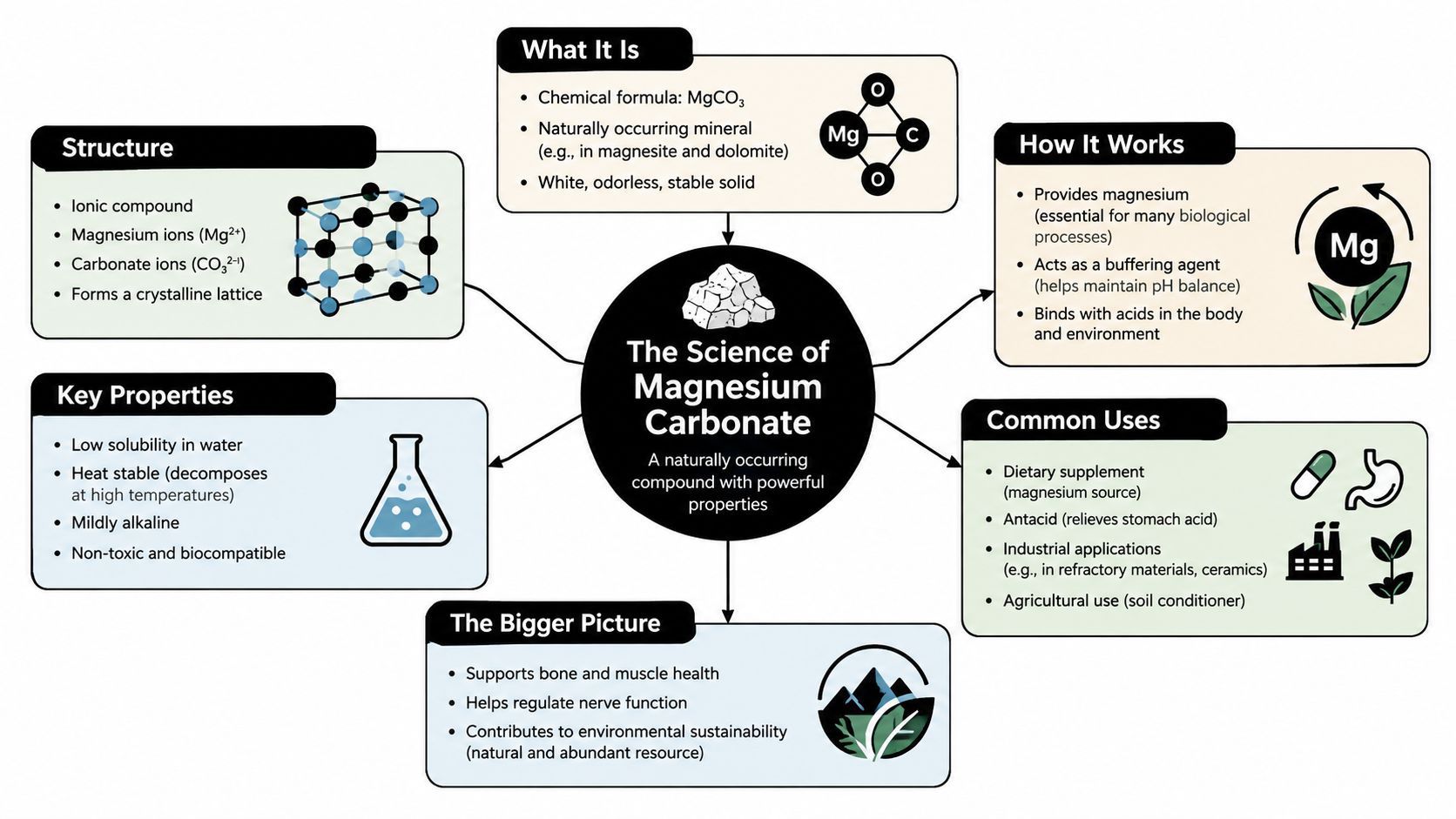
Most weightlifting chalk is magnesium carbonate, MgCO3, a mineral compound that manages moisture where skin meets the bar. It does not create adhesive force like resin. Instead, it changes the contact conditions so the skin can interact with the surface more consistently. Learn how magnesium carbonate works as gym chalk.
From gymnastics to the barbell
Magnesium carbonate has a long sporting history. An independent account of its use in sport describes its adoption across weightlifting and other grip-dependent disciplines, while the history and uses of magnesium carbonate in climbing places gym chalk within that broader development.
Another historical account credits American climber and gymnast John Gill with introducing magnesium carbonate to climbing in 1954. Before that shift, athletes used methods such as wiping their hands on trousers or applying dirt. The compound later spread through climbing, CrossFit, gymnastics, and weight training because it helps control moisture and can improve friction between the hand and a surface. The history of chalk from gymnastics to climbing describes that cross-sport adoption.
Why the result isn't universal
Chalk works according to the condition of both skin and equipment. A 2024 laboratory study tested static friction with dry and wet fingertips at normal forces of 5, 10, and 15 N. Chalk generally improved friction more on dry fingertips than on simulated sweaty fingertips, while making friction more consistent across the tested conditions. The researchers also found that surface microtexture changes the result, so the same application will not perform identically on every material. The 2024 fingertip friction study provides the experimental context.
Too much chalk can create its own problem. In a controlled finger-to-rock test, magnesium carbonate reduced the coefficient of friction under some conditions, possibly because it dried the skin excessively and left a slippery granular layer. Results also varied by rock type, with sandstone less slippery than granite and slate in that test. The controlled study of chalk and rock friction supports a practical rule: match chalk to the surface and apply a controlled layer. That principle matters in the gym too, particularly as ventilation and equipment-maintenance rules increasingly favor contained liquid application over loose airborne powder.
Comparing Powder Block and Liquid Formats
The three common chalk formats solve the same moisture problem with different handling costs. Loose powder is quick to refresh but easily disperses. A block reduces some accidental scattering while it remains intact, yet the athlete still has to crush or rub it into the hands. Liquid chalk controls the application more precisely and dries on the skin in seconds.
| Chalk Format Comparison | Dust Level | Longevity | Gym Compliance |
|---|---|---|---|
| Loose powder | High, especially during clapping or reapplication | Easy to refresh, but can shed during training | Often restricted where airborne dust is a concern |
| Solid block | Lower than loose powder while intact, then higher once broken | Useful for controlled hand loading | Depends on whether the venue permits powder |
| Liquid chalk | Low dust when applied correctly | Forms an even base layer that can be refreshed as needed | Suitable for gyms that ban powder chalk, subject to venue rules |
Loose powder and block chalk
Powder gives immediate tactile feedback. A lifter can add a little, rub it across the palm, and return to the bar without waiting for drying. The drawback is distribution. Excess product can land on the floor, clothing, storage areas, or nearby equipment, and airborne chalk becomes more noticeable in enclosed rooms.
A block is more compact and can help reduce accidental over-pouring. It still produces dust when crushed, tapped, or rubbed aggressively, so it doesn't remove the ventilation or cleanup issue. Both traditional formats can also build up inside knurling when repeated applications mix with sweat and skin oil.
Liquid chalk
Liquid chalk suspends magnesium carbonate in a carrier that evaporates quickly. The athlete spreads a thin coat, waits until the hands are fully dry, and then takes the bar. The format doesn't create the same powder cloud, doesn't leave loose dust on clothing or flooring, and is easier to control in a home gym.
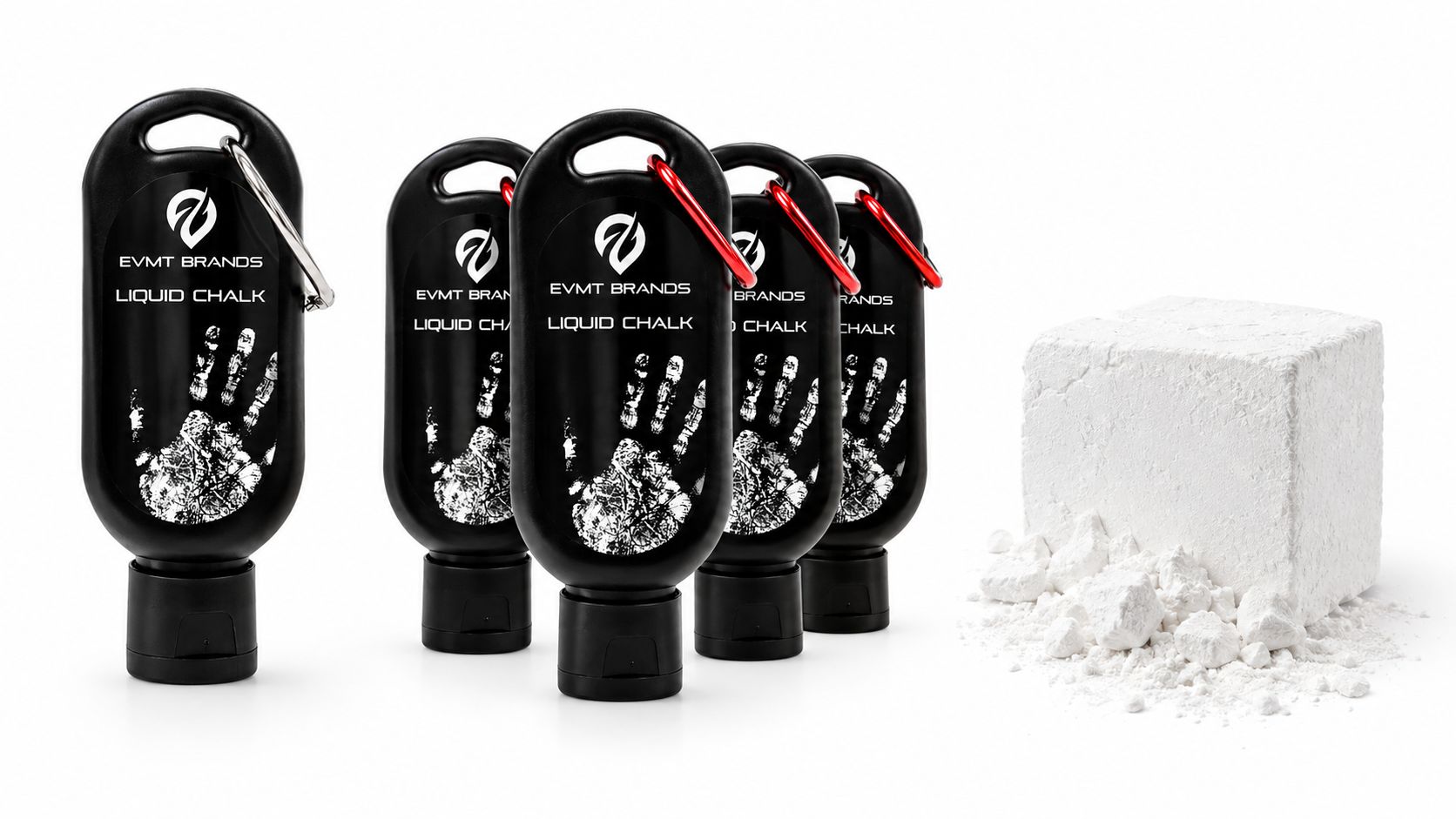
EVMT Liquid Chalk is a magnesium-carbonate liquid chalk intended for weightlifting, gymnastics, rock climbing, and other sports. The product catalog lists 11 variants across three option fields, with availability data provided for each variant. For a lifter choosing between formats, the relevant question isn't whether liquid chalk is universally superior. It's whether controlled, low-dust application fits the training surface and venue better than loose material.
How to Apply and Remove Chalk Properly
Good application starts with dry, clean hands. If sweat, lotion, or old residue is already present, liquid chalk has to work through that layer instead of forming a reliable contact surface.
Applying liquid chalk
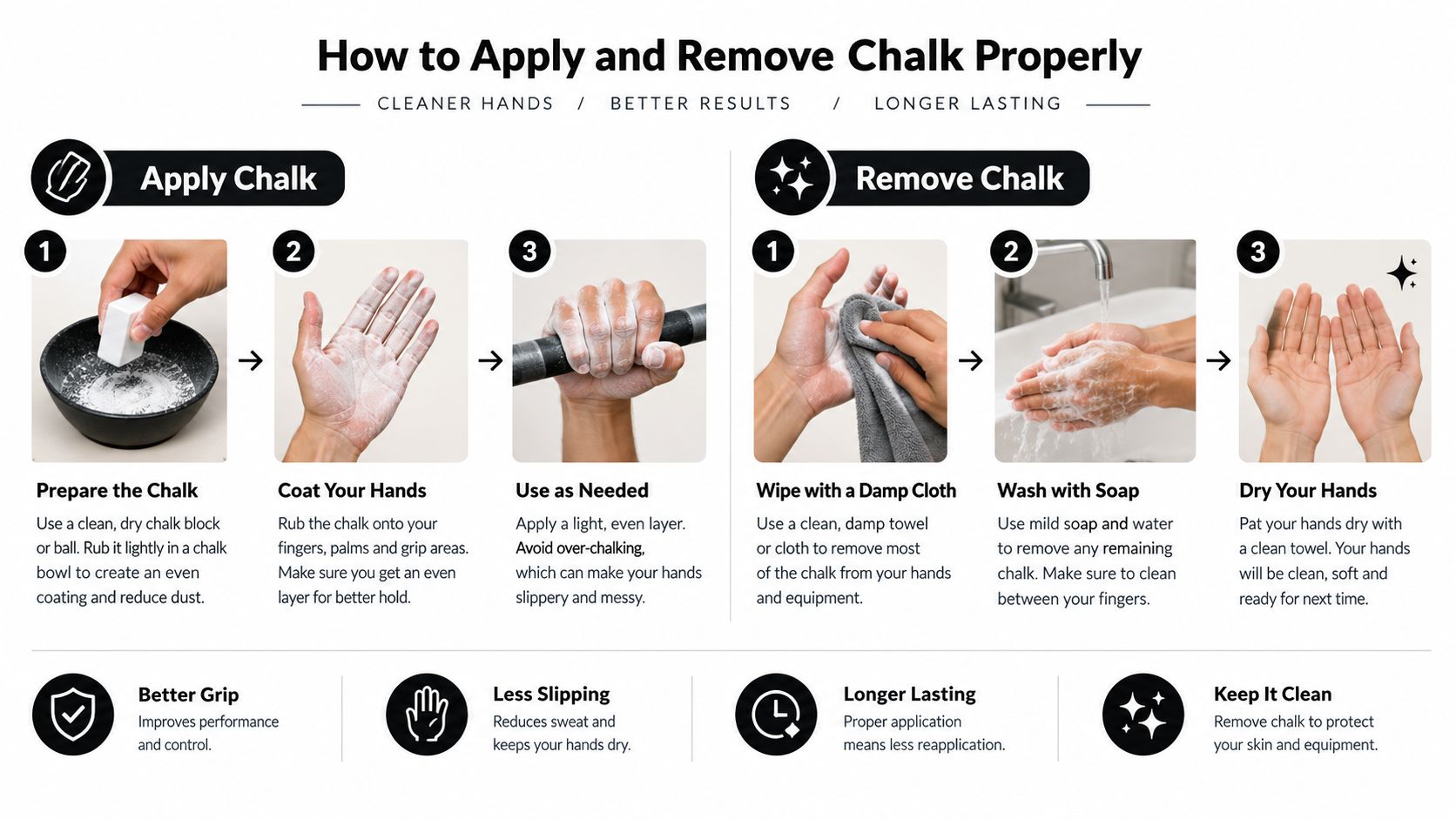
Use the smallest amount that creates an even film. A practical sequence looks like this:
- Clean the palms. Remove sweat, oil, and old buildup before training.
- Apply a light coat. Cover the palms, fingers, thumb pads, and the areas that contact the bar. Avoid soaking the hands.
- Spread it fully. Rub the product across the skin rather than leaving wet patches or thick ridges.
- Let it dry completely. The hands should feel dry before they touch the bar.
- Check the texture. If the surface feels gritty, caked, or unusually slick, there's probably too much product.
The drying step matters because wet carrier residue can reduce tactile consistency. Adding more chalk to compensate usually makes the layer thicker rather than more effective. A lifter who still feels moisture should first allow the original coat to dry, then add only a small amount if needed.
Removing it without damaging the hands
After training, start with warm water and soap. Work around the finger creases, thumb pads, nail edges, and callus borders. If residue remains, use a soft brush with light passes rather than aggressive scrubbing.
For equipment, begin with a damp cloth and dry the surface immediately. Textured steel may need gentle brushing if chalk has settled into the knurling, but the least aggressive effective method is the right starting point. Liquid chalk reduces loose transfer, but it doesn't eliminate the need to clean bars, poles, handles, or flooring after repeated use.
Navigating Gym Rules and Air Quality
A chalk policy often reflects more than housekeeping. Enclosed training rooms can hold airborne particles, and athletes with respiratory sensitivity may notice irritation, coughing, or asthma aggravation when dust accumulates. Independent analysis of indoor climbing facilities reported PM10 concentrations above 440 μg/m³ and discussed those respiratory risks in enclosed spaces. The analysis of dust exposure in indoor climbing facilities gives gym owners a reason to treat chalk control as an air-quality issue, not just a cleanliness preference.
Why powder rules are practical
Loose chalk becomes airborne during several ordinary gym behaviors:
- Hand claps and rubbing: Athletes disperse particles while coating the palms.
- Container handling: Bags, tubs, and blocks release dust when moved or struck.
- Bar contact: Excess chalk transfers into knurling and later becomes airborne through brushing or cleaning.
- Floor traffic: Foot movement can disturb settled powder around platforms and stations.
A powder ban can therefore protect ventilation systems, reduce residue on shared equipment, and make the room more comfortable for people who don't use chalk. Home-gym owners face a similar issue on a smaller scale. Dust can settle on electronics, flooring, storage, and surfaces that are difficult to clean without moving the entire setup.
The low-dust workaround
Liquid chalk is a natural compromise for venues that still allow a grip aid but prohibit loose powder. It dries on the hands in seconds and doesn't spread through the room in the same way powder does. That makes it relevant to commercial gyms, boutique studios, climbing facilities, pole venues, and home gyms where the owner wants grip without a chalk cloud.
Venue rules still control. Some facilities restrict all chalk products, while others permit liquid formats only in designated areas. Athletes should check the policy before applying anything, then wipe the bar or pole after use when the venue expects shared-equipment cleanup.
For gym owners: A low-dust option works best when paired with clear application rules, visible cleaning supplies, and a simple expectation that athletes leave contact surfaces ready for the next user.
Skin Health and Equipment Maintenance
Chalk improves contact only when the skin remains usable. Excessive drying can make hands feel tight, rough, or vulnerable around callus edges. A torn callus changes the grip problem from slipping to pain, so more chalk isn't a substitute for sensible hand maintenance.
Keep the skin functional
Athletes with sweaty hands may be tempted to reapply repeatedly. That can create a thick layer that feels dry but behaves inconsistently. A better approach is to remove obvious buildup, let the hands dry, and add a light coat only when the contact surface needs it.
After training, wash with warm water and soap, then dry carefully between the fingers and around the callus line. If the skin feels overly dry, a modest skin-care routine away from the lifting session can help preserve flexibility. Harsh household cleaners don't belong on the hands, even if they remove residue from equipment.
Protect the shared surface
Powder can combine with sweat and oil inside knurling, producing a packed or slick feel that changes how the next athlete experiences the bar. Liquid chalk leaves less loose material once dry, but repeated use can still create film. The responsible routine is simple:
- Wipe after use: Remove visible residue from bars, poles, handles, and touchpoints.
- Brush texture gently: Use a suitable soft or nylon brush when buildup sits inside knurling.
- Dry the surface: Don't leave moisture behind where it can spread residue or create slickness.
- Clean before adding more: Reapplying over old layers creates the very buildup athletes later struggle to remove.
The liquid chalk removal guide offers a practical distinction between cleaning skin and cleaning equipment. Hands need a gentle approach, while textured metal may require controlled brushing.

Choosing the Right Grip Aid for Your Training
The right chalk format depends on three variables: the task, the sweat level, and the venue. A powerlifter training in a powder-friendly facility may value fast refreshes. A home-gym owner with sensitive flooring may prioritize clean application. A climber often wants liquid chalk as a primer rather than a replacement for loose chalk.
Match the format to the setting
| Training situation | Practical choice | Reason |
|---|---|---|
| Powder is allowed and dust isn't a concern | Powder or block chalk | Easy to refresh during repeated attempts |
| The venue bans loose powder | Liquid chalk | Applies directly to the hands with minimal airborne mess |
| A home gym must stay clean | Liquid chalk | Limits dust on flooring and nearby equipment |
| Climbing with existing powder chalk | Liquid base layer, then powder | Creates an even primer without removing the normal top layer |
| Pole, gymnastics, or cheer training | Low-dust liquid application | Keeps grip preparation controlled around shared surfaces |
| Travel or competition use | Portable liquid bottle | Avoids carrying loose powder and simplifies venue compliance |
Climbing requires a different strategy
Climbers and boulderers who already use powder chalk don't need to abandon it. The useful role for EVMT Liquid Chalk is a base layer. Apply it to dry hands before the session, let it dry fully, and then add powder chalk on top as normal.
The liquid layer gives the powder a more even foundation. It can last through more moves before re-chalking, so the climber may make fewer trips to the chalk bag during a long sport route, multi-pitch climb, or humid indoor session. That approach is generally more relevant to extended routes than to short boulder problems, where the athlete may spend little time on the wall before returning to the mat.
Choose restraint over maximum coverage
For weightlifting, broad palm coverage makes sense when the hand contacts a bar through deadlifts, cleans, snatches, and pulling variations. For pole, gymnastics, or climbing, the athlete may need more precise control over which areas receive product. In every case, the coat should be thin, even, and completely dry.
Athletes with sweaty hands should test the format in training rather than waiting for a competition. The goal is a consistent surface that works with the venue's rules and the athlete's skin. Liquid chalk is especially practical when powder is banned, dust is unacceptable, or equipment must remain clean between users.
Evermost LLC offers EVMT Liquid Chalk in single bottles and multi-packs for weightlifting, climbing, gymnastics, cheer, pole fitness, and other grip-dependent training. Visit Evermost LLC to choose a low-dust chalk format that fits the athlete's hands, venue, and cleanup expectations.