


Liquid Hand Chalk: Grip That Holds Longer
The bar feels secure until the final inch of the lift. Then sweat turns the palm slick, the fingers open slightly, and a clean rep becomes a grip problem. The same failure appears on a climbing hold, a pole, a gymnastics apparatus, or during repeated high-rep work when the hands gradually lose their dry contact surface.
Liquid hand chalk helps by managing that moisture before it breaks contact. It isn't a magic friction multiplier, and it won't fix every grip issue, but it can create a more consistent chalk layer with less airborne mess than loose powder. The practical question is whether liquid chalk works. It's whether liquid chalk alone suits the session, or whether it should become the first layer in a broader chalk strategy.
Table of Contents
- When Grip Fails and How Liquid Hand Chalk Changes the Outcome
- How Liquid Hand Chalk Works on Sweaty Hands
- Liquid Chalk vs Powder Chalk for Gym and Sport Use
- EVMT Liquid Chalk Formulas and Best Sports Matches
- Why Liquid Chalk Helps Most When Hands Are Sweaty
- Using Liquid Chalk as a Base Layer for Climbers
- How to Apply Liquid Chalk Properly for Lasting Grip
- Choosing the Right Liquid Chalk Strategy for Your Sport
When Grip Fails and How Liquid Hand Chalk Changes the Outcome
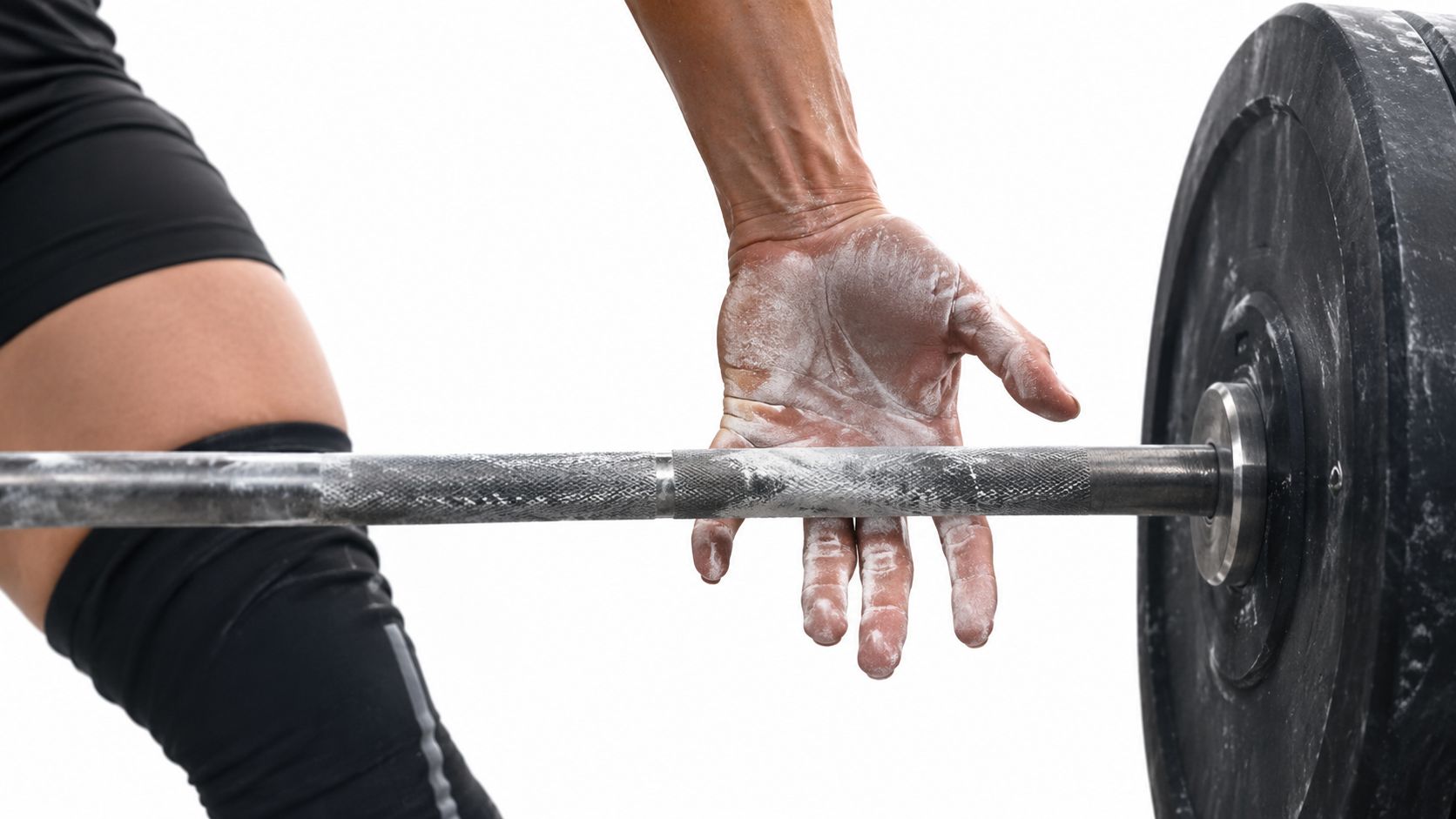
The bar begins to roll at lockout, before the legs or back give way. On a climbing route, fingertips slide from the next hold. During a pole transition, sweat changes the contact between skin and apparatus. In each case, the athlete loses attention to grip instead of completing the movement.
Load, technique, and strength may contribute, but the immediate failure is often moisture changing the contact surface. Magnesium carbonate helps dry the skin, and research on grip-enhancing agents shows that its friction benefit is tied to reducing skin moisture and finger-pad compliance rather than creating universal grip on every surface (controlled grip research).
Consistency matters more than a peak grip moment
Loose chalk can improve contact, yet uneven patches, shed particles, and room-wide dust can make coverage inconsistent. Liquid hand chalk spreads across the working areas of the hand and dries into a more controlled base before the first rep, route, or apparatus contact.
That base also clarifies the next decision. If the film handles the session's sweat, liquid chalk alone is enough. If repeated work saturates the layer or the surface demands more texture, a light powder layer over it can extend grip without starting from bare, damp skin.
Practical rule: Grip aid should reduce unpredictable hand changes, not encourage an athlete to keep adding more product.
EVMT Liquid Chalk uses magnesium carbonate in a liquid format for weightlifting, gymnastics, rock climbing, and other grip-focused sports. Apply a thin coat to clean, dry contact areas, let it set, then add powder only when the session shows that the base layer needs reinforcement. Reapply liquid chalk after the film has worn down, not after every minor change in sensation.
How Liquid Hand Chalk Works on Sweaty Hands
A bar starts slipping when sweat breaks the contact between skin and steel. Liquid chalk manages that moisture before the first rep by spreading magnesium carbonate suspended in an alcohol carrier, commonly ethanol or isopropanol, across the working areas of the hands. Reported alcohol content ranges from 40% to 80% (Royal Society of Chemistry research). As the alcohol evaporates, it leaves a thin chalk film attached to the skin.
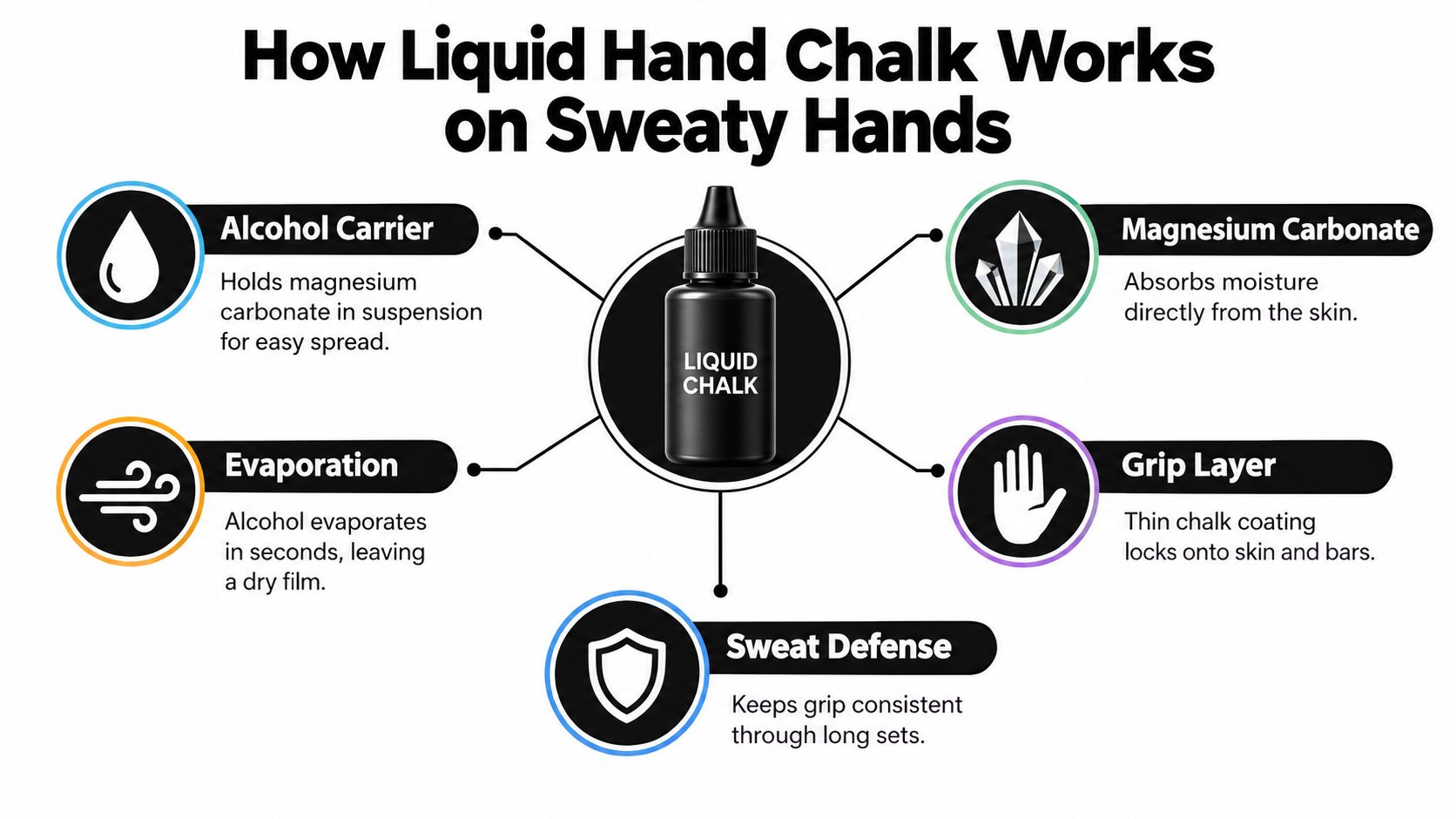
The application sequence is simple:
- Spread the liquid evenly. Cover the palms, fingers, fingertips, and contact points used on the bar, hold, or apparatus.
- Wait for evaporation. Let the carrier disappear fully. The result should feel dry, not wet or tacky.
- Train against the chalk layer. The magnesium carbonate helps manage moisture as sweat reaches the skin.
- Refresh selectively. Reapply when the film has worn away, rather than after every small change in sensation.
This film changes how sweat is handled. Loose chalk leaves separate particles on the skin, while liquid chalk forms a more even starting layer and produces less airborne dust. Measurements in climbing gyms found dust from liquid chalk remained similarly low to conditions where chalk was banned, making it useful in indoor facilities with strict cleanliness rules (Royal Society of Chemistry research).
The drying process is explained in this guide to liquid chalk's drying formula. Liquid hand chalk is a moisture-management layer, not a promise of stronger friction on every dry surface. Grip testing found little practical improvement on dry steel compared with no agent, while chalk-type products became more useful with sweaty hands and non-porous surfaces.
That distinction guides the setup. Use liquid chalk alone when the film controls sweat through the session. Add a light powder layer when repeated work saturates the base or the surface calls for more texture.
Liquid Chalk vs Powder Chalk for Gym and Sport Use
Powder chalk remains familiar because it is quick to add and easy to refresh. Liquid chalk changes the starting process, giving the athlete a spreadable base that dries on the skin and keeps the mess more contained. Neither format wins every situation, so the choice should follow the venue, sweat level, and need for repeated reapplication.
| Factor | Powder Chalk | Liquid Chalk |
|---|---|---|
| Application | Fast, but coverage can be uneven | Requires spreading and full drying |
| Dust | Can release airborne particles | Designed to reduce dust generation |
| Equipment cleanliness | More likely to spread around a room | Leaves limited residue when correctly applied |
| Gym rules | Often restricted by commercial facilities | Commonly accepted where loose chalk isn't |
| Sweat management | Refreshes the skin as needed | Creates an adhered drying layer |
| Long sessions | Easy to reapply, but may wear unevenly | Can provide a more consistent base before repeated work |
A commercial-gym review observed that correctly applied liquid chalk dried in about eight to ten seconds at room temperature and was generally permitted in many gyms that ban block or loose chalk. That doesn't override local rules. A facility can still restrict any chalk product, so athletes should check the posted policy before training.
Where powder still earns its place
Climbers often want powder available during a route or session because it is easy to refresh. Gymnasts, cheer athletes, and pole performers may also prefer a light, controlled application that doesn't leave a visible build-up on the apparatus. Liquid chalk is cleaner for the initial coat, but it shouldn't be treated as a compulsory replacement for every powder application.
For home gyms, the advantage is practical rather than cosmetic. Less airborne chalk means fewer particles settling on nearby surfaces and less concern for people sharing the room. The best choice is the format that maintains contact without creating a cleanup or policy problem.
EVMT Liquid Chalk Formulas and Best Sports Matches
EVMT's lineup can be viewed as three grip strategies, not just three labels. The right choice depends on the contact surface, sweat pattern, and whether the athlete needs broad coverage or precision.
Classic for broad training use
The Classic formula suits athletes who move between general gym work and grip-sensitive activities. It makes sense for home-gym owners, mixed training sessions, and anyone who wants a straightforward liquid base without narrowing the choice to one apparatus or movement.
Weightlifting for demanding bar contact
The Weightlifting formula is aimed at athletes whose hands meet a knurled bar while sweat builds through heavy or repeated work. Weightlifters, powerlifters, and CrossFit athletes can use it when the priority is a firm, even contact layer before the bar work begins.
Rock Climbing for precision contact
The Rock Climbing formula fits athletes who need controlled coverage across fingertips and palms. It suits climbers and boulderers who already understand powder chalk but want a cleaner base, as well as athletes who need to preserve contact consistency on smaller or more technical holds.
Formula choice should also account for training volume. A portable bottle is practical for travel and competition, while a high-volume option suits a busy home gym or shared training environment. Gymnasts, cheer athletes, and pole fitness athletes generally benefit from the same underlying principle: apply only enough to create coverage, then let it dry fully before touching the apparatus.
Why Liquid Chalk Helps Most When Hands Are Sweaty
Liquid chalk matters most when sweat is disrupting contact. On dry steel, controlled testing found little to no improvement compared with using no grip agent. Benefits became clearer when hands were sweaty and the surface was non-porous. Magnesium carbonate helps dry the skin and reduces finger-pad compliance, so the hand stays more stable against the surface.
That distinction should guide product choice. An athlete with naturally dry hands, performing a short and low-effort task, may notice little change. During repeated lifts, long hangs, or sustained apparatus work, moisture has more time to build and weaken contact. Liquid hand chalk can then manage the moisture before slipping starts.
The most effective setup depends on how quickly sweat returns. A thin liquid layer may be enough for a short session. For longer work, adding powder after the liquid has dried can extend coverage because the liquid controls the skin surface while the powder refreshes contact as the session continues.
Hyperhidrosis and frequent training
Very sweaty hands create a different trade-off from occasional use. Alcohol helps liquid chalk dry quickly, but frequent application can feel harsh on sensitive or already-dry skin. Formulas range from alcohol-heavy products, including examples around 80% ethyl alcohol and others above 70% alcohol, to alcohol-free options. Skin tolerance belongs in the buying decision.
Use the least aggressive routine that keeps contact reliable:
- Test a small area first. Irritation, cracking, or persistent discomfort indicates that the formula may not suit repeated use.
- Apply thin coats. More product does not automatically mean more grip and can increase skin dryness.
- Reapply powder only when needed. A light top layer can extend grip without repeatedly adding liquid.
- Care for the skin after training. Wash with soap and water, then use a suitable moisturizer if your hands feel tight.
The goal is controlled moisture on the contact surface, not maximum chalk.
Using Liquid Chalk as a Base Layer for Climbers
Climbers who already carry powder chalk don't need to abandon it. The more useful strategy is to treat liquid chalk as a primer beneath the powder, especially when sweat and repeated movement make the top layer disappear too quickly.
Start with dry hands before the session. Apply a thin coat of EVMT Liquid Chalk over the palms and fingertips, rub it evenly, and let it dry fully until the surface feels matte. Then apply loose chalk on top as normal. The liquid layer creates an additional grip foundation, so the powder coat can last through more moves before re-chalking is needed.
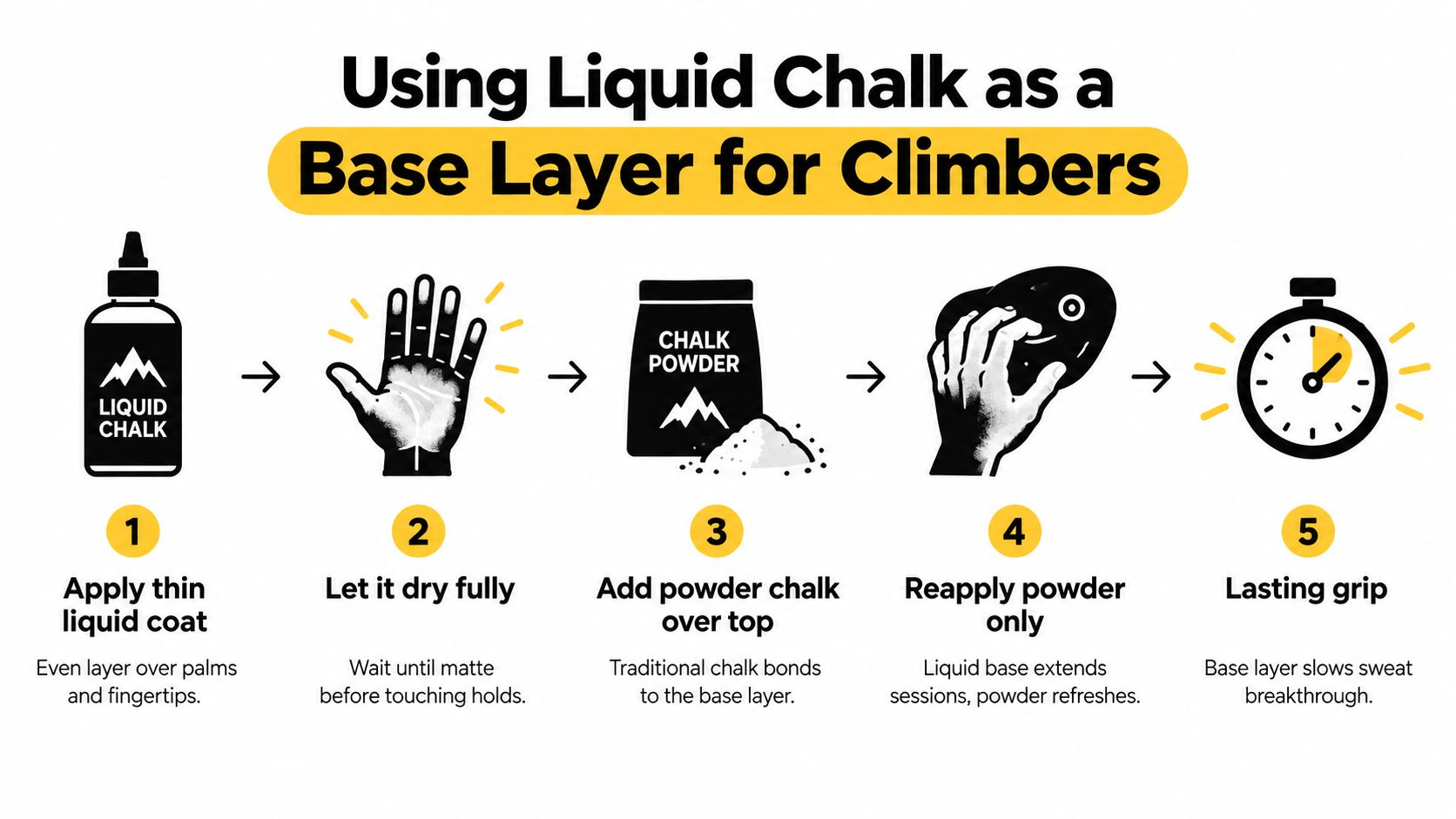
When layering makes the biggest difference
This method is most useful when a climber can't afford frequent interruptions:
- Long sport routes: Fewer trips to the chalk bag can preserve rhythm and attention.
- Multi-pitch climbing: A longer-lasting base is useful when refreshing chalk is less convenient.
- Humid climbing gyms: Sweat can break through a loose layer quickly, making a bonded foundation more valuable.
- Short boulder problems: The benefit may be smaller because the effort is brief and powder reapplication is easy.
The principle is simple. Sweat has to work through two layers instead of one, and the powder remains available for normal refreshes. A climbing review describes liquid chalk as an even, low-dust base that can help powdered chalk last longer, with loose chalk applied over it when appropriate.
The practical layering method is also covered in this guide to liquid climbing chalk. Climbers should expect an extended coat life and less frequent re-chalking, not a permanent coating. If the hands become slick, dirty, or uncomfortable, the correct response is to clean or refresh the hands rather than keep adding product.
How to Apply Liquid Chalk Properly for Lasting Grip
Application quality determines whether liquid hand chalk feels like a clean grip layer or a sticky buildup. The correct amount is smaller than many new users expect. Independent gear testing found that a teaspoon-sized dollop completely coated both hands once dry.
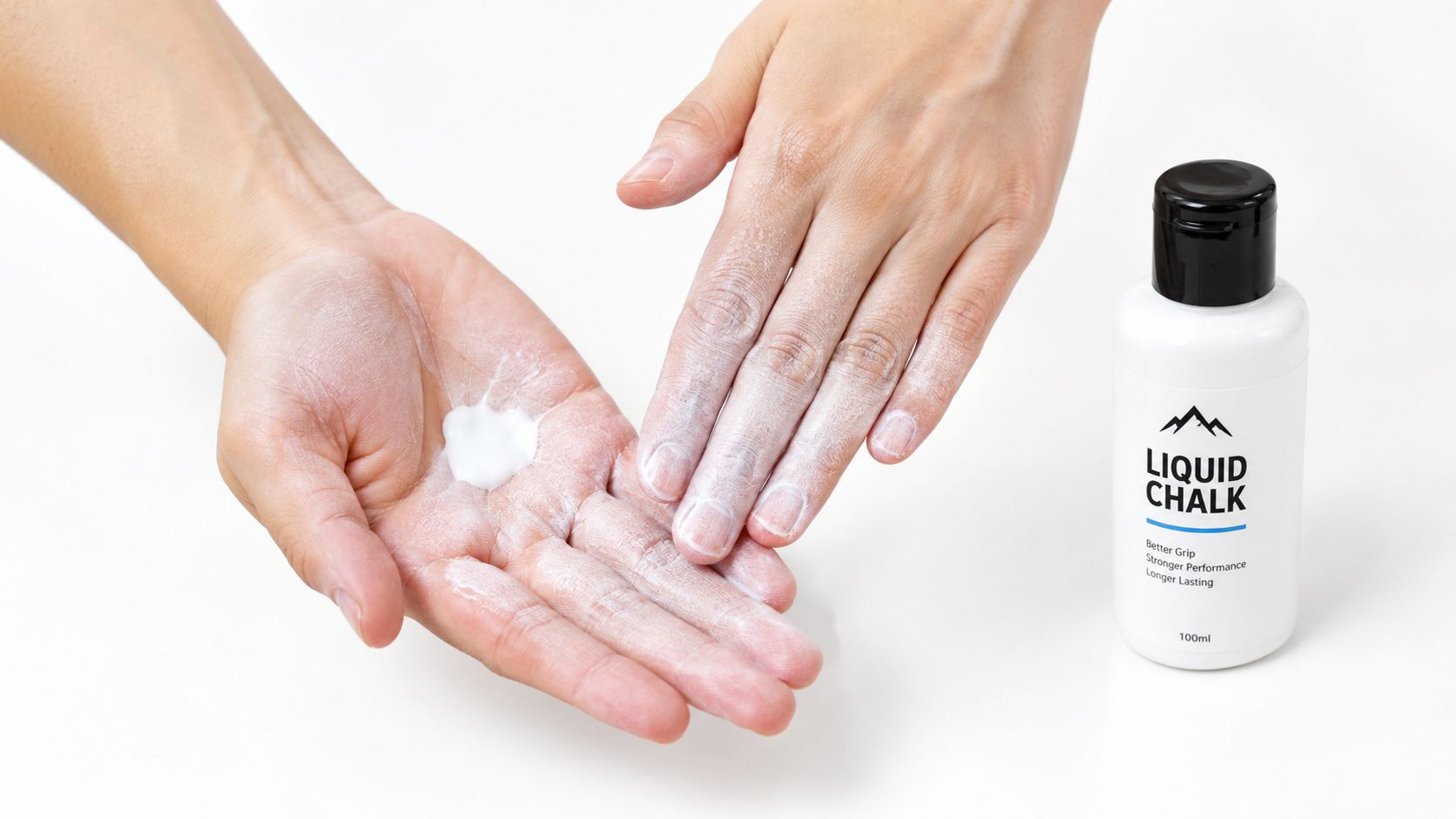
A reliable application sequence
- Begin with clean, dry hands. Moisture, lotion, and old buildup can interfere with an even coat.
- Use a small amount. Spread it across the palms, fingers, fingertips, and other contact zones rather than leaving thick spots.
- Rub until coverage looks even. Patchy application creates patchy grip, especially on high-contact areas.
- Let it dry completely. The alcohol carrier should evaporate before the hand touches the bar, pole, hold, or apparatus.
- Reapply only when needed. A fresh thin layer is preferable to repeatedly adding product over a heavy one.
Liquid chalk does reduce mess, but “dust-free” doesn't mean “careless.” A bar or pole can still receive residue if an athlete applies too much, touches equipment before drying, or continues training with accumulated chalk and sweat. Wiping the contact surface according to the venue's rules keeps equipment cleaner and avoids transferring buildup.
Washing it off is uncomplicated. Soap and water remove the chalk layer from the hands after training, as described in practical climbing guidance (hand-washing guidance for liquid chalk). Athletes with sensitive skin should also pay attention to tightness, redness, or cracking and adjust frequency or formula if those symptoms appear.
Choosing the Right Liquid Chalk Strategy for Your Sport
The best chalk decision starts with the failure pattern, not the label on the bottle. If sweat causes the hand to slide during repeated bar work, a fast-drying liquid layer is a logical starting point. If a climber already relies on powder, liquid chalk is more useful as a primer than as a replacement.
Weightlifters and powerlifters should prioritize consistent bar contact and thin application across the palm and fingers. The EVMT liquid chalk guide for weightlifting is relevant to athletes deciding how to fit the product into heavy pulling and repeated lifting sessions.
CrossFit athletes need a low-dust option that can handle changing movements and repeated contact without constant cleanup. Liquid chalk also suits home-gym owners who can't have powder spreading across nearby surfaces, provided the local rules allow it.
Climbers and boulderers should choose based on session length. Short boulder problems may need only a light liquid coat or the athlete's usual powder routine. Long sport routes, multi-pitch climbing, and humid gyms are stronger cases for the liquid-under-powder method.
Gymnasts, cheer athletes, and pole fitness athletes need clean, controlled coverage and careful residue management on apparatus. Thin application and complete drying matter more than adding a heavy layer.
The central decision is moisture control. Liquid hand chalk alone can be enough for many gym, lifting, pole, gymnastics, and high-sweat sessions. Climbers who already use powder often get more value by keeping both formats and using liquid chalk as the base layer that extends the powder coat.
Evermost LLC offers EVMT Liquid Chalk in single bottles and multi-packs for athletes who need a fast-drying, low-dust grip layer for lifting, climbing, gymnastics, cheer, or pole training. Visit Evermost LLC to choose a liquid chalk format that fits the athlete's sport, sweat level, and venue rules.