


A Lifter’s Guide to Liquid Chalk for Weightlifting
Liquid chalk is a high-performance grip solution: magnesium carbonate—the same functional ingredient in powder chalk—suspended in a fast-evaporating alcohol base. When applied to the palm, the alcohol dissipates in seconds, leaving a uniform, durable layer of chalk that bonds directly to the skin.
The result is a sweat-resistant grip that is significantly cleaner and longer-lasting than traditional powder chalk. For serious athletes, this makes it a superior grip tool in almost any training environment.
Why Liquid Chalk Is The Elite Grip for Serious Lifters
Picture this: you're set for a one-rep max deadlift. You’ve put in the work, your technique is dialed in, and you’re ready for a lifetime personal record. The bar breaks the floor, but as it passes your knees, your grip begins to fail. The lift is lost—not from a lack of strength, but because your connection to the barbell was compromised.
This scenario is a frustrating reminder that for many athletes, grip is the primary limiting factor in performance.
When every kilogram on the bar matters, you need a grip solution engineered for high-stakes performance. This is where liquid chalk for weightlifting provides a definitive advantage. It’s not just a cleaner substitute for the powder chalk banned in many commercial gyms; it’s a strategic performance upgrade.
The Modern Solution for Maximum Bar Control
Think of it as the difference between street tires and high-performance racing slicks on a track car. Liquid chalk doesn't just sit on the skin; it bonds to it, creating a solid, uniform surface that resists sweat and maintains its integrity. This translates to a more secure, powerful connection to the barbell, whether you're on the platform at a sanctioned powerlifting meet or training in your home gym.
For the dedicated lifter, grip isn’t just about holding on; it’s about transferring every ounce of force generated into the bar. A reliable grip is the foundation of confidence, enabling an athlete to focus purely on the execution of the lift.
This performance edge comes down to core benefits that make liquid chalk a smarter choice for most athletes.
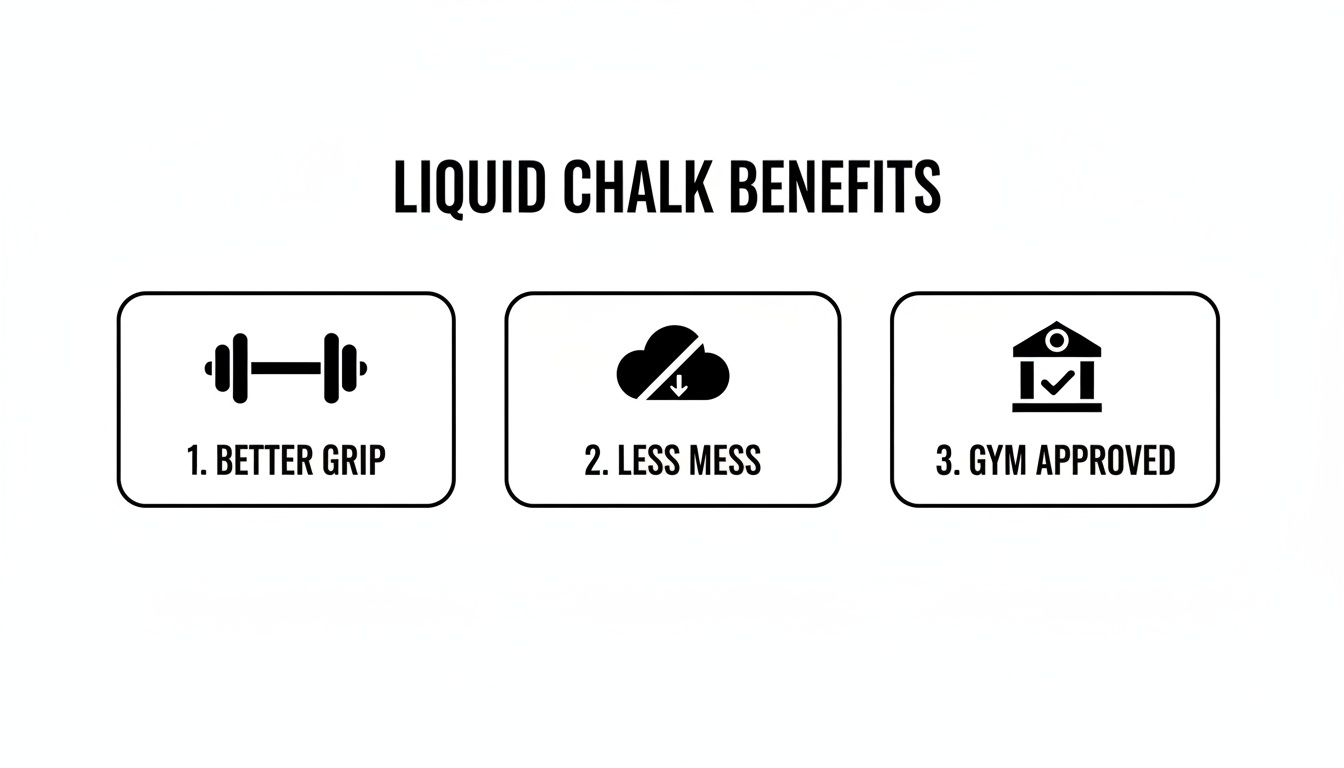
These three advantages—better grip, less mess, and gym-friendliness—directly address the major weaknesses of traditional powder chalk.
The fitness industry has taken notice. The athletic chalk market, valued at USD 106 million in 2023, is experiencing a significant shift toward liquid formulas. With an estimated 70% of facilities now preferring liquid chalk to reduce airborne particulates and maintain equipment hygiene, it is rapidly becoming the new standard.
For athletes, this shift yields tangible results. Powerlifting community surveys have reported up to 20% greater grip consistency during maximal efforts when using liquid chalk. To review the data, you can read the full research on the liquid chalk market and analyze the trends.
Liquid Chalk vs. Powder Chalk: A Performance Comparison
When the dust settles, how do the two options compare for a serious lifter? Here is a practical breakdown of the features that matter.
| Feature | Liquid Chalk | Powder Chalk |
|---|---|---|
| Grip Longevity | Excellent; one application can last an entire session | Poor; requires frequent re-chalking between sets |
| Mess & Air Dust | Minimal to none; stays bonded to the hands | High; creates airborne dust and leaves residue on surfaces |
| Gym Friendliness | Widely accepted, even in restrictive commercial gyms | Often banned or restricted due to mess and air quality |
| Application | Precise and uniform coating | Inconsistent, clumpy, and difficult to apply evenly |
| Sweat Resistance | Superior; alcohol base dries hands for a better bond | Fair; can become pasty or slick with excessive sweat |
| Portability | Easy; small, spill-proof bottles fit in any gym bag | Messy; bags can rip and leak, chalk blocks can break |
While powder chalk has been a staple for decades, liquid chalk addresses nearly all its shortcomings without compromising performance. For most lifters, it represents a clear upgrade.
The Science Behind a Flawless Grip
The mechanism behind liquid chalk is straightforward chemistry designed to eliminate grip failure. While the iconic cloud of powder chalk is a familiar sight, liquid chalk delivers the same core ingredient—magnesium carbonate—with far greater precision and efficiency.
The simple formula ensures each component plays a specific role in creating the reliable, long-lasting grip athletes depend on.
Consider the process of a professional painter preparing a surface. They wouldn't apply paint directly to a bare wall. First, they would use a high-quality primer to create a perfect, uniform base for the paint to adhere to.
That is exactly what EVMT Liquid Chalk does for your hands. It creates a flawless, bonded layer that prepares the skin for the intense friction and pressure of a heavy lift.
The Three Core Components
At its core, liquid chalk is an intelligent blend of three key elements that work in sequence. Understanding their interaction makes it clear why it outperforms traditional powder in virtually every lifting scenario.
The process begins the moment it is applied to your palm.
-
Alcohol Base: This acts as the delivery system. The alcohol serves two functions: it sanitizes the hands and ensures the magnesium carbonate spreads in a thin, even layer. It evaporates in approximately 20-30 seconds, rapidly drying the skin and initiating the grip-setting process.
-
Magnesium Carbonate: This is the formula's functional workhorse. It is the same compound trusted by Olympic lifters and gymnasts for decades, left behind once the alcohol evaporates. Its primary role is to absorb sweat and moisture, which dramatically increases friction between the skin and the barbell's knurling.
-
Bonding Agent: This is the key to longevity. A subtle binding agent helps the magnesium carbonate adhere directly to the skin, creating a cohesive layer that resists flaking during a set. It’s the reason one application often lasts an entire workout.
The real advantage of liquid chalk in weightlifting is its proactive approach. Instead of merely absorbing existing sweat, it forms a durable barrier that prevents moisture from becoming an issue in the first place, allowing you to focus completely on the lift.
This synergy produces a consistent, reliable grip from the first warm-up to the final PR attempt. It is a clean, efficient system that leaves no room for error. For any serious athlete, that level of reliability is critical.
Mastering Application for Maximum Bar Control
A high-performance tool is only as effective as its user. With liquid chalk, proper application technique is essential to unlocking a rock-solid grip that won't fail mid-set. This is not the same as taking a handful of powder from a community chalk bowl; it is a quick, precise process that creates a durable foundation for serious bar control.
The process starts before the bottle is opened. Hands must be clean and completely dry. Any oil, sweat, or dirt on the skin will interfere with the formula's ability to bond directly.
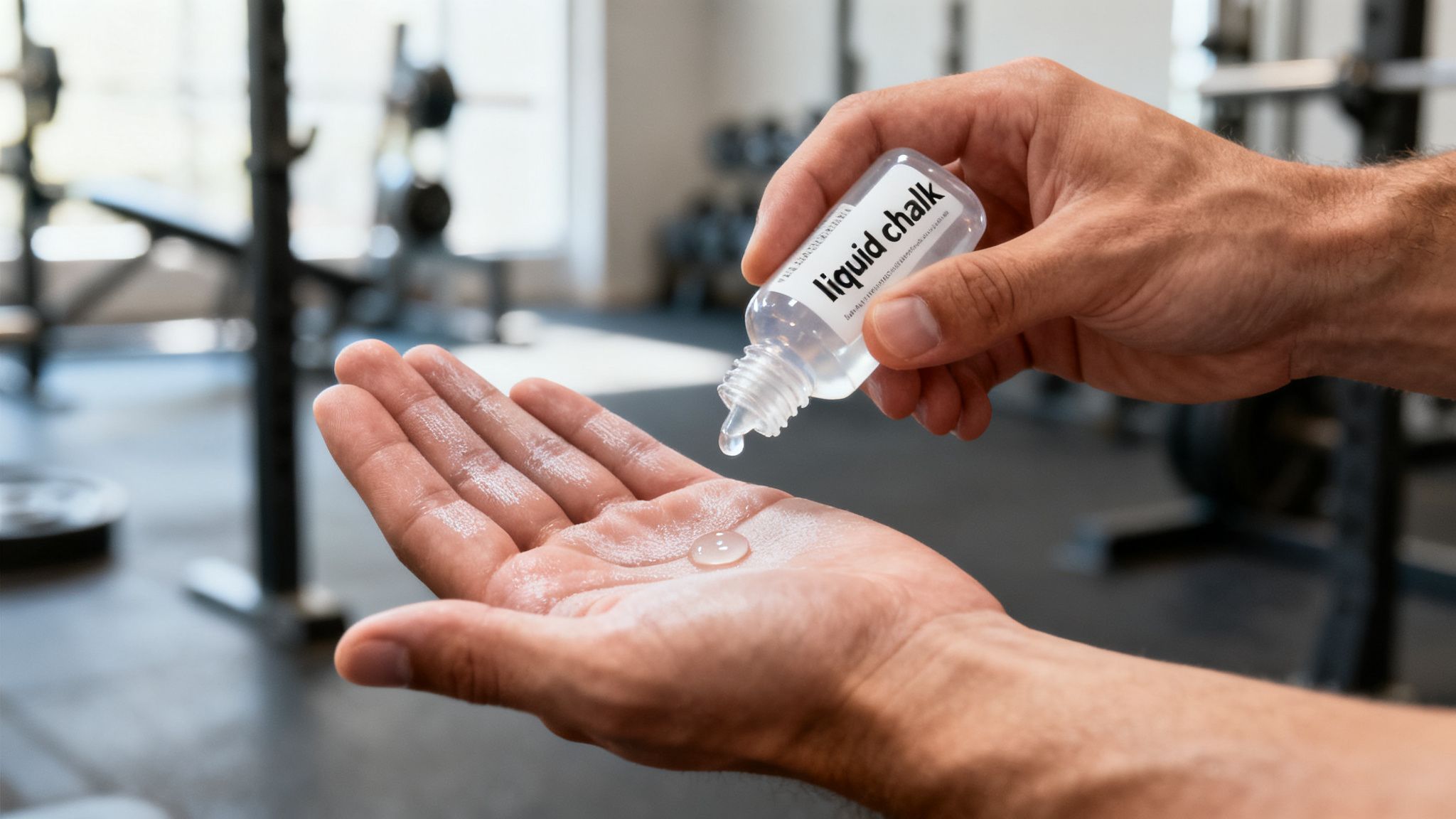
The Pro Application Method
To achieve a perfect, long-lasting coat, follow these simple steps. The entire process takes less than a minute but can significantly impact your training session.
- Start Clean: Wash and dry your hands thoroughly. A clean surface is necessary for the chalk to adhere properly.
- Apply a Dime-Sized Amount: Squeeze a small amount of liquid chalk into your palm—about the size of a dime is sufficient. Using too much can create a thick, flaky layer that may compromise your grip.
- Spread Evenly: Rub your hands together to work a thin, consistent layer across your palms, fingers, and thumbs. Pay attention to the creases where moisture can accumulate.
- Let It Dry Completely: This is the most critical step. Allow your hands to air dry for 20-30 seconds without touching any surfaces. You will see the liquid evaporate, leaving a perfect, white layer of magnesium carbonate.
Once dry, your grip is set. For most individuals, a single application is sufficient for an entire session, providing a reliable grip from your first warm-up set to your final heavy single.
Lift-Specific Application Tips
For athletes pursuing elite performance, minor adjustments to application can provide a strategic advantage. A powerlifter’s deadlift grip has different demands than an Olympic weightlifter’s hook grip.
- For Deadlifts: Concentrate the chalk higher on the palms and at the base of the fingers—the exact points where the bar makes contact. This maximizes friction where it is most needed for heavy pulls.
- For Olympic Lifts: Ensure full coverage on the thumb and index finger. This is non-negotiable for securing a solid hook grip during explosive snatches and cleans.
Imagine a competitive weightlifter on their third and final snatch attempt at a national meet. A perfect liquid chalk application ensures their hook grip is absolutely locked. That unwavering connection allows them to transfer maximum force into the bar, turning a potential miss into a successful lift.
By mastering this simple process, you can ensure that grip is never the reason a lift is failed. This attention to detail is what distinguishes good lifters from great ones.
Choosing The Right Formula for Your Training
Not all liquid chalk is created equal. Just as a powerlifter wouldn’t train in running shoes, selecting the right formula is a strategic decision that must align with your training discipline. The chalk engineered for a climber seeking a gritty hold on a rock face is fundamentally different from what a weightlifter needs for durability against a barbell.
Understanding these distinctions is key to optimizing your equipment. A formula designed for weightlifting prioritizes a durable, sweat-resistant layer that withstands the intense friction of a barbell's knurling, set after set. In contrast, other formulas might focus on a different texture or a faster drying time.
Dialing In Your Grip for Your Sport
For athletes focused on the barbell, the choice is clear. You need a formula built for high friction and longevity under heavy loads.
- Weightlifting & Powerlifting: Look for a formula specifically marketed for lifting. These are engineered to create a solid, tacky base that locks the hands to the bar. Brands like EVMT Liquid Chalk offer a weightlifting-specific blend designed for superior bar contact and control.
- Rock Climbing: Climbing formulas often have a grittier texture for enhanced feel and precision on small holds. While effective for that purpose, this texture is not always ideal for the smooth, rotating sleeve of an Olympic barbell.
- Gymnastics & Calisthenics: Athletes in these disciplines often require a balance of grip and smooth release, making a standard or classic formula a versatile choice that won’t interfere with dynamic movements.
This focus on sport-specific solutions reflects a broader trend. The liquid chalk market has expanded rapidly, growing from USD 100 million in 2023 to a projected USD 432 million by 2031. This growth is driven by athletes demanding better performance tools, pushing brands to develop specialized formulas for lifters who need to push their limits without grip failure. You can find more insights on the liquid chalk market growth on Verified Market Research.
Matching Packaging to Your Training Environment
Beyond the formula itself, practical considerations like packaging can impact your daily routine. How and where you train should inform the size and type of bottle you choose.
Your gear should support your training, not complicate it. The right container makes liquid chalk an effortless part of your pre-lift ritual, whether you’re training at home or traveling for a competition.
Consider your primary training location:
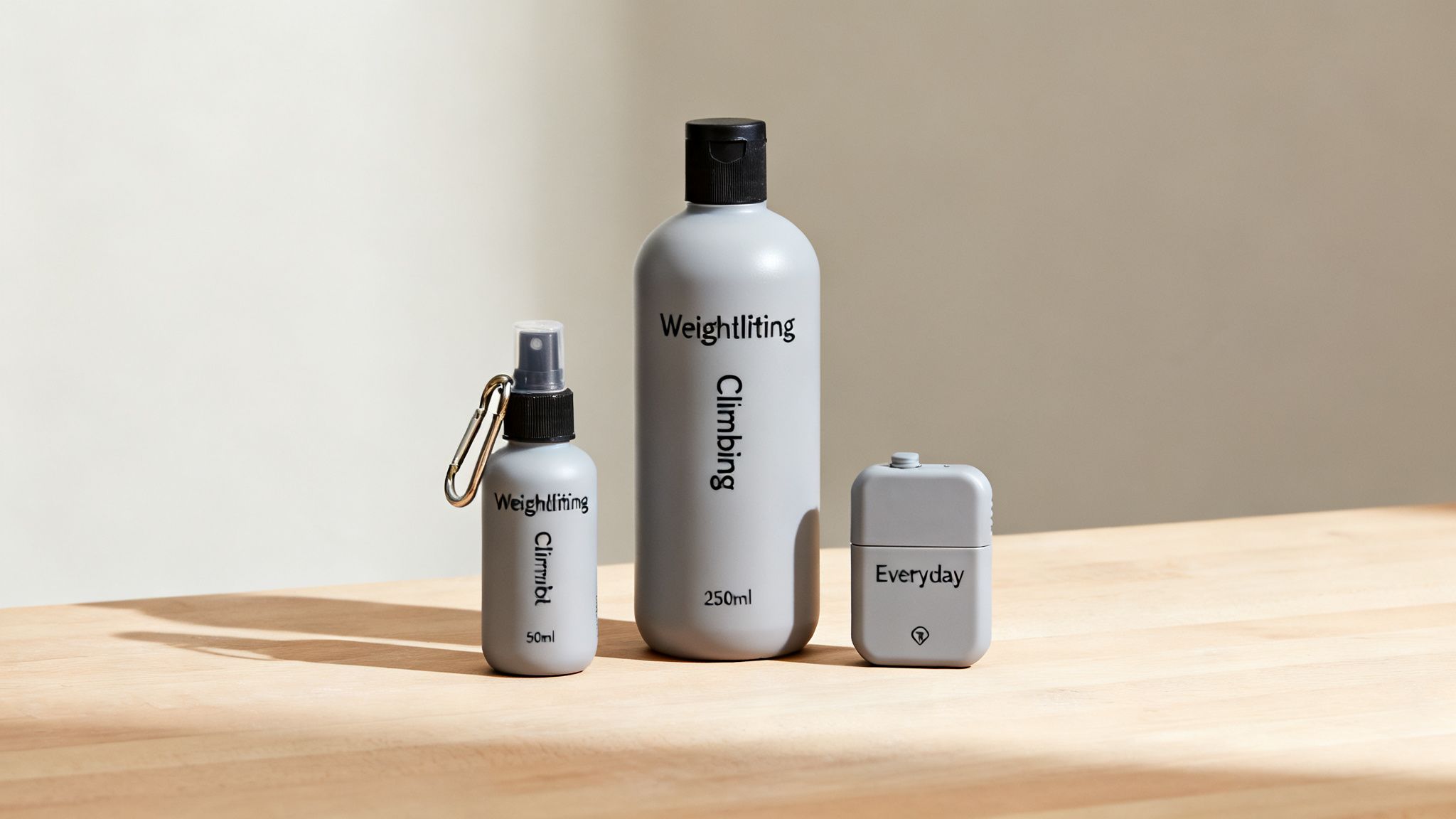
- For the Gym Bag: A portable 50ml bottle is the ideal solution for athletes on the go. Some include a carabiner that can clip directly to a gym bag, ensuring your chalk is always accessible.
- For the Home Gym: A larger 250ml bottle offers better value and is well-suited for a dedicated training space. It ensures a steady supply for months of heavy lifting without the need for frequent restocking.
Deliberately choosing your formula and packaging is not overthinking; it’s about removing variables so you can focus completely on the lift ahead.
Putting Liquid Chalk to Work in Your Routine
Understanding the theory is one thing; practical application is where performance is forged. Integrating liquid chalk into your training is a strategic move to overcome specific barriers. The right application at the right time can be the deciding factor between achieving a new personal record and stalling due to grip failure.
For any serious lifter, using liquid chalk for weightlifting is a deliberate ritual, fine-tuned for the unique demands of each movement.
For the Powerlifter
Powerlifters manage immense loads where millimeters of slip can compromise technique and reduce force production. Liquid chalk provides the unwavering, locked-in grip needed to maintain control from un-racking the bar to completing the lift.
- The Squat: While not a grip-intensive lift for the hands, chalk is critical for securing the bar on the back. A thin layer across the traps and upper back creates a high-friction shelf, preventing the barbell from sliding down during a maximal attempt. This provides a stable base for a powerful ascent.
- The Bench Press: A solid grip is essential for transferring power into the bar. A light coat of liquid chalk on the hands prevents slippage, promoting stable wrists for a stronger press. It also works in tandem with chalk on the upper back to lock the lifter to the bench.
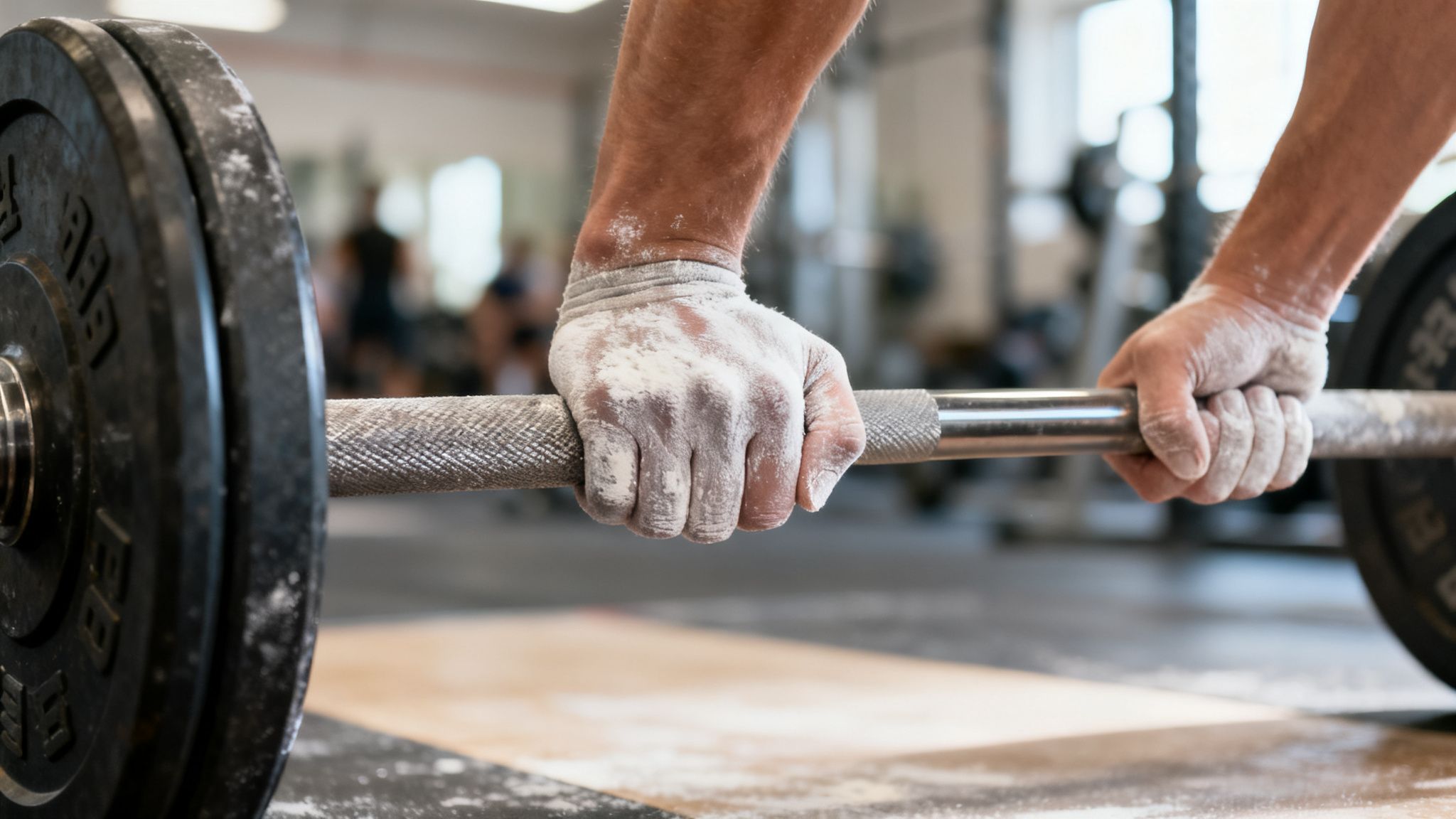
- The Deadlift: This is the ultimate test of grip strength. Apply liquid chalk just before your heaviest sets. A proper application effectively welds your hands to the knurling, allowing you to focus completely on leg drive and pull mechanics without concern for grip failure.
For the Olympic Lifter
In Olympic weightlifting, the grip must be both secure and dynamic to accommodate explosive transitions and bar rotation. Liquid chalk achieves this balance perfectly, providing a tacky surface that does not impede movement.
The hook grip is non-negotiable for an Olympic lifter's snatch and clean. Liquid chalk creates the high-friction environment necessary to lock the thumb down, securing the bar during a violent first pull without hindering the rapid turnover required to receive it overhead or on the shoulders.
This becomes critical during competition, where a minor slip results in a failed lift. A clean, dependable layer of chalk provides the confidence to be aggressive, fast, and precise under pressure.
For Bodybuilders and CrossFitters
For athletes focused on high-repetition sets and metabolic conditioning, grip fatigue is often the true point of failure, not muscular exhaustion. Liquid chalk is the tool that allows you to push target muscles to their absolute limit.
- High-Rep Pulling: During sets of pull-ups, chin-ups, or heavy rows, the forearms often fatigue before the lats are fully stimulated. Applying liquid chalk beforehand ensures you can hold on for those extra, growth-inducing repetitions.
- Metcon Workouts: In a fast-paced CrossFit WOD with kettlebell swings or toes-to-bar, sweat is a major impediment. A single application of liquid chalk can last an entire circuit, preventing dangerous slips and allowing you to maintain pace without returning to the chalk bucket.
By understanding how to use liquid chalk for your specific discipline, you can transform it from a simple accessory into a cornerstone of your performance strategy. To see how different grip solutions can fit into your training, explore our full collection of high-performance athletic gear.
Your Questions Answered About Liquid Chalk
Even for experienced lifters, changing a core piece of equipment like chalk can raise questions. Getting the details right is the difference between trying something new and upgrading your performance. Here are clear, direct answers to the most common questions from lifters making the switch.
Our goal is to provide the information needed to integrate liquid chalk into your training seamlessly, so your focus remains on the bar.
How Often Should I Reapply Liquid Chalk During a Workout?
This is where the difference from traditional powder is most noticeable. For most lifting sessions, a single, proper application of high-quality liquid chalk is sufficient. It is not like powder, which requires constant reapplication. A good liquid formula creates a durable, sweat-resistant layer that lasts.
A powerlifter working up to a one-rep max deadlift will find that one coat applied before warm-ups provides a solid grip through their final attempt. For high-volume work, like a CrossFit WOD or a bodybuilding back day, a light reapplication before a particularly grueling, grip-heavy movement might be beneficial.
The rule of thumb: start with one good coat on clean, dry hands. Reapply only if you feel your grip slipping due to significant sweat. For 90% of lifting sessions, one application is all that's needed.
Is Liquid Chalk Safe for My Skin and Barbells?
Yes. Reputable liquid chalk for weightlifting is formulated to be safe for both your hands and your equipment. The alcohol base sanitizes the hands and evaporates in seconds, leaving only pure magnesium carbonate. This process is less harsh than repeatedly dipping hands into a communal chalk bucket.
For your equipment, liquid chalk is the superior choice for several reasons:
- Minimal Residue: It leaves significantly less material caked into the barbell's knurling.
- Easy Cleanup: The minimal residue that is left wipes off easily with a stiff brush.
- Protects Equipment: The absence of airborne dust prevents particulates from entering the sensitive bearings of Olympic bars, which helps preserve spin and extend the life of your equipment.
Can I Use Liquid Chalk in Competitions?
In nearly all cases, yes. Liquid chalk is not only permitted but often preferred in powerlifting, Olympic weightlifting, and CrossFit competitions. The primary reason is cleanliness. Meet directors and event staff favor it because it keeps the platform, bars, and surrounding area free of chalk dust.
That said, it is always the athlete's responsibility to check the specific rules of their federation or the event. While major organizations like USA Powerlifting (USAPL) and USA Weightlifting (USAW) generally permit its use, some smaller or local federations may have specific rules regarding grip aids. For most competitive lifters, it is a standard, approved piece of equipment.
How Do I Remove Liquid Chalk After Training?
Removing liquid chalk is simpler than scrubbing off caked-on powder. The bonded layer it creates is designed to break down easily with soap and water.
Wash your hands thoroughly with warm water and soap. For athletes who train multiple days a week, it is good practice to apply a quality moisturizer or hand balm after washing. This helps maintain skin health, prevents calluses from drying out and cracking, and ensures your hands are ready for the next heavy session.
For any other questions about product use or safety, feel free to contact our team directly for one-on-one support.
Ready to experience a cleaner, more reliable grip that lasts your entire session? EVMT Liquid Chalk is engineered for serious lifters who refuse to let a weak grip limit their strength. Try the formula trusted by over 250,000 athletes and lock in your new personal best. Shop EVMT Liquid Chalk now at https://www.evmt.co.
Enhanced by Outrank app