


Liquid Chalk for Gymnastics: The Competitive Edge for a Flawless Grip
In gymnastics, where routines are won or lost by millimeters, grip is non-negotiable. For the serious gymnast, liquid chalk is a high-performance tool engineered to solve the persistent issues of traditional powder chalk—inconsistent grip, distracting dust clouds, and constant reapplications. It's designed to create a reliable, long-lasting connection between an athlete's hands and the apparatus, especially when the pressure of competition is at its peak.
The Modern Solution to an Age-Old Gymnastics Problem
From a gymnast's first kip to an Olympic-level dismount, a secure hold is the foundation of every skill. For decades, the chalk bucket has been a fixture in every gym, its fine white powder a familiar part of the training environment. While effective, traditional powder chalk has inherent drawbacks: airborne particles can impact air quality, and the need to break focus for reapplication disrupts training rhythm.
This is where liquid chalk provides a clear advantage. It isn't just a replacement; it's a strategic upgrade. It is formulated for high-stakes environments, such as a collegiate championship or an intense elite training camp, where there is zero margin for grip failure.
A Cleaner, More Efficient Grip Solution
The mechanism behind liquid chalk is both simple and effective. A small amount is applied to the hands, and its alcohol base evaporates within seconds. What remains is a thin, uniform, and durable layer of magnesium carbonate that bonds directly to the skin.
This process delivers key performance benefits for gymnasts:
- No Dust Clouds: It eliminates the airborne particles that can irritate airways and coat equipment, fostering a cleaner, more professional training facility.
- Long-Lasting Performance: One application provides a sweat-resistant grip that can outlast multiple turns on the high bar or a full pommel horse sequence, minimizing interruptions.
- Consistent Friction: The even coating prevents the clumping and unexpected slick spots common with loose powder, ensuring a predictable and reliable grip every time.
For a gymnast, confidence is built on consistency. When your grip is unwavering from the start of a routine to the finish, you can focus entirely on execution. Liquid chalk provides that reliability when it matters most.
The Growing Preference in Modern Gyms
The shift toward cleaner grip solutions is not isolated to gymnastics; it's a trend across the performance fitness industry. The global gym chalk market was valued at $246 million in 2024 and is projected to reach $412 million by 2033. Liquid chalk is the fastest-growing product type within this market, largely due to its mess-free application that keeps both athletes and facilities clean. You can discover more insights about the growing gym chalk market for a complete analysis.
EVMT Liquid Chalk is engineered for this modern athletic environment. It delivers a gym-approved grip solution that supports peak performance without the mess. For gymnasts serious about precision, safety, and hygiene, the switch is a performance-driven decision.
How Liquid Chalk Creates a Flawless Grip
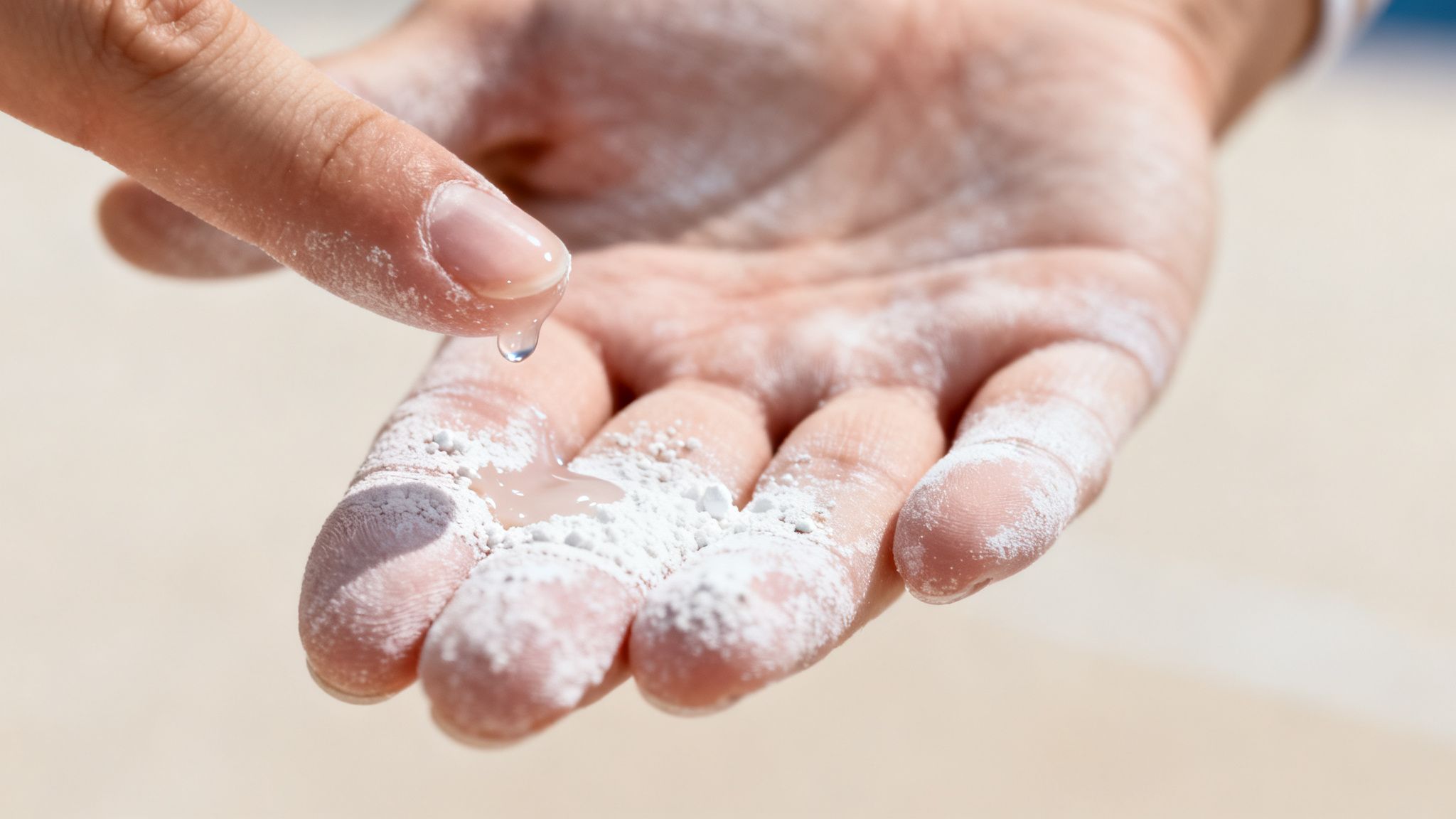
The superior grip from liquid chalk for gymnastics is a result of applied science, not magic. At its core, liquid chalk is a suspension of magnesium carbonate—the same compound in block chalk—in a fast-drying alcohol base. This formula transforms the often messy, inconsistent process of chalking into a precise and reliable application.
When applied, the alcohol serves a dual purpose. First, it sanitizes the skin, removing sweat, oils, and moisture that could otherwise compromise grip. It then evaporates in seconds.
What's left is a fine, bonded layer of chalk adhered directly to the skin. This creates a high-friction surface that feels less like a coating and more like a natural extension of the hands.
The Science of Superior Friction
This bonded layer is where liquid chalk fundamentally outperforms traditional powder. It establishes a higher, more consistent coefficient of friction that is difficult to achieve with loose chalk. Powder sits on top of the skin, making it prone to shifting, clumping, or wearing away unevenly mid-routine. On the rings or high bar, that unpredictability is a liability.
During a giant swing or a release move like a Jaeger, there is no room for error. The connection to the apparatus must be absolute. The uniform coating from liquid chalk ensures every part of the hand maintains solid contact, eliminating the weak points where a slip is most likely to occur. This reliability builds immense confidence. When an athlete trusts their grip completely, they can commit to skills with more power and focus on technique, not their hands.
In a sport where a fraction of a second separates a stuck landing from a fall, a flawless grip isn't a luxury—it's a necessity. Liquid chalk gives you a predictable foundation to push your limits safely.
Liquid Chalk vs. Powder Chalk: A Performance Breakdown
Observing liquid and powder chalk in a training environment highlights the practical differences. A gymnast on the uneven bars using powder might need to re-chalk between each turn, breaking rhythm and concentration. Liquid chalk fundamentally changes this dynamic.
| Attribute | Liquid Chalk | Powder Chalk (Loose/Block) |
|---|---|---|
| Grip Duration | Long-lasting; 1 application can last an entire session | Short-lived; requires frequent reapplication |
| Application | Precise, clean, and controlled | Messy, dusty, and inconsistent coverage |
| Friction Quality | Uniform, bonded layer for consistent friction | Uneven coating that can shift, clump, or wear off |
| Mess Factor | Minimal; no airborne dust clouds | High; leaves residue on equipment, clothes, and in the air |
| Efficiency | Streamlines training by reducing chalk breaks | Interrupts flow and momentum for re-chalking |
| Skin Prep | Alcohol cleans and dries skin for better adhesion | Sits on top of sweat and oils, can feel pasty |
A single application of liquid chalk can often last an entire rotation, translating to more time training and less time at the chalk bucket. This sustained performance is why many competitive gymnasts are integrating it as a core component of their gear. To see how this applies in other disciplines, explore the benefits of liquid chalk for gym use.
Nailing Your Liquid Chalk Application
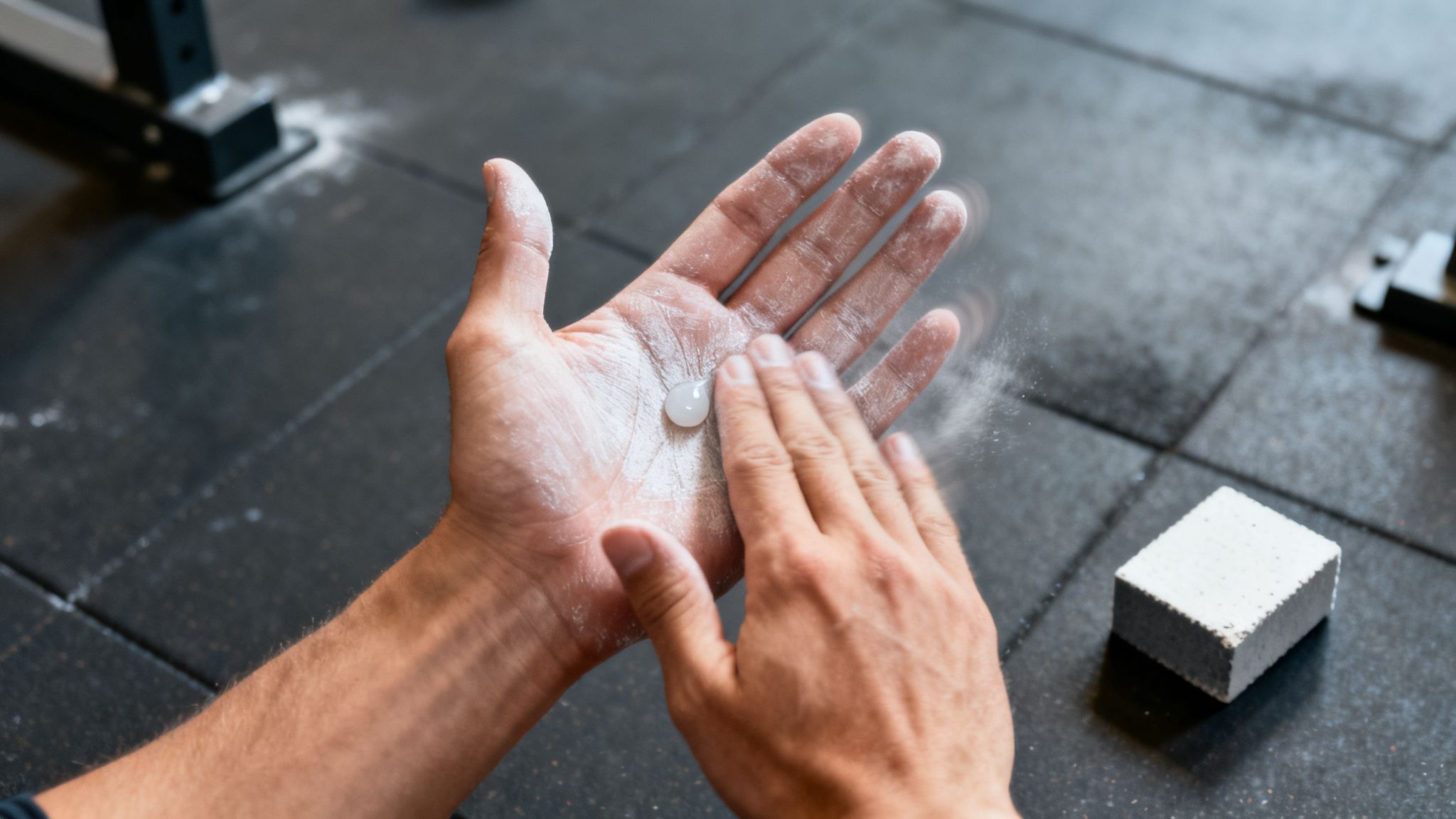
A high-performance tool is only as effective as its application. One of the greatest benefits of liquid chalk for gymnastics is its precision, but proper technique is essential to realize its full potential. This method replaces the imprecise nature of a chalk bucket with a controlled, efficient process for creating a perfect grip layer.
The goal is a thin, even coat that acts as a second skin. Mastering this allows an athlete's focus to remain on their routine, not their hands. Here are the steps to achieve a flawless application every time.
The Foundational Steps for a Perfect Coat
Treat this as a pre-routine ritual. A consistent process ensures a predictable outcome—exactly what is needed before saluting the judge.
-
Start with a Clean Slate: Always begin with clean, dry hands. Any residual oil, lotion, or moisture will interfere with how the chalk bonds to the skin. This step is non-negotiable for optimal performance.
-
Less Is More: Squeeze a dime-sized drop into your palm. A common error is using too much, which can lead to a flaky, ineffective grip. You can always add a little more if needed.
-
Ensure Full Coverage: Rub your hands together to spread the liquid chalk across all surfaces. Cover the entire palm, each finger, and the areas between them. The objective is a thin, translucent layer on every part of the hand that will contact the apparatus.
-
Wait for the Bond: Allow the chalk to air dry completely. This is the most critical part of the process. Fanning your hands will accelerate drying, which typically takes 15-30 seconds. The grip is ready once the wet sheen disappears and the hands are uniformly white.
Advanced Techniques for a Competitive Edge
For gymnasts competing at a high level, small adjustments can yield significant performance gains. Certain events or conditions may call for a more strategic approach to chalking.
One technique used by some collegiate and elite gymnasts is chalk layering.
By applying a perfect base coat of liquid chalk first, you create a long-lasting, sweat-proof foundation. From there, a light dusting of block chalk can be added on top to achieve a specific tactile feel, without the risk of the entire grip failing mid-routine.
This hybrid method provides the durability of liquid chalk with the familiar texture of traditional powder. It is especially effective on events like the uneven bars or high bar, where grip is under extreme stress. The foundational liquid layer remains intact even if the superficial powder wears off.
Ultimately, perfecting your application comes down to practice. Experiment during training sessions to find the exact amount and method that gives you the most confidence. A premium grip solution like EVMT Liquid Chalk is designed to provide that solid foundation, allowing you to focus on sticking the landing.
Protecting Your Skin and Your Equipment
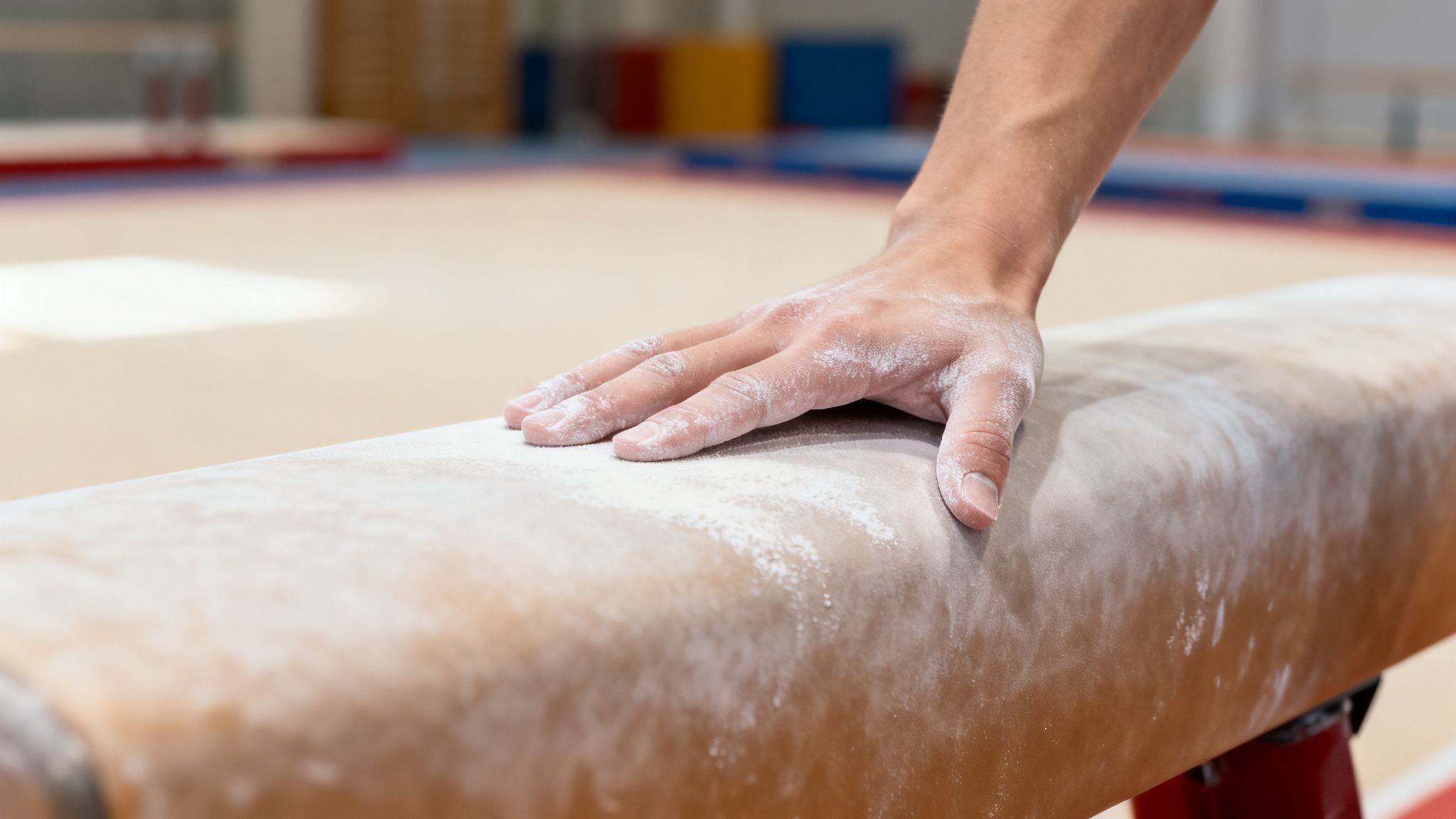
Beyond superior grip, liquid chalk for gymnastics addresses two critical areas for athletes and gym owners: hand health and equipment longevity. A gymnast's hands are their primary tool, and the constant friction from bars and rings can lead to a battle with rips and blisters. Concurrently, the apparatus represents a significant investment that requires proper maintenance.
Liquid chalk offers a solution for both. It is as much about what it prevents—skin damage and equipment degradation—as what it provides. This makes it a smart choice for any high-intensity training facility.
Creating a Protective Barrier for Your Hands
Every gymnast understands the pain of a fresh rip. While calluses are a mark of hard work, open wounds can sideline an athlete. Liquid chalk provides a significant advantage by forming a thin, uniform layer that acts as a second skin, creating a barrier between the hand and the apparatus.
This bonded layer absorbs sweat and provides grip while also taking the brunt of the friction from swings and rotations. This reduces the shearing force that causes painful skin tears.
- Reduces Direct Friction: The smooth coating minimizes the rubbing that leads to skin damage.
- Keeps Skin Drier: By managing sweat at the source, it prevents skin from becoming soft and vulnerable during long sessions.
- Less Abrasive: Unlike caked-on powder chalk, which can feel gritty, the fine layer from liquid chalk is smoother and gentler on the hands.
A gymnast's season is long. Consistent training is everything. By protecting your hands from constant abuse, you spend less time on the sidelines and more time perfecting your routines.
Preserving the Integrity of Your Equipment
The clean application of liquid chalk offers substantial benefits for the gym itself. Traditional powder chalk inevitably settles on every surface, creating a dusty film that is not just messy but can also harm equipment.
Liquid chalk’s minimal residue is a game-changer for gym maintenance. Because it adheres to the hands rather than becoming airborne, it keeps the apparatus cleaner and more hygienic.
For example, the wooden rails of uneven and parallel bars are porous. Caked-on powder chalk traps sweat and oils, which can degrade the wood's finish and structural integrity over time. Steel rings and high bars are also affected, as chalk buildup can create a slick, polished surface that is difficult to grip and clean.
EVMT Liquid Chalk helps maintain the true feel of the equipment. Gymnasts train on clean, consistent surfaces without the slick residue left by layers of old powder. It also allows gym staff to spend less time scrubbing bars and more time ensuring the facility is safe and operating smoothly.
The gymnastics equipment market was valued at $8.5 billion in 2023, with training accessories playing a key role. With proper grip being a factor in preventing slips, clean and effective solutions like liquid chalk are essential for athlete safety. You can read more about trends in the gymnastics equipment market for more context.
Using Liquid Chalk in a Competitive Setting
On the competition floor, under the judges' watch, every detail matters. The transition from practice to a meet introduces a higher level of pressure, demanding gear that is completely reliable. This is where liquid chalk for gymnastics shifts from a training convenience to a significant competitive advantage.
First, its use is widely permitted. High-quality liquid chalk, like EVMT, is accepted by major governing bodies, including USA Gymnastics and the International Gymnastics Federation (FIG). Its clean, dust-free nature helps maintain equipment to the strict standards required at major events, making it a preferred alternative to messy powder chalk.
The Strategic Advantage Under Pressure
In the fast-paced environment of a gymnastics meet, there is no time to waste. An athlete's focus between rotations should be on visualization and energy conservation, not on trips to the chalk bucket. The long-lasting formula of liquid chalk provides a clear strategic edge.
A single, proper application can deliver a secure grip that lasts through both warm-up and the competitive routine. This means less mental energy spent worrying about grip and more devoted to execution. For an athlete stepping up to the uneven bars for a critical routine, feeling a locked-in grip from the initial kip to the final dismount provides invaluable confidence.
During a high-stakes competition, the last thing an athlete should be thinking about is their grip. A dependable, long-lasting coat of liquid chalk removes that variable, allowing for 100% focus on execution and performance when it counts the most.
From Mental Prep to Flawless Execution
The psychological impact of a reliable grip cannot be overstated. When an athlete trusts their connection to the apparatus, they can attack skills with greater confidence and aggression. This is especially true for high-risk release moves or tumbling passes where any hesitation can lead to a significant deduction.
Consider these common competition scenarios where liquid chalk makes a tangible difference:
- The High-Stakes Release Move: A gymnast attempting a Tkatchev or Gienger on the uneven bars requires absolute faith that their hands will not slip on the re-catch. The consistent friction from liquid chalk provides that security.
- The Grueling Pommel Horse Routine: This event demands constant hand repositioning under fatigue. A sweat-proof grip prevents minor slips that can disrupt the rhythm of a complex sequence.
- The Final Tumbling Pass: On floor exercise, a solid hand plant is essential for generating power. Liquid chalk ensures hands do not slide during a round-off back handspring, maximizing height and control.
By eliminating the distraction of a failing grip, liquid chalk becomes a crucial part of an athlete's competition toolkit. For athletes in other sports facing similar challenges, see how liquid chalk provides a reliable grip in our guide for weightlifters.
Common Questions About Liquid Chalk for Gymnastics
Adopting new gear, even something as fundamental as chalk, naturally raises questions. When performance is at stake, every detail matters. Here are answers to the most common questions from gymnasts, parents, and coaches about using liquid chalk in a training environment.
Will Liquid Chalk Cause More Skin Rips?
No, in fact, the opposite is often true. High-quality liquid chalk for gymnastics can be gentler on the hands. It creates a smooth, thin barrier that reduces the direct friction responsible for most rips and blisters.
Caked-on powder chalk can be gritty and abrasive. A clean layer of liquid chalk absorbs sweat while mitigating the shearing forces that tear skin. Of course, no chalk can replace proper hand care. Gymnasts should always moisturize after training to keep their skin healthy and resilient.
Can I Use Liquid Chalk on Every Apparatus?
Yes. Liquid chalk is highly versatile and performs exceptionally well across all events. Its uniform coating provides a reliable grip on the wood, steel, and composite materials of the uneven bars, high bar, rings, parallel bars, and pommel horse.
A key benefit is that it does not create the thick, caked-on residue common with powder. This helps preserve the natural texture and feel of the equipment, which is critical for the tactile feedback required to execute skills precisely.
The purpose of chalk is to enhance your natural connection to the apparatus, not create a barrier. Liquid chalk forms a minimalist, high-friction layer that feels less like a coating and more like an extension of your own skin.
How Do I Remove Liquid Chalk After Training?
Removal is simple and efficient, another major advantage over stubborn powder chalk. Liquid chalk washes off quickly and cleanly with basic soap and water.
There is no need for the harsh scrubbing that can damage skin. For optimal hand health, always apply a quality hand balm or moisturizer after washing to aid recovery and prepare for the next session.
How Long Does One Application Typically Last?
Durability is where liquid chalk excels. A single, well-applied coat can last through multiple turns or even an entire rotation at a meet—significantly longer than a typical application of powder chalk.
The exact duration will vary based on factors like an athlete's sweat rate and the intensity of the routine. However, the consistent result is far less frequent reapplication. This leads to better training rhythm, sharper focus, and less time wasted at the chalk bowl.
For athletes who demand a clean, reliable, and gym-approved grip, EVMT provides a high-performance liquid chalk engineered for serious training and competition. See what a difference a flawless grip can make in your performance. Upgrade your grip with EVMT Liquid Chalk today.