


Chalk for CrossFit: Liquid Grip That Stays Put
CrossFit's official competition rules explicitly permit magnesium carbonate chalk while banning synthetic substitutes. That makes chalk a standard, regulated competition aid, not a gray area.
The practical problem appears in the box, not in the rulebook. A bar feels slick, a high-rep workout has soaked the palms, and fingers start opening before the athlete expects it. Powder chalk can solve the grip problem, but some gyms ban it because airborne dust settles on equipment and spreads through shared training spaces. EVMT Liquid Chalk offers the cleaner workaround: a magnesium-carbonate coating that dries in seconds, produces no dust, and leaves minimal residue when used correctly.
Table of Contents
- The Moment Your Grip Fails
- Liquid Chalk vs Powder and Block Chalk
- How to Apply Liquid Chalk Correctly
- The Science Behind Why Chalk Works
- Why Liquid Chalk Is Best for CrossFit Boxes
- Choosing Your Grip Solution
The Moment Your Grip Fails
The missed snatch often looks like a strength problem from across the room. The bar rises, the athlete commits, and then the fingers uncurl just before the movement is finished. Up close, the cause is usually more basic: sweat has reduced the dependable contact between skin and metal.
That failure can appear during deadlifts, pull-ups, toes-to-bar, kettlebell work, or barbell cycling. A dense session compounds the issue because the hands stay damp while the bar keeps collecting moisture, chalk, and skin residue. Once the grip becomes uncertain, the athlete starts managing the hands instead of executing the workout.
Practical rule: Grip aid should solve the moisture problem without creating a venue problem.
For years, the default answer was a shared container of loose white powder. It worked for many athletes, but it also created a visible cloud during application and reapplication. Dust settled across bars, flooring, clothing, and nearby surfaces, which is difficult to manage in a busy box or home gym.
The policy conflict
A gym may allow chalk in competition while restricting it during ordinary training. That isn't necessarily contradictory. A competition rule can define what athletes may use, while a facility policy can control dust, cleaning, ventilation, and equipment care.
CrossFit's official competition rules explicitly allow magnesium carbonate chalk and prohibit substitutes including liquid chalk, resin, rosin, sandpaper, tacky materials, adhesives, and waxes. The wording treats chalk as a regulated aid, but athletes still need to follow the specific policy of the facility hosting the workout.
The useful question isn't merely, “Is chalk allowed?” It's “Is liquid chalk allowed here?” A staff member may hear “chalk” and assume loose powder, while a dry, thin liquid application may fit a separate policy. That distinction matters in commercial gyms, boutique facilities, and shared home environments where dust is the main objection.
Liquid Chalk vs Powder and Block Chalk
The three common formats solve the same grip problem in different ways. Loose powder offers immediate coverage but can become airborne. A block reduces handling compared with loose powder, yet rubbing or breaking it still produces dust. Liquid chalk changes the application method rather than abandoning magnesium carbonate.
Liquid chalk is typically made from magnesium carbonate and alcohol. After application, the alcohol evaporates, leaving a thin, dry coating on the skin. The result is a dry surface without the same loose particles dispersing through the room.
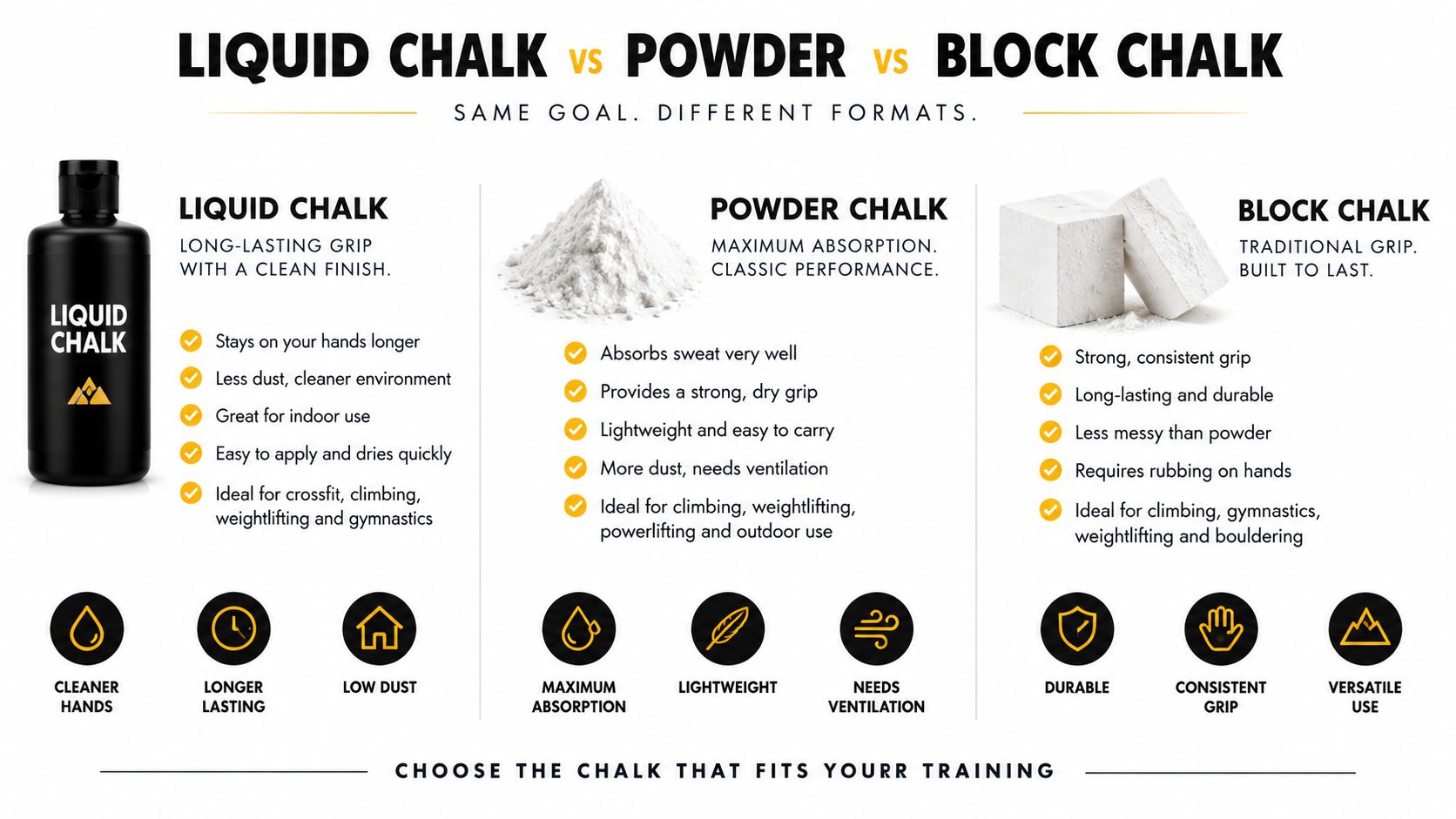
What changes in a shared gym
Powder and block chalk can be perfectly practical where the facility provides cleaning controls and permits airborne dust. They also make it easy to add more coverage between attempts. The trade-off is that every reapplication can spread particles beyond the athlete's hands.
Liquid chalk fits a stricter environment because the product is applied directly to the palms and allowed to dry before contact with the equipment. It doesn't create a powder cloud, and a properly thin application leaves minimal residue on bars and poles. It still isn't a substitute for reading the facility's policy, but it addresses the specific objection that leads many gyms to restrict loose chalk.
| Format | Main advantage | Main drawback |
|---|---|---|
| Loose powder | Fast, familiar coverage | Airborne dust and wider cleanup |
| Block chalk | Solid handling and direct application | Rubbing can still create dust |
| Liquid chalk | Thin, dry application with no dust cloud | Requires dry hands and correct application |
EVMT Liquid Chalk is a magnesium-carbonate liquid chalk intended for weightlifting, gymnastics, rock climbing, and sports, with multiple listed variants. For a CrossFit athlete, the relevant distinction is simple: coverage stays on the hands instead of becoming a loose layer across the training area.
How to Apply Liquid Chalk Correctly
Liquid chalk works best when the hands are clean and fully dry before application. If sweat is already sitting on the palms, the product can spread unevenly and feel tacky instead of forming a dry grip layer.
- Use a small amount. Dispense enough to cover the working surfaces of both hands without flooding the palms. Excess product takes longer to dry and can create a gummy feel.
- Spread it evenly. Rub the palms together, then work the coating across the fingers, fingertips, and the areas that contact the bar. The aim is a thin, continuous film, not a thick patch.
- Wait for the alcohol to evaporate. Drying takes seconds. The hands should feel dry and slightly powdery before they touch the bar, rig, rings, or other equipment.
- Apply before the set, not during the failure. A fresh coating is easier to control before the hands become wet. Reapply sparingly between efforts when the surface has clearly lost its dry feel.
The most common mistake is using too much. A heavy layer doesn't automatically create more friction. It can bunch, feel sticky, and transfer more material to the equipment. A light coat gives the skin a consistent contact surface while keeping cleanup manageable.
For a concise explanation of application and grip preparation, see this guide to liquid chalk hand grip. Once the coating dries, athletes should avoid touching clothing, phones, or other surfaces before gripping the bar. That keeps the prepared contact area cleaner and reduces unnecessary transfer.
The Science Behind Why Chalk Works
Sweat can act as a lubricant between skin and a metal surface. Magnesium carbonate helps by managing that moisture, allowing the hand to maintain more dependable contact under grip-limited conditions. The effect is not magic and it doesn't replace strength, but it can prevent moisture from becoming the first failure point.
Controlled research supports that practical observation. In a study of recreationally trained climbers, open-handed repeated pull-ups increased from 19.7 ± 4.39 without chalk to 22.8 ± 4.53 with chalk, while pinch-grip repetitions increased from 9.1 ± 4.83 to 14.4 ± 4.47. Both changes were statistically significant, with p = 0.006 for open-handed repetitions and p = 0.007 for pinch-grip repetitions, as reported in the controlled pull-up study.
Those results correspond to roughly a 15.7% improvement for open-handed pulls and a 58.2% improvement for pinch-grip pulls in that study's conditions. CrossFit movements aren't identical to the tested protocol, but the relevance is clear when repeated pulling output is limited by the hands rather than the larger muscles.
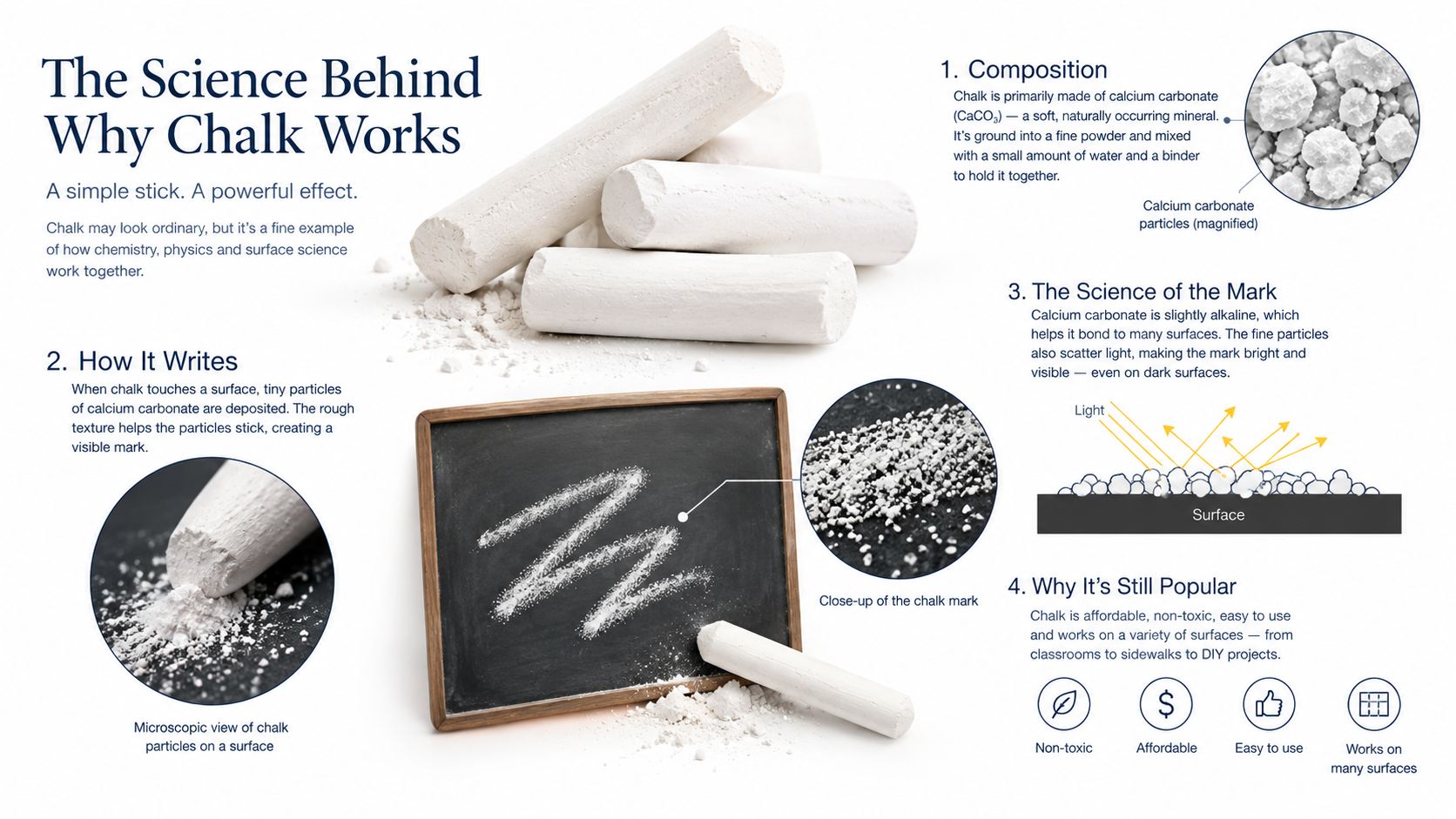
The result depends on the surface
A separate controlled study found about a 22.5% increase in repeated pulling output with magnesium carbonate compared with no chalk, with mean repetitions rising from 9.1 ± 3.1 to 11.1 ± 5.1 and a moderate effect size of 0.6 standard deviations. The findings appear in this study of repeated pull-ups.
Chalk isn't a universal friction booster. Laboratory work on rock-climbing-style finger contact found that it improved static friction more reliably on dry fingertips, while moisture and surface roughness changed the result. On some wet surfaces, chalk could even reduce friction, which is why it should be treated as a moisture-management aid, not an automatic fix for every hand and bar combination. The finger-pad friction research supports testing the application on the actual surface used in training.
For application details focused on a drying formula, the same principle applies: thin coverage and complete drying matter more than adding product.
Why Liquid Chalk Is Best for CrossFit Boxes
A CrossFit class can move from barbells to pull-up rigs and rings in minutes, with athletes sharing the same floor, equipment, and air. That makes chalk policy a practical grip issue, not a minor preference. Loose powder spreads beyond the athlete's hands, settles on bars and flooring, and increases cleanup for staff.
Liquid chalk addresses the dust problem directly. The alcohol evaporates after application, leaving magnesium carbonate on the skin instead of a loose cloud around the station. A thin coat that dries fully stays more contained during training than powder shaken from a bag.
Policy comes before preference
A box may prohibit loose powder while allowing liquid chalk because the formats create different housekeeping and air-quality concerns. Rules vary by facility, so athletes should confirm the exact product format before using it. Ask staff:
“Does this gym allow magnesium-carbonate liquid chalk, even if loose powder is prohibited?”
That question removes ambiguity. The gym still makes the final decision, and some facilities restrict every grip product or require athletes to apply chalk away from bars, rings, and other equipment. Follow the local rule rather than applying chalk covertly.
Match the coating to the contact surface
The hand is only half of the contact point. Magnesium carbonate may clog pores in some synthetic materials or make certain tacky grip surfaces feel slick. Liquid chalk can reduce loose residue on synthetic or microfiber grips, but compatibility still needs to be tested on the actual bar or apparatus.
Apply a small amount first. Let it dry, then check whether the grip feels secure during a controlled movement. If the coating changes how the material contacts steel, remove it and use the approved alternative.
A practical CrossFit setup depends on the box and the equipment:
- Powder permitted: Use the format that gives reliable coverage without loading the bar with excess chalk.
- Powder banned, liquid permitted: Apply a thin liquid layer and wait until it is completely dry.
- All chalk restricted: Respect the rule and train without it.
- Synthetic grip material: Test compatibility before covering the full surface.
Liquid chalk is often the workable compromise for strict boxes. It can support grip on sweaty hands while limiting airborne dust, but only when the facility permits it and the coating suits the contact surface. The right choice protects both performance and shared equipment.
Choosing Your Grip Solution
The decision starts with the venue, then moves to the athlete's hands and contact surfaces. A product that works in a private training room may be unsuitable in a commercial gym where dust is prohibited. A climber or athlete using synthetic grip material also needs to evaluate how the coating feels on that material rather than assuming every chalk format behaves alike.
A straightforward decision guide looks like this:
- Strict commercial gym: Ask specifically about liquid chalk. If it's permitted, a fast-drying liquid format is usually the most practical dust-control option.
- Home gym: Powder or block chalk may be acceptable if airborne dust and cleanup aren't concerns. Liquid chalk remains useful when the room shares air with living spaces or stored equipment.
- Competition or travel: A sealed liquid bottle is portable and avoids a loose powder spill inside a training bag. The event's own rules still control what athletes may use.
- Climbing or bouldering: Liquid chalk isn't necessarily a replacement for loose chalk. Apply EVMT Liquid Chalk to dry hands as a base layer, let it dry fully, then add powder chalk as normal. The added layer can last through more moves before re-chalking, which is particularly useful on long sport routes, multi-pitch climbing, and humid gyms. Short boulder problems may offer less opportunity to benefit.
- Very sweaty hands: Apply before the palms become wet, use a thin coat, and reapply only when the dry feel has clearly faded.
The material decision deserves equal attention. Guidance on hand grip aid can help athletes think about grip as a combination of moisture, surface, policy, and application rather than as a simple chalk-versus-no-chalk choice.
A CrossFit athlete doesn't need the dust cloud to get dependable hand contact. The practical next step is to check the box's exact rule, test a small amount of liquid chalk on dry hands, and confirm that the coating feels dry rather than sticky before the next grip-limited workout.
Evermost LLC offers EVMT Liquid Chalk for athletes who need a dry, no-dust grip aid for CrossFit, lifting, climbing, gymnastics, or other grip-intensive training. Visit Evermost LLC to choose a liquid chalk format that fits the athlete's venue, skin, and training routine.