


Hand Grip Aid Compared: Chalk, Straps, Gloves, and Tape
A deadlift slips at lockout, a climber peels off a hold, or a gymnast loses the bar just when control matters most. The usual reaction is to buy the most popular hand grip aid available, then discover that the product solves a different problem.
The right choice depends on sweat, sport, skin, surface, and venue rules. Chalk improves contact friction. Straps and hooks transfer load around the hand. Gloves and tape protect skin or joints. Choosing well means matching the aid to the failure, not treating every grip problem as the same.
Table of Contents
- Why Hand Grip Aid Is a Decision, Not a Default
- How Each Hand Grip Aid Actually Works
- Side by Side Comparison of the Main Grip Aids
- Matching the Right Aid to Your Sport and Hands
- Application, Layering, and Removal Without Skin Damage
- Gym Rules, Dust, and Why Liquid Chalk Wins on Policy
- Buying Guide for Athletes and Gym Owners
Why Hand Grip Aid Is a Decision, Not a Default
A lifter whose hands are sweating through a heavy pull has a moisture problem. A powerlifter whose fingers cannot hold the load at the limit may have a grip endurance problem. A climber falling from a small hold may need better friction, while a gymnast with torn palms may need protection instead. Those situations can look identical from the outside, but they need different solutions.
The common mistake is using mechanical assistance when friction would have solved the issue, or using chalk when the hand cannot safely support the load. Straps and hooks can help transfer force, but they don't make the skin grip the bar better. Gloves can reduce direct contact and protect calluses, but they may dull tactile feedback. Tape can support irritated fingers, yet it isn't a substitute for a friction enhancer.
The three jobs of a grip aid
Most products fall into three practical categories:
- Friction enhancers: Powder chalk, chalk balls, and liquid chalk manage surface moisture and improve skin-to-surface contact.
- Mechanical assists: Straps and hooks reduce the amount of load the fingers must hold directly.
- Protective barriers: Gloves and athletic tape limit abrasion, skin shear, or irritation.
Liquid chalk sits at the front of the decision for many shared gyms because it addresses sweaty hands without creating a powder cloud. EVMT Liquid Chalk is a magnesium-carbonate liquid chalk intended for weightlifting, gymnastics, rock climbing, and sports, making it relevant when the priority is cleaner friction rather than load bypass.
Practical rule: If the hand is slipping because it's wet, start with a friction aid. If the hand is failing because the load exceeds its holding capacity, consider mechanical assistance.
The rest of the choice becomes easier once the athlete identifies the failure point. Climbers need contact with holds. Lifters need a reliable bar interface. Pole athletes need controlled contact without contaminating the pole. Home-gym owners may need an aid that won't spread through the room or violate a shared-space rule.
How Each Hand Grip Aid Actually Works
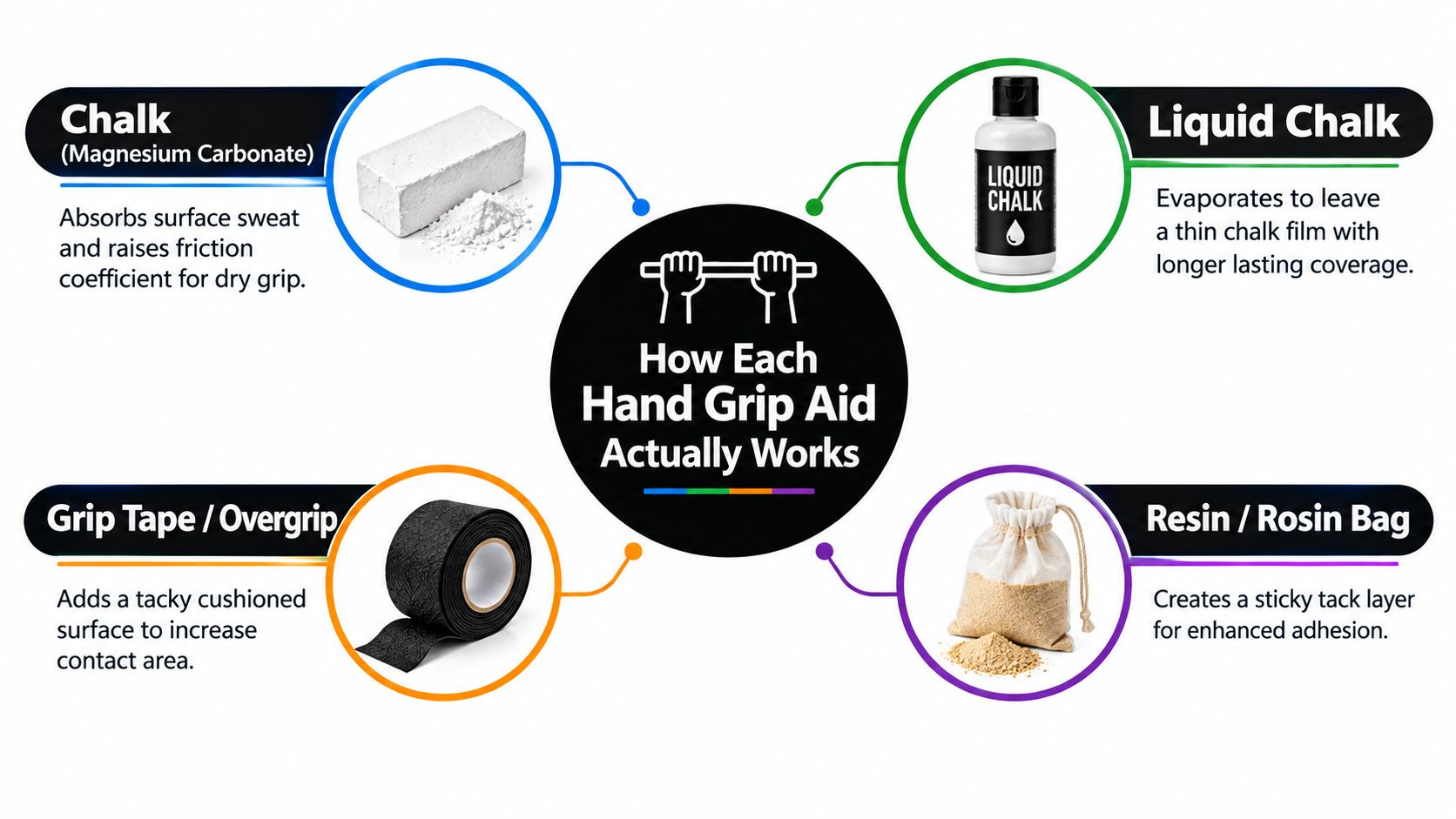
Your hands are damp, but the bar is still secure. In that situation, magnesium carbonate absorbs surface moisture and helps increase friction at the finger-pad contact point. The surface still decides the result. Independent testing found that chalk increased finger-hold friction by 18.7% on limestone and 21.6% on sandstone (natural-rock friction testing). Separate testing found that powdered chalk and rosin could reduce friction on dry steel, while some grip enhancers performed better in damp or wet conditions (independent grip-enhancer testing). Choose for the surface, not by habit.
Liquid chalk uses the same magnesium-carbonate principle through a different delivery system. Its alcohol carrier evaporates in about 10 to 30 seconds, leaving a thin chalk layer on the hands (liquid chalk composition and drying guidance). That film provides a controlled base coat without loose powder immediately dropping from the hands. For shared gyms, it is the clean, dust-free default when liquid products are permitted.
Friction versus force transfer
Loose chalk is quick to refresh during a long session. Chalk balls release powder more gradually, giving the athlete tighter control over application. Liquid chalk requires more deliberate timing: apply a thin coat, let it dry, then start the work. That extra step pays off where airborne dust or gym policy is a concern.
Straps change the job entirely. A strap loops around the wrist and bar, allowing the wrist and strap material to carry more load as the fingers fatigue. Hooks use a rigid hook, commonly made from metal or plastic, to transfer load around the hand. Neither increases skin friction directly, so neither solves a sweaty palm.
Gloves put leather, synthetic material, or silicone between the skin and the bar. They can reduce abrasion, but the added layer changes tactile feedback and may shift during a set. Athletic tape wraps fingers or joints to limit skin shear and support vulnerable areas. Use tape for protection, not as a primary friction enhancer.
A 2018 controlled study of nine experienced male climbers recorded higher open-hand repetitions with chalk, 22.8 ± 4.53 compared with 19.7 ± 4.39 without chalk. Pinch-grip repetitions also rose, 14.4 ± 4.47 compared with 9.1 ± 4.83, with statistically significant differences (controlled climbing grip study). Apply only what the surface needs, then keep residue off shared equipment as part of proper gym equipment care.
Side by Side Comparison of the Main Grip Aids
A useful comparison must separate friction, force support, cleanliness, skin effect, and technique cost. No product wins every category. The correct option depends on what the athlete needs the hand to do.
| Aid | Friction | Sweat Handling | Mess | Skin Impact | Longevity Per Use | Learning Cost |
|---|---|---|---|---|---|---|
| Liquid chalk | High when correctly applied | Strong on damp hands, condition-dependent | Low | Can dry skin | Strong base coverage | Low |
| Loose chalk | High on suitable surfaces | Strong with frequent refreshes | High | Can dry skin | Shorter between refreshes | Low |
| Chalk ball | Moderate to high | Controlled powder coverage | Moderate | Can dry skin | Moderate | Low |
| Lifting straps | No direct friction increase | Doesn't manage sweat | Low | May press at wrist | Strong during attached work | Moderate |
| Gloves | Variable, material-dependent | Creates a barrier, may trap moisture | Low | Can reduce abrasion | Moderate | Moderate |
| Athletic tape | Not a primary friction aid | Limited sweat effect | Low | Supports skin and joints | Moderate | Moderate |
Liquid chalk wins when the venue limits airborne dust and the athlete wants a repeatable coat. Loose chalk wins for climbers who need quick reapplication during a long session. Chalk balls provide a middle ground for controlled powder use, but they still leave loose chalk in the environment.
Straps and hooks rank highest for pure load support, not skin friction. They also require a reliable setup habit, because a poorly secured attachment can interfere with a safe release. Gloves protect hands but reduce direct contact, while tape belongs around a vulnerable finger or joint rather than across every grip surface.
Three fast decisions
- Short metcon: Liquid chalk is the cleanest first choice for sweaty hands and fast transitions.
- Heavy compound lift: Liquid chalk supports the bar contact, while straps can be reserved for grip-limited heavy work.
- Outdoor sport climb: Liquid chalk under loose chalk gives a friction base, while loose chalk remains the practical tool for route-by-route refreshes.
The point isn't to build a bag full of every aid. It's to identify whether the session needs more friction, more load transfer, or more protection.
Matching the Right Aid to Your Sport and Hands
Sport changes the answer because each activity asks the hand to interact with a different surface. A barbell rewards secure contact and sweat control. A climbing hold demands precise fingertip friction. A pole or gymnastics apparatus adds venue rules and skin-management concerns.
| Athlete or Skin Profile | Primary Aid | Secondary Aid | Avoid |
|---|---|---|---|
| Powerlifter or heavy lifter | Liquid chalk | Straps for grip-limited heavy work | Gloves when tactile feedback matters |
| CrossFit athlete | Liquid chalk | Straps for selected heavy sets | Excess powder in shared gyms |
| Sport climber or boulderer | Liquid chalk base plus powder chalk | Chalk ball for refreshes | Gloves on small holds |
| Pole athlete | Sparingly applied liquid chalk where permitted | Clean skin and venue-approved products | Heavy residue or excessive application |
| Gymnast or cheer athlete | Venue-approved chalk | Tape for vulnerable skin areas | Over-chalking apparatus |
| Sweaty-palm athlete | Liquid chalk | Powder chalk where allowed | Applying aid over wet hands |
| Sensitive or cracked skin | Pause until skin is assessed, then use only tolerated products | Mechanical assistance when appropriate | Powder on irritated or broken skin |
Powerlifters should start with liquid chalk when sweat is the limiting factor. Straps make sense for selected heavy pulls when the load exceeds the hand's ability to hold it, but daily dependence can hide the underlying grip limitation. Hooks provide similar load transfer and should be treated as a specialized mechanical option, not a sweat solution.
CrossFit athletes often move between pull-ups, rope climbs, and barbell work. Liquid chalk fits that mixed environment because it supports contact without forcing powder into every transition. Athletes comparing hand protection with chalk can also review CrossFit and gloves, especially when abrasion rather than slippage is the main concern.
Climbing, pole, and apparatus work
Climbers generally shouldn't abandon powder chalk. The better approach is a liquid base layer, applied to dry hands before the session, allowed to set fully, then covered with powder chalk as normal. That layered approach creates a longer-lasting coat and can reduce how often the climber needs to re-chalk, especially on long routes, multi-pitch climbing, and humid indoor walls.
Pole and gymnastics athletes need stricter control. Liquid chalk can be useful when the studio or venue permits it, but too much product can change the surface and leave unwanted residue. Gymnasts and cheer athletes with recurring palm irritation should prioritize approved protective solutions and skin recovery over adding more chalk.
People with eczema, psoriasis, or cracked skin should stop treating the problem as a basic grip failure. Powder can worsen dryness, and alcohol-based products may sting or irritate damaged skin. Skin should heal before normal use resumes, with a clinician consulted when symptoms persist.
Application, Layering, and Removal Without Skin Damage
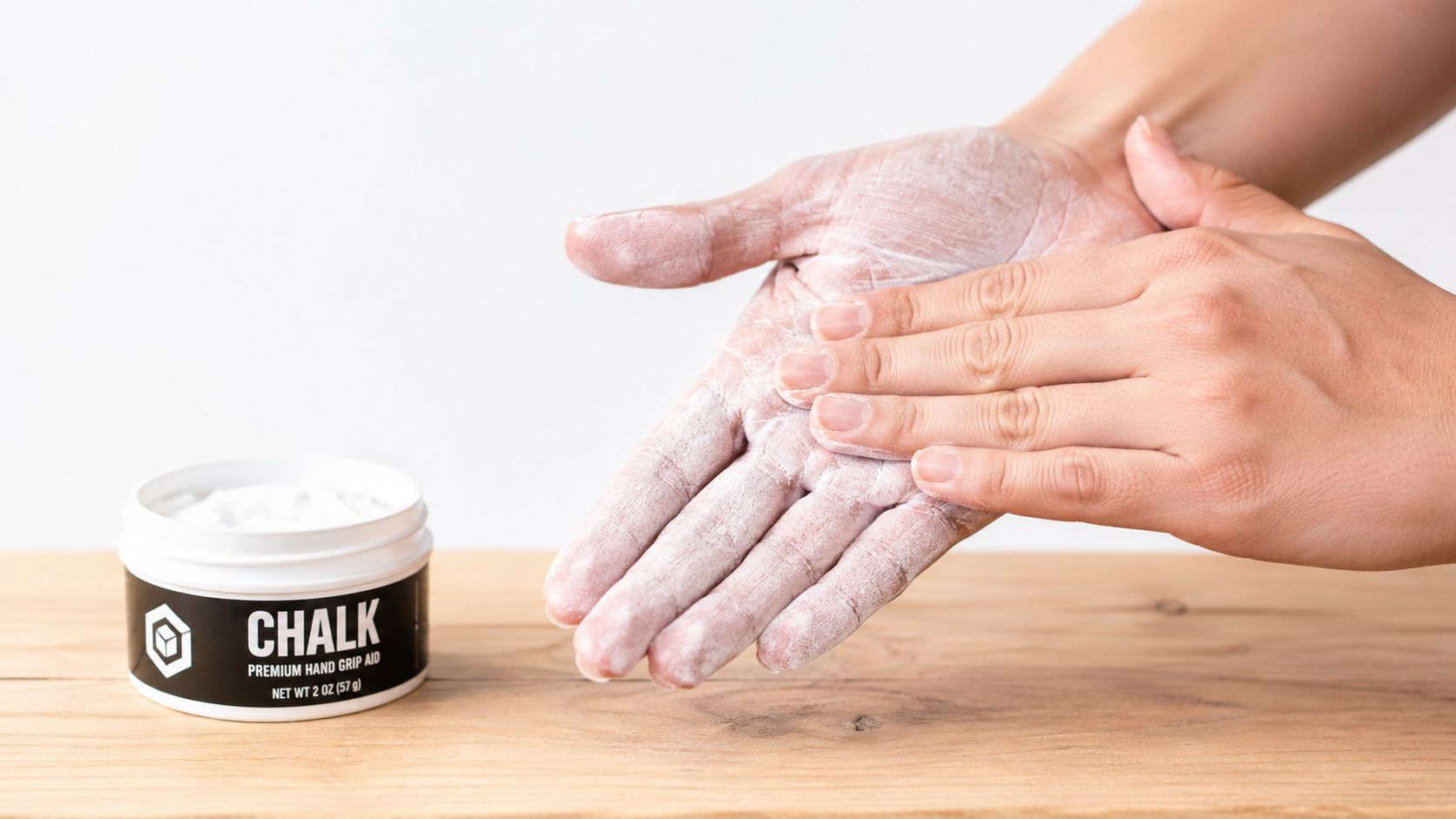
Grip aids fail when athletes apply them to damp skin, pile on too much product, or grab equipment before the coating sets. Start with clean, completely dry hands. The right application depends on the aid: liquid chalk needs an even film, powder needs controlled refreshes, and straps, gloves, grips, and tape must support contact without creating new pressure points.
Spread liquid chalk in a single thin pass over the working areas of the palms and fingers. Wait until the surface feels dry and matte before touching a bar, hold, pole, or apparatus. Drying time changes with the formula and conditions, so judge the finish by feel rather than rushing the next movement.
A cleaner application sequence
- Start dry: Wash and dry your hands before applying chalk. Wet palms dilute the coating and make grip inconsistent.
- Use less first: Apply a thin coat. A thick layer can feel slick and does not guarantee more friction.
- Let liquid chalk set: Climbers should allow the primer to dry fully before moving onto the wall. Half-dry liquid chalk can perform worse than loose chalk. Follow climbing chalk application guidance for the application sequence.
- Layer for climbing: Once the liquid layer is dry, dust powder chalk over it. This preserves the climber's usual routine while giving the base coat more staying power.
- Refresh selectively: Add powder only where contact has faded. Recoating the whole hand creates unnecessary buildup and dries the skin faster.
Secure straps so the loose end cannot catch on a knurled bar. Gloves and gymnastics grips should fit snugly without pinching the webbing between the fingers. Apply tape to the intended finger or joint area, while leaving circulation unrestricted.
After training, use lukewarm water and mild soap to remove chalk without scrubbing aggressively. A basic moisturizer or hand balm can restore comfort. Athletes who need topical relief anywhere can keep a suitable recovery product available, but cracked or irritated skin needs careful assessment. For cleanup steps, follow this guide on how to remove liquid chalk. Stop adding grip aid when the skin is the problem, and let damaged areas recover before normal use resumes.
Gym Rules, Dust, and Why Liquid Chalk Wins on Policy
Gym policy often decides the purchase before grip performance does. Powder chalk releases airborne particles that can settle on floors, ventilation components, and equipment. Liquid chalk suspends magnesium carbonate in alcohol, then leaves a dry film on the hand after the carrier evaporates, so it doesn't spread through the room in the same way.
One commercial-gym market source reports that about 80% of the 50 largest U.S. commercial gym chains allow liquid chalk, while 30% allow powder chalk and 20% ban all chalk products. Those figures show why liquid chalk often survives a front-desk policy where loose powder doesn't. Athletes should still check the specific venue, because a chain-wide pattern isn't permission for every individual location.
Why shared spaces prefer controlled products
For a commercial gym, fewer airborne particles mean fewer complaints and less residue on neighboring equipment. For a home-gym owner in an apartment or shared room, the same advantage reduces conflict with roommates and neighbors. The benefit isn't only aesthetic. It's practical compliance.
Pole studios often recommend applying liquid chalk sparingly and waiting a few seconds before using the pole. Some studios describe liquid products as less messy because they leave less residue on poles and mats (pole grip guidance).
Travel also favors a sealed liquid bottle over loose powder that can spill through a bag. The strongest default for a shared or dust-sensitive space is therefore simple: use a thin liquid coat, allow it to dry, and clean any visible residue after the session. Athletes interested in the lifting-specific use case can review liquid chalk for powerlifting.
Buying Guide for Athletes and Gym Owners
Athletes don't need every grip product. They need a primary aid that matches the failure, plus a secondary option for the sessions where the problem changes.
For most lifters, CrossFit athletes, gymnasts, pole athletes, and home-gym owners, a magnesium-carbonate liquid chalk is the sensible first purchase. EVMT Liquid Chalk is available as a product line with 11 variants across its listed options, so buyers should choose based on the intended activity and application preference rather than collecting multiple aids without a clear reason.
Climbers should keep powder chalk in the routine and add liquid chalk underneath it as a primer. That preserves fast powder refreshes while giving the hand a base layer that can last through more moves before re-chalking. Short bouldering attempts may not justify the extra step, but long sport routes, multi-pitch climbing, and humid gyms can make the layer worthwhile.
Buying priorities
- For lifters: Buy liquid chalk first. Add straps only for grip-limited heavy pulls, not every working set.
- For climbers: Pair liquid chalk with the existing powder chalk supply. The liquid product is the base, not a replacement.
- For home gyms: Choose a dust-free liquid format that won't spread across the room.
- For studios: Stock or permit only products that match the venue's surface-care rules.
- For sensitive skin: Check the ingredient list and stop use if irritation appears. Broken skin needs recovery, not heavier application.
Gym owners should lead with liquid chalk when members want friction without airborne dust. Secondary stock can address members who need mechanical assistance or skin protection, but the core offer should remain easy to apply, easy to clean, and compatible with the facility's rules.
| User Type | Buy First | Add Later | Skip |
|---|---|---|---|
| Commercial gym athlete | Liquid chalk | Straps for selected heavy work | Loose powder where restricted |
| Home-gym owner | Liquid chalk | Powder only in a contained area, if permitted | Dust-producing routines |
| Indoor climber | Liquid chalk plus existing powder | Chalk ball for controlled refreshes | Gloves on precision holds |
| Gym owner | Liquid chalk for approved use | Tape or protective options | Uncontrolled powder stock |
| Heavy pull specialist | Liquid chalk | Straps for limit sets | Neoprene straps that stretch under load |
Avoid scented chalk, alcohol-based grip lotions that dry the skin, and stretchy straps that can shift under load. The buyer's goal is a predictable hand-to-surface interface, not a crowded equipment bag.
Evermost LLC offers EVMT Liquid Chalk for athletes who need cleaner grip across lifting, climbing, gymnastics, pole, and other grip-intensive sessions. Visit Evermost LLC to choose a liquid chalk option that fits the athlete's sport, sweat level, and venue rules.