


Liquid Chalk Hand Grip: Drying Time, Use, and Sport Tips
A deadlift is halfway up when a sweaty palm starts to slide. The lifter saves the attempt, but the bar has already exposed the problem: strength isn't the only limit when moisture sits between skin and steel. The same thing happens to a climber near the top of a boulder problem, when a slick fingertip loses purchase and forearm tension disappears.
That failure happens at the contact point. Sweat creates a thin liquid layer between the hand and the surface, reducing the clean friction needed to transmit force. Loose chalk can help, but it may rub away, spread through an indoor space, or fail to stay where the hand needs it most.
Liquid chalk hand grip addresses that specific problem by creating a dry, bonded layer on the skin. It can suit lifters, climbers, gymnasts, pole athletes, and anyone training in a venue that restricts powder chalk. For climbers, the most useful approach usually isn't replacement. It's a layered system, with liquid chalk underneath and loose chalk added over it when needed.
Table of Contents
- The Moment Grip Fails and Why It Matters
- How Liquid Chalk Actually Works on Your Skin
- Applying Liquid Chalk for Maximum Bar and Hold Contact
- Liquid Chalk vs Powder Chalk, Chalk Balls, and Grip Aids
- Sport-Specific Recommendations for Lifters, Climbers, and More
- Troubleshooting Common Liquid Chalk Problems
- Choosing the Right Liquid Chalk for Your Training
The Moment Grip Fails and Why It Matters
A lifter setting up for a heavy pull often notices the warning before the slip. The palm feels warm, the fingers start to open, and the bar seems to roll forward instead of staying fixed against the hand. A quick dusting of powder may restore contact, but sweat can turn that surface layer into a short-lived solution.
A climber experiences the same failure differently. Three moves from the finish, the fingertips feel polished rather than dry. A small crimp no longer accepts pressure cleanly, so the climber squeezes harder, burns through forearm tension, and loses the movement that was previously available.
What changes at the contact point
Skin and equipment need close, stable contact to exchange force. Sweat interrupts that contact with moisture, while repeated movement pushes loose chalk away from the areas carrying the load. The result isn't just “less chalk.” It's a less predictable interface between hand and bar, hold, pole, or apparatus.
Liquid chalk is designed for this exact interface. Its magnesium carbonate stays on the skin after the carrier evaporates, forming a dry film that can reduce the immediate effect of moisture. A sports-performance assessment found that liquid chalk didn't meaningfully change measured finger moisture and didn't improve grip on steel compared with no treatment, so it shouldn't be treated as magic. Its practical value depends on full drying, adequate coverage, and the surface being used. The assessment of liquid chalk and grip on steel supports a more careful conclusion than broad claims of universal superiority.
Grip-coach rule: Chalk supports contact. It can't compensate for wet hands, poor coverage, or a surface that doesn't suit the formula.
The rest of the decision comes down to context. A powerlifter may want a clean, fast-drying coat before a sweaty session. A climber may want a primer that helps loose chalk remain useful for more moves. Someone training in a humid gym may value low airborne dust and easier cleanup as much as the grip itself.
How Liquid Chalk Actually Works on Your Skin
Liquid chalk is best understood as a microscopic sponge carried by an evaporating liquid. The solid part is magnesium carbonate, the same core material used in traditional chalk. The carrier is alcohol, commonly isopropyl alcohol, which spreads the particles across the skin before evaporating.
That carrier gives the formula access to the fine texture of the palm and fingers. Once the alcohol disappears, the magnesium carbonate remains as a thin, dry film rather than a loose pile of powder. Common guidance places evaporation at roughly 10 to 30 seconds, depending on airflow and humidity, while strength-training guidance reports drying in roughly 8 to 10 seconds at room temperature. Technical guidance on liquid chalk drying and application and strength-training testing of liquid chalk both point to the same practical instruction: wait until the hands feel fully dry before touching equipment.
Why the film can help
The film gives sweat another layer to pass through before it reaches the contact surface. It also stays attached to the skin more effectively than a loose dusting during repeated movement. That's why liquid chalk can feel especially useful in enclosed training spaces, where loose chalk creates airborne dust and cleanup problems.
The benefit has a limit. The film has a fixed capacity for handling moisture. A very sweaty athlete can eventually overwhelm it, just as repeated rubbing can wear it away. Reapplication should follow the hand's condition, not a promise that one coat will last indefinitely.
EVMT Liquid Chalk uses magnesium carbonate in a fast-drying liquid format for sports including weightlifting, gymnastics, rock climbing, and other grip-intensive activities. The product is available through EVMT Liquid Chalk, with multiple listed variants.
Why humidity changes the result
Humidity makes loose chalk harder to manage because moisture can quickly consume the dry feeling on the skin. A bonded film gives the athlete a more controlled starting layer, although it still needs enough time to set. A closer look at liquid chalk's drying formula can help athletes understand why carrier choice and drying conditions affect the final feel.
Applying Liquid Chalk for Maximum Bar and Hold Contact
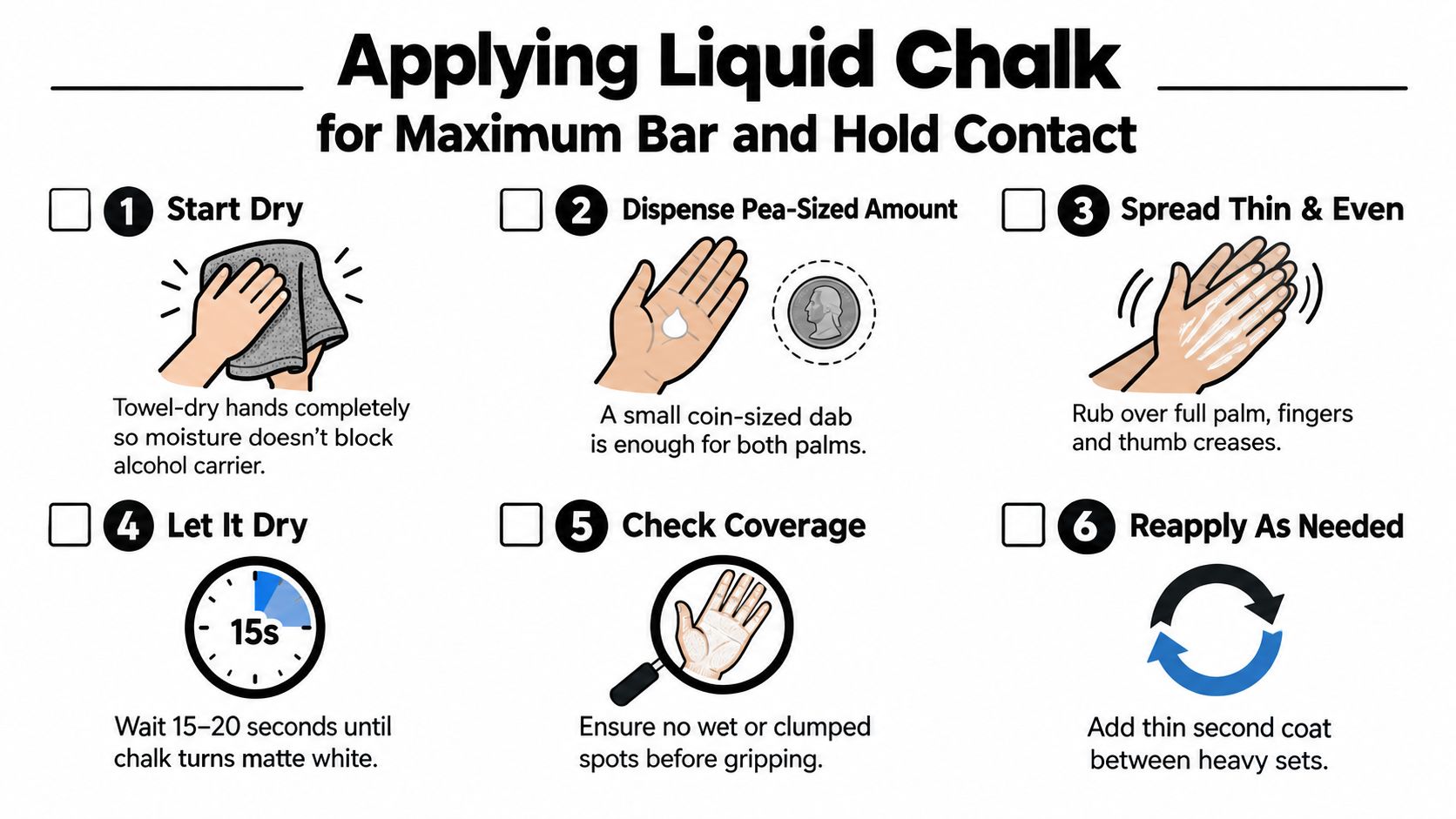
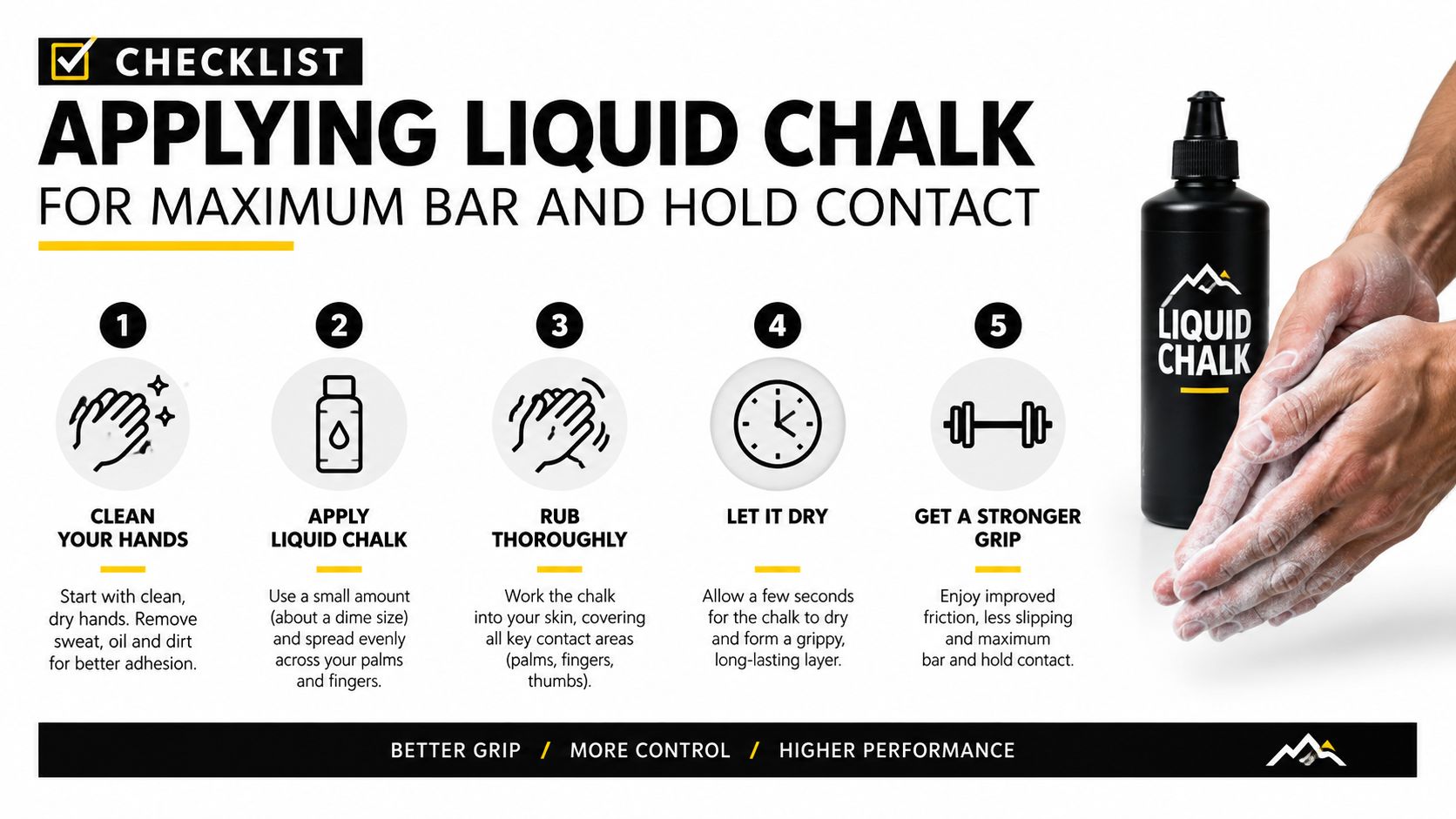
Application starts before the bottle opens. Hands should be dry, or towel-dried completely, because surface moisture interferes with how the alcohol spreads the chalk. Lotion and oil can create the same problem by leaving a slick layer between the skin and the formula.
Use a small amount, roughly pea-sized to nickel-sized per palm. The goal is coverage, not thickness. Rub the chalk over the palm, fingers, thumb, and the creases that meet the bar, hold, pole, or apparatus.
The correct drying check
Keep the hands open while the coat dries. In still air, full drying commonly takes 15 to 30 seconds, and cool or humid conditions can extend that window. The surface should feel dry and matte, with no wet patches, clumps, or tacky areas.
A thick glob isn't stronger. It's more likely to crack, flake, or transfer to equipment. A thin, even film gives the hand a more consistent surface and leaves less material available to rub onto a bar or hold.
Practical rule: If the hands still feel wet, the application isn't finished.
A simple pre-set routine
- Dry the hands. Remove sweat, lotion, and visible moisture.
- Apply a small amount. Start with less than seems necessary.
- Cover contact zones. Work the product into fingers, thumb creases, and palm lines.
- Wait for the finish. Don't grip equipment while the formula is still wet.
- Test the feel. The hand should feel dry, not sticky or heavily coated.
- Reapply by condition. Add a thin coat when sweat or worn coverage returns.
For venue-specific considerations, guidance on using liquid chalk in gyms provides a useful reference point. Commercial gyms often prefer formulas that dry cleanly and don't create a visible cloud during application.
Liquid Chalk vs Powder Chalk, Chalk Balls, and Grip Aids
Athletes often ask which option creates the strongest grip. A better question is which option matches the surface, sweat level, venue rule, and desired feel.
Loose powder is fast and tactile. A climber can add a small amount between attempts, and a lifter can refresh a palm immediately. Its disadvantages are airborne dust, visible transfer, and the need for more frequent touch-ups during long or sweaty work.
Chalk balls sit between loose powder and liquid chalk. They control dispensing better than grabbing a handful of powder, but they still release dry particles and don't create the same bonded starting film. Resin or tacky grip aids belong to a different category. They increase tack or friction through stickiness rather than managing sweat with a magnesium-carbonate layer, and they may not suit every venue or skin type.
| Grip Option | Mess Level | Durability | Gym-Friendly | Best For |
|---|---|---|---|---|
| Liquid chalk | Low airborne mess when fully dry | A bonded coat can last through repeated movement, but sweat and rubbing eventually wear it down | Often accepted where loose chalk isn't | Sweaty hands, indoor training, clean application |
| Powder chalk | High airborne mess during application | Easy to refresh, but the surface layer can rub away | Restricted in some gyms and venues | Fast touch-ups and familiar tactile feedback |
| Chalk ball | Lower mess than loose powder | Moderate, with controlled release | Depends on the venue rule | Athletes who want powder with less spill |
| Tacky grip aid | Little loose dust, but possible sticky transfer | Can feel durable while tack remains | Rules vary widely | Situations needing tack rather than dry grip |
| Grip gloves | No chalk dust from the glove itself | Depends on fit, wear, and material | Usually venue-dependent | Athletes who prefer a covered hand |
Liquid chalk's strongest position is as a clean base layer. It can provide a more stable starting surface, while powder remains more convenient for immediate, precise reapplication. The trade-off is that liquid chalk must dry first, and some athletes prefer the direct texture of loose chalk on small climbing holds.
Sport-Specific Recommendations for Lifters, Climbers, and More
The right liquid chalk routine changes with the sport. A barbell athlete usually wants broad palm coverage and a fast setup. A climber often wants a foundation that works with an existing powder-chalk habit. A pole athlete may care about controlled dryness without leaving a visible coating on the apparatus.
Weightlifting and powerlifting
For deadlifts, rows, and other bar movements, a thin coat across the palm and fingers can help when sweat makes the bar roll. The hand should be dry before application, and the lifter should wait until the film has set before taking the bar.
Clean and snatch-style grips require individual testing. Some lifters prefer the feel of powder for a fast, dry surface, while others find a liquid layer useful when the hands sweat heavily. Liquid chalk shouldn't be applied so thickly that the palm feels slick or coated.
Climbing and bouldering
Climbers who already use powder chalk don't need to abandon it. The most practical system is:
- Start with dry hands.
- Apply EVMT Liquid Chalk as a thin base layer.
- Let the film dry fully.
- Add loose chalk over it as normal.
- Re-chalk selectively between attempts or routes.
The liquid layer acts as a primer. It creates another layer of grip, so the coat can last through more moves before re-chalking, and sweat has to work through two layers instead of one. That can mean fewer trips to the bag during a long sport route, multi-pitch climb, or humid indoor session. Short boulder problems may not benefit as much, especially when quick powder touch-ups already suit the climber.
Climbing education also recognizes this hybrid approach, with liquid chalk guidance for climbing describing the base-layer use rather than treating liquid chalk as a forced replacement for loose chalk.
Gymnastics and cheer
Bar work and tumbling demand a balance between grip and skin feel. A light coat can support dry contact, but athletes should test compatibility with the hand coverings and grips used in their discipline. Over-application can make the hands feel less responsive and may contribute to dryness.
Pole fitness and CrossFit
Pole athletes often need targeted coverage rather than a thick coating across every part of the hand. Liquid chalk can suit sweat-heavy sessions because the bonded film stays more controlled than loose powder and doesn't spread through the venue in the same way.
CrossFit athletes move between bars, holds, and other stations, so a clean application matters. Liquid chalk can be useful before a mixed-modal session, with a thin reapplication when sweat has clearly returned.
Troubleshooting Common Liquid Chalk Problems
Most complaints about liquid chalk trace back to preparation or quantity. The formula may be suitable, but the hand was damp, the coat was too thick, or the athlete touched equipment before drying finished.
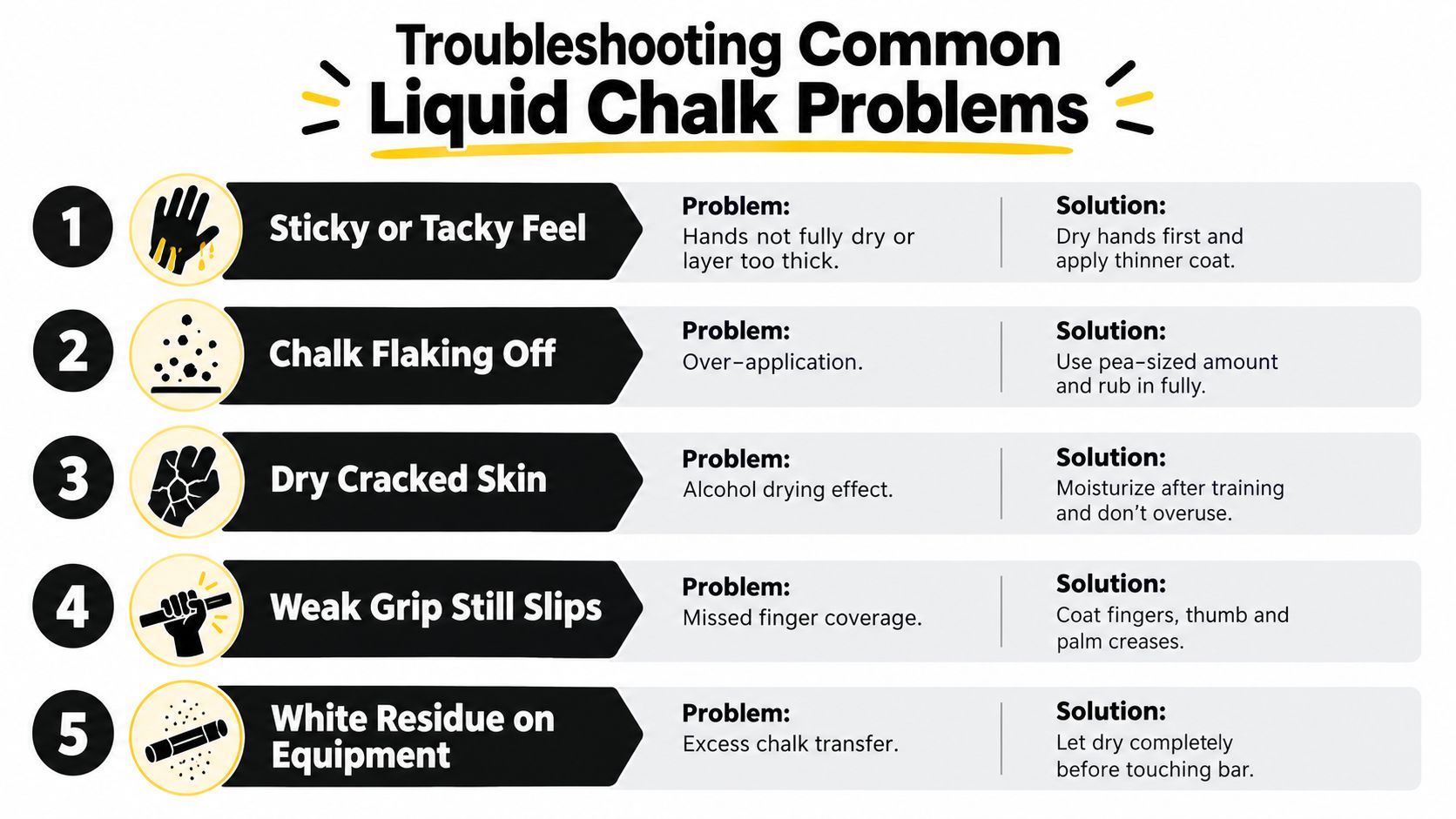
Sticky or tacky hands
Sticky feeling usually means the hands weren't fully dry or the layer was too heavy. Wipe the hands clean, allow them to air-dry, and apply a thinner coat.
Patchy coverage or flaking
Leftover lotion and skin oils can prevent even bonding. Wash the hands and start again with clean, dry skin rather than adding more chalk over the patchy areas.
Cracking in the palms
Cracks can result from over-application or flexing the hands before the film sets. Keep the fingers relaxed and the palms open during drying.
Residue on bars or holds
White transfer usually signals excess product or contact before the coat dried. Wipe the equipment with a dry cloth, then use less product next time and wait longer before gripping.
Slow drying in humid air
Humidity can slow evaporation. Rub the hands together briskly to spread the film evenly, then give the coat additional air time. A small fan can help in a fixed training space, but it doesn't replace complete drying.
Dry or irritated skin
Alcohol can contribute to skin dryness, while repeated chalk use can strip natural oils and increase friction-related skin stress. Climbing skin guidance recommends treating skin management as part of the grip decision, and notes that some climbers use liquid chalk as a base before adding loose chalk selectively. Advice on chalk and skin management is particularly relevant for athletes who already experience cracking or sensitivity.
At the end of training, soap and water are generally enough to remove liquid chalk. A scrub brush isn't necessary, and aggressive scrubbing can add unnecessary irritation.
Choosing the Right Liquid Chalk for Your Training
A buying decision should start with the hand problem, not the label. Athletes with sweaty hands need a formula that spreads evenly and forms a stable dry layer. Climbers who already carry powder chalk should look for a thin primer that works underneath it. Gymnasts, cheer athletes, and pole users may prioritize clean transfer and a predictable feel on shared apparatus.
Check the magnesium-carbonate content, because the solid chalk is responsible for the dry film. Examine the alcohol carrier, since carrier quality affects drying speed and skin feel. Added binders or rosins may extend adhesion, but they can also alter texture and irritate sensitive skin, so transparent ingredient information matters.
Bottle format affects how easily the product fits a training bag or competition routine. Portable packaging suits travel and venue checks, while a larger bottle can make sense for frequent home-gym use. The category includes formats such as 50 ml and 250 ml, while one independent guide describes a typical 200 ml bottle sold for around 10 euros. Packaging and format guidance for liquid chalk provides that market context.
EVMT Liquid Chalk fits the core use case for athletes seeking magnesium-carbonate liquid chalk that dries in seconds, creates no dust during application, and leaves no residue on bars or poles once properly dry. It can serve as a direct grip option for lifting and pole work, or as a primer beneath powder chalk for climbing.
Evermost LLC offers EVMT Liquid Chalk for weightlifting, climbing, gymnastics, cheer, pole fitness, and other sweat-heavy grip work, with single bottles and multi-packs available through its store. Athletes can use Evermost LLC to choose a clean liquid chalk routine for their gym, venue, or next climbing session.