


The Best Liquid Chalk for Weightlifting: A Performance Guide for Serious Lifters
The right liquid chalk for weightlifting is a simple, effective tool: it dries fast, resists sweat, and leaves almost no trace. It’s engineered to create a rock-solid grip without the mess of traditional chalk powder. A high-performance formula like EVMT Liquid Chalk forms a durable, high-friction layer on your hands, allowing you to focus completely on the lift.
Why Grip Fails and How Liquid Chalk Provides the Solution
Every serious lifter knows the scenario. You're pulling for a new deadlift PR. The bar is moving, your posterior chain is firing, and you have the strength to finish. Then, inches from lockout, your fingers start to uncurl. The bar slips, and the lift is over. It wasn't a failure of absolute strength—it was a failure of grip.
This is a classic performance limiter for athletes at every level, from collegiate weight rooms to the competitive powerlifting stage. Your grip is the critical link transferring power from your body to the barbell. When sweat or fatigue compromises that link, your performance hits a ceiling.
The Limitations of Traditional Chalk
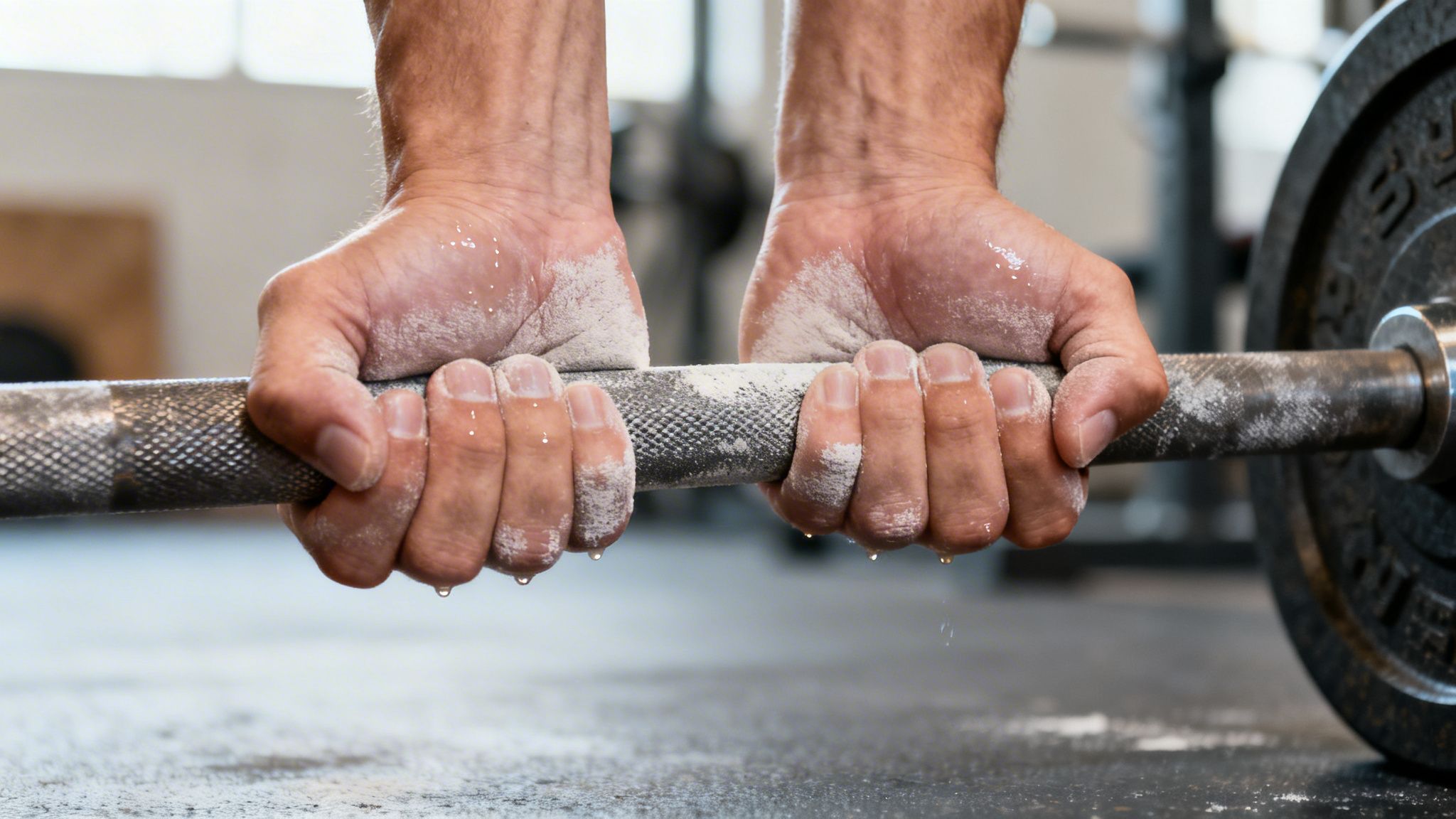
For decades, the standard solution was a block of chalk or a communal bucket in the corner of the gym. While powder chalk absorbs moisture, it comes with significant drawbacks. It creates airborne dust that settles on equipment, gets into HVAC systems, and is inhaled—which is why so many commercial gyms have banned it entirely.
Furthermore, powder chalk provides inconsistent coverage. It can clump when mixed with sweat and often wears off mid-set, forcing athletes to break focus and rhythm to re-chalk their hands. This constant interruption is a significant disruption during a focused training session.
A secure grip is non-negotiable for peak performance. Whether executing an explosive snatch or grinding through a heavy farmer's carry, the connection between your hand and the implement must be absolute. Any slip compromises force transfer and dramatically increases the risk of a failed lift.
The Modern Solution for a Timeless Problem
Liquid chalk is a superior tool for the modern athlete. It’s not simply "wet chalk"; it's an engineered solution designed for reliability and cleanliness. By combining magnesium carbonate with a fast-evaporating alcohol base, it provides a mess-free application that solves the classic problems of its dusty predecessor.
When applied, it spreads into a thin, even layer that bonds directly to the skin, reaching every crease and pore. The alcohol base evaporates in seconds, leaving behind a durable, high-friction surface that actively resists sweat. This approach offers weightlifters several distinct advantages:
- Superior Durability: A single application can last through multiple heavy working sets, unlike powder chalk that may require reapplication after every lift.
- Consistent Coverage: It creates a uniform layer across the entire hand, eliminating weak spots where sweat could compromise grip.
- Clean and Gym-Approved: Liquid chalk produces no dust clouds and leaves minimal residue on the bar, making it the preferred choice in most commercial gyms and high-end training facilities.
- Enhanced Bar Feel: By creating a thin yet effective layer, it preserves the connection between your hands and the bar's knurling for better feedback and control.
For any athlete training in a high-stakes environment—from a local powerlifting meet to an Olympic training hall—reliability is paramount. The best liquid chalk for weightlifting provides the confidence that your grip will never be the limiting factor.
The Science Behind a High-Friction Grip
What makes liquid chalk a more effective tool than the powder in the community chalk bowl? The difference lies in its formulation, which is engineered to create an exceptionally reliable interface between your hand and the bar.
Think of it like a painter priming a canvas. You wouldn't apply paint directly to a raw surface and expect a perfect, durable finish. Liquid chalk primes your hands, creating the ideal surface for a non-slip bond when performance matters most.
The formula consists of two key components: magnesium carbonate, the same grip-enhancing agent in traditional chalk, and a fast-evaporating alcohol base. When applied, the liquid flows into every crease and pore of your palms, creating far more comprehensive coverage than the patchy coat from a block of chalk.
The Evaporation Advantage
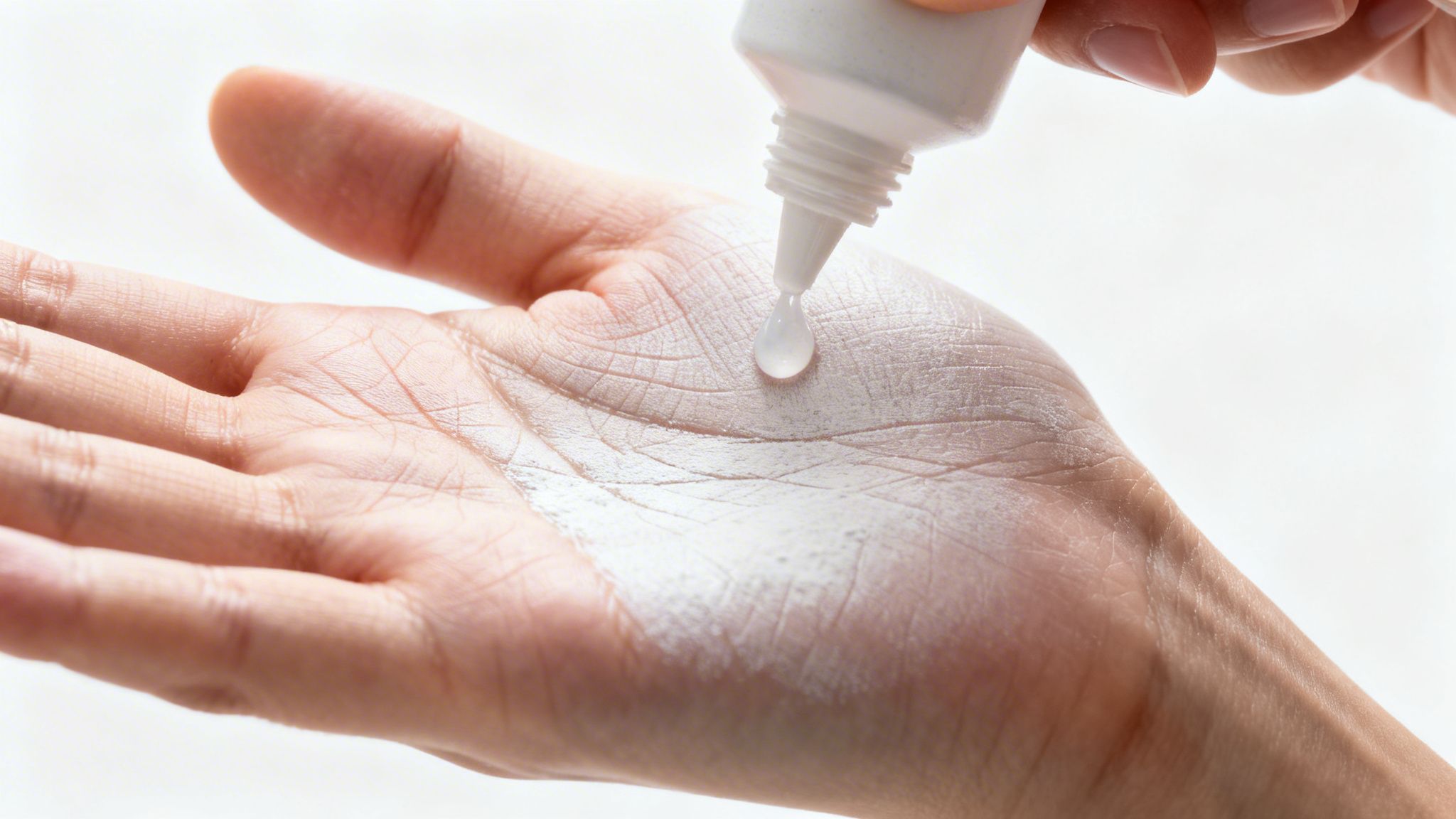
The critical action occurs as the alcohol base evaporates. This rapid process actively pulls moisture from the skin's surface while depositing a solid, uniform film of chalk that bonds directly to your hand.
This is the key performance differentiator. Liquid chalk doesn't just absorb existing sweat; it creates a proactive barrier against it. The result is a consistent, high-friction grip that endures through multiple sets, even during intense, sweat-heavy training sessions.
This performance advantage has not gone unnoticed. The liquid chalk market is expanding rapidly, growing from $100 million in 2023 to a projected $432 million by 2031, according to a Verified Market Research report. This trend indicates a clear shift among serious athletes toward more effective and reliable grip solutions.
Why Complete Coverage Matters in High-Stakes Lifts
In weightlifting, every point of contact is critical. Consider an Olympic lifter executing a heavy snatch. The movement is explosive, and force must transfer perfectly from their body, through their hands, and into the barbell. A momentary slip during the pull or catch phase means a failed lift.
The same principle applies to a powerlifter grinding through a max-effort deadlift. As fatigue sets in, sweat becomes the primary enemy. The complete coverage from liquid chalk ensures there are no weak points where moisture can compromise the lift at a critical moment.
The uniform layer created by a quality liquid chalk formula ensures that the entire hand, from the base of the palm to the fingertips, maintains a secure connection with the bar's knurling. This isn't just about preventing slips; it's about maximizing control and force production from start to finish.
This is the fundamental difference between a temporary dusting of powder and a proper pre-lift hand preparation. One is a reactive fix; the other is a proactive strategy designed to eliminate a potential point of failure.
Key Qualities of a High-Performance Liquid Chalk
Selecting the first bottle of liquid chalk you find is a mistake. For a serious lifter, the formula directly impacts performance on the platform. Think of it like tires on a race car—you wouldn't use all-season radials in a Formula 1 event, and you shouldn't use a generic chalk formula when chasing a personal record.
Not all liquid chalks are created equal. A high-performance formula must stand up to the high-pressure, sweat-soaked environment of heavy lifting. Here are the key attributes to evaluate.
Drying Time: The Seconds Before the Lift
You’re preparing for a max attempt. The last thing you need is tacky, partially dry hands. A high-performance liquid chalk should dry completely in seconds, leaving a uniform, grippy layer with no stickiness. This rapid evaporation is critical for maintaining pre-lift focus.
An Olympic weightlifter, for instance, operates on a strict clock in competition. They cannot afford to waste precious seconds waiting for a subpar formula to set. The best liquid chalk allows you to apply, set your grip, and lift with immediate confidence.
Sweat Resistance: The Barrier Against Grip Failure
This is arguably the most critical factor for a weightlifter. A top-tier formula doesn’t just absorb some moisture; it creates a durable barrier that actively resists sweat throughout your entire session. It must hold up during intense, multi-set workouts without degrading into a pasty, slippery mess.
The significant growth of liquid chalk in strength sports is driven by this superior moisture control. It's why the market is projected to reach $394.97 million globally by 2034. When grip failure is a factor in a significant percentage of missed lifts, a highly sweat-resistant formula is non-negotiable. You can find more data in this Market Research Intellect report.
A high-quality liquid chalk should feel like a second skin that works with you. It needs to be resilient enough for a brutal deadlift session but clean enough that it doesn’t cake up and diminish your connection with the bar’s knurling.
Residue Level: The Cleanliness Factor
A major benefit of liquid chalk is its cleanliness, but some formulas are far superior to others. The best liquid chalk dries into a fine layer that adheres to your hands, not the equipment, your clothes, or the air. A low-residue formula is essential for several reasons:
- Gym Etiquette: It keeps barbells, dumbbells, and pull-up bars clean for other members.
- Equipment Preservation: Chalk caked deep into the knurling of a barbell can reduce its effectiveness over time.
- Gym Approval: It is the primary reason facilities that ban traditional chalk blocks permit liquid chalk.
A clean formula provides all the grip benefits without leaving a mess, demonstrating respect for the training environment and equipment.
Skin Health and Formula Composition
The ingredients in the bottle matter. An overly aggressive, alcohol-heavy formula might dry quickly but can strip your skin of its natural oils, leading to excessive dryness, cracking, and painful tears around calluses.
Look for a formula that balances fast-drying performance with skin-friendly ingredients. Your hands are your most important tool in lifting, and maintaining their health is crucial for consistent training. A formula that supports skin health helps prevent painful rips that can halt your progress for days or weeks.
Matching the Chalk Formula to Your Training Style
Not all lifts are the same, and your grip aid shouldn't be either. The best liquid chalk for weightlifting is a specialized tool that should match the demands of your training. The needs of a powerlifter pulling a max-effort deadlift are distinct from those of a CrossFit athlete cycling high-rep butterfly pull-ups.
A powerlifter setting up for a heavy single requires maximum adhesion and tackiness. The goal is to create an ironclad connection to the bar for one all-out effort. Even the slightest slip means a failed lift, so the formula must create a high-friction surface that feels almost bonded to the knurling.
Conversely, a functional fitness athlete performing kipping pull-ups or muscle-ups needs a different balance. They require solid grip and sweat absorption, but excessive tackiness can be detrimental. High friction during rapid, repetitive movements is a primary cause of the painful hand tears and rips that can derail training.
For Heavy Grinders: Powerlifters and Strongman Athletes
When your training is centered on moving maximal weight for low repetitions, your chalk has one job: deliver an unyielding grip. You need a product that creates a thick, durable layer capable of withstanding the immense shearing forces of a 500-pound deadlift or a heavy yoke carry.
Formulas designed for this style often have a higher viscosity and a dense concentration of magnesium carbonate. They are engineered to pack into every groove of your hands and the bar's knurling, creating a lock-tight connection that won't budge under extreme load.
For High-Volume Athletes: CrossFit and Functional Fitness
If your workouts involve high-rep Olympic lifts, gymnastics movements, and metcons, your priorities shift. Excellent sweat resistance is still crucial, but the formula must allow for slight hand rotation on the bar or rings to prevent skin damage.
A great liquid chalk for this style dries quickly into a smooth, fine layer. This is key for minimizing the friction buildup that shreds calluses during kipping movements. It provides enough grip to hang on securely without the overly sticky feel that impedes fluid, dynamic motion. The goal is a perfect balance between durable sweat protection and a skin-friendly surface.
This decision tree can help you choose the right chalk based on your training priorities: sweat control, drying speed, or cleanliness.
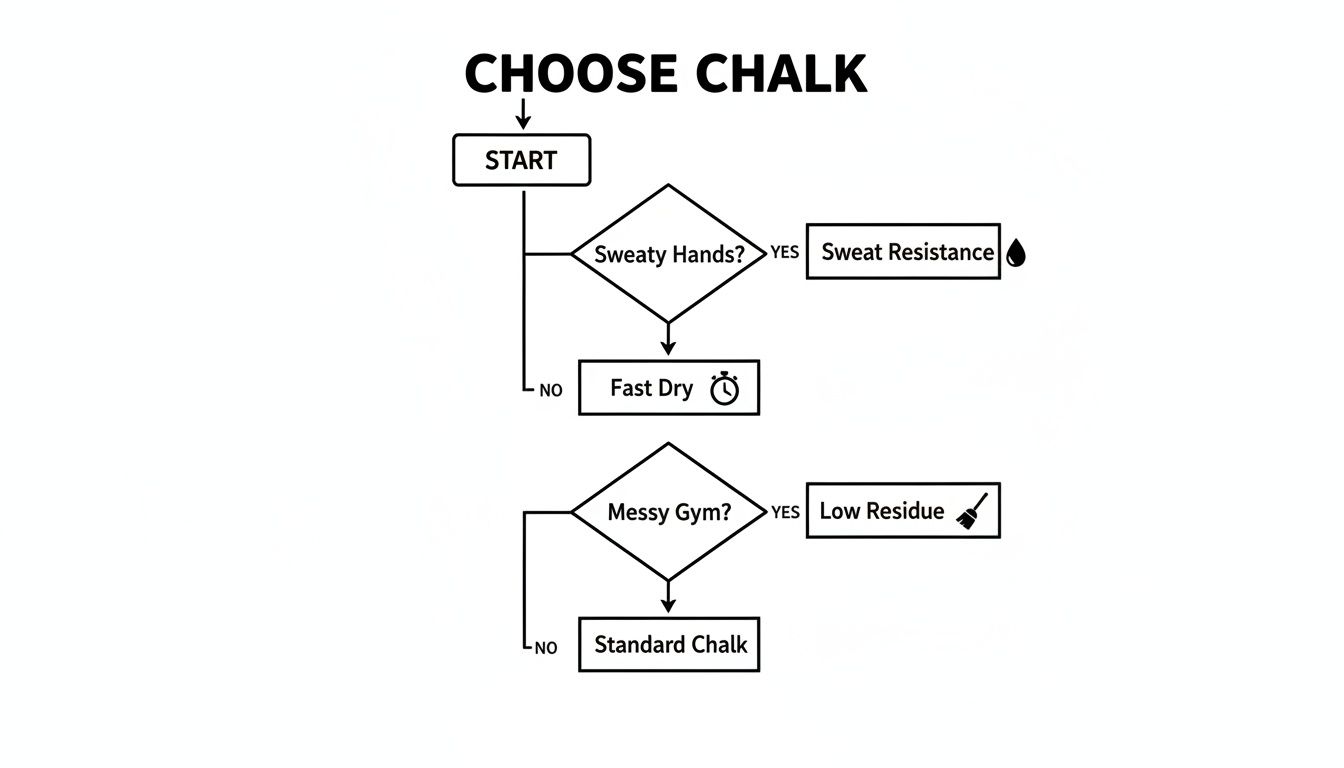
As the flowchart illustrates, while sweaty hands are the primary reason athletes use chalk, factors like fast-drying properties and low-residue formulas are equally important for an efficient and undisrupted workout.
Practical Considerations: Bottle Size and Portability
Beyond the formula, practical details like bottle size can make a significant difference based on your training environment.
- For the Gym Bag (50ml): A small, portable bottle is essential for any athlete on the go. Look for one with a carabiner that clips directly to your bag, ensuring your chalk is always accessible, whether you're at your home gym or visiting a new facility.
- For the Home Gym (250ml): If you have a dedicated training space, a larger bottle is more convenient and economical. A 250ml bottle can last for months, so you'll never be caught without chalk mid-workout. It becomes a permanent fixture of your training setup.
The key is to treat liquid chalk as a piece of performance equipment, not just an accessory. Matching the formula and bottle to your specific training style ensures your grip is never the reason you fail a lift.
While this guide focuses on lifting, these principles apply across numerous sports. For additional insights, you can explore how climbers address their specific grip needs in our guide to liquid climbing chalk in our specialized guide.
Application Technique: Getting the Most Out of Your Chalk
Possessing the best liquid chalk is only half the equation; proper application is what unlocks its full potential. A correct application isn't about hastily applying chalk five seconds before a lift; it's a deliberate pre-lift ritual that ensures your grip will not be the weak link.
The process is straightforward, but each step is critical. For a lifter preparing for a heavy deadlift, this ritual is as much mental as it is physical. It begins with clean, dry hands. Applying liquid chalk to already sweaty or dirty hands creates a slick paste rather than a high-friction surface.
The Step-by-Step Application Process
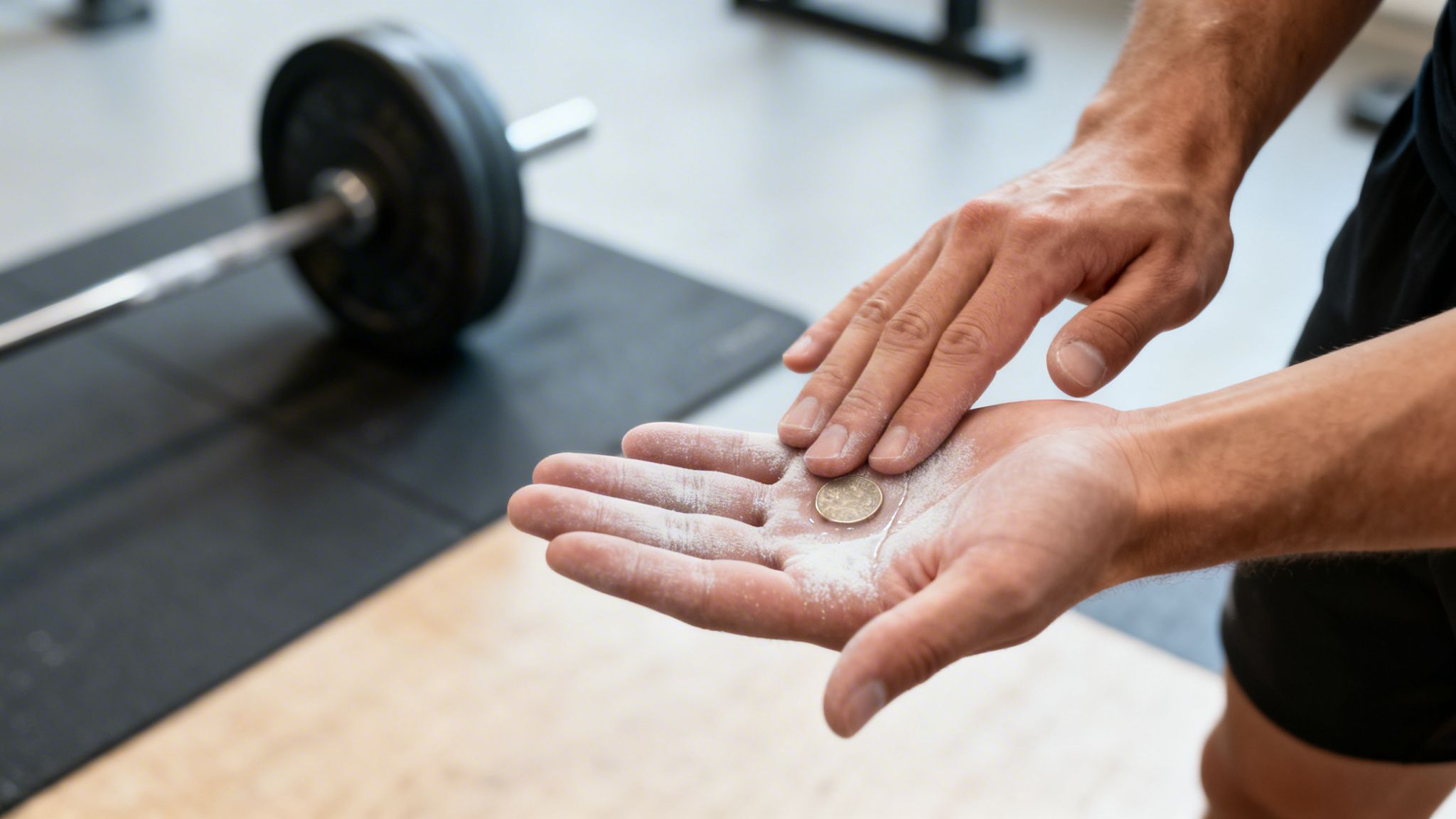
For maximum grip, follow a simple, repeatable process. Consistency is key to performance. A small, dime-sized amount is typically sufficient for perfect coverage.
Spread it into a thin, even layer, focusing not just on your palms but also on the base of your fingers and the areas in between—precisely where the barbell's knurling makes contact. Total coverage creates a uniform surface with no points for sweat to break through.
The final and most important step is patience. Allow the chalk to dry completely. This takes only a few seconds as the alcohol evaporates, leaving behind the solid, grippy layer. Rushing this step will result in a tacky, ineffective grip.
Common Application Mistakes to Avoid
Even experienced lifters can make mistakes, often due to habits formed with powder chalk. To maximize the effectiveness of your liquid chalk, avoid these common errors:
- Applying Too Much: More is not better. Over-applying creates a thick, cakey layer that can diminish your feel for the bar and flake off during a heavy lift. A thin coat is stronger and more durable.
- Applying to Wet Hands: This is the cardinal sin of liquid chalk application. Applying it over sweat or water prevents it from bonding properly to your skin, resulting in a slippery mess.
- Neglecting the Fingers: Many lifters only chalk their palms, but a significant portion of grip strength comes from the fingers. A full coat is essential for securing a hook grip or conventional grip.
- Rushing the Drying Process: You must allow the chemical process to complete. Give the alcohol a few seconds to fully evaporate before gripping the bar.
The goal isn't just to dry your hands—it's to create a tough, high-friction second skin. That thin layer becomes a true extension of your grip, letting you transfer every ounce of force into the bar without giving it a second thought.
Post-Workout Hand Care
Heavy lifting is demanding on the hands. While liquid chalk provides protection during your workout, your post-session routine is equally important for recovery and long-term skin health. The alcohol in liquid chalk can be drying, so proper skin care is non-negotiable to prevent painful cracks and tears that can sideline your training.
After your session, wash your hands thoroughly with soap and water to remove all chalk residue. Then, apply a quality moisturizer or hand salve formulated for athletes. This rehydrates the skin and keeps your calluses healthy and pliable rather than dry and brittle, ensuring your hands are ready for the next session.
For a complete breakdown, refer to our guide on how to best use liquid chalk for weightlifting.
The No-Mess Advantage in Modern Gyms
Walk into almost any commercial gym today, and you will likely see a "No Powder Chalk" sign. This rule isn't an attack on serious lifting; it's a practical measure to address a significant problem. The fine dust from traditional chalk blocks becomes airborne, coating every surface, entering lungs, and clogging expensive HVAC systems.
For gym owners, this means constant cleaning and costly maintenance. For athletes, it creates a dusty, suboptimal training environment. Liquid chalk was specifically designed to solve this issue. It is more than a performance aid; it's a gym-friendly solution that respects the shared training space.
When liquid chalk is applied, it dries and bonds directly to the skin, eliminating the mess. There are no chalk clouds, no residue on the platform, and minimal transfer to equipment. This cleanliness is why it has become the standard in so many modern training facilities.
A Cleaner Environment for Everyone
The shift from powder to liquid chalk has a significant impact on health and gym operations. This change can reduce airborne particulates, a key reason the market is projected to grow from $250 million in 2024 to $400 million by 2033.
In major fitness markets like the U.S. and Europe, where an estimated 65% of gyms have implemented dust-free policies due to stricter hygiene standards since 2021, a clean solution is a necessity. This is where a product like EVMT Liquid Chalk, with its residue-free formula, excels. For a deeper dive, review the full business analysis of chalk trends on Accio.
Choosing the best liquid chalk for weightlifting extends beyond personal performance. It demonstrates respect for the facility, the equipment, and fellow athletes.
The Standard for Professionalism and Etiquette
Imagine a crowded weight room during peak hours. An athlete claps a large cloud of chalk dust into the air before a deadlift, coating the platform and affecting lifters at adjacent stations. This is precisely the scenario modern gyms seek to avoid.
Using liquid chalk signals a level of professionalism and awareness. It shows you understand modern gym etiquette and are committed to maintaining a clean, high-performance space for everyone.
This simple choice keeps equipment in better condition, improves air quality, and allows everyone to focus on their training. It is a small change in your gym bag that makes a significant difference to the entire facility. For a more detailed look, see our guide on why liquid chalk is the superior choice for gym environments.
Your Questions About Liquid Chalk, Answered
Even with its clear benefits, lifters often have practical questions before fully integrating liquid chalk into their training. Understanding its function and limitations is key to using it effectively. Here are answers to the most common questions from athletes.
Is Liquid Chalk Better Than Lifting Straps?
This isn't an "either/or" choice. Liquid chalk and lifting straps are distinct tools for different purposes. Liquid chalk is used to enhance your natural grip, enabling you to build the raw, functional grip strength that is foundational to all lifts.
Lifting straps, in contrast, are a tool to bypass your grip entirely. They are used strategically when you don't want grip strength to be the limiting factor, such as on a heavy set of rack pulls where the primary target is your back, not your hands. For the majority of your training, developing a powerful, unaided grip with the assistance of chalk is the superior long-term strategy.
Will Liquid Chalk Dry Out or Tear My Hands?
The alcohol in liquid chalk is a drying agent, but a high-quality formula is designed to be tough on sweat, not on your skin. The key to preventing rips and tears lies in a consistent hand care routine, not in avoiding chalk.
A lifter's hands are their most valuable tool. Healthy calluses are built through consistent training and maintained with proper post-workout care. Neglecting them is a direct path to painful, progress-halting injuries.
Make it a non-negotiable habit to wash your hands thoroughly with soap and water after training to remove all chalk residue. Follow up with a good moisturizer or hand salve. This keeps your calluses hydrated and pliable, making them tough and protective rather than dry and brittle. Healthy calluses do not rip.
How Long Does One Application Last?
The durability of an application depends on two main factors: your individual sweat rate and the intensity of your session. An athlete completing a high-intensity CrossFit WOD will sweat more than a powerlifter taking several minutes of rest between heavy singles.
However, a major advantage of liquid chalk is its longevity. A single, properly applied coat will almost always last through multiple working sets of an exercise. This allows you to maintain focus on the lift itself rather than breaking your rhythm to re-chalk, offering a significant advantage over traditional powder.
Is Liquid Chalk Allowed in Competitions?
In most cases, yes. Liquid chalk is permitted in the majority of powerlifting, weightlifting, and strongman competitions, primarily due to its effectiveness and cleanliness.
However, each federation has its own specific regulations. It is always the athlete's responsibility to verify the rules for your specific event. A quick review of the rulebook or an email to the meet director beforehand can prevent any issues on competition day.
Ready to experience an unbreakable, mess-free grip? EVMT Brands creates high-performance liquid chalk trusted by over 250,000 athletes to secure their lifts and elevate their training. Find your perfect formula at evmt.co and feel the difference in your next session.