


Best Gifts for Athletes: Grip, Gear & Recovery
A gift can look perfect online and still fail before the first serious workout. The bottle leaks in a gym bag, the wearable needs a size the buyer doesn't know, or the chalk leaves a film on equipment that a venue manager won't tolerate. For athletes with sweaty hands, the question is simpler: will this gift improve grip without creating another problem?
The best gifts for athletes support an existing routine. For lifters, climbers, boulderers, CrossFit athletes, gymnasts, cheer athletes, pole fitness athletes, and home-gym owners, a clean, portable grip aid can be more useful than a larger piece of gear chosen by guesswork. The strongest options reduce friction, survive repeated sweaty use, and fit the athlete's rules.
Table of Contents
- Why Athletic Gifts Often Miss the Mark
- The Market Behind Athlete Shopping
- How to Choose Gifts Without Knowing Everything
- Grip Aids for Lifters, Climbers, Gymnasts, and Dancers
- Pole Sport Rules and Competition-Ready Grip
- Recovery Gifts That Actually Help Training
- Occasion-Specific Gifting Moves
- How to Finalize the Best Choice Every Time
Why Athletic Gifts Often Miss the Mark
A thoughtful gift can become unwanted clutter the moment it misses the athlete's actual routine. A powerlifter may already have a preferred chalk system. A climber may dislike anything that changes the feel of a hold. A dancer may train in a studio where residue is a safety concern. A beautifully packaged grip product that doesn't suit the surface or venue will stay unopened.
The same problem affects expensive technology. A wearable may require a precise fit, a compatible app, regular charging, or a subscription. A compression product can feel impressive in a gift box but remain unused if the athlete doesn't like the fit. The buyer sees advanced features. The athlete sees another maintenance task.
Practical rule: Buy for the friction the athlete already manages, not for the capability that looks most impressive on a product page.
Grip is a useful example because the need repeats. Sweaty hands can reduce confidence on a bar, hold, apparatus, or pole. Powder chalk can create dust, transfer onto shared equipment, or conflict with a gym's rules. Gloves can change contact and feel, while a generic grip aid may be unsuitable for a specific venue.
A lower-risk gift addresses a problem without requiring the buyer to know every detail of the athlete's equipment closet. EVMT Liquid Chalk is a magnesium-carbonate liquid chalk that dries in seconds, produces no dust, and is designed to leave no residue on bars or poles once dry. It's suitable for athletes who need moisture control in weightlifting, climbing, gymnastics, pole, or home-gym settings, provided the venue permits its formula.
Utility beats novelty because athletes repeat the same movements and preparation habits week after week. A gift that supports those habits has a better chance of earning a place in the gym bag than an item that depends on perfect knowledge of size, brand preference, or training level.
The Market Behind Athlete Shopping
Athletic gifting reaches far beyond elite competitors. A 2026 statistical compilation reports that 43% of U.S. children ages 6–17 participate in sports through community organizations or leagues, and 80% of youth sports participants say participation makes them feel better about themselves. The same compilation places the global sports equipment and accessories market at $84.4 billion in 2023, showing that athletic products serve a broad international audience, not a narrow professional niche. These figures appear in the participation and recognition statistics compilation.
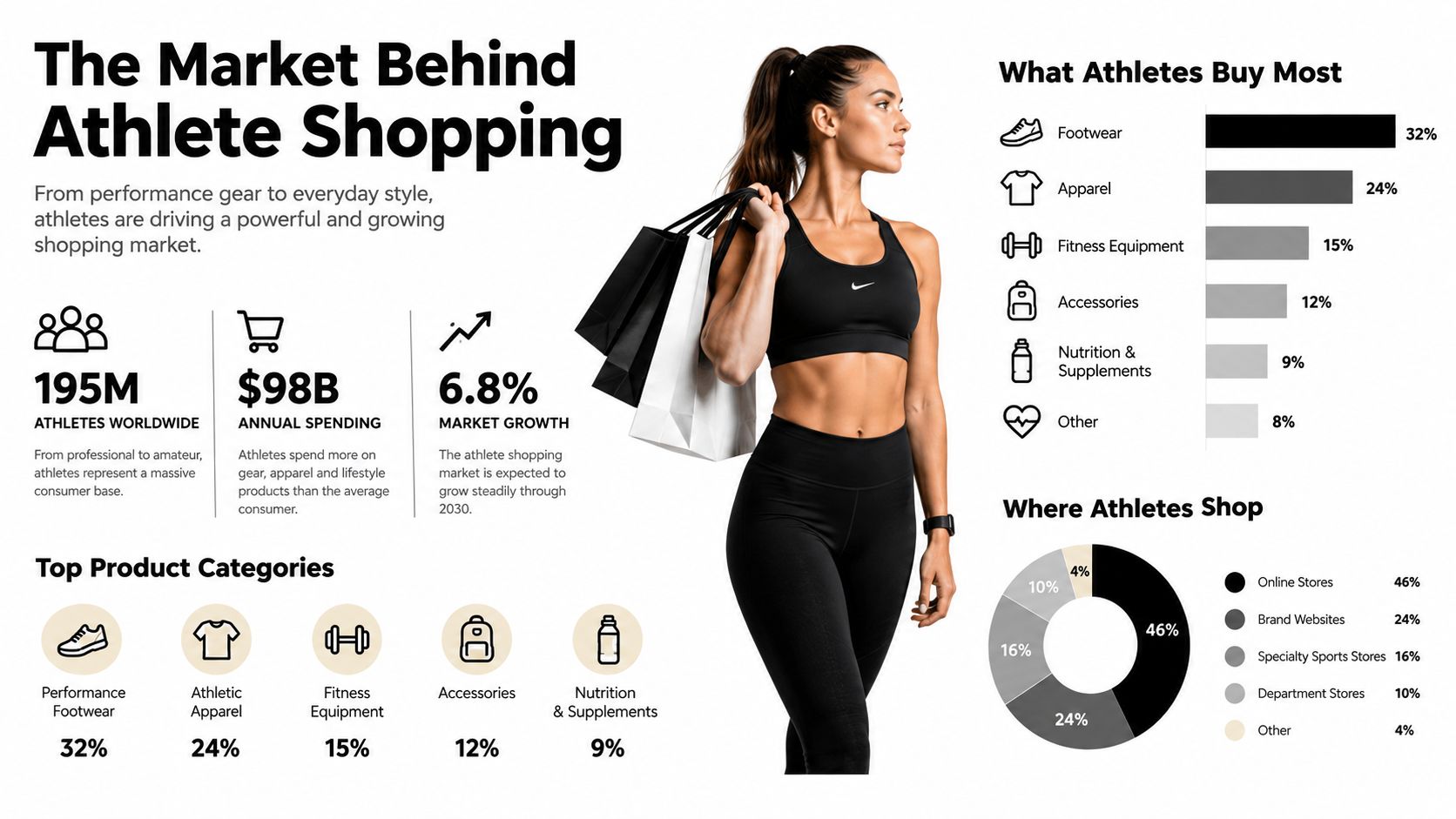
Holiday purchasing behavior also supports practical athletic gifts. A compiled U.S. survey summary reports that 23% of men and 10% of women planned to purchase sporting goods as Christmas gifts, placing sports equipment and accessories ahead of many specialized gift categories. The summary also reports average U.S. Christmas spending of approximately $900 per person and indicates that 63% of Americans purchase presents online, which favors products that are portable, easy to explain, and straightforward to ship. The figures are detailed in this Christmas spending and gift category summary.
Historical sales figures in that same summary show U.S. Christmas sales rising from $467.2 billion in 2004 to approximately $936.3 billion in 2023, effectively doubling over 19 years. That scale doesn't mean every athlete wants an expensive present. It means buyers have a substantial market of specialized products to choose from, and the practical ones can stand out when they match a repeated training need.
Recognition matters, too. In a 2020 survey of 1,200 youth athletes, 44% said recognition made them want to practice more, according to the participation compilation linked above. A grip aid, training accessory, or recovery tool can therefore carry two forms of value: it solves a small daily problem and signals that the athlete's effort has been noticed.
How to Choose Gifts Without Knowing Everything
Most buyers don't know an athlete's exact shoe size, current equipment, preferred fit, or training level. That uncertainty makes a risk-based framework more useful than a sport-by-sport popularity list.
Low-risk choices
Low-risk gifts require little personal information. Consumables and universally sized accessories work well because they support repeated activity without demanding an exact fit. Portable liquid chalk sits in this tier when the buyer knows the recipient lifts, climbs, trains on apparatus, or works with sweaty hands.
A bottle can be used in a commercial gym, home gym, climbing facility, or travel kit, although venue rules still matter. A multi-pack can suit an athlete who trains frequently, while a single portable bottle is safer when the buyer isn't sure how much grip aid the athlete uses.
Medium-risk choices
Medium-risk gifts need sport context. A climber may want liquid chalk as a primer beneath loose powder chalk, while a powerlifter may prioritize broad bar coverage. A gymnast or cheer athlete may need fast drying and precise application. A pole athlete may need a formula that complies with apparatus and cleanup rules.
The buyer doesn't need to know every technical preference, but should know the athlete's main activity and where the product will be used. That information is usually enough to choose a suitable format, or to select a gift card if the athlete has strict preferences.
High-risk choices
High-risk purchases include anything dependent on exact measurements, body contact, app compatibility, or a specific equipment setup. Shoes, compression products, and wearables can be excellent gifts when the athlete has named the exact model and fit. They're poor guesses when the buyer is working from a vague idea of the sport.
The less the buyer knows about fit and compatibility, the more valuable a simple, frequently used grip product becomes.
A good final check asks four questions:
- Routine: Does the athlete already perform an activity that needs grip or moisture control?
- Venue: Does the gym, studio, or competition permit that chalk format?
- Use frequency: Will the product be used repeatedly rather than displayed?
- Ownership burden: Does it avoid unnecessary charging, setup, maintenance, or sizing risk?
Grip Aids for Lifters, Climbers, Gymnasts, and Dancers
Grip failure often appears as a small interruption. A lifter resets the bar because the hands feel slick. A climber reaches for more chalk between moves. A gymnast applies too much product and has to manage transfer on shared apparatus. A pole athlete needs moisture control without coating the pole.
The right gift starts with the surface and the movement demand.
- Weightlifters and powerlifters: Choose a liquid chalk that spreads across the hands and dries quickly before heavy sets. EVMT Liquid Chalk is designed for broad bar contact without powder clouds, making it practical for commercial gyms and home gyms where dust is unwelcome.
- CrossFit athletes: High-repetition sessions demand quick reapplication and a bottle that won't become a nuisance between movements. A portable format keeps grip support available without adding loose powder to the floor or equipment.
- Gymnasts and cheer athletes: Precise application and fast drying matter around apparatus. The athlete should apply only what's needed and allow it to dry before contact.
- Climbers and boulderers: Liquid chalk shouldn't replace the powder chalk already used by many climbers. Apply EVMT to clean, dry hands as a base layer, let it dry fully, then apply loose chalk as usual. The liquid coat adds another grip layer, so the coat can last through more moves before re-chalking. That's especially useful on long sport routes, multi-pitch climbing, and humid gyms, and less important on a short boulder problem.
- Pole and dance athletes: The athlete needs a hand-applied, low-residue product that fits the studio or competition's rules. A hand grip aid for sweaty training should support contact without turning the apparatus into a cleanup problem.
A carabiner-compatible bottle adds practical value because the grip aid stays accessible between sets or attempts. A product left at home can't solve sweaty hands at the moment grip starts to fail.
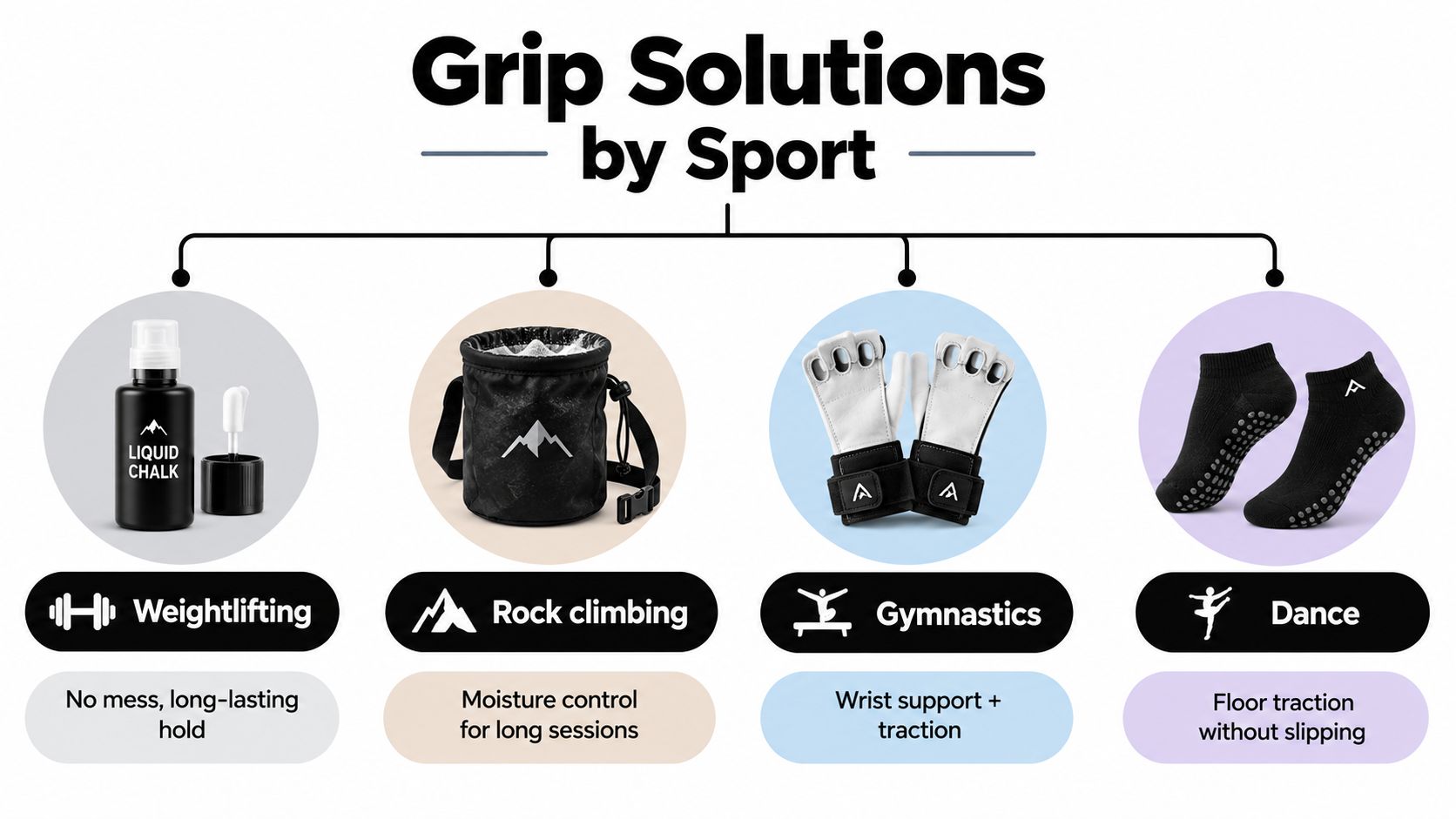
Liquid chalk also suits facilities that ban powder chalk. It applies smoothly, dries in seconds, and doesn't spread through the air in the same way loose powder does. The athlete should still wipe equipment according to the facility's instructions and avoid assuming that every venue treats all liquid formulas identically.
Pole Sport Rules and Competition-Ready Grip
Pole grip is a compliance issue as much as a performance issue. International Pole Sports Federation rules permit grip products on the athlete's body, not directly on the pole. Products that leave residue cleaners can't remove within the allotted cleaning time can lead to a five-point penalty, and prohibited grip aids may lead to disqualification, as stated in the IPSF approved grips information.
That changes the buying decision. A tacky product isn't automatically appropriate. The buyer should confirm that the formula is approved where required, that it's applied to the hands rather than the apparatus, and that the venue can remove it without difficult residue.
The 2024 pole-sport regulations from the Italian Association of Culture and Sport prohibit spray products and resin-based grips, including rosin, dance pitch, Stickum, Gorilla Grip, Itac, and Monkey Grip. They allow magnesium only with extreme caution and warn athletes not to leave it on the stage. The 2024 pole sport regulations give buyers a concrete reason to avoid general-purpose adhesives and uncontrolled application.
For a pole athlete with sweaty hands, a fast-drying liquid chalk applied sparingly to the hands can be a practical option. EVMT Liquid Chalk fits that use case as a portable, hand-only format, but the recipient should still verify the specific studio or competition rules before use. IPSF rules require organizers to clean the apparatus with provided products within two minutes, so low transfer and straightforward cleanup matter.
A liquid chalk guide for pole grip can help buyers understand the application decision. The safe sequence is simple: check the rules, apply a thin layer to the hands, let it dry fully, and never coat the pole directly.
Recovery Gifts That Actually Help Training
Recovery gifts often fail because the product promises more than the athlete's routine can support. Massage guns, compression systems, and recovery boots may sound advanced, but reviews of sports recovery strategies find evidence for many newer devices limited or inconsistent. The stronger foundations remain sleep quantity and quality, nutrition, hydration, periodization, and rest, as outlined in this sports recovery review.
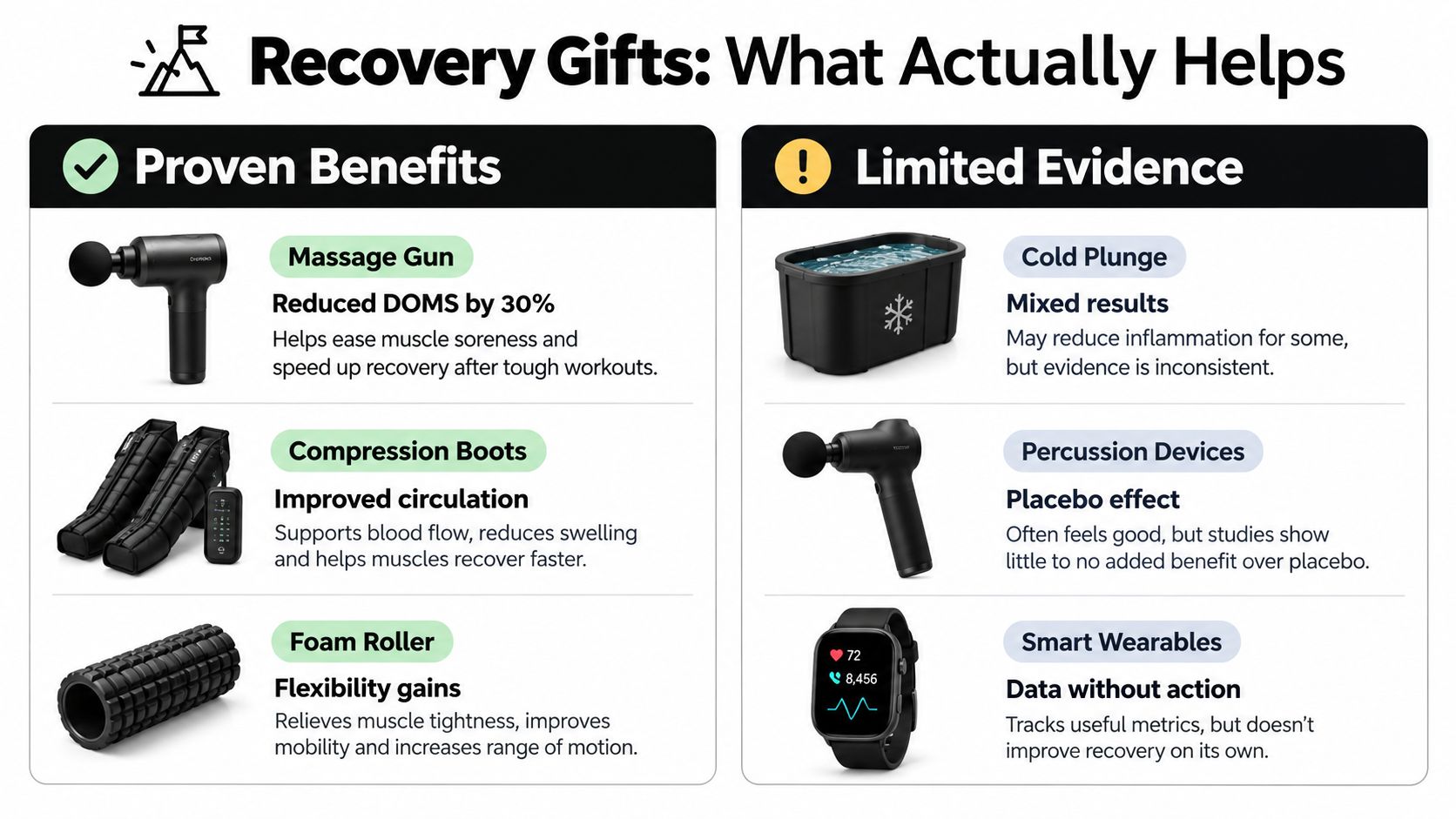
A sleep-tracking wearable or athlete sleep diary can be useful when paired with a decision protocol. The athlete can monitor sleep duration, perceived recovery, fatigue, and training load, then reduce intensity or add rest when several indicators deteriorate. The data should guide coaching judgment, not replace it.
Wearables can show useful trends through movement, heart-rate, and related sensors. They aren't reliable diagnostic tools for sleep disorders or precise sleep-stage measurement. A single nightly score is less useful than a pattern that helps the athlete notice changes over time.
What makes a recovery gift useful
- Low maintenance: The athlete can use it without complicated charging, setup, or subscriptions.
- Clear purpose: It supports sleep, rest, comfort, or routine consistency rather than promising a cure.
- Repeated use: It fits naturally after training or before bed.
- Appropriate expectations: It provides information or comfort, not a guarantee of faster adaptation.
For readers evaluating fatigue after training, a practical resource on how to bounce back from overtraining can add context. The best recovery gift won't compensate for an athlete who consistently ignores sleep, rest, or coaching feedback.
Occasion-Specific Gifting Moves
The timing of the gift changes what makes sense. A holiday purchase can support a routine that will continue through the next training cycle. A competition gift needs to travel cleanly and comply with venue rules. A mid-season gesture should reduce daily friction without interrupting the athlete's carefully chosen setup.
Holidays
Holiday buyers can choose a single bottle of EVMT Liquid Chalk when the athlete's sport is known but usage is uncertain. A multi-pack is more practical for a frequent lifter, climber, or gym owner who goes through grip aid regularly. The buyer should confirm whether the recipient trains in a powder-free facility before choosing a chalk format.
Before competition
Competition timing favors reliability over experimentation. A hand-applied liquid chalk that dries quickly and minimizes transfer is more defensible than a new adhesive product the athlete has never tested. Pole athletes should check organizer rules, while climbers and gymnasts should confirm that the product fits the apparatus and venue requirements.
Mid-season
Mid-season gifts work best when they reinforce consistency. A portable bottle can stay in the training bag, car, or locker so sweaty hands don't become an avoidable interruption. A sleep diary or simple recovery-tracking habit can also help an athlete notice fatigue trends without adding a complicated device.
The buyer should avoid turning the occasion into an equipment upgrade contest. Athletes often research their own high-risk gear carefully. A low-risk grip consumable, selected for the athlete's actual surface and rules, is less likely to duplicate something they already own.
How to Finalize the Best Choice Every Time
A reliable gift filter starts with the athlete's hands and training environment. If the athlete regularly loses grip because of sweat, chalk rules, or messy powder, a liquid chalk gift has a clear job. If there's no grip problem, the buyer should choose a different low-friction category rather than forcing a product into the routine.
Use this decision flow:
- Identify the repeated problem. Is the athlete managing sweaty hands, slipping contact, powder restrictions, or residue concerns?
- Match the surface. Bars, climbing holds, gymnastics apparatus, and poles don't create identical demands.
- Check the rules. Commercial gyms, studios, and competitions may restrict powder, spray, resin, or direct apparatus application.
- Choose the lowest-risk format. Prefer a portable consumable when size, fit, and existing gear are unknown.
- Test ownership burden. The product should be easy to carry, apply, dry, and clean from the athlete's hands and equipment.
- Respect existing preferences. Climbers who use powder chalk can layer liquid chalk underneath rather than replacing their established system.
Coach's filter: A strong athletic gift improves something the recipient already does, without asking that person to rebuild the routine around it.
For athletes who track sleep or recovery, a wearable can be useful when comfort and consistent wear matter more than a long feature list. Buyers who already know the recipient uses a compatible watch can also consider practical replacements such as silicone bands for Apple Watch, but fit and device compatibility should be confirmed before purchase.
EVMT Liquid Chalk is available in portable and high-volume bottles, with formats intended for different grip demands. It dries in seconds, produces no dust, and is designed for use on the hands rather than directly on bars or poles. The recipient should still follow facility and competition rules, especially for pole sports.

The best gifts for athletes don't need to be dramatic. They need to survive repeated use, solve a known problem, and respect the environment where training happens. For sweaty hands and chalk-sensitive gyms, a clean, portable liquid grip aid is often a safer choice than a precise-size product or a gadget that adds more maintenance.
Evermost LLC offers EVMT Liquid Chalk for lifters, climbers, gymnasts, cheer athletes, pole athletes, and home-gym owners who need clean, portable grip support. Visit Evermost LLC to choose a liquid chalk format for the athlete's sport and training environment.