


Wall Pull Ups: Stop Slipping with Liquid Chalk
On a wall pull-up, slipping hands can end a set while the back and arms still have strength left. Liquid chalk helps address sweat-related slipping without the airborne dust that loose powder creates.
The familiar warning is a bar that starts moving toward the fingertips near the top of a repetition. The useful question isn't which chalk grips hardest. It's which format controls sweat, keeps the room clean, and meets the gym's rules.
Table of Contents
- What Wall Pull-Ups Demand From Your Grip
- Liquid, Powder and Chalk Balls Compared for Wall Bars
- Why Your Grip Slips and How to Fix It
- How to Apply Liquid Chalk Before Wall Pull-Ups
- Where Gyms and Competitions Allow Liquid Chalk
- Liquid Chalk as a Base Layer for Climbers
- Choose Liquid Chalk for Your Next Wall Session
What Wall Pull-Ups Demand From Your Grip
A lifter reaches the top of a repetition, feels the palms shift, and tightens the fingers to recover. The next repetition becomes a negotiation with the bar rather than a test of pulling strength. Slipping and muscular failure aren't the same problem, even when both end the set.
A wall pull-up means a pull-up performed on a bar fixed to a wall. The mounting provides stability, while the bar stays at a fixed height and distance from the wall. That's the setup covered here, not an exercise performed by pulling directly against a bare wall.
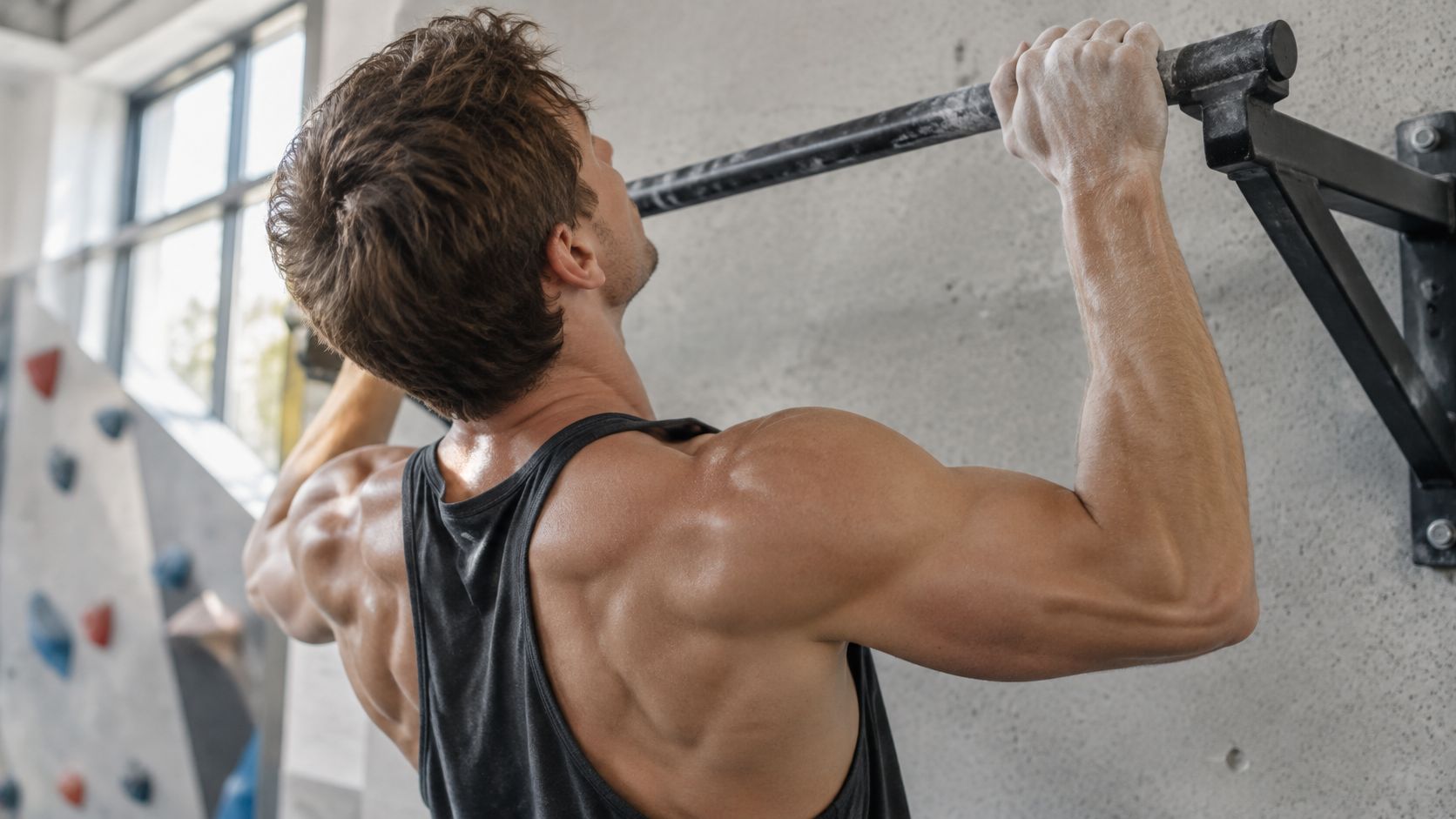
Similar names, different demands
Searches for wall pull ups can lead to movements with very different hand-contact requirements:
- Wall-mounted pull-ups use a fixed overhead bar, with the hands supporting the hanging athlete.
- Wall walks begin in a push-up position, with the feet climbing the wall while the hands move toward it, as described in this wall-walk exercise guide.
- Wall-assisted pull-ups use contact with the wall for balance or assistance rather than treating the wall-mounted bar as the defining feature.
Compared with a freestanding or rig station, a wall bar often becomes a dedicated contact point used throughout the session. Its surface may be painted, unpadded, or already damp from earlier sets. The athlete keeps returning to that same patch of bar.
Identify the actual limiter
During repeated pulling, sweat can accumulate where the palm wraps around the bar. As contact becomes less secure, the athlete squeezes harder, shifts the fingers, or releases early. A home-gym owner also has another concern: chalk dust settling on nearby storage, flooring, and furniture.
Grip check: When sliding ends the set before the back and arms feel exhausted, address hand moisture and bar cleanliness before assuming that more pulling strength is the answer.
A dry hand that can't maintain its hold needs a different response from a wet hand that slides. The distinction is explained further in this guide to grip strength for pull-ups.
Grip confidence also shouldn't encourage training through pain. Aspen Falls Wellness's guide to how athletes stay injury-free offers broader injury-prevention context. Chalk supports hand contact; it doesn't establish that a painful shoulder or unstable setup is safe.
Liquid, Powder and Chalk Balls Compared for Wall Bars
Chalk options compared for wall pull-up sessions
| Option | Dust in the room | Residue on bar | Gym rules | Best for |
|---|---|---|---|---|
| Liquid chalk | None once applied and dried | Minimal once dry | Usually allowed where loose chalk is restricted; check each venue | Home gyms, shared gyms, wall bars |
| Powder chalk | High during application and use | Heavy film can build on bar and wall | Often restricted by gyms | Open floors where dust is allowed |
| Chalk ball | Low, contained in the ball | Light | Ask whether contained powder is permitted; check each venue | Quick touch-ups between sets |
Liquid chalk prioritizes containment: the athlete spreads it directly onto the hands and lets it dry before touching the bar. Powder chalk makes quick touch-ups convenient, but loose material can disperse during application and use. A chalk ball limits how much powder escapes at once, although coverage takes repeated contact with the ball.
The practical comparison is bigger than friction. A product that works well on the hands can still be the wrong choice for a shared training room if it creates cleanup work or breaches the venue's policy.
Containment matters in a shared room
USA Climbing's return-to-sport medical guidance strongly encouraged liquid chalk or chalk balls because loose chalk can disperse dust and debris through a venue, and noted that loose chalk may irritate the respiratory tract. That guidance supports a straightforward distinction: containing chalk at application reduces the amount released into the room.
For wall-bar sessions, liquid chalk is convenient when the athlete can prepare before the set. It doesn't require reaching into loose powder beside a wall, and there's no cloud from clapping excess chalk off the hands. Drying first matters, because wet application can smear instead of forming an even grip layer.
Powder remains practical where dust is permitted and fast replenishment matters more than containment. However, repeatedly adding powder without cleaning the contact surface can leave a buildup that needs attention. More visible chalk doesn't automatically mean a more dependable hold.
Match the format to the setting
- Home gyms: Liquid chalk suits rooms where dust would spread beyond the training area.
- Shared gyms: Liquid is a sensible starting point when management restricts loose powder but permits a contained alternative.
- Dust-permitted sessions: Powder suits athletes who prioritize immediate touch-ups and accept the cleanup.
- Contained powder use: A chalk ball suits athletes comfortable with repeated dabbing and checking coverage across the palm.
A gym chalk ball comparison helps clarify the handling trade-off. The ball contains the supply, but the chalk is still powder, so a loose-chalk restriction shouldn't be interpreted as permission to use one.
The venue's rule decides what can come through the door. Checking that rule before buying is more useful than discovering during warm-up that the chosen format isn't allowed.
Why Your Grip Slips and How to Fix It
Slipping grip symptoms, causes and fixes
| Symptom | Likely cause | Fix |
|---|---|---|
| Hands slip near the top of each rep | Sweat reaches the palms faster than friction can hold | Use a thin coat of liquid chalk on dry hands, let it dry fully, then begin |
| Grip fades within a few reps | The coat is too thick or was still damp when you gripped the bar | Apply less and wait until the surface no longer feels tacky |
| Bar feels greasy or dusty | Oil, powder or residue is affecting contact | Check the bar surface and follow the venue's rules for dealing with contamination |
| One hand slides more than the other | Coverage is uneven or sweat pools in one palm | Check both palms and inner fingers for consistent coverage |
| Slipping occurs mainly in humid rooms | Moisture builds faster than the first coat can manage | Consider a thin refresh between sets if the venue permits liquid chalk |
Treat these patterns as clues to check, not as diagnoses. Sweat, uneven coverage, residue on the bar, and limited grip capacity can all contribute. Match the fix to the likely cause; adding more chalk does not address every kind of slipping.
If sliding starts late in a set, notice where the hand feels damp afterward. Moisture around the finger bases can point to sweat or a missed patch. A thick, uneven coating can instead indicate that too much chalk was applied. Liquid chalk may help when sweat is the main issue, but it cannot compensate for a bar surface that feels greasy or for fingers that are tiring under load.
Check contact and hand position
Before changing your hand position, check whether both hands have similar contact and whether one palm is getting wetter. If the bar feels contaminated, follow the venue's approved approach before using it. Chalk over a slick surface can make the contact less predictable rather than restoring friction.
Grip geometry changes loading. In a controlled study of grip configuration involving 21 men, a neutral hand angle of 0° and a wider grip with a 30° hand angle produced different muscular demands. The wider position also increased shoulder net joint moment by 7%.
Use a comfortable hand position and address the source of slipping directly. Moving the hands outward to feel more secure can change shoulder demands without solving sweat or uneven contact.
A grip aid should help the hands stay settled at a comfortable position, not encourage an athlete to tolerate shoulder discomfort.
Separate grip confidence from guarantees
Customer reports can illustrate how liquid chalk feels in use, but they do not establish a universal result. Acaciah said it stopped their hands slipping during difficult deadlift sets. Reviewer mthornb described being protected from slipping multiple times, and Wayne said the product let him lift without fear of slipping.
Those accounts do not predict pull-up totals. Judge the result by whether your hands stay settled on the wall bar. If your palms are dry and contact feels stable but your fingers still open under load, more chalk will not remove the underlying fatigue.
How to Apply Liquid Chalk Before Wall Pull-Ups
A thin, fully dried coat is the goal. The athlete needs coverage where the bar touches the hand, not a thick shell across every patch of skin.
The preparation sequence is simple, but rushing the drying stage undermines it. Clean hands, even coverage, and a controlled first contact make the result easier to assess.
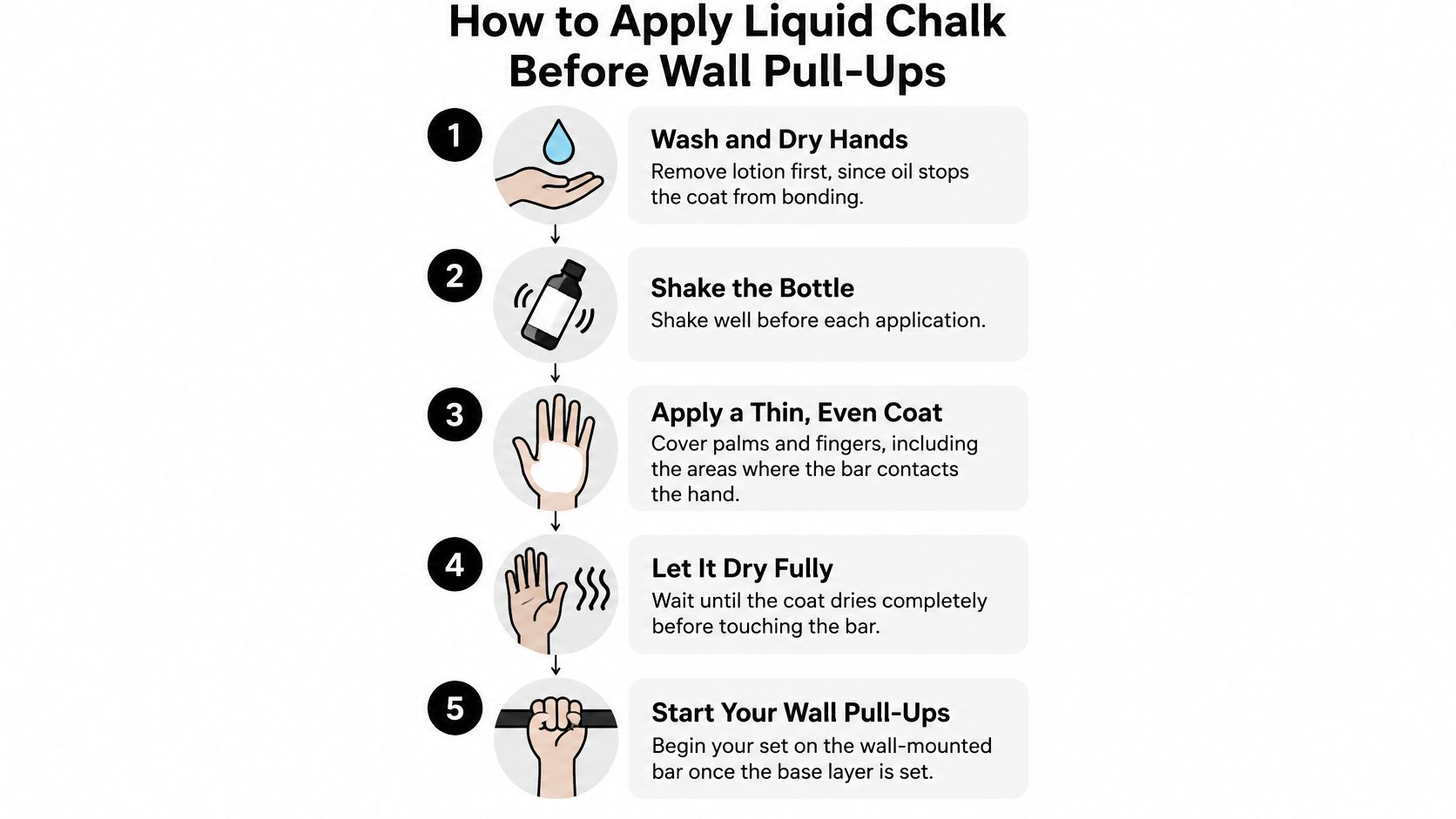
Prepare, apply, and check
- Wash and dry the hands. Remove lotion, oil, and old chalk with soap and water, then dry the palms and finger creases thoroughly. Applying a fresh coat over damp or oily skin makes an even layer harder to achieve.
- Shake the closed bottle, then spread a small amount across the palms and the finger surfaces that contact the bar. Thin and even beats thick and patchy, particularly around the base of the fingers, where missed areas can remain slippery.
- Allow the coat to dry completely. Fast-drying liquid chalk sets quickly, but the useful check is a dry surface that no longer feels wet or tacky. Touching the bar too early can smear the coating and leave an uneven contact patch.
- Before the working set, use a short, controlled hang to check the hold, with a safe way to step down. The athlete should look for sliding, damp spots, or an uncomfortable hand position rather than turning this check into a fatigue test.
- Refresh only when needed. If coverage fades, dry away fresh sweat before applying another thin layer between sets. Adding liquid over a wet palm or building a thick coat can produce a less consistent surface rather than a stronger hold.
- Finish by washing the hands with soap and water, then wiping the bar with a dry cloth if loose chalk remains. Any persistent equipment contamination needs the facility's approved cleaning process, not repeated dry rubbing.
Judge the result under effort
A good application shouldn't require constant repositioning. The bar stays in the same place in the hand as the repetition becomes difficult, without the athlete repeatedly opening and closing the fingers to recover contact.
Application standard: Enough coverage to control moisture, enough drying time to set the coat, and no extra product added merely for appearance.
Skin comfort matters too. Burning, irritated skin, or a damaged callus is a reason to stop and reassess rather than cover the area with more chalk. A secure hold isn't permission to ignore a developing skin problem.
The most useful adjustment is usually small: more complete drying, better finger coverage, or less product. Changing everything at once makes it harder to identify what improved the grip.
Where Gyms and Competitions Allow Liquid Chalk
Before bringing chalk to a wall bar, check the facility's policy; competition rules may set separate requirements. A gym may distinguish liquid chalk from loose powder, while another may prohibit chalk in every form.
Competition rules focus on the climbing surface
USA Climbing's competition rulebook permits commercially available dry or liquid climbing chalk on competitors' hands. It prohibits substances that modify climbing holds or surfaces, including additives that create extra tack. Ordinary chalk transferred from hands is not itself a violation.
That distinction is relevant to grip aids: chalk and products designed to make a surface sticky are not interchangeable. Check the ingredient list and follow the event's interpretation of its rules.
Confirm the policy for your activity
Rules can differ across climbing, gymnastics, lifting, and pole fitness. A policy for climbing holds may not cover a lifting platform, gymnastics apparatus, or pole studio, so confirm the requirements for the specific venue and event.
- Ask about liquid chalk directly. A facility may treat it differently from loose powder.
- Read the event rules. Federation requirements and local instructions may both affect what athletes can use.
- Check the ingredients. Added tackifying agents need particular attention when altering a contact surface is prohibited.
- Confirm the discipline. Make sure the policy applies to the equipment and activity you plan to use.
- Follow cleanup requirements. Keep wet hands off shared surfaces where possible, and use the venue's posted cleanup process.
A guide to gym chalk explains the differences between common formats and can help you prepare questions for facility staff. For wall-bar training, liquid chalk's low-mess application may be useful where the venue allows it, but it does not override a posted rule. Staff can clarify how the policy applies in the room they manage.
Keep the grip aid and the shared equipment clean. Venue rules take priority over general product claims, including claims that a chalk format is commonly permitted.
Liquid Chalk as a Base Layer for Climbers
Climbers who already use powder chalk don't need to abandon it to benefit from liquid chalk. The useful approach is a base layer beneath the existing powder routine, especially when repeated mid-route chalking interrupts movement.
The sequence is straightforward: apply liquid chalk to dry hands before climbing, let it dry fully, then add powder chalk as normal. The liquid layer creates an additional grip layer beneath the powder, so sweat has another layer to work through before the hand needs refreshing.
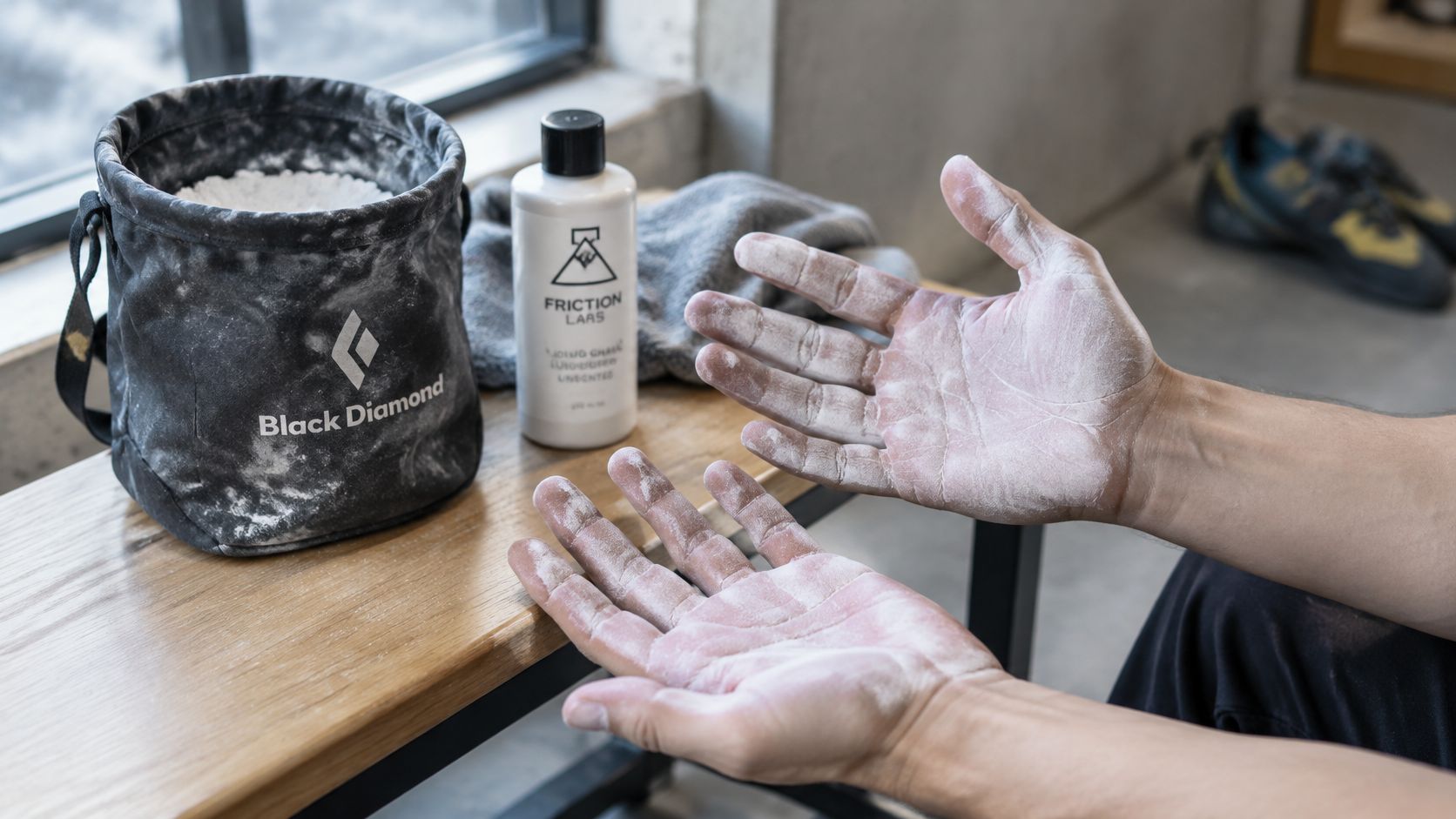
Where the extra preparation earns its place
Long sport routes, multi-pitch climbing, and humid indoor sessions offer a clearer use case than a short boulder problem. The climber may need dependable coverage through sustained movement, with fewer convenient opportunities to stop and chalk.
On a brief problem, a normal powder application may already be sufficient. Adding a base layer then becomes an optional preparation step rather than an obvious improvement.
- Sustained climbing: A longer-lasting coat can reduce the need to reach for powder during continuous movement.
- Humid sessions: The additional layer gives sweaty hands more coverage beneath the powder.
- Short attempts: The extra application and drying step may offer little practical advantage when ordinary chalk already lasts through the attempt.
The useful outcome is fewer interruptions to refresh chalk, not a promised duration on the wall.
Keep the trade-off visible
Layering takes extra preparation and doesn't eliminate the need for powder touch-ups. The climber should judge it by whether the coating lasts through more moves before re-chalking, not by how white the hands appear before starting.
The same approach can suit long wall pull-up sets in a humid room, but only where loose powder is permitted. Adding powder over a liquid base doesn't make powder acceptable in a dust-restricted gym.
For climbers and boulderers, the comparison should remain session-specific. Similar conditions, comparable efforts, and attention to when re-chalking becomes necessary provide a more useful verdict than expecting every route or problem to feel identical.
Choose Liquid Chalk for Your Next Wall Session
A wall-bar set can end because sweat breaks the hand's contact with the bar, even when the athlete's back and arms still have more to give. Choose a grip aid by weighing friction against dust control and the venue's rules.
Powder allows quick touch-ups where it is permitted. Chalk balls contain the powder but still require dabbing. Liquid chalk dries on the hands before contact with the equipment, which can suit dust-sensitive training. It can improve grip when sweat is the problem, but it cannot compensate for a poor hold or make every venue allow chalk.
Make the choice practical
- For dust-sensitive training: Choose a coating that dries before you touch the bar.
- For sweat-related slipping: Check whether the grip stays steady without repeated hand adjustments.
- For shared facilities: Ask the venue about its chalk policy before your session.
Many gyms ban loose chalk but allow liquid chalk. EVMT Liquid Chalk is sweat-resistant and suitable for gyms that do not allow loose chalk, subject to each venue's rules. It dries in seconds, creates almost no dust, and leaves minimal residue on equipment once dry. EVMT offers Classic, Weightlifting, and Rock Climbing formulas in 50 ml portable and 250 ml high-volume bottles.
Start with a clean bar, dry hands, and a thin coat, then let it dry fully. Judge the result by whether the bar stays put when the set gets hard.
Evermost LLC offers liquid chalk for grip support without the dust of loose powder. Before choosing a bottle for wall-bar sessions, confirm that your venue permits liquid chalk. Evermost LLC