


Pole Fitness Accessories: Liquid Chalk for a Firmer Grip
What good is a stronger grip aid if the studio won't allow it or it behaves badly on the pole's finish? That's the gap in many shopping lists of pole fitness accessories: they recommend more grip before checking whether sweat, surface contamination or a venue rule is the actual problem.
The useful purchase is the one that passes both checks, permission to use it and compatibility with the pole. Liquid chalk makes sense for sweaty hands in dust-restricted spaces, powder has a place where loose chalk is permitted, and neither replaces a clean contact surface. Mats and other safety equipment belong to a separate decision, not an upgrade path for chalk.
Table of Contents
- Grip Aids Compared by Dust, Drying and Best Fit
- Checking Your Venue's Chalk Rule Before You Buy
- Applying Liquid Chalk Before a Pole Session
- Removing Liquid Chalk Residue from the Pole
- Protecting Skin from Friction, Metal and Sweat
- Choose Your Pole Grip Setup Before Your Next Session
- When Grip Still Slips
Grip Aids Compared by Dust, Drying and Best Fit
| Grip aid | Loose dust | Drying | On common pole finishes | Best fit |
|---|---|---|---|---|
| Liquid chalk (EVMT LIQUID CHALK) | Almost none | Dries in seconds | Grips chrome and powder-coated poles; residue wipes off after training | Dust-restricted studios and home gyms |
| Powder chalk | Airborne dust that settles on poles and floors | No drying step; absorbs sweat on contact | Works on chrome but cakes into powder-coat texture and needs scrubbing out | Dust-permitted venues with heavy sweat |
| Chalk ball | Dust released with each press | No drying step; releases powder on press | Same finish behaviour as powder, in smaller doses | Quick top-ups during a session |
- Choose liquid for a loose-powder ban. A hand-applied liquid offers controlled coverage without spreading powder through the room, provided the venue permits liquid chalk.
- Choose powder when dust is allowed and sweat is heavy. It offers immediate top-ups, but the athlete accepts the cleanup that comes with loose chalk.
- Combine them only with permission. Permission for liquid chalk doesn't automatically include permission for powder applied over it.
- Skip chalk entirely on silicone-coated poles. Silicone coatings are designed to grip bare skin, and a drying agent can reduce that tack. Where a studio runs silicone poles, ask management whether any grip product is wanted at all.
Match the aid to the actual problem
Grip aids change the contact between skin and pole. Cleaners remove contamination; clothing changes which areas contact the apparatus; mats address landing conditions. Buying from all those categories doesn't necessarily solve sweaty palms, so the grip decision should stay focused.
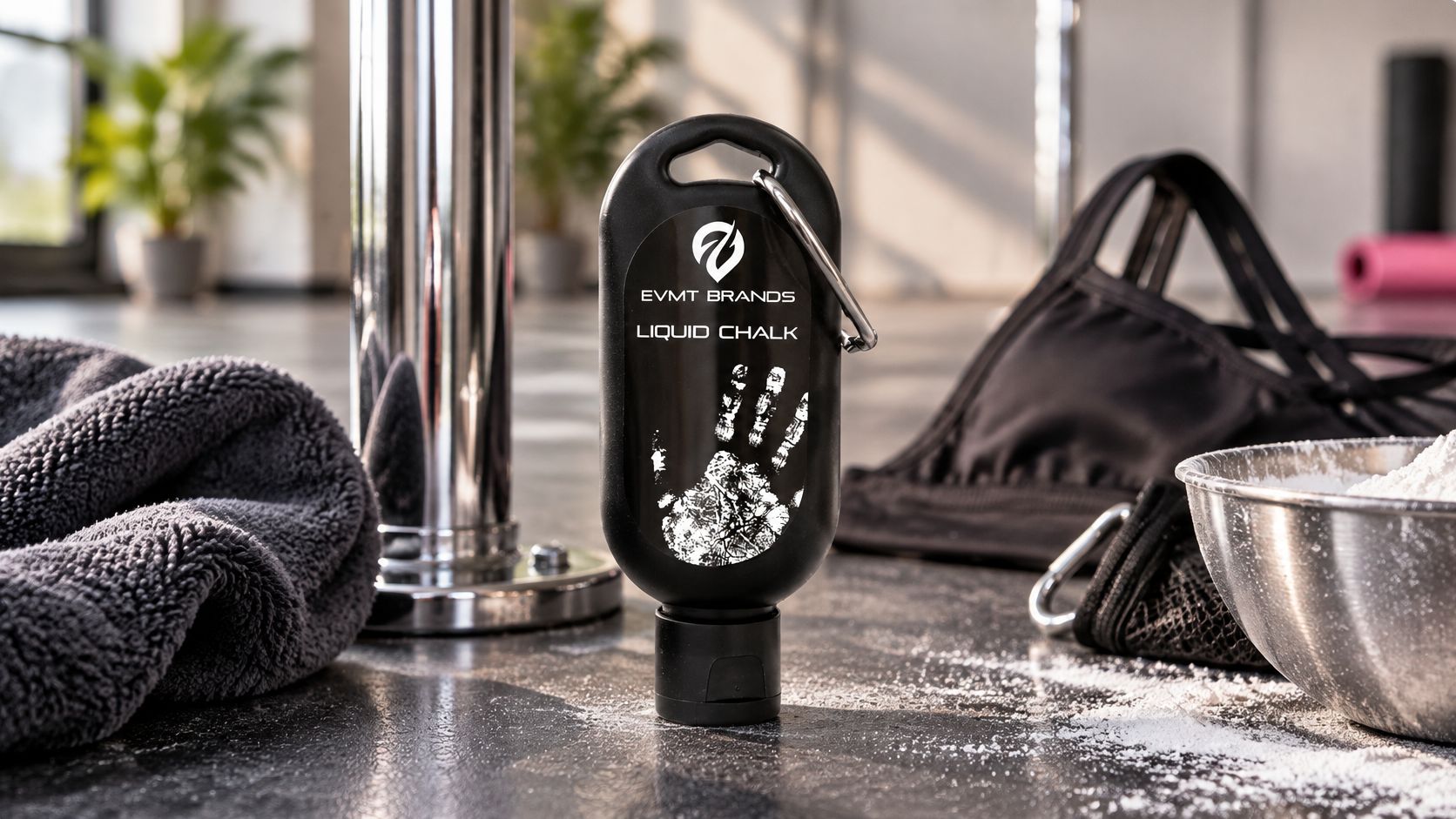
Magnesium-carbonate liquid chalk is applied to dry hands and allowed to set before contact. The linked option is sweat-resistant, creates almost zero mess compared to loose chalk and washes off with soap and water, which makes it suitable for home training spaces and gyms that prohibit loose chalk but accept liquid formulations.
Powder is convenient when hands need repeated drying, but its convenience comes with airborne material and surface cleanup. A chalk ball contains the powder between applications; pressing or squeezing it still releases chalk, so it doesn't answer a powder ban.
The finish can overturn the first choice
A dry hand isn't enough if the cleaning routine has left the pole slippery. Chrome, powder-coated and silicone-coated finishes each call for different care, and the wrong cleaner on any of them can leave a film that no chalk overcomes.
That distinction matters before purchasing a stronger aid. An athlete whose hands slide only on a recently cleaned pole should look at the cleaner and the finish before assuming the chalk is weak. A broader hand grip aid comparison can help separate a moisture problem from a surface problem.
Buying rule: The best grip aid is the least complicated option that controls sweat, suits the surface and satisfies the venue.
Liquid wins under dust restrictions. Powder fits permitted, sweat-heavy sessions. A chalk ball suits contained top-ups. None of the three substitutes for the right finish care.
Checking Your Venue's Chalk Rule Before You Buy
The International Pole Sports Federation apparatus norms specify a constant 45 mm body diameter for the competition apparatus described in that document. Diameter changes how far the fingers wrap and how much skin sits against metal, so a grip product that performs on one pole can behave differently on another.
Standard dimensions are a reference point. Finish, cleanliness and hand condition decide the friction. A grip product should be tested on the actual training pole, with the owner's permission, before an athlete relies on it.
Permission belongs to the training space
At home, the owner decides whether loose dust is acceptable. In a studio, management decides which formulations can touch shared equipment, and permission on the main gym floor may not extend to the pole room.
Published gym rules show how varied these decisions are. Many gyms ban loose chalk but allow liquid chalk. Some facilities permit chalk only on lifting platforms and require equipment cleanup afterward, while others enforce a complete chalk ban in specific spaces.
Permission for one room does not cover another, and none of these policies transfers to an unrelated studio. A rule that accepts chalk on the hands may still prohibit applying any product directly to the pole.
The purchase checks
- Confirm the written chalk rule. Look for an explicit distinction between dry powder, chalk balls and liquid chalk. A chalk ball still contains powder.
- Confirm the permitted area. Ask whether the policy covers the pole room and the particular apparatus in use, rather than relying on a general gym notice.
- Confirm the cleanup duty. Establish which cleaner is supplied, which cloth belongs to the pole and whether cleaning is required between users or after the session.
A home-gym owner can run the same checks against household requirements: no airborne dust, no unsuitable cleaner and no shared surface left uninspected. Where those conditions point toward controlled hand application, liquid chalk is the natural fit.
An unclear rule is a reason to pause the purchase and get the answer in writing. The setup worth buying is the one that clears both checks: permitted by the venue and proven on the finish of the actual pole.
Applying Liquid Chalk Before a Pole Session
A thin, fully dried coat is the starting point. Adding more product doesn't automatically produce more useful friction, especially when an athlete needs both secure holds and controlled repositioning.
A peer-reviewed study of pole-specific strength testing describes the challenges of working against a round, shiny pole surface and identifies the shoulder and wrist as frequently injured joints, with friction-related problems affecting skin. The practical implication is controlled contact, not squeezing harder or applying the heaviest possible coating.
Build an even coat
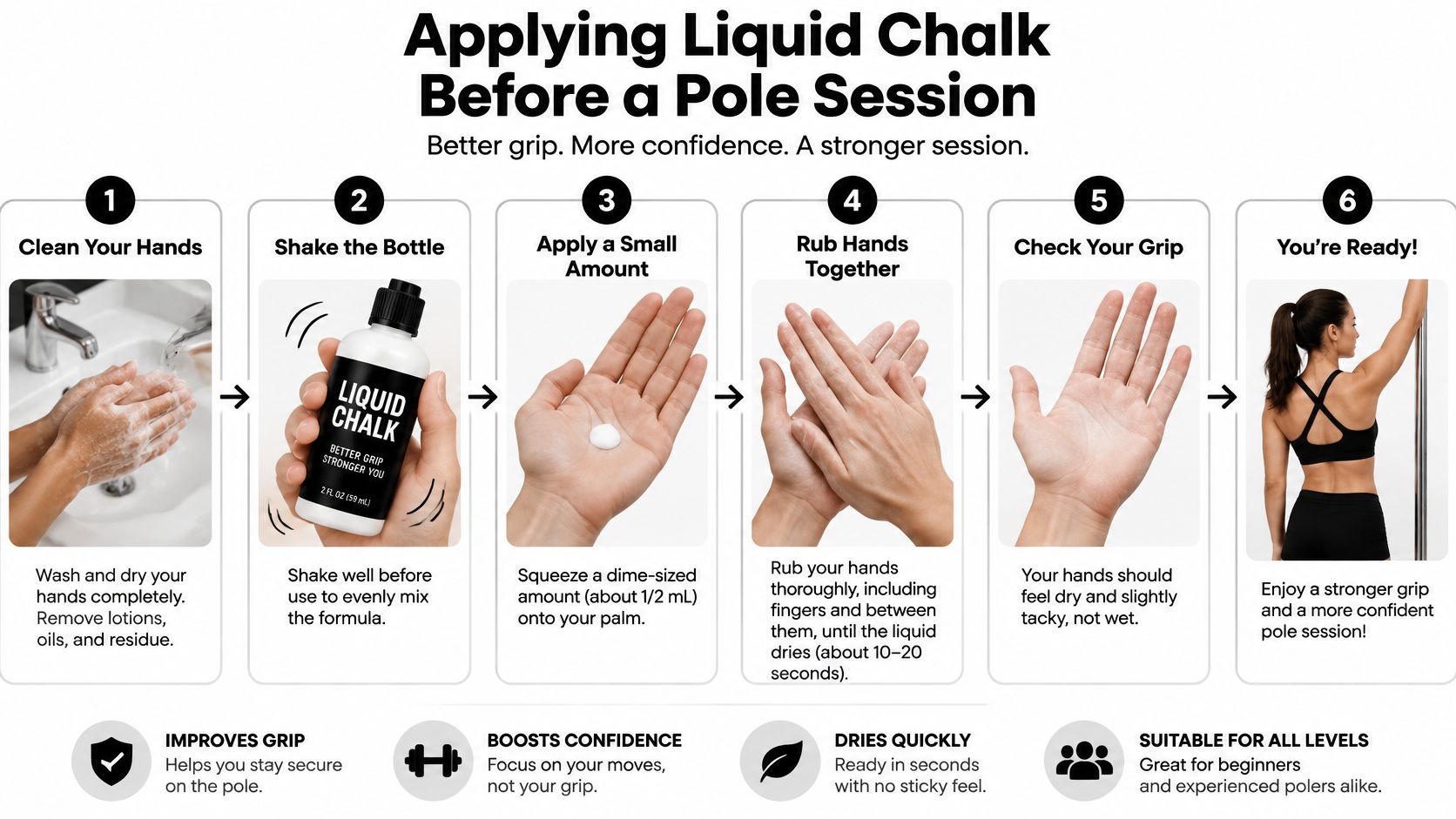
- Start with clean, dry hands. Wash away lotion, oil and previous product, then dry the palms, fingers and spaces between them. Applying chalk over contamination leaves an unreliable layer between skin and the grip aid; covering active sweat is another common mistake.
- Spread a thin coat across the contact areas. Cover the palms and gripping surfaces of the fingers evenly rather than leaving a thick pool in the centre of each hand. The aim is consistent coverage, not a visible crust that flakes or interferes with hand placement.
- Wait until the coat is completely dry. A fast-drying formulation can set in seconds, but the surface condition matters more than counting. Touching the pole while the coating is wet can smear product onto it and leave the hand unevenly covered.
Check contact before relying on it
- Test with a light, low hold. With feet supported and the movement kept close to the floor, check whether the hand stays placed without unexpected sliding. A successful check confirms the feel of that application; it doesn't establish readiness for a higher or more demanding move.
- Reapply only to dry skin when needed. If moisture returns, pause, dry the hands and add a single thin coat where coverage has worn away. Repeatedly painting over sweat can produce a patchy layer instead of correcting the problem.
- Finish with hand washing and surface care. Soap and water remove the chalk from the hands. The pole needs its own finish-appropriate cleaning routine, followed by drying and inspection before another athlete uses it.
The coat is ready when it feels dry and secure, not wet or gummy, and a light hold doesn't slide unexpectedly.
The athlete should also be able to release and reposition the hand predictably. An excessively grabby surface isn't automatically an improvement, especially when movement requires controlled sliding.
Friction contributes to suspension and braking during dynamic work, but a hand check cannot reproduce every load encountered later. Coaching, suitable landing protection and gradual progression remain separate requirements. A grip aid manages moisture; it doesn't certify a movement as safe.
Removing Liquid Chalk Residue from the Pole
Visible marks after a session don't always identify the product responsible. Sweat, skin oils, previous grip products and cleaning films can all change the surface, so the correct response is cleaning and inspection rather than immediately applying more chalk.
Soap and water remove washable chalk from hands, but the pole's finish determines the equipment-cleaning method. A hand-washing instruction isn't permission to soak a pole, its bearings or its base.
Cleaner and avoid list by pole finish
| Pole finish | Suitable cleaner | Avoid |
|---|---|---|
| Chrome or stainless steel | Manufacturer-approved alcohol-based cleaner, then dry thoroughly | Oils, furniture polish, bleach, silicone spray |
| Brass | Cleaner explicitly approved for that brass pole's surface | Oils, furniture polish, bleach, silicone spray |
| Powder-coated | Mild soap and water | Oils, furniture polish, bleach, silicone spray |
| Silicone-coated | Mild soap and water | Oils, furniture polish, bleach, silicone spray |
Alcohol-based cleaning is commonly appropriate for compatible metal finishes, but that doesn't make every alcohol-containing household cleaner suitable. Added fragrance, oils or other ingredients can leave a film. For brass, a decorative metal polish shouldn't be substituted for a product approved for a gripping surface.
Apply the approved cleaner to a cloth rather than flooding the apparatus. Work over the contact area, lift away contamination and dry the surface thoroughly. Powder-coated and silicone-coated poles need particular care to avoid treating their outer layer like bare metal.
Run the post-cleaning check
- Wipe with a clean, dry cloth. Check whether the cloth lifts remaining material or leaves lint behind. A cloth already saturated with product can redistribute contamination.
- Press a dry palm against a low contact point. Use a light, supported hold to check for unexpected sliding or excessive sticking.
- Assess the surface feel. Greasiness, tacky patches or uneven drag mean the pole isn't ready for normal use. Repeat the approved cleaning process and investigate the cleaner if the problem remains.
Studios should keep labelled cloths for different finishes so a product intended for one surface doesn't migrate onto another. Cleaning between students also gives the instructor an opportunity to notice damage, unfamiliar deposits or a change in friction.
A practical liquid chalk removal guide can help distinguish hand cleanup from equipment care. The central distinction remains simple: a washable grip aid may be easy to remove from skin, while the apparatus still needs a finish-specific method.
A chalk product's clean application isn't a reason to skip routine maintenance. Even when it leaves no residue, hands still transfer sweat and oils to shared poles.
Protecting Skin from Friction, Metal and Sweat
Friction injury, metal sensitivity and product irritation are different problems. Treating every red patch as a sign that more chalk is needed can make the situation worse.
Sliding contact can cause grazes or friction burns on the palms, thighs and inner arms. Metal exposure can trigger allergic contact dermatitis in susceptible athletes, while sweat can make contact less predictable. These skin-contact concerns sit alongside equipment safety, as discussed in the International Pole Sports Federation apparatus norms and associated safety considerations.
Identify the likely trigger
- Friction and sliding: Tenderness along a contact path suggests that repeated rubbing deserves attention. More aggressive grip can also make an intended slide uncomfortable.
- Metal contact: A history of reactions to jewellery or watch straps makes the pole's finish and exposed fittings relevant. Chalk shouldn't be treated as a protective barrier against an allergen.
- Product contact: Burning, itching or redness after application calls for stopping use and washing the product off. A suitable active ingredient doesn't guarantee that every additional ingredient suits every athlete.
Magnesium carbonate absorbs moisture and helps reduce slippage. A formula made with non-toxic magnesium carbonate still needs to be assessed as a complete formulation, including any carrier or additives listed on the label. “Non-toxic” doesn't mean irritation is impossible.
Test cautiously and recognise stop signs
For sensitive skin, apply a small amount to intact skin before the first full session and allow a day to observe the response. This is a cautious screening step, not a medical allergy test or a guarantee against a later reaction. A known allergy or recurring rash warrants clinical advice rather than repeated experiments.
Stop sign: Rash, blistering or open sores call for ending the session, not covering the area with another layer of chalk.
A clinician should assess persistent or significant symptoms. Product should stay off broken skin, and pain shouldn't be used as evidence that the grip is working.
Youth gymnasts, cheer athletes and dancers can use the formula under adult supervision. Supervision includes controlling the amount, observing skin reactions and ensuring that a young athlete doesn't continue through discomfort because the hands no longer slip.
Choose Your Pole Grip Setup Before Your Next Session
A home athlete training on a chrome pole in a spare room cannot let loose chalk coat the floor. A sweat-resistant liquid chalk such as EVMT's covers the grip need, a chrome-appropriate cleaner resets the surface after each session, and a small patch test on the skin closes the loop. That combination passes both checks: the venue rule and the pole itself.
A studio that permits powder calls for a different packing list. Powder stays for the rooms where it is explicitly allowed, liquid covers the liquid-only areas, and shared poles get cleaned with the approved product between students. For competition or travel, confirm the organiser's current chalk policy and apparatus requirements before packing, because liquid chalk is not accepted everywhere.
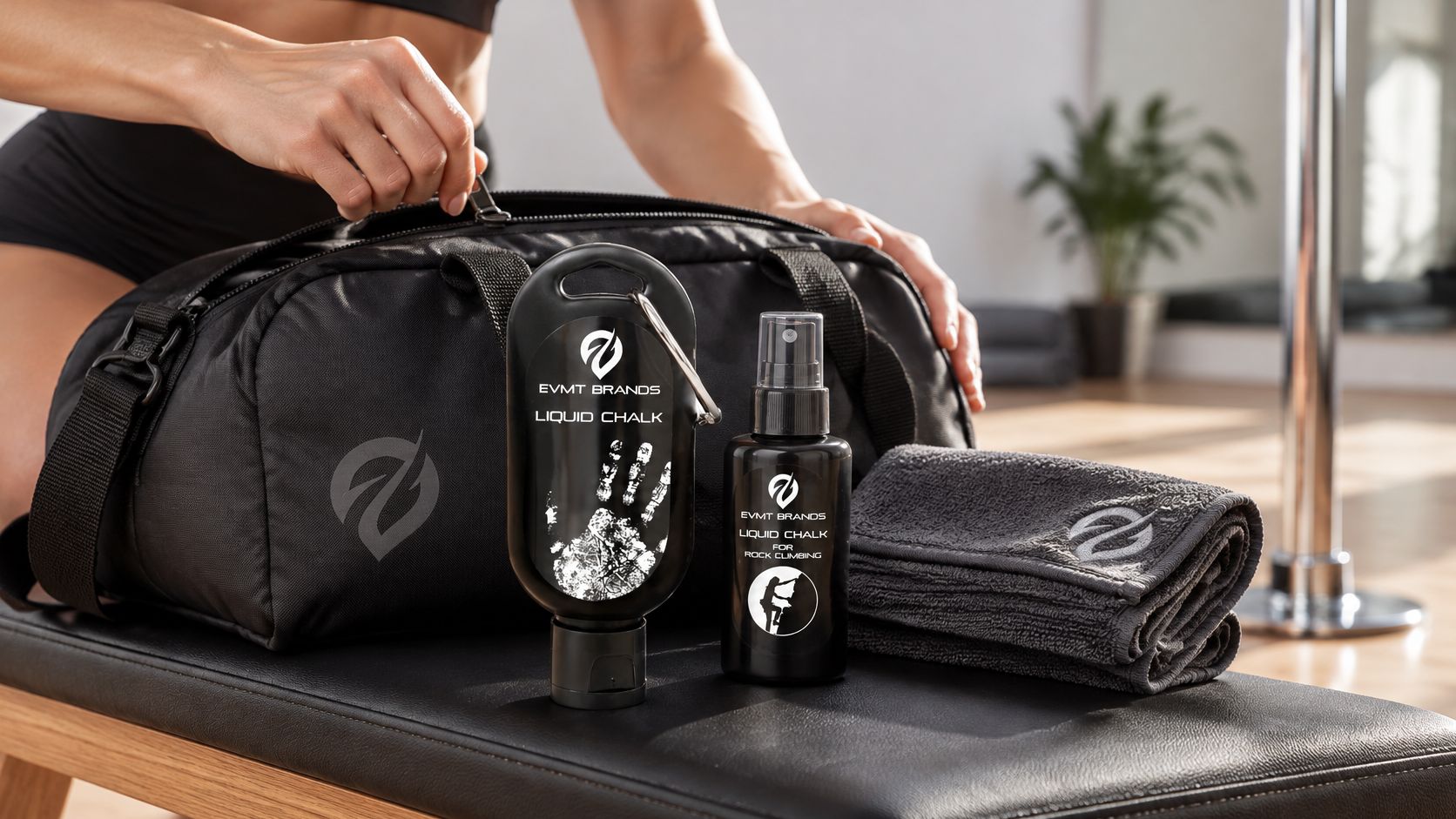
Buy a single bottle first. It is the sensible format for checking compatibility and gauging how much a session uses. Multi-packs suit a regular routine once the formulation has passed those checks, while buying volume beforehand creates a storage problem rather than a grip solution.
Mats, crash pads and protective apparel sit outside this choice. Their suitability depends on the apparatus, the practice environment and the intended activity, not on whether a particular chalk feels secure in the hand.
Record the decision before buying
The useful checklist is short:
- Pole finish: Name the actual contact surface, such as chrome or brass, and its approved cleaner.
- Venue rule: Record which chalk formats are allowed, in which rooms, and who handles cleanup.
- Sweat level: Note whether slipping starts immediately, only after sustained activity, or only on one particular pole.
If permission is unclear, get it in writing before the session. Those three answers narrow the purchase better than the strongest-sounding grip claim on a label.
When Grip Still Slips
Diagnose the failure before buying another bottle. The timing of a slip often tells more than the amount of chalk left on the hands.
A hand that slides on first contact raises different questions from one that holds until sweat returns. A pole that feels greasy to several athletes points toward a shared surface problem, and swapping products will not clean it.
Match the symptom to the next action
| Symptom | Plausible cause | Next action |
|---|---|---|
| Sliding at the start of a hold | Lotion, oil, damp hands or incomplete coverage | Wash, dry and inspect the application before a supported retest |
| Grip fades during the session | Moisture has returned or coverage has worn away | Pause, dry the hands and refresh only the worn areas |
| Pole feels greasy or patchy | Contamination or an unsuitable cleaning film | Stop using it and run the finish-appropriate cleaning check |
| Difficulty occurs on one pole only | Different finish, diameter, condition or maintenance | Identify the apparatus difference before changing products |
| Grip feels excessively sticky | Too much product or incompatible surface interaction | Remove the application and reassess with less product |
These are diagnostic possibilities to weigh. Immediate slipping can also involve hand placement, fatigue or an unsuitable task, so a coach should assess persistent difficulty before anyone reaches for the bottle again.
The venue rule shapes this list. It does not cause slipping itself, yet it decides which remedies are allowed in the room, and switching products without checking permission can turn a manageable grip issue into a policy problem.
Keep a useful grip log
A short note after a failed application should include the pole finish, whether the hands were fully dry, the approximate coat thickness and when the slipping began. Descriptions such as “first contact,” “after sweating” or “only on the studio's coated pole” are more useful than “chalk didn't work.”
One entry means little on its own. Three identical entries across a week point somewhere specific: repeated “first contact” failures suggest a preparation or coverage problem, while “after sweating” entries point at moisture returning mid-session. When the log keeps repeating itself, the diagnosis needs updating rather than another coat.
The pole fitness grip troubleshooting guide offers a focused starting point for separating hand-moisture problems from surface and application issues.
If a clean pole and a correctly dried application still produce unpredictable contact, stop testing harder movements. Ask the instructor to assess the surface and the athlete's contact before increasing the load.
The setup worth buying is the one that survives this check and the venue rule together: a permitted liquid aid for moisture management, a corrected cleaning routine for contamination, or coaching when the difficulty isn't a chalk problem. More product helps only where insufficient coverage is the confirmed cause.
Evermost LLC offers EVMT Liquid Chalk in 50 ml portable bottles and 250 ml high-volume sizes for controlled, fast-drying hand application without loose powder dust. Visit Evermost LLC to choose a size after confirming the pole finish, the venue's chalk rule and the amount the training routine uses.