


Bouldering Chalk Guide: Types, Tips, and Gym Etiquette
Mid-route, sweat starts creeping down the fingertips and the next hold suddenly feels like polished plastic. The chalk bag gets hit again, the hands get worse, and the problem is no longer strength, it's contact. That's where bouldering chalk earns its place in a climber's kit, not as a magic fix, but as a moisture tool that helps skin stay attached to the rock.
Table of Contents
- What Bouldering Chalk Actually Does
- Three Main Types of Bouldering Chalk Explained
- How to Apply Chalk for Maximum Grip
- Choosing Chalk for Your Climbing Style
- Using Liquid Chalk as a Base Layer
- Bouldering Chalk Etiquette at the Gym
- Protecting Your Skin From Chalk Dryness
- Common Bouldering Chalk Mistakes to Avoid
What Bouldering Chalk Actually Does
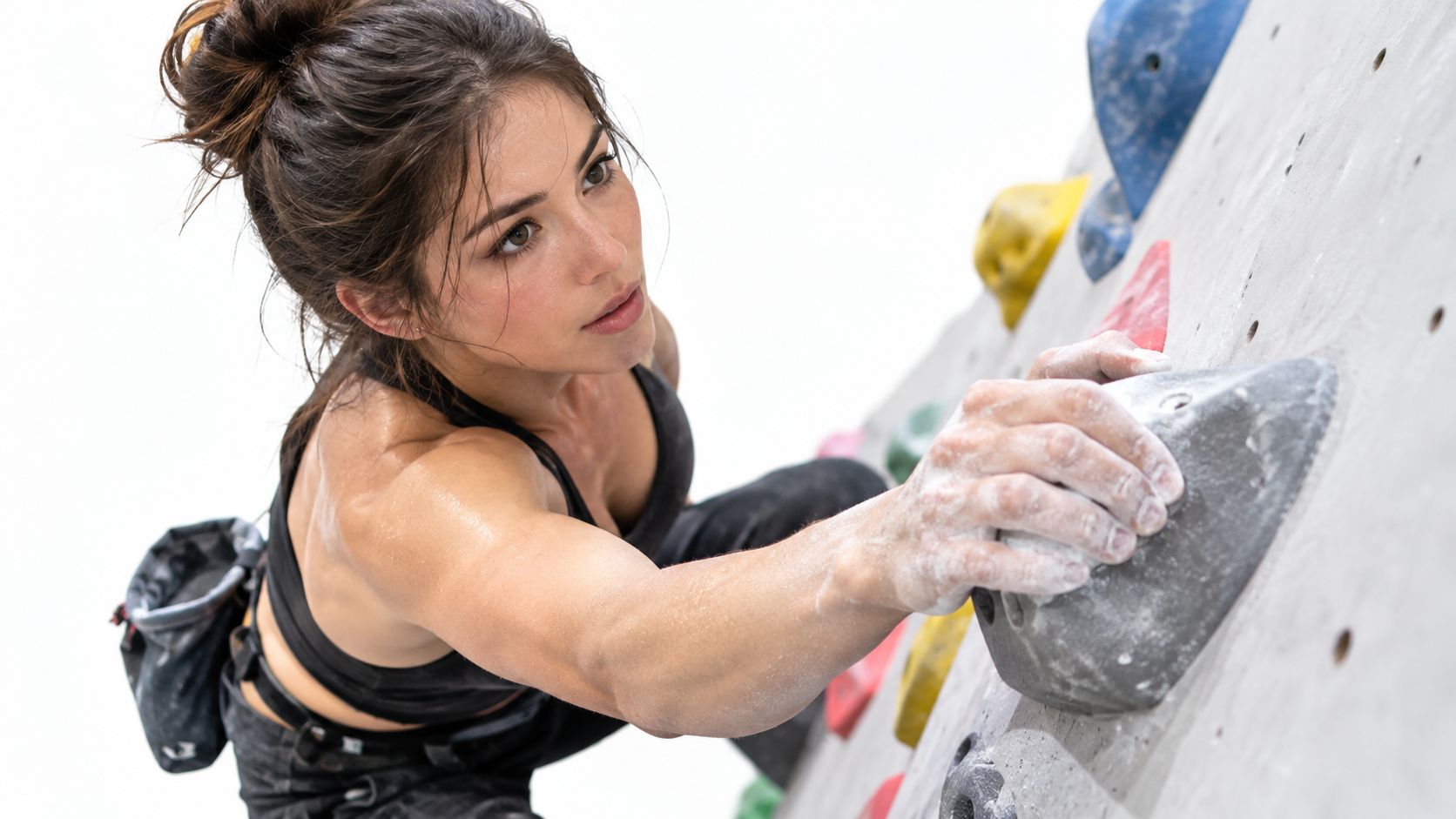
A good run on the wall can turn on a single hand. The crimp looked fine from the floor, then the sweat came, the skin smoothed out, and the grip started to slide just enough to matter. Chalk exists for that moment, because magnesium carbonate helps pull surface moisture off the hands while improving contact between skin and rock.
The real job is moisture control
Chalk isn't there to make weak hands strong. It's there to make sweaty hands usable. The old idea that chalk is a niche accessory doesn't hold up anymore, either, because loose magnesium-carbonate chalk became standard climbing equipment after John Gill started using gymnastic chalk in 1954, following a gymnastics class at Georgia Tech (National Geographic). That history matters because it shows chalk moved from training aid to everyday climbing gear.
The important part is how it works in practice. Chalk helps on small holds, on dynamic moves, and anywhere the skin has to stay in contact long enough to matter. It's also used in gymnastics and weightlifting, so it belongs to a wider family of grip tools built around performance under sweat, not around tack or glue.
Practical rule: chalk works best when the hands are already as dry as they can be.
That's why the first decision isn't which brand to buy, it's how much moisture the session creates. A humid gym, a long boulder day, or hot skin after several attempts changes the job chalk has to do. For a basic reference on the material itself, what climbing chalk is helps frame the rest of the conversation.
Three Main Types of Bouldering Chalk Explained
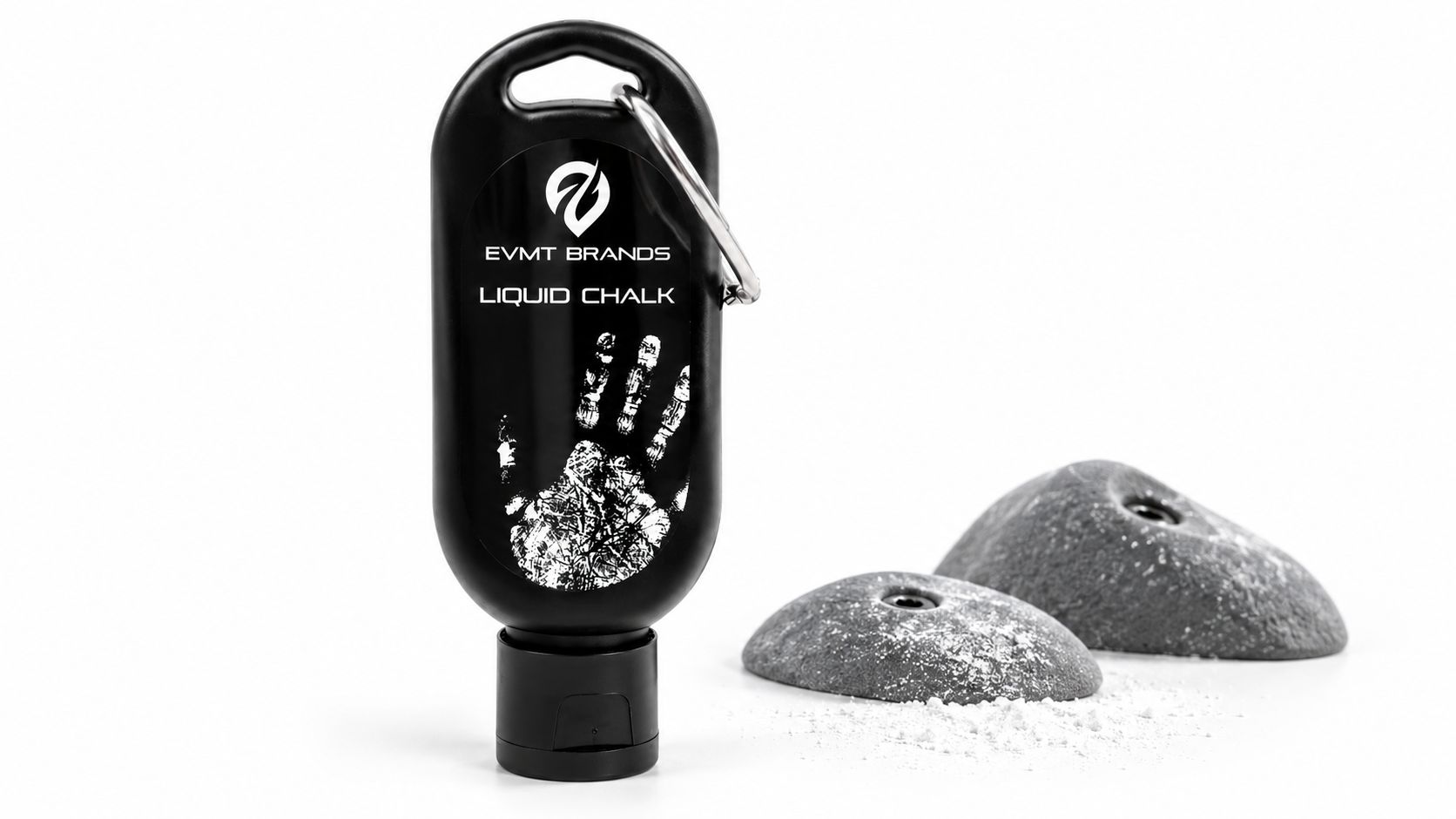
Different chalk formats solve different problems. A climber who wants fast coverage between attempts, a gym that hates dust, and a boulderer who wants a clean base layer are not shopping for the same thing. That's why the choice usually comes down to powder, block, or liquid chalk, each with its own trade-off.
Powder, block, and liquid side by side
| Type | Pros | Cons | Best For |
|---|---|---|---|
| Powder | Fast to apply, familiar, easy to top off | Creates dust, can spread everywhere, can be banned in some gyms | Traditional bouldering sessions where loose chalk is allowed |
| Block | Less airborne dust than loose powder, easy to break down by hand | Slower to apply, can feel uneven if over-crumbled | Climbers who want a drier feel with less mess |
| Liquid | Smooth application, dries quickly, far less dust | Needs full drying time, can be misused if left tacky | Gyms with no-powder rules, competition, base-layer use |
IFSC rules make the distinction clear, competitors may use commercially available dry or liquid climbing chalk, but the chalk has to be magnesium carbonate and it can't alter the hold for later climbers (IFSC rules). That rule structure matters because it mirrors what most gyms care about too, cleanliness, hold condition, and whether the product leaves a residue that changes the wall for the next person.
For climbers looking at EVMT Liquid Chalk, the useful detail isn't hype, it's format. A liquid magnesium-carbonate chalk is the right kind of choice when the goal is controlled application rather than a cloud of dust. The catalog snapshot also lists 11 variants with availability data, which tells shoppers there's room to match format to use case without changing the basic product category.
A gym can tolerate grip aid. It usually can't tolerate contamination.
That's the actual divide. Powder is still fine in many spaces, block is a middle ground, and liquid is the cleanest option when a venue cares about residue or a climber cares about starting with a dry, controlled layer.
How to Apply Chalk for Maximum Grip
The mistake most climbers make isn't picking the wrong chalk. It's using it like a substitute for drying the skin. A wet hand with chalk on top still feels wet, only now it's wet and slippery, which is worse than starting clean.
Start dry, then use less than feels natural
Laboratory testing found that chalk on dry fingertips generally produced a more positive static-friction effect and made friction more consistent, while the benefit was less reliable under simulated sweaty conditions, and too much loose chalk could form a granular layer that acts like a lubricant (White Rose research). That lines up with what climbers feel on the wall, a light coat helps, a packed coat smears.
The practical sequence is simple:
- Dry the hands first. Wipe sweat before chalking so the product can do its job.
- Apply a thin layer. Cover the fingertips and the contact points in the palm, not every inch of skin.
- Brush off excess. Loose powder on the skin can become the thing that reduces grip.
- Reapply only when sweat returns. Constant rehits to the bag usually mean the first application was too heavy or the hands were never dry enough.
A useful mental model is that chalk is a film, not a pile. The goal is to create enough coverage that sweat has to work through it, but not so much that particles sit between skin and hold. On textured indoor volumes, a lighter touch often feels more secure than a thick white coat.
Chalk that disappears into the skin is doing more work than chalk that sits on top of it.
That rule matters even more during repeated attempts. If the hands are getting slick after every go, the fix may be less chalk, not more. Clean fingertips, a thin coat, and a quick brush before the start usually hold better than a heavy dip that leaves powder on the wall.
Choosing Chalk for Your Climbing Style
A short gym problem and a long outdoor session do not ask for the same grip strategy. On a quick boulder, the hands need to be ready immediately. On longer sequences, chalk has to hold up through more movement, more breathing, and more sweat. The right choice depends on where the climbing happens and how fast the skin warms up.
Short problems, humid gyms, and outdoor stone all change the answer.
Outdoor bouldering adds another issue, because chalk can remain ecologically detectable even when it cannot be seen. In a 2020 field study, raised magnesium showed up at 65% of sampled locations where no visible chalk traces were present, and lab tests found negative effects on the germination and survival of rock-dwelling mosses and ferns (study). That does not mean chalk is automatically banned everywhere, but it does mean “looks clean” and “is clean” are not the same thing.
For that reason, environmental care belongs in the gear choice. Outdoor climbers should brush holds after attempts, avoid smearing chalk onto vegetated or biologically active rock, and use the least product that still gets the job done. Indoor climbers face a different problem, airborne residue and messy equipment, so controlled application matters there too.
A climber who also plans training around the same day can get more from a structured session if grip is treated as one input, not the main event. An AI workout planning app can help organize rest, route timing, and effort so chalk use does not become a random habit during the session.
Good chalk use is situational. The right amount indoors is not always the right amount outside.
For long sport routes or humid gyms, a layer that keeps sweat under control for more moves makes practical sense. For short boulder problems, the priority is often a clean first grip and a quick reset between tries.
Using Liquid Chalk as a Base Layer
Many climbers think they have to choose between powder and liquid. That's the wrong frame for bouldering and gym climbing. Liquid chalk can work as a base layer, which means the session starts with a dry, controlled coat before powder goes on top as usual.
Why the layered approach makes sense
Liquid chalk is especially useful when sweat gets ahead of the session. Applied to dry hands, it dries fast and leaves a magnesium-carbonate layer that helps the powder coat last longer before the next re-chalk. The point isn't to replace loose chalk, it's to give the loose chalk a drier starting point. Sweat has to push through two layers instead of one, so the hands usually stay usable for more moves before another trip to the bag.
That strategy fits the way competition rules treat chalk too. USA Climbing allows a small container of commercially available liquid climbing chalk on the field of play, along with limited water or non-greasing hand-cleaning products, while prohibiting substances that add tack or alter hold condition (USA Climbing rulebook). The key is that the product behaves like chalk, not glue.
Where it helps most
- Long sport routes. Fewer re-dips during extended movement helps keep attention on the climb.
- Multi-pitch days. A cleaner, drier base layer can reduce the stop-start chalk routine between sections.
- Humid gyms. Sweat is harder to outrun when the room is warm and the holds stay slick.
- Venue-restricted spaces. Liquid chalk fits better where powder dust becomes a problem.
For climbers who want a controlled application pattern, liquid climbing chalk is a practical place to start because it's framed around drying, not adding tack. That distinction matters. A good liquid layer should dry fully before the climb starts, then powder can be used on top if the session calls for it.
Apply liquid chalk like a primer, not like a sticky coating.
That's the whole trick. When it dries cleanly, it becomes part of the grip stack instead of a replacement for it.
Bouldering Chalk Etiquette at the Gym
Chalk may be personal gear, but the dust never stays personal for long. In a shared gym, every puff ends up on mats, holds, floors, and sometimes on the next climber's hands. Good etiquette is mostly common sense, keep the space usable and keep friction where you need it, on the hold.
Clean application keeps the whole room better
Many gyms restrict powder chalk because airborne dust settles on equipment and creates more cleanup work. Even where powder is allowed, the standard is simple, chalk should stay where the climber is standing, not drift across the wall. That means keeping your chalk bag or bucket closed when it is not in use, and brushing holds after an attempt, especially when chalk has piled up on a crux feature. For a closer look at container choice, see bouldering chalk bucket.
Liquid products fit better in shared spaces because they create less visible dust and make house rules easier to follow. That matters most in busy gyms where staff are already cleaning up traffic, tape, and skin flakes. If a gym posts a sign about a specific chalk format, follow it before you make your first move. Waiting until after you have dusted the wall just creates an avoidable cleanup problem.
A few habits make a real difference:
- Brush after use. Leave the hold cleaner than you found it.
- Keep the container closed. Open bags spill, and spilled chalk becomes everyone's problem.
- Respect venue rules first. If the gym says no powder, the answer is no powder.
- Do not rechalk holds for the next person. Fresh chalk on the next start can leave an uneven or unfair surface.
The point is shared use, not purity. A cleaner gym feels better, and it also works better because fewer holds get coated with loose residue. Route setters notice it. Staff notice it. The climber who arrives after your session notices it too.
Good chalk etiquette is invisible. Bad etiquette hangs in the air and on the holds.
Protecting Your Skin From Chalk Dryness
Chalk strips moisture, and skin notices. After enough sessions, fingertips can get dry, rough, or cracked, and cracked skin never grips as well as healthy skin. The hands may look tougher, but the actual contact patch is worse when the skin is broken.
Wash, rehydrate, and don't wait for cracks to spread
Regular post-session care matters more than most climbers admit. Mild soap and warm water remove the chalk without stripping the hands as aggressively as harsher cleansers, and moisturizer helps keep fingertip pads from turning stiff. That part matters because a little flexibility in the skin usually beats a brittle edge that tears on the next sharp hold.
For athletes who prefer a cleaner dry-down, liquid chalk can also reduce how often the hands get buried in powder during a session. That doesn't make it a skin cream, but it can reduce some of the repeated product buildup that dry hands dislike. For a broader skin-care context, why Fillaree chose Sanoun shea butter is a useful read on the role of emollients after hands get stripped down.
The practical pattern is straightforward:
- Wash after climbing. Leave the chalk at the gym instead of carrying it through the rest of the day.
- Moisturize after washing. Focus on the cuticles and fingertip pads.
- Protect damaged skin early. Small splits get in the way of grip fast.
- Match product use to skin condition. If the skin is already dry, less chalk and more recovery may be smarter for a few sessions.
Cracked fingertips don't just hurt, they perform worse. Once skin starts opening, climbers often chalk more to compensate, which makes the dryness worse and the cycle harder to break. The better move is to let the skin recover before it becomes the limiting factor.
Common Bouldering Chalk Mistakes to Avoid
The worst chalk mistakes are quiet ones. They don't always feel wrong in the moment, but they show up later as slipped feet, dusty holds, or skin that's too dry to trust.
More chalk is not better
The biggest error is overloading the hands. Excess chalk can create the same granular layer that hurts friction instead of helping it, and the wall ends up dusted for no useful gain. Another common mistake is chalking over sweaty hands without drying them first, which traps moisture under the product and leaves a slick surface anyway.
A few other habits cause trouble fast:
- Using the bag as a habit instead of a tool. Re-dipping every few moves often hides an application problem.
- Ignoring the chalk container. Damp or compacted chalk loses the clean feel climbers want.
- Chalking holds excessively. That damages texture and makes the next climber deal with the mess.
- Treating liquid chalk like glue. If it doesn't dry cleanly, it isn't doing the job correctly.
The fix is usually simpler than the mistake. Start dry, use a thin coat, brush residue off the skin and the holds, and stop adding product just because the bag is there. Grip problems that come from chalk are often self-inflicted, not environmental.
The climber who keeps the layer thin usually gets better friction, cleaner holds, and skin that lasts longer into the session. That combination beats any heavy-handed approach, because it works with the rock, the wall, and the hands instead of fighting all three.
Evermost LLC makes EVMT Liquid Chalk for athletes who need controlled grip without powder mess, and it fits especially well for climbers who want a clean base layer under powder or a venue-friendly liquid option. Visit Evermost LLC to look at the product and choose the format that matches the way the hands sweat on the wall.