


Master Your Weightlifting Grip: Unlock Unbreakable Strength
A deadlift can leave the floor smoothly, pass the knees, and still fail when the fingers begin to open before lockout. The legs and back may have the strength, but the bar only moves as long as the hands keep their agreement with it.
Your Grip Is the Weakest Link Until It Is Not
Grip is more than the ability to squeeze a bar. It's the active connection between your force and the implement. When that connection fails, the lift ends regardless of how strong your hips, back, or legs are.
That's why a heavy pull slipping at the last second feels so frustrating. You can have the right stance, a strong brace, and enough power to finish the repetition, yet lose the attempt because the bar begins to rotate or slide through your fingers. The mistake is treating grip as something that should improve automatically through ordinary training.
Grip reflects the whole athlete
Evidence from Olympic-style weightlifting supports a broader view. Grip strength was measured in 164 competitive athletes at the 2022 World Master Weightlifting Championships, giving the subject real relevance to trained lifters rather than a small recreational gym sample. In related research involving elite and sub-elite weightlifters, researchers found significant correlations between both dominant and non-dominant handgrip strength and variables including height, body weight, BMI, and weightlifting performance. The study also reported no statistically significant difference in non-dominant handgrip strength between the elite and sub-elite groups, and no dominant-versus-non-dominant asymmetry within the sample. The peer-reviewed weightlifting grip research therefore points to grip as part of broader performance capacity, not merely forearm size or hand dominance.
That matters for a national-level lifter securing a difficult clean just as much as it matters for a dedicated home-gym athlete trying to finish a deadlift. A secure hand position helps you express strength that already exists elsewhere in the body.
Practical rule: Treat grip as a performance skill. Train it, standardize it, and choose the grip that matches the lift instead of waiting for failure to teach you.
A useful weightlifting grip has three qualities: it resists movement, preserves efficient mechanics, and remains appropriate for the rules of the setting. The goal isn't to squeeze as hard as possible on every repetition. The goal is to create enough control that your hands support the movement rather than becoming the limiting factor.
The Foundation Your Complete Guide to Grip Types
Choosing a grip is like choosing a tool. A double-overhand grip is balanced and useful for learning, warm-ups, and many Olympic-lifting positions. A mixed grip gives a heavy deadlift more resistance to bar rotation. A hook grip creates a strong mechanical lock for explosive pulls. A switch grip changes which hand takes the supinated position across sets.
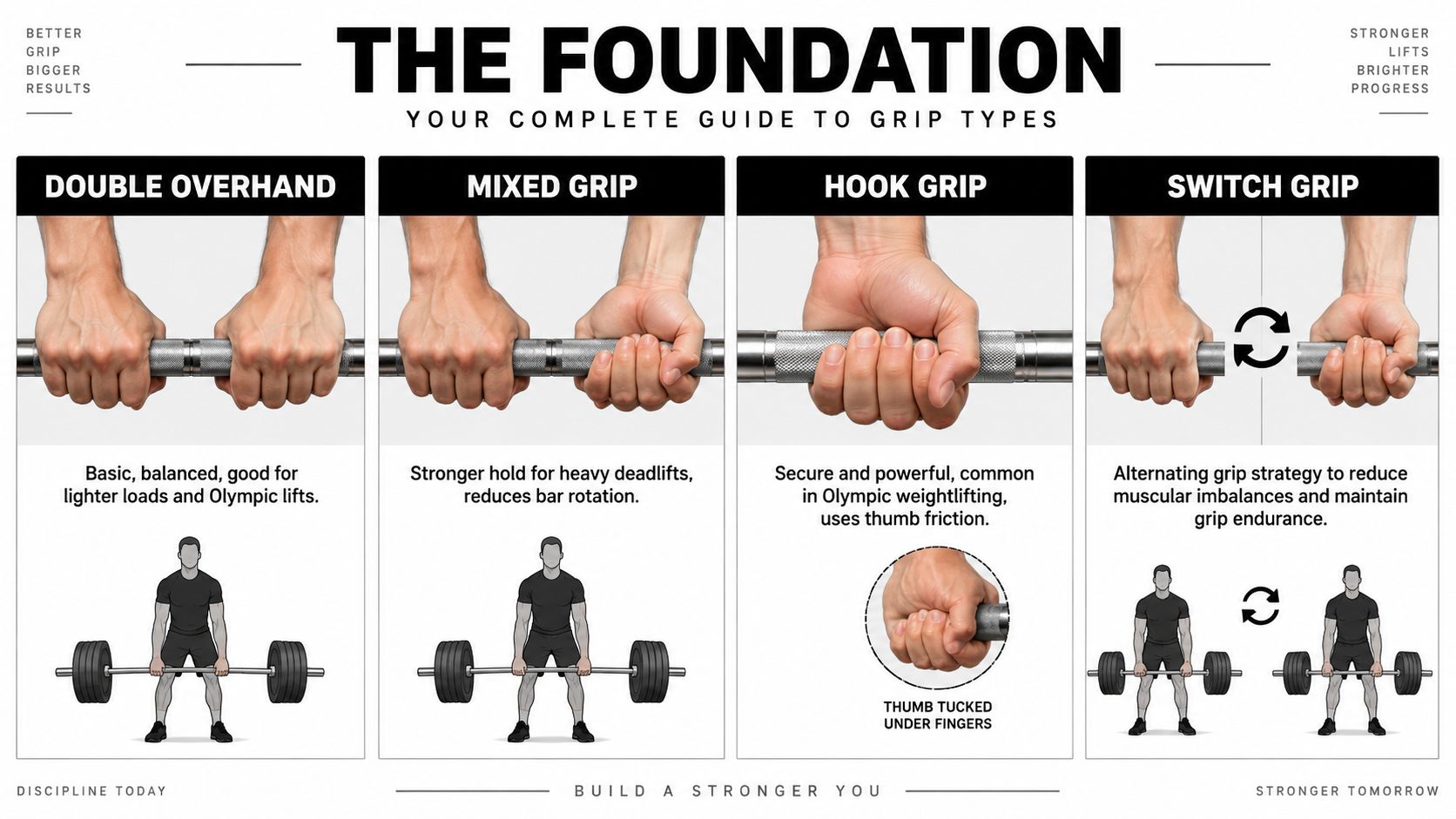
Double overhand grip
Both palms face toward you, with the fingers wrapping over the bar. This is the most symmetrical option and a strong default for warm-ups, rows, Romanian deadlifts, and early deadlift work.
Its limitation appears when the bar becomes heavy enough to roll toward the fingertips. That doesn't make double overhand a poor grip. It makes it a useful test of raw support strength and a sensible choice when you want the hands to remain equally loaded.
For Olympic lifts, the double-overhand position also provides a consistent starting point for the snatch and clean. The grip must be firm, but excessive squeezing can create unnecessary forearm fatigue before the bar reaches the floor.
Mixed grip
One palm faces toward you and the other faces away. The opposing hand positions reduce the bar's tendency to rotate, which can help a lifter hold more weight in a deadlift.
The trade-off is asymmetry. The supinated arm requires careful positioning, and the lifter should avoid pulling aggressively with the elbow bent. A mixed grip belongs most naturally on heavy deadlift attempts when grip security is the main concern, not on every warm-up set.
Hook grip
The hook grip keeps both palms facing down while the thumb wraps around the bar and the fingers close over the thumb. The thumb becomes a friction point between the hand and the bar, allowing the lifter to maintain a secure hold without turning one arm outward.
This is why the hook grip is common in Olympic weightlifting. It supports the fast transition from pull to turnover without forcing the bar to change direction in the hands. A peer-reviewed study found that weightlifters achieved a greater power-clean one-repetition maximum with the hook grip than with a standard closed grip, with a statistically significant difference and a moderate effect size. The power-clean hook-grip study gives the technique a performance rationale beyond habit.
The cost is thumb pressure and an adaptation period. A national-level weightlifter who catches a heavy clean with a reliable hook grip isn't relying on hand toughness alone. That athlete has practiced the position until the grip remains stable during acceleration, turnover, and the rack.
Switch grip
A switch grip alternates which hand is overhand and which is underhand across sets or sessions. It can reduce the tendency to load one side repeatedly, although it doesn't remove the underlying asymmetry of the mixed position.
Use it deliberately. If you switch randomly without recording which hand is supinated, you can create inconsistency rather than balance. For athletes who deadlift heavy with a mixed grip, alternating sides is a straightforward way to distribute exposure while keeping the bar secure.
Applying Grip Technique for Major Lifts
The right grip still fails if you set it casually. Place the hands consistently, pull slack out of the system, and keep the wrist and forearm aligned with the force you need to produce.
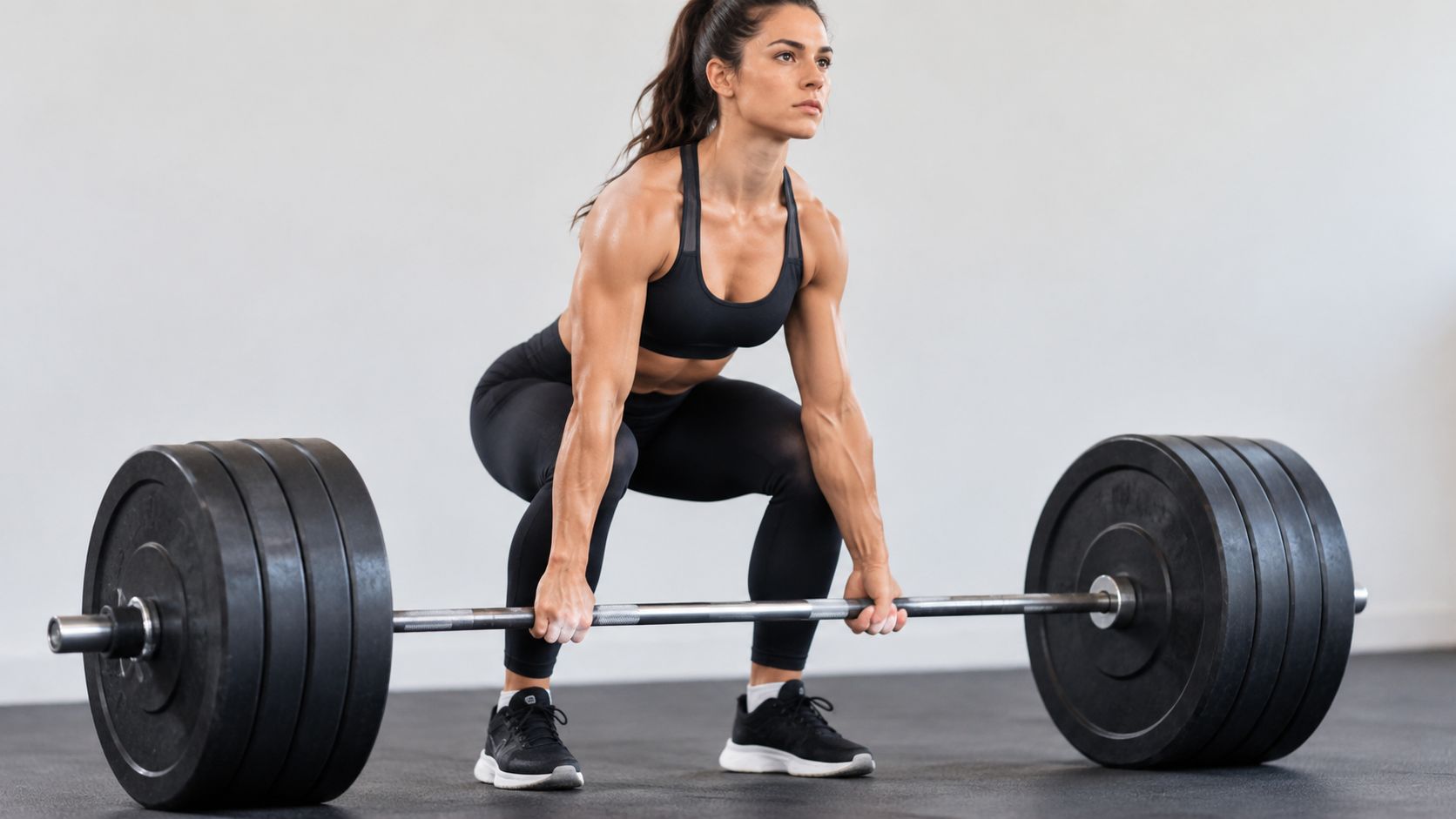
Deadlift
Start with the double-overhand grip while building position and warming up. Set the bar deep into the hand rather than letting it sit across the fingertips. Wrap the fingers fully, squeeze the bar, and pull the slack out before the plates leave the floor.
For a heavy strength-focused deadlift, a mixed grip can prevent the bar from rolling open. Keep the supinated arm straight, avoid bending the elbow, and maintain the same shoulder position on both sides. A hook grip is another option when you want both palms down and a more symmetrical setup, particularly in Olympic-style training.
The practical choice depends on the purpose of the set. Use the best grip for deadlift applications as a decision point, but don't let a grip aid or grip style hide a weak setup. Your feet, brace, bar path, and hand placement still have to work together.
Snatch
The snatch uses a wide double-overhand grip. Set the bar across the crease of the hip when standing tall, then confirm that the shoulders can remain active without forcing the wrists into an uncomfortable position.
The thumb should wrap around the bar, and the hands should stay connected as the bar accelerates. Don't death-grip the bar during the entire movement. Maintain control, keep the bar close, and allow the elbows and shoulders to rotate naturally as you pull under.
A consistent hand mark or measured setup helps more than guessing. Small changes in width can alter the start position, turnover, and receiving balance.
Clean and jerk
The clean begins with a narrower double-overhand or hook grip. Wrap the thumb first, close the fingers over it, and keep the bar close through the first pull. The hook grip should remain firm as the bar passes the knees and the athlete extends.
At the turnover, the hands don't merely let go. The elbows rotate around the bar while the fingers loosen enough for the bar to settle into the rack. If the lifter maintains a rigid, fully closed grip through the turnover, the rack position becomes slower and more restricted.
The jerk then requires a secure but mobile rack. Keep the bar supported across the shoulders, maintain the wrist as neutral as the position allows, and avoid letting the hands carry the entire load overhead.
Bench press
Use a full grip with the thumb wrapped around the bar. Set the bar low in the palm, stack the wrist above the forearm, and squeeze the bar as you lower it. That pressure can help you maintain upper-body tension and a repeatable bar path.
Grip width changes mechanics. Research on the seated barbell shoulder press found that narrower grips increased the load lifted and range of motion while changing shoulder and elbow forces and joint moments. The same research reported that grip width influenced barbell kinetics across the lift and joint kinetics through the early portion of the movement. The grip-width biomechanics research supports choosing width based on the objective of the lift and your shoulder tolerance, rather than using comfort as the only guide.
Pull-ups
A pronated pull-up grip emphasizes the upper back and forearms while keeping the hands in a familiar bar position. Use a full grip, keep the wrists from collapsing, and begin each repetition by setting the shoulders before bending the elbows.
For high-repetition work, avoid turning every repetition into a prolonged finger endurance test if the intended target is the back. Controlled grip assistance can preserve the pulling movement when hand fatigue would otherwise end the set, but the program should still include unassisted holds if grip development is part of the goal.
Use the following video as a visual reference for bar contact, hand placement, and pulling mechanics.
Building a Vise-Like Grip Strengthening Exercises
A strong weightlifting grip develops through several functions, not one generic squeezing motion. Crushing grip helps you close the hand around an object. Support grip keeps the hand closed while a load tries to pull it open. Pinch grip lets the thumb work against the fingers when the implement doesn't provide a friendly handle.
Crushing grip
Heavy grippers can build forceful hand closure, but use them as focused assistance rather than a replacement for barbell work. Perform controlled closes, hold the closed position briefly, and stop before the forearm becomes so fatigued that it affects the next important session.
You can also train individual fingers with a simple resistance tool, provided the movement stays controlled and pain-free. The purpose is to strengthen the parts of the hand that often fail first, not to chase fatigue for its own sake.
Support grip
Farmer's carries are one of the most useful choices because they combine hand endurance with bracing, gait, and shoulder control. Pick up two heavy dumbbells, stand tall, keep the ribs stacked over the pelvis, and walk without letting the handles rotate.
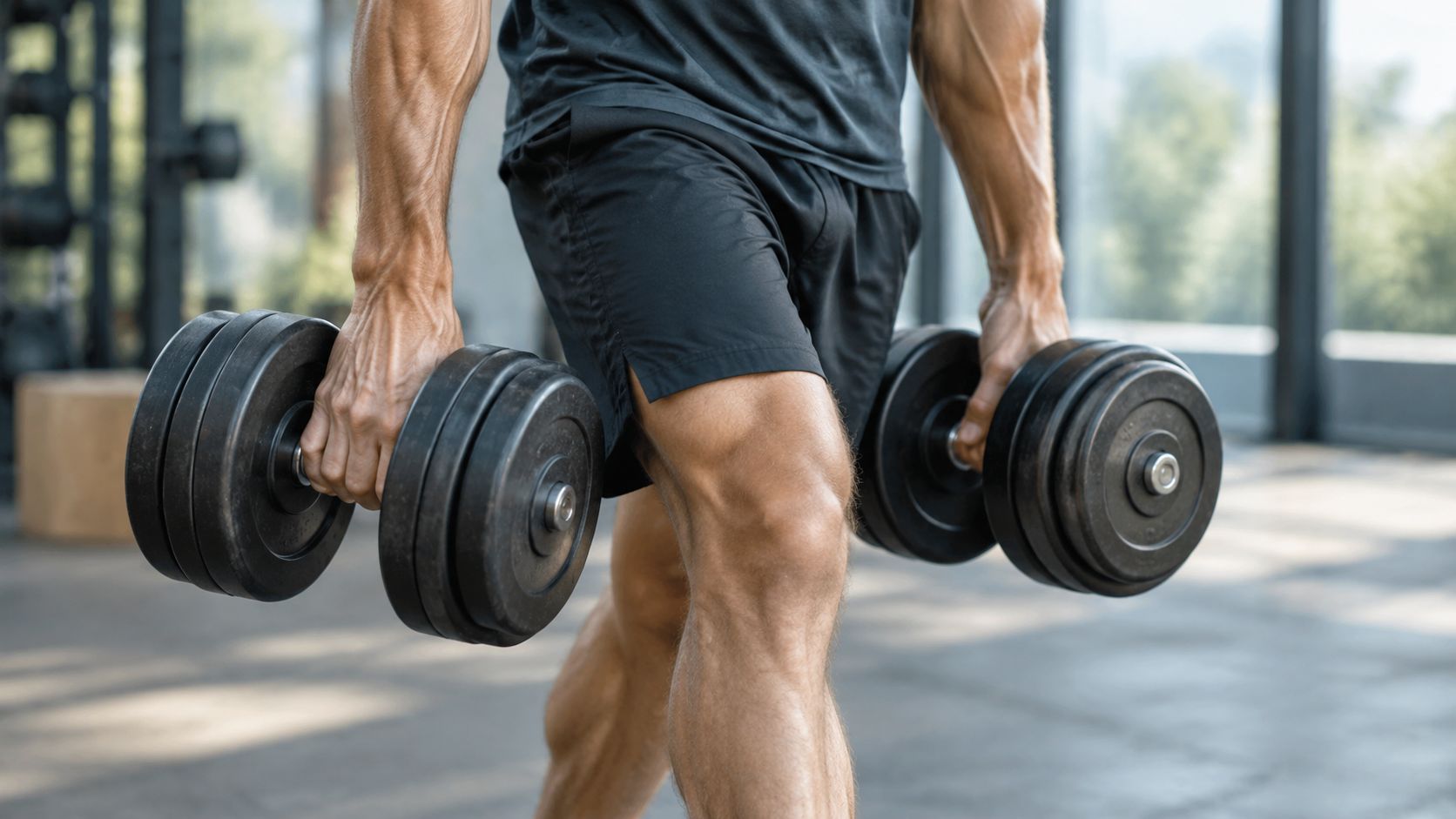
Use carries as a demanding finisher after the primary work, or place them on a day when you can recover from the extra forearm loading. Kettlebell carries and holds can add offset loading and awkward-handle demands. Empire Athletics' kettlebell guide offers useful context for incorporating kettlebells into broader conditioning work without confusing conditioning with dedicated grip training.
Dead hangs are simpler. Hang from a pull-up bar with the shoulders active, keep the hands fully wrapped, and stop when the grip begins to open rather than dropping through an uncontrolled shoulder position. They fit well at the end of a pull session, when the main strength work is already complete.
Pinch grip
Plate pinches train the thumb and fingers in a way a barbell cannot. Stand two smooth-sided plates together, pinch them between the thumb and fingers, and hold them without letting the plates tilt. Use short, high-quality holds and progress by adding control before chasing heavier plates.
A practical weekly structure can include one support exercise, one pinch exercise, and one crushing exercise. Keep direct grip work away from the sessions where fresh hands are essential for heavy cleans, snatches, or deadlifts.
For more exercise ideas and setup guidance, use this resource on how to improve grip strength. The main principle remains simple: train the function that limits your lift, and don't add so much volume that the grip work reduces the quality of your primary movements.
Common Grip Mistakes and Injury Prevention
A harder squeeze isn't always a better grip. Many lifters clamp down from the first warm-up and create forearm fatigue before the bar reaches a challenging load. The hand should be secure, but the amount of tension should match the task.
Stop forcing the wrist into extension
Wrist position affects both force transfer and comfort. A 2025 study of novice weightlifters found that the neutral-wrist group had better wrist function and strength in both dominant and non-dominant wrists, while the extended-wrist group reported more pain. The novice weightlifter wrist study supports a neutral wrist whenever the lift allows it, especially during repetitive or high-volume work.
That doesn't mean every barbell position can look perfectly neutral. A front rack, overhead position, and bench setup each impose different demands. It means you should avoid collapsing the wrist without a clear technical reason, and you should adjust the hand position if discomfort increases as the set continues.
Respect mixed-grip asymmetry
The mixed grip can hold a heavy deadlift, but the supinated side deserves attention. Keep that elbow straight and don't rotate the torso toward the underhand arm. Alternate the supinated side across training exposures, and use double overhand or hook grip for work where symmetry matters more than absolute holding capacity.
Calluses also influence grip quality. Smooth, controlled filing can prevent a thick ridge from catching on the bar, while tearing skin should end the session's raw-grip work. Pain that persists, worsens, or changes your movement deserves assessment from a qualified clinician rather than another layer of chalk.
Use dry grip for hands as part of a broader approach to moisture and skin management. A dry palm won't fix poor wrist alignment, an unstable bar path, or an overly aggressive training load.
Grip Aids Skin Care and Equipment Choices
Grip aids should solve a defined problem. Chalk manages moisture and improves friction. Straps let you train a pulling muscle group when the hands would otherwise end the set. Skin care keeps calluses from becoming a technical liability. None of these tools replaces a competent grip.
Chalk and competition rules
Chalk remains the baseline legal aid in many strength settings. In grip sport rules, chalk is described as the only permitted gripping aid, while lifting straps are prohibited and hook grip isn't allowed in those events. Raw powerlifting rules also restrict deadlift assistance largely to chalk and the athlete's own hands, with straps banned in raw competition. The grip-sport and powerlifting rules explain why bare-hand control remains foundational for competitive lifters.
USA Weightlifting rules explicitly permit chalk on the hands, thighs, and other body areas, but the wording is specific to permitted use. Gymnastics follows a different approach. USA Gymnastics rules prohibit chalk on the runway and vault table while allowing it on the hand placement mat when markings are removed by the end of the rotation. The USA Weightlifting rules document and USA Gymnastics' apparatus rules show why athletes should check the relevant federation and venue before competition.
EVMT Liquid Chalk from Evermost LLC is one liquid option for athletes who want a fast-drying, sweat-resistant barrier with minimal dust and residue once dry. It can suit commercial gyms, home gyms, and training environments where loose powder creates cleanup or equipment concerns. Check meet-specific rules before using any product in competition, because permission for chalk doesn't automatically mean every grip product is accepted.
Straps and skin management
Straps make sense when the target is the back, hamstrings, or hips and grip isn't the variable you want to test. They can also protect the hands during high-volume pulling. They become counterproductive when you use them for every set and never expose the hands to the demands of the competition lift.
A 2026 review found that lifting straps can enhance maximal strength and perceived grip, but it found no consistent effects for pulling and back exercises and noted that scientific evidence for chronic training benefits is still absent. The lifting-strap review supports a selective approach. Use straps to manage fatigue and overload the intended musculature, then keep grip-specific sets unassisted when grip adaptation matters.
Finally, respect the bar itself. Knurling, moisture, and diameter change the task before you change your technique. In a controlled free-weight-bar study, athletes used a standard Olympic bar, a 2-inch bar with a 5.08 cm grip span, and a 3-inch bar with a 7.62 cm grip span. Thicker bars reduced deadlift and bent-over-row one-repetition maximum loads, and the 3-inch bar produced especially large reductions, including about 26.1% in the upright row and 17.6% in the arm curl. The free-weight bar thickness study makes the programming point clear. Thick handles are useful for deliberate grip overload, but they aren't neutral equipment.
Your Grip Is Your Contract with the Bar
Your grip isn't a genetic lottery ticket. It's a trainable combination of hand strength, wrist position, bar awareness, technical timing, and sensible tool use. Choose double overhand, mixed, hook, or switch grip according to the lift and the rules, then build crushing, support, and pinch capacity around that choice.
Equipment matters too. Research on thicker bars found that deadlift and bent-over-row one-repetition maximum loads were significantly reduced with 2-inch and 3-inch bars compared with a standard Olympic bar, showing that grip demand can change force production rather than merely making a lift feel harder. The bar-diameter research reinforces the value of treating grip as a specific training variable.
Evermost LLC offers EVMT Liquid Chalk for lifters who need a clean, fast-drying way to manage sweat and maintain bar contact during training. Visit Evermost LLC to choose a grip solution that fits your lifting environment, then put it to work alongside deliberate technique and direct grip training.