


Waterproof Athletic Tape: What It Actually Does for Athletes
A lifter finishes a sweaty set and notices tape curling away from a thumb. A climber in a humid gym feels a taped finger slipping inside its wrap. Both may start shopping for waterproof athletic tape, but the useful question comes first: does the athlete need joint support, skin protection, or help managing sweaty grip? Tape and chalk serve different purposes, and buying one to solve the other's problem can leave the original frustration untouched.
Table of Contents
- Why Waterproof Athletic Tape Matters in Real Training
- How Waterproof Athletic Tape Is Built
- Waterproof vs Water Resistant vs Sweat Resistant
- Where Waterproof Tape Actually Holds Up
- How to Apply Waterproof Tape So It Actually Performs
- Choosing the Right Waterproof Tape for Your Sport
- Common Myths About Waterproof Athletic Tape
Why Waterproof Athletic Tape Matters in Real Training
On a pool deck, tape that survives the water can look reassuring. In a lifting hall, an intact wrap can feel like proof that the adhesive has done its job. Yet athletes need more than a strip that remains visible on the skin.
A taped joint may need controlled movement. A protected contact area needs tolerable skin friction. A sweaty palm needs a grip-management solution, not necessarily another adhesive layer. Successful adhesion isn't the same as successful support or better grip.
The difference between staying attached and staying useful
An Illinois State University thesis summarized collegiate-football evidence associating prophylactic ankle taping with a reduction from 32.8 to 14.7 sprains per 1,000 athletic exposures, approximately 55%, while also reporting that conventional white tape lost 50% of its restrictive properties after a 2.5-hour practice (ankle-taping evidence and post-practice restriction). Those findings illustrate separate questions, not a universal promise about every tape.
For the athlete comparing grip aids, that distinction prevents an expensive category mistake:
- Support problem: A joint needs an appropriate taping technique and, when injured, clinical assessment.
- Contact problem: A specific skin area needs protection without creating uncomfortable pressure.
- Sweat problem: Hands need moisture management appropriate to the activity and venue.
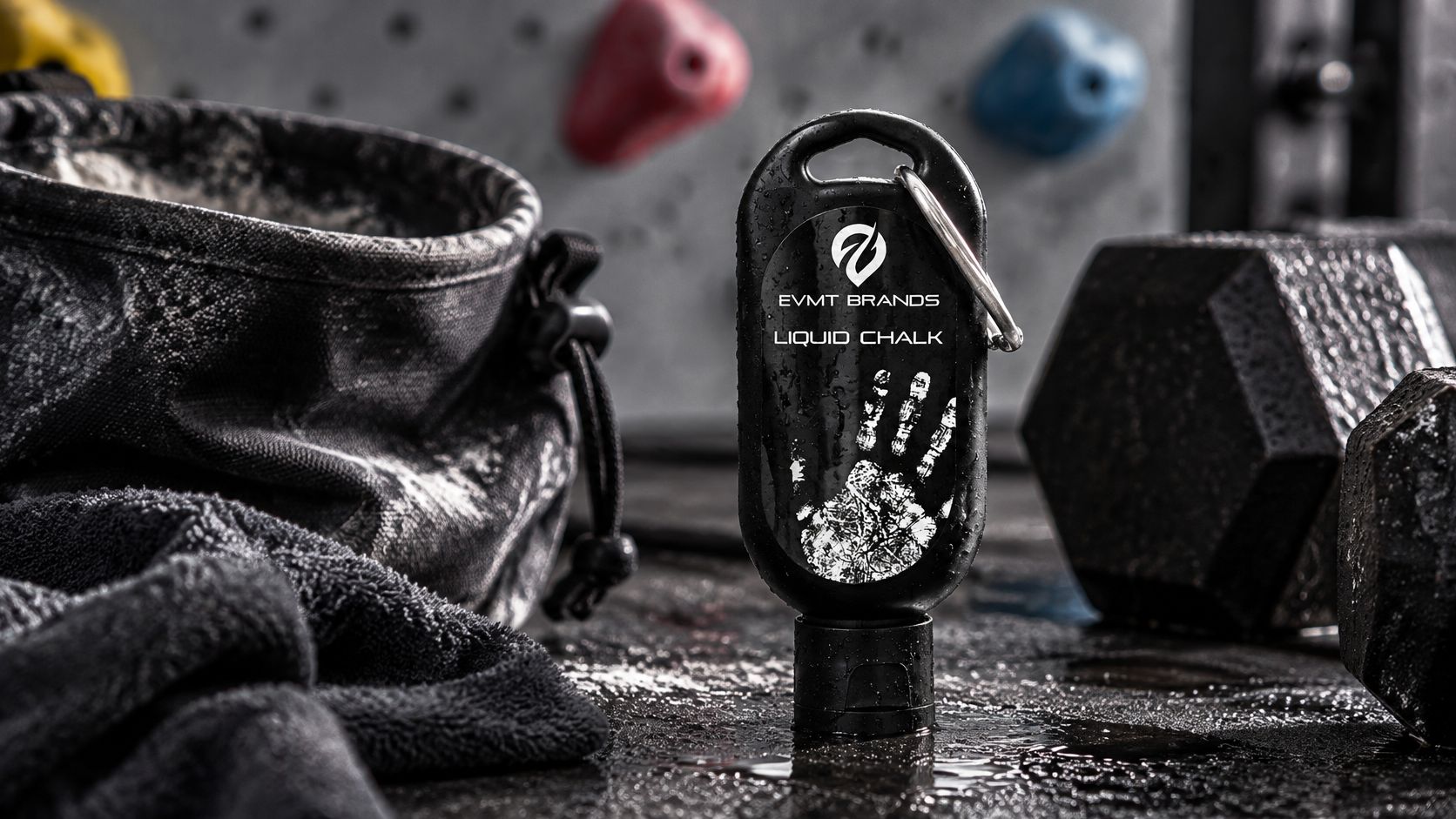
The pictured grip aid belongs to that last category, rather than serving as a replacement for supportive taping.
For families managing field-sport participation, Villarreal Houston Academy's youth soccer injury prevention tips offer a broader prevention resource beyond product selection. Tape should fit into an athlete's care decisions, not become the entire strategy.
Practical rule: A waterproof label answers a moisture question. It doesn't establish whether the product solves the athlete's actual problem.
How Waterproof Athletic Tape Is Built
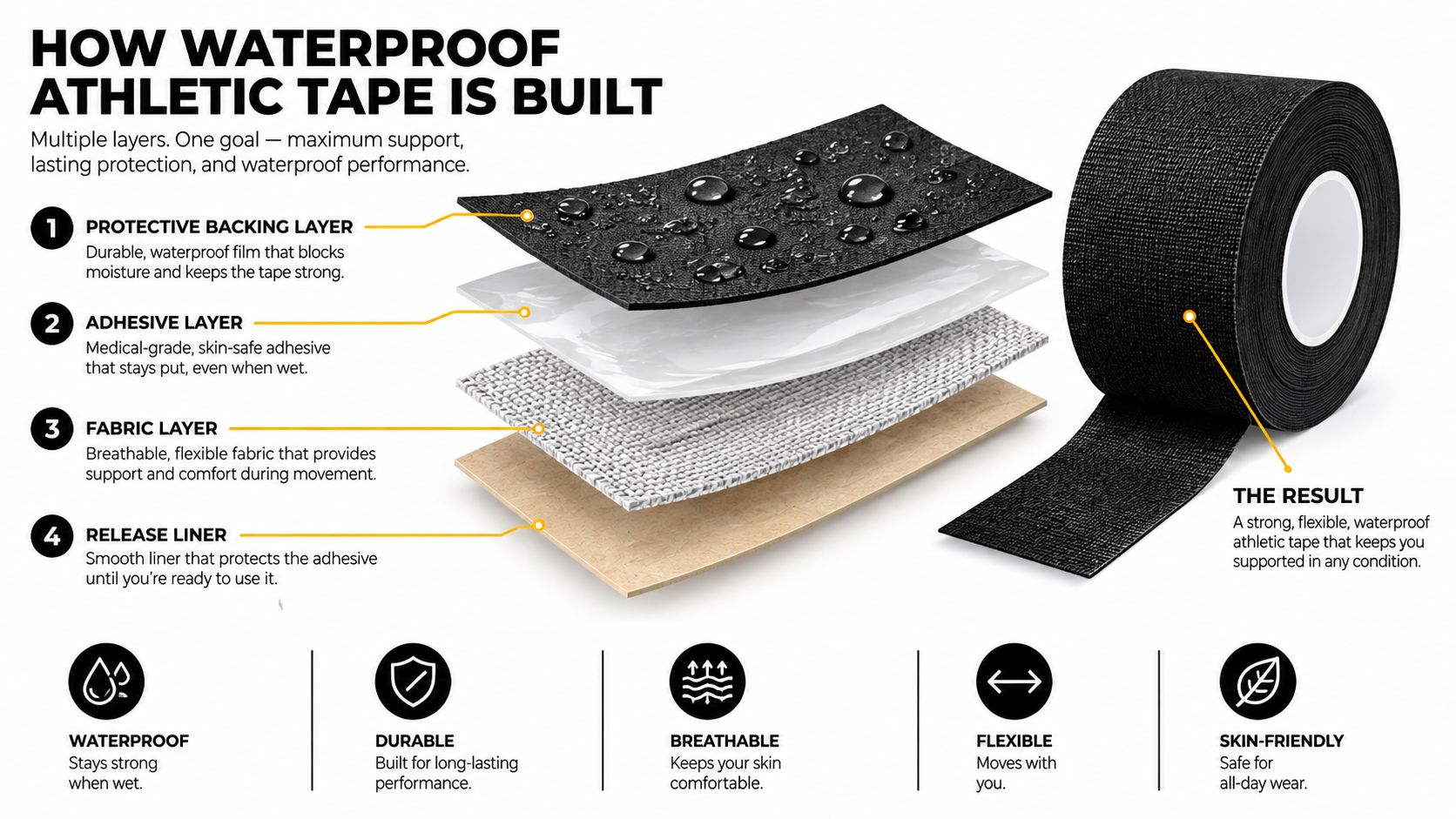
Waterproof athletic tape works as a backing, adhesive, and skin-interface system. Product descriptions sometimes blend those components together, but each deserves a separate inspection.
The construction illustration provides a useful starting point for understanding those interacting parts.
Backing and stretch behavior
The backing is the material an athlete handles. Its ability to resist liquid water is different from its ability to let moisture vapor escape.
Published kinesiology-taping material describes water-resistant, air-permeable construction, approximately 120–140% of original-length stretch, and wear of roughly 3–5 days, with results dependent on application and movement (kinesiology-tape construction and application characteristics). Those characteristics describe an elastic tape category, not every product sold as athletic tape.
The stretch figure needs careful reading. Stretching to a percentage of original length does not mean adding that entire percentage again. Elasticity is a material property, not a prescription for application tension.
Adhesive and skin compatibility
The adhesive must maintain contact while the backing bends and the athlete moves. The skin interface is where comfort, contamination, and mechanical pulling become relevant.
A practical product-page review separates the questions:
- Backing: Does the manufacturer describe breathability and intended movement?
- Bond: Does the documentation address wet wear and repeated flexion?
- Compatibility: Are material disclosures and skin-use warnings available?
Athletes concerned about material sensitivity can use this explanation of latex-free athletic tape to guide label questions. A material claim should never be stretched into a guarantee that irritation can't occur.
Rounded edges and controlled stretch belong to application technique, not magical adhesive chemistry. A product can have appropriate materials and still perform poorly when its shape, tension, or placement doesn't suit the task.
The useful buying habit is simple: read the construction details before accepting the headline claim. A flexible, breathable tape and a low-stretch support tape shouldn't be treated as interchangeable merely because both tolerate water.
Waterproof vs Water Resistant vs Sweat Resistant
These labels describe different intended exposures, but they don't provide a universal ranking. Without product-specific testing, waterproof doesn't automatically mean stronger, longer-lasting, or more comfortable than water resistant.
Likewise, a sweat-resistant claim doesn't establish swimming suitability. Athletes should ask what exposure was tested, under what movement conditions, and how the manufacturer decided the tape had passed.
Comparing Waterproof, Water Resistant, and Sweat Resistant Tape
| Claim | Typical Exposure | Best For | Limitation |
|---|---|---|---|
| Waterproof | Wetting or immersion described by the manufacturer | Comparing products intended for substantial water contact | Doesn't establish immersion duration or retained support without test details |
| Water resistant | Limited wetting, splashes, or shower exposure | Situations matching the stated exposure conditions | Shouldn't be interpreted as unlimited underwater wear |
| Sweat resistant | Perspiration during activity | Evaluating products intended for sweaty training | Doesn't establish pool performance or resistance to equipment friction |
The label alone doesn't identify the adhesive formulation. Assigning a particular chemistry to every waterproof or sweat-resistant product would overstate what the wording reveals.
Athletic wear also involves more than clean-water contact. Skin oils, repeated movement, friction, and perspiration form a combined challenge. A meaningful evaluation therefore considers comfort and removal as well as whether the strip remains attached.
Stronger adhesion has a cost
A clinical evaluation of four acrylic adhesive tapes followed 36 healthy volunteers for up to 28 days and recorded 13 mild-to-moderate device-related events, including irritation, blistering, broken skin, stinging, and dermatitis (extended-wear adhesive-tape clinical evaluation). That wasn't a sport-specific comparison, so its wear results shouldn't become a training-duration promise.
Its relevance is the trade-off: longer attachment isn't automatically a better skin outcome.
An athlete needs a bond that suits the task and can be removed tolerably, not simply the strongest adhesive available.
A useful packaging question is whether the manufacturer reports wet adhesion, repeated-stretch performance, and skin tolerance separately. If the only information available is a prominent waterproof badge, the athlete still lacks the evidence needed to predict demanding gym or pool use.
Where Waterproof Tape Actually Holds Up
A shower, a swim, and a sweaty lifting session aren't interchangeable product tests. The practical approach is to identify what will challenge the tape during the actual session rather than treating all moisture exposure as equivalent.
Pools, lifting halls, and field sessions
For swimming or open-water activity, the purchase decision should turn on documented immersion suitability. Shower compatibility alone doesn't establish suitability for repeated strokes, prolonged submersion, or a particular pool environment.
For lifting, bar contact creates a separate question from water exposure. Tape placed at a contact point must be assessed during the intended grip, while tape used for joint support must be assessed for its prescribed purpose.
A comparative sports-medicine study found that cloth and self-adherent tapes initially reduced ankle range of motion and talar-tilt displacement, but both lost some restriction after exercise (cloth and self-adherent tape before and after activity). That finding makes post-activity assessment more informative than a photograph of an intact wrap.
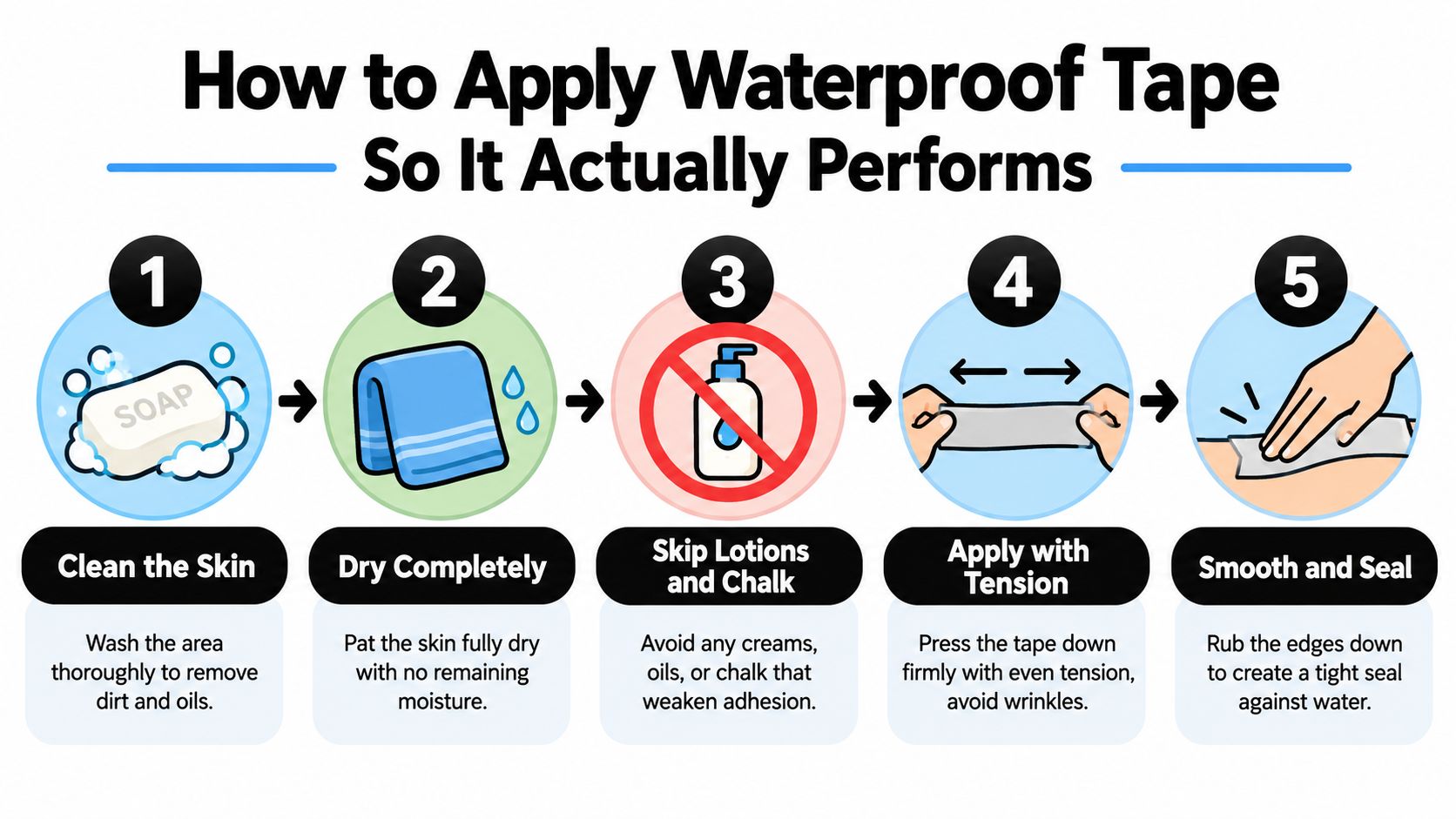
The application sequence below highlights preparation, but tension must remain specific to the tape and taping purpose.
When the real issue is sweaty grip
For lifters, CrossFit athletes, gymnasts, cheer athletes, pole athletes, and home-gym owners, liquid chalk is a separate grip-aid category. EVMT LIQUID CHALK is an option for weightlifting, gymnastics, rock climbing, and other grip-intensive sports. It shouldn't be presented as joint support, and tape shouldn't be expected to perform chalk's role.
Climbers who already use powder needn't abandon it. A liquid layer can go onto dry hands before the session, dry fully, and then receive powder chalk where the venue permits it (liquid-chalk layering guidance).
- Long routes and humid sessions: A base layer can be worth evaluating when repeated re-chalking interrupts movement.
- Short boulder problems: The extra preparation may be less useful, depending on the climber's sweat and preferences.
- Restricted venues: Permission for liquid chalk doesn't imply permission for loose powder.
Layering is a practical option, not a guaranteed duration claim. Athletes should judge whether it produces a longer-lasting coat in their own permitted training environment.
How to Apply Waterproof Tape So It Actually Performs
Preparation comes before tension. Athletes should follow the specific product instructions and any clinician-prescribed technique, because a general application diagram can't determine the right joint position or support pattern.
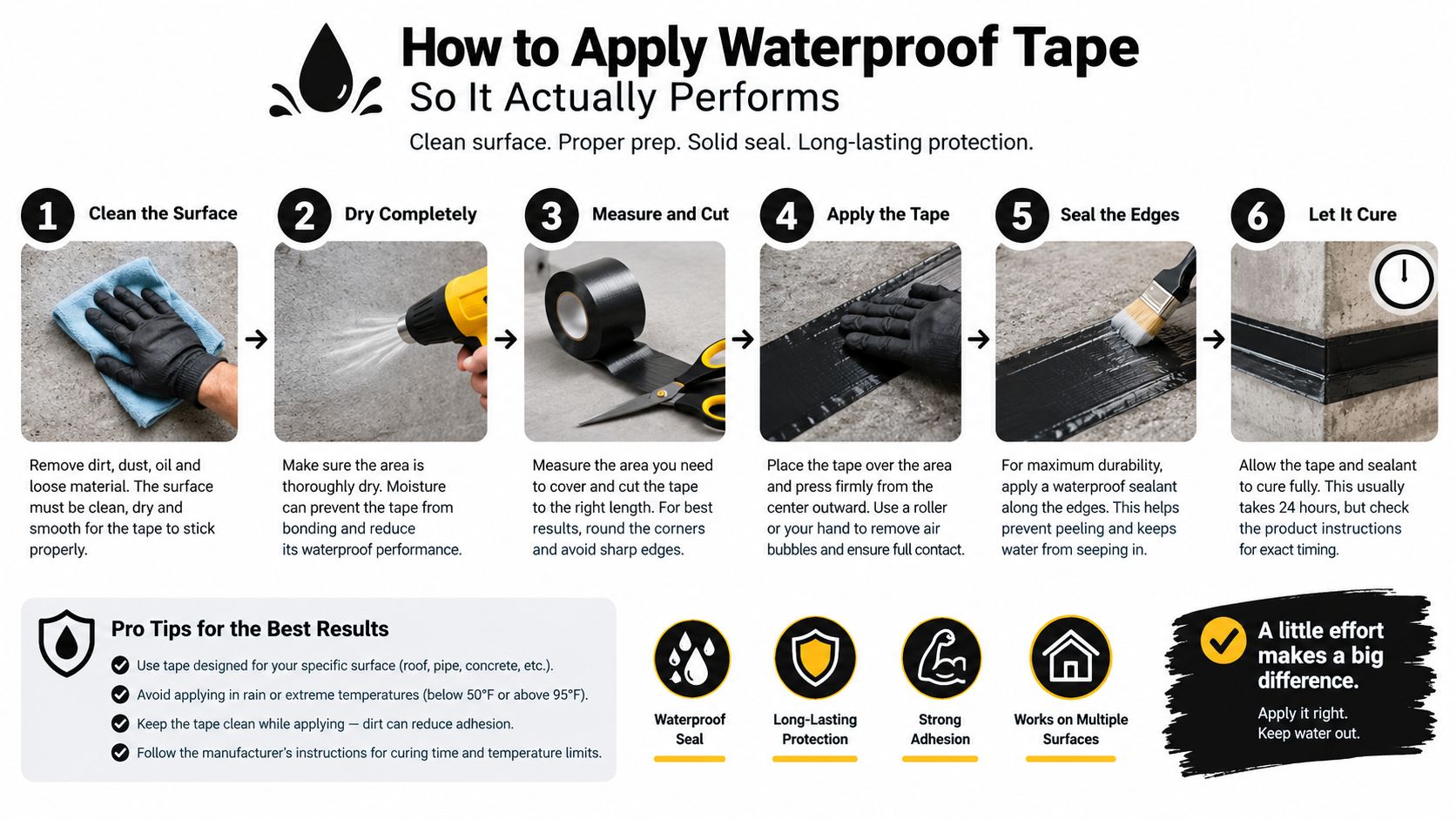
The workflow below is useful as a preparation reminder, not as a reason to stretch every tape aggressively.
Prepare the contact area
Skin should be clean and completely dry, without lotion, oil, or chalk residue. Athletes using chalk elsewhere on the hand should establish the taped area first, then keep grip-aid application off the adhesive contact zone.
- Check hair interference: If hair prevents flat contact, follow the manufacturer's preparation guidance rather than automatically shaving the area.
- Shape the strip: Round corners where appropriate to reduce exposed points that can catch.
- Position deliberately: Use the joint position required by the technique, not whichever position makes application easiest.
- Control stretch: Avoid excessive tension across moving areas. Follow the intended stretch direction rather than pulling toward the most convenient anchor.
Elastic recoil can create skin shear. Maximum tension therefore isn't a sensible default, even when an athlete wants a firmer-feeling application.
For hand-specific planning, this guide to athletic tape for hands provides relevant context. Athletes considering finger wraps for grappling can also consult Locals Jiu Jitsu Alexandria finger tape, while keeping sport-specific wrapping separate from injury diagnosis.
Inspect and remove deliberately
A useful inspection considers edge lift, wrinkling, and perceived loss of support. A failing application should be reassessed or replaced rather than repeatedly covered with fresh layers.
Removal deserves the same care as application. A cautious routine follows the product's removal instructions, supports the skin, and works slowly rather than pulling abruptly upward.
Skin-first approach: Pain, blistering, broken skin, or a developing rash warrants stopping the application and seeking appropriate advice, not testing how much longer the adhesive can hold.
Fresh tape belongs on suitable skin, not on an irritated area just because another session is scheduled. Persistent discomfort, suspected injury, or uncertainty about circulation calls for professional assessment rather than tighter wrapping.
Choosing the Right Waterproof Tape for Your Sport
The right purchase starts with a written purpose: support, contact protection, or sweat management. An athlete who can't name the problem is more likely to buy a powerful-sounding label than a useful product.
This overview of what makes good athletic tape can support product-page comparisons. The deciding information should still match the athlete's activity and skin needs.
A practical selection framework
| Decision | Useful information | Warning sign |
|---|---|---|
| Adhesion and wear | Intended exposure and replacement guidance | Wear claims without activity context |
| Stretch | Material behavior suited to the taping purpose | Assuming elastic and restrictive tapes are substitutes |
| Breathability | Moisture-vapor information and comfort guidance | Treating water resistance as proof of ventilation |
| Skin tolerance | Material disclosures and removal instructions | Choosing maximum adhesion regardless of skin response |
Swimmers should prioritize documented wet-use conditions. Field-sport players needing stabilization should consider maintained function after activity, not just initial firmness.
Lifters and climbers should first distinguish sweaty hands from a genuine taping need. Research summarized in a University of Leeds repository assessment found that chalk effects depended on surface and moisture, including no meaningful grip difference from liquid chalk on steel in the reported comparison (chalk friction under different surface and moisture conditions). That prevents a universal grip claim, not the practical use of chalk.
Venue permission is part of product fit
A gym that bans powder may permit liquid chalk, but athletes shouldn't assume every chalk ban contains that exception. Home-gym owners can prioritize low-mess application, while competition athletes must check the actual event rules.
For pole sport, approved products go on the athlete rather than directly on the apparatus, and residue removal matters (pole-sport approved-grip policy). Gymnastics requirements can also distinguish apparatus and permitted substances, so a liquid product labeled chalk isn't automatically acceptable everywhere (gymnastics chalk and apparatus-rule overview).
A suitable grip aid must fit both the athlete and the venue. Neither waterproof tape nor liquid chalk overrides competition restrictions, and neither should be selected solely because another athlete uses it.
Common Myths About Waterproof Athletic Tape
Waterproof means medical-grade protection. It doesn't. Water resistance alone doesn't establish that a product is appropriate for wound coverage or provides a protective medical barrier.
Athletes dealing with open or damaged skin need a product intended for that purpose and appropriate care advice. Ordinary sports tape shouldn't acquire a medical claim because it survives a shower.
Pool survival predicts tournament performance
This assumption confuses exposure with function. A tape that tolerates water hasn't necessarily demonstrated the mechanical behavior required during prolonged gripping, running, or repeated contact.
The relevant buying question is whether the testing resembles the intended use. An immersion claim and an athletic-support claim require different evidence.
- Visible attachment: Describes whether the tape remains in place.
- Mechanical function: Describes whether the application still provides its intended movement control.
- Skin tolerance: Describes whether continued wear remains acceptable for the athlete.
Familiar tape history proves performance benefits
The rise of conspicuous elastic tape in elite sport doesn't establish the history or effectiveness of every athletic-tape category. ABC News's August 8, 2012 report connected public attention to the 2008 Beijing Olympics and Kerri Walsh, while reporting that experts found no solid scientific evidence of improved athletic performance (historical coverage of elastic sports tape and performance claims).
Popularity and clinical usefulness aren't interchangeable. Nor should an older report be treated as a complete assessment of every later product or application.
More stretch means more support. The correct amount depends on the material, technique, and intended outcome. An athlete shouldn't compensate for uncertainty by pulling harder.
The clearest purchasing verdict is narrower than most packaging: waterproof athletic tape is worth considering when the athlete needs tape under wet conditions. For sweaty hands without a support requirement, a permitted grip aid is the more relevant category to evaluate.
Evermost LLC offers magnesium-carbonate liquid chalk in single bottles and multi-packs for athletes managing sweaty grip. For lifters, climbers, pole athletes, and home-gym owners comparing grip aids rather than joint-support products, Evermost LLC provides a place to explore liquid-chalk options and check their fit with the intended activity and venue rules.