


Sweaty Hands Weightlifting: Grip Strategies That Work
You've set your feet, braced hard, and pulled a heavy deadlift from the floor. Your back and legs are ready, but the bar begins rotating through your fingertips because your palms are wet. Squeezing harder only burns your forearms faster. In that moment, the limiting factor may not be strength at all. It may be the thin layer of moisture between your skin and the knurling.
That's the central problem in sweaty hands weightlifting. You need enough friction to control the bar, but not so much drying that your skin becomes brittle, cracks, or tears. The practical answer combines moisture management, appropriate grip aids, sensible technique, and, for persistent symptoms, proper medical guidance.
The Biomechanics of Moisture and Grip Failure
A bar can begin rotating before a lifter feels a clear loss of strength. Moisture changes the contact conditions between skin and steel, reducing the reliable friction created by skin conformity, contact pressure, and the bar's knurling. Once sweat forms a continuous film across the palm, the interface becomes less predictable.
The bar rolls, the fingers start to open, and the forearms respond by squeezing harder. That extra pressure may slow the slip briefly, but it also increases fatigue while the wet surface remains. Grip failure can therefore reflect a changing skin-and-steel interface, not inadequate grip strength.
Why effort creates palm sweat
Palmar sweating can occur in a cool gym. Sustained handgrip exercise produced sweating responses in physically trained men under mildly hyperthermic conditions, showing that gripping itself can stimulate sweat without classic environmental heat stress (the handgrip sweating study).
Effort level also affects the response. Experimental research found that exercise intensity influenced palmar sweating across contractions ranging from 25% to 100% of maximal voluntary contraction (research on exercise intensity and palmar sweating). That pattern fits heavy cleans, high-repetition pull-ups, and repeated deadlift sets, even when the room feels comfortable.
Practical rule: Treat sweat as a changing surface condition, not as proof that your grip muscles are inadequate.
What the clinical evidence shows
Palmar hyperhidrosis is the condition most directly associated with excessively sweaty hands. It affects about 1% of the population, while roughly 0.2% experience very severe cases (clinical review of hyperhidrosis). Broader estimates vary. A large U.S. survey published in 2016 reported 4.8%, or about 15.3 million Americans, while a 2004 U.S. survey estimated 2.8%, or about 7.8 million people, had hyperhidrosis (hyperhidrosis epidemiology review).
These figures do not mean every lifter with sweaty palms has a medical disorder. They do show why persistent moisture deserves attention, particularly when it interferes with training and ordinary tasks. Normal exercise sweating usually rises with effort and settles afterward. Palms that stay wet at rest, remain excessively moist regardless of temperature, or make objects difficult to hold warrant discussion with a qualified clinician.
Training preparation still needs to account for the physical interface. Dry palms before applying a grip aid, allow the product to dry, and avoid creating a paste over visible moisture. The EVMT drying formula guide provides further context on using a drying formula with liquid chalk.
Gym rules also shape the workable solution. Some commercial facilities restrict loose chalk or ban chalk entirely because airborne residue affects equipment and cleaning. In those settings, a low-dust product, a towel, and a clear wipe-down routine may protect grip without violating policy. Shared equipment deserves the same attention, especially in warm conditions. Guidance on why summer hygiene matters explains why athletes should wipe hands, bars, benches, and other shared contact surfaces rather than leave sweat and residue behind.
In-Session Protocols for Managing Palm Moisture
The most reliable between-set routine is short and repeatable. Don't apply liquid chalk over visibly wet palms. That mistake creates a damp chalk paste, which can feel tacky for a moment and then become inconsistent under load.
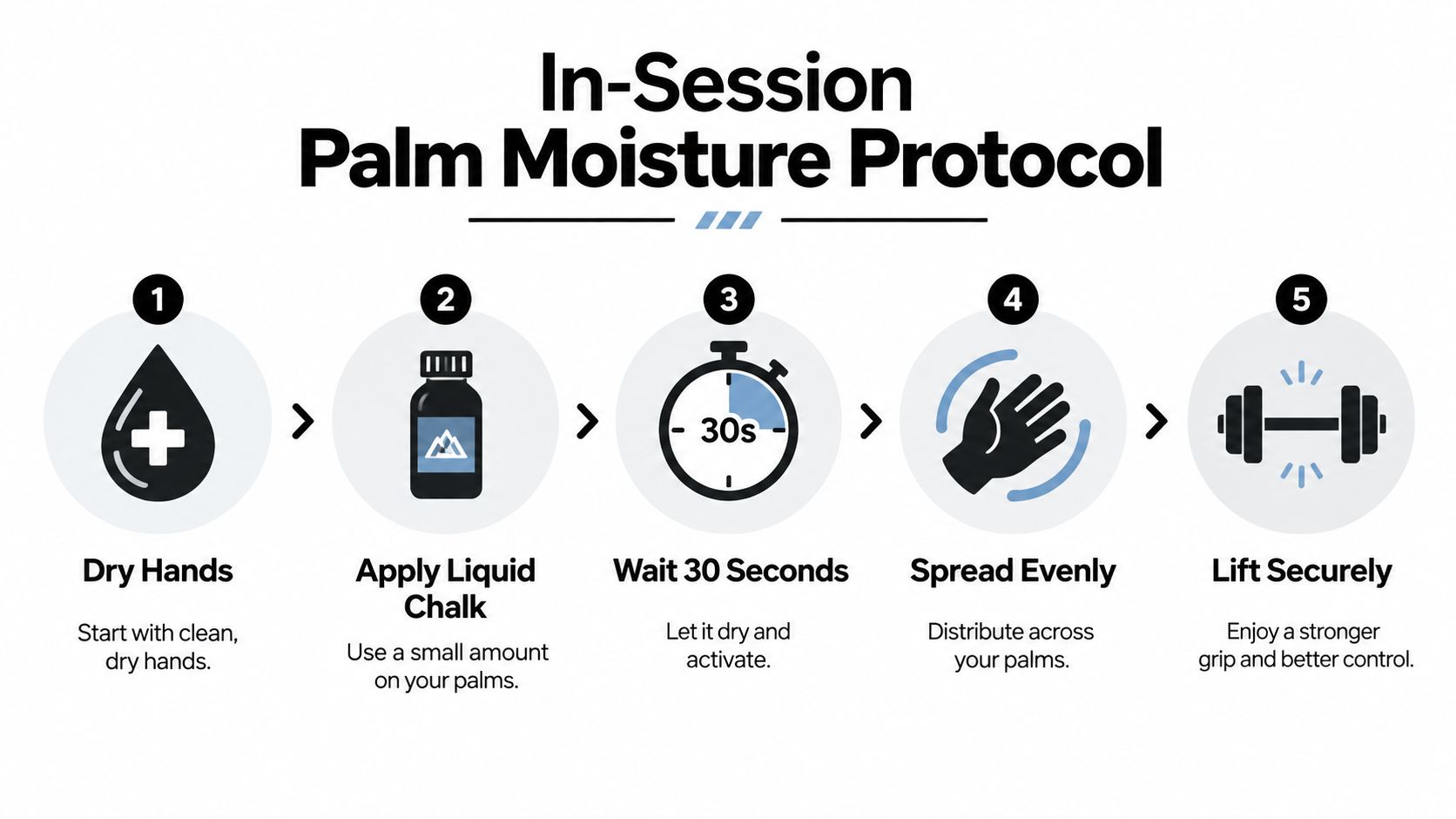
The dry, apply, wait method
1. Dry the contact surfaces. Use a clean towel to wipe the palms, fingers, and thumb webbing. If the bar is wet, clean or exchange it according to gym policy. Chalk can't restore a consistent interface when liquid remains on both surfaces.
2. Apply a thin layer. Use enough liquid chalk to cover the contact points, not enough to create a thick coating. Spread it across the palm, fingers, and the area where the thumb closes around the bar. EVMT Liquid Chalk is one example of a fast-drying, low-dust option designed for grip-intensive training.
3. Wait for evaporation. Keep your hands open and let the liquid dry fully before touching the bar. The alcohol carrier needs time to evaporate, leaving magnesium carbonate on the skin. Rushing this step smears the product and defeats the purpose of starting with a dry surface.
4. Spread and remove excess. Rub the remaining chalk evenly. If you can see loose clumps or feel a wet, gummy layer, you've used too much. A thin, uniform coating should feel dry and secure rather than sticky.
5. Set the grip deliberately. Place the bar deep into the hand where your chosen grip allows, close the fingers, and establish the thumb position before initiating force. For a hook grip, secure the thumb first, then wrap the fingers around it without changing the bar's position during the pull.
This process can fit into a brief rest period when performed efficiently. The important sequence is dry first, apply lightly, wait, then grip. Reapplying powder or liquid chalk over sweat only builds residue.
Quick adjustments during long sessions
Keep a towel where you can reach it without walking across the gym. Between sets, open your hands, wipe them, and allow air to reach the palms. Don't automatically re-chalk after every set. Reapply only when the dry friction has faded.
Use a fan, open training area, or brief hand exposure to moving air when possible. Avoid aggressive heat, harsh solvents, or repeated scrubbing during the workout. Those methods can irritate skin and leave the palm less resilient for later sets.
A dry grip guide for hands can help you refine application timing and preparation without turning every set into a product routine. The goal isn't to eliminate all sweat. It's to keep the hand-bar interface predictable.
Evaluating Grip Aids and Commercial Gym Policies
Grip aids solve different problems, and gym rules often determine which option you can use. A dedicated powerlifting room may welcome loose chalk, while a commercial facility may prohibit airborne powder because it settles on machines, flooring, ventilation systems, and shared surfaces.
Choosing the right friction aid
| Grip aid | Practical strength | Main drawback | Policy question |
|---|---|---|---|
| Loose chalk | Strong moisture control when applied to dry hands | Dust and residue spread easily | Is loose powder prohibited? |
| Chalk ball | More controlled powder release | Still produces airborne residue | Is a chalk ball accepted? |
| Liquid chalk | Clean, portable, and easy to apply in a thin layer | Can feel pasty if applied over wet skin | Is liquid chalk allowed? |
| Lifting straps | Reduce the grip demand during selected pulling work | Change the training effect and don't replace hand friction | Are straps permitted for the movement or event? |
Loose chalk remains useful where the facility provides a chalk area or where dust isn't a concern. It's adjustable and easy to refresh, but careless application creates the exact mess many commercial gyms are trying to prevent.
Chalk balls moderate the amount of powder released. They can be a reasonable compromise, although they aren't automatically permitted. Always check the posted rules rather than assuming a chalk ball counts as clean.
Liquid chalk usually fits modern commercial facilities better because it produces little airborne dust after drying. That doesn't make it universally approved. Some gyms allow it, some restrict it to designated areas, and some prohibit all chalk products. Ask staff before opening the bottle over a platform.
Straps are a programming tool
Straps aren't a direct substitute for friction management. They're appropriate when the session is meant to target the back, hips, or posterior chain and grip fatigue would otherwise end the work prematurely. They're less appropriate when the purpose of the set is to test unaided grip, practice a competition grip, or build confidence holding the bar.
Use them selectively. For example, a lifter might perform top deadlift work with a competition-legal grip aid, then use straps for controlled back-off rows or high-volume pulls. That preserves the training objective without forcing every set to become a grip endurance test.
A clean training partner also matters. Wipe visible residue from shared equipment, keep bottles closed, and avoid applying loose chalk beside another athlete's breathing zone. Good grip etiquette keeps your solution compatible with the people and equipment around you.
Preventative Skin Care and Dermatological Options
A lifter with chronically wet palms needs more than a mid-session fix. The useful long-term approach combines sweat reduction, skin protection, and medical evaluation when symptoms extend beyond ordinary exercise sweating.
Clinical guidance identifies antiperspirant as a first-line option for hands, while Mayo Clinic describes hyperhidrosis as excessive sweating that isn't always connected to heat or exercise (guidance on hyperhidrosis and hand antiperspirant use). That distinction matters. Liquid chalk manages moisture at the skin-bar surface. It doesn't switch off the sweat response.
Build a cautious evening routine
A clinician or pharmacist can help you choose an appropriate hand antiperspirant and explain how to apply it. Many products designed for excessive sweating are used on dry skin outside the training window, often as part of a consistent routine rather than immediately before a heavy session.
Don't layer an unfamiliar antiperspirant under chalk for the first time before a max attempt. Test it during an easier session, watch for irritation, and stop if burning, rash, or excessive dryness develops. Your hands need to be dry enough for friction but flexible enough to tolerate knurling.
Skin maintenance should include:
- Washing after training: Remove sweat, chalk, and residue with a gentle cleanser.
- Drying carefully: Pat rather than aggressively scrub irritated areas.
- Moisturizing later: Use a light, non-greasy moisturizer when your hands are no longer in contact with the bar.
- Managing calluses: Smooth raised edges so they don't catch and tear, but don't remove the protective layer entirely.
- Inspecting damaged skin: Modify pulling volume when a split, raw area, or active tear makes gripping unsafe.
Over-dried skin can fail just as decisively as wet skin. Friction management includes preserving the surface that creates friction.
When medical support makes sense
Persistent palm sweating can justify a dermatology appointment, particularly when it occurs at rest or affects daily activities. Clinical options may include prescription antiperspirants, iontophoresis, or botulinum toxin treatment, depending on the individual and the clinician's assessment. Don't treat these as performance shortcuts or self-directed protocols.
The mechanics deserve attention here. A controlled study in patients with palmar hyperhidrosis measured grip force, coefficient of friction, and safety margin before and after botulinum toxin treatment. Reduced sweating accompanied a significant reduction in dominant-hand grip force, while the safety margin increased again as sweating returned (the grip mechanics study). Less sweat doesn't automatically mean better lifting. Over-drying or changing the skin's friction can alter how you control the bar.
For additional background on symptoms and management, find relief for hyperhidrosis offers a plain-language starting point. Bring your actual training pattern to the appointment, including whether sweating happens only during lifting or also at rest.
Grip Adaptations in Elite and Competition Settings
Competition exposes weak grip systems quickly. Under lights, with limited warm-up time and strict platform procedures, athletes can't improvise after the bar starts moving. Powerlifters, Olympic lifters, and collegiate athletes commonly rehearse their hand preparation as carefully as their stance, bracing, and attempt selection.
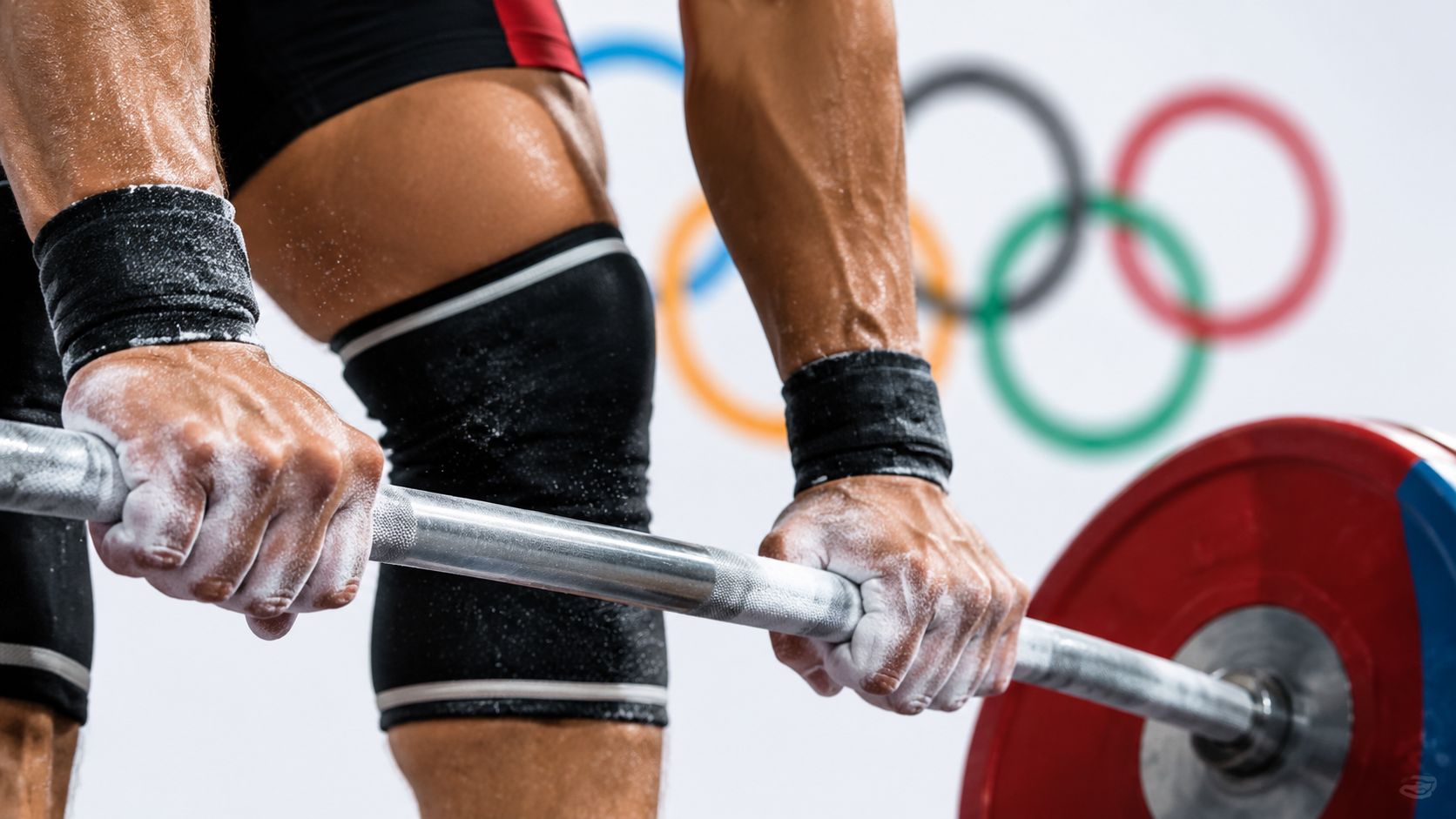
Rehearse the venue, not just the lift
A lifter who trains with loose chalk at home may arrive at a commercial venue where only liquid chalk is accepted. Another may train with liquid chalk but discover that the meet has a designated preparation area and no bottle access on the platform. The solution is to practice the same preparation sequence under the same restrictions before competition day.
Competition rules can be precise. One current guide states that the International Weightlifting Federation allows magnesium in all forms, including liquid chalk, while warning athletes not to bring a chalk bottle onto the competition platform because it can cause delays and a clock deduction (competition guidance for liquid chalk).
That rule affects preparation timing. Apply and dry during warm-ups or in the approved area, then approach the platform with your hands ready. Don't assume you can refresh your grip after the clock starts.
Technical choices under pressure
Hook grip can improve bar control during Olympic lifts, but wet palms complicate thumb security and finger placement. A seasoned lifter establishes the hand position before the pull, avoids repeated re-gripping, and uses only enough chalk to maintain contact. If the first warm-up reveals slipping, the athlete adjusts early rather than waiting for the heaviest attempt.
Straps may be useful in training but aren't automatically appropriate in a sanctioned lift. The rulebook, not gym habit, determines whether they're permitted. The same principle applies to chalk format, tape, and any product left on the hands.
For barbell-specific preparation, the liquid chalk powerlifting guide provides another practical reference point. The strongest competitive habit is simple: test the product, grip, drying time, and venue rules before the meet, then repeat the proven routine without experimentation on the platform.
Your Complete Grip Security Checklist
A secure session begins before the first working set. Use this checklist to control the variables you can control, then adjust volume or equipment when moisture overwhelms the surface.
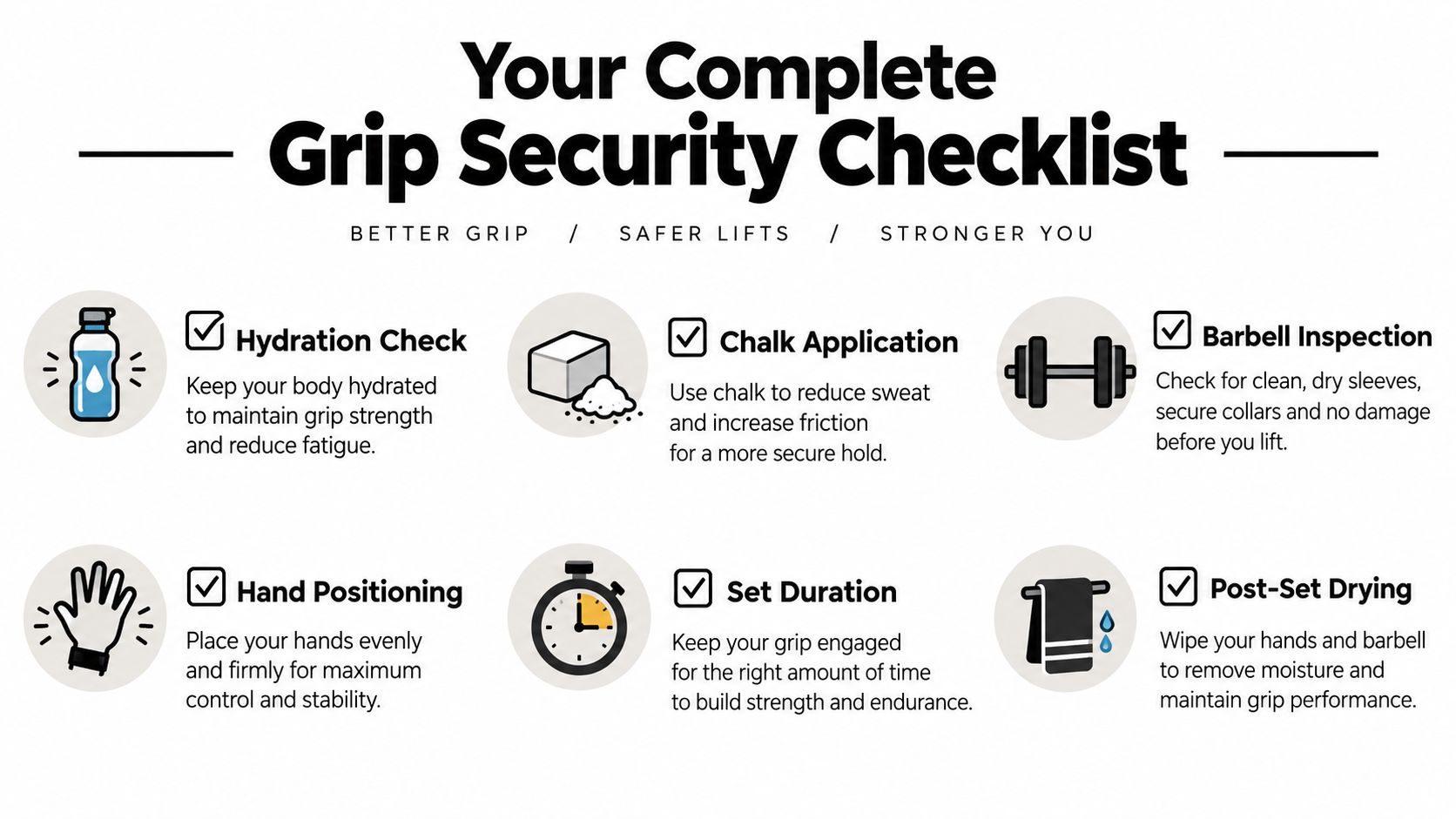
Before you touch the bar
- Hydration check: Arrive hydrated and avoid treating dehydration as a way to suppress sweating. Your training quality matters more than chasing a dry sensation.
- Skin check: Look for cracks, fresh tears, or swollen calluses. A damaged palm may need altered loading or a different movement.
- Policy check: Confirm whether the facility permits liquid chalk, chalk balls, loose chalk, and straps. Rules vary by gym and event.
- Barbell inspection: Check the knurling and surface. Wipe away visible moisture and report unusually slick or contaminated equipment.
- Hand preparation: Start with clean, completely dry hands. Remove lotion, oil, and residual product before applying anything else.
During the session
- Apply liquid chalk sparingly. Cover the palm, fingers, and thumb contact points with a thin, even layer.
- Wait until fully dry. Don't grip the bar while the product is still wet. A dry finish is the objective.
- Set your hand position first. Establish the bar placement, finger closure, and thumb strategy before pulling.
- Track set duration. Long, high-repetition pulling work may require a towel break or a planned grip adjustment.
- Dry before reapplying. Wipe away sweat before adding more chalk. Never build a paste on top of wet skin.
- Use straps deliberately. Reserve them for sets where preserving the target musculature matters more than testing unaided grip.
- Stop when skin becomes unsafe. A slipping bar or tearing callus is a reason to modify the set, not a challenge to ignore.
After the final set
Wash chalk and sweat from your hands, pat them dry, and use a light moisturizer once you're finished gripping equipment. Smooth rough callus edges during routine hand care, not aggressively between heavy sets.
Sweaty palms are a manageable training variable. Start dry, apply less product than your instincts suggest, respect venue rules, and protect the skin that has to contact the bar again tomorrow.
Evermost LLC offers EVMT Liquid Chalk for athletes who need a clean, fast-drying grip aid for weightlifting and other grip-intensive training. Visit Evermost LLC to choose a formula suited to your training environment and prepare your next session around consistent, mess-conscious bar contact.