


Liquid Chalk Powerlifting: A Practical Grip Guide
You're standing over a deadlift that has already taken everything from your legs and back. The bar bends before it leaves the floor, your mixed grip is set, and then one callused palm starts to slide. Strength isn't the problem. The connection between your hand and the knurling is.
That's where liquid chalk powerlifting decisions matter. Block chalk, loose chalk, and liquid chalk can all improve the lifting setup, but they don't behave the same under sweat, rough steel, repeated attempts, or strict meet rules. Liquid chalk is convenient and clean, yet convenience alone doesn't make it the right choice for every heavy single.
This guide is a practical playbook for choosing, applying, and trusting grip aid under real loads. It covers performance differences, lift-specific application, federation wording, skin and equipment care, residue troubleshooting, and buying criteria, so you can leave with a grip strategy you can defend on the platform and in a shared gym.
When Your Grip Is the Only Thing Left
The lifter squeezes harder, pulls the slack out, and drives through the floor. At lockout, the bar is still moving, but the hand is losing the fight. The thumb webbing has chalk on it, the callus is thick, and the mixed grip felt secure during setup. A fraction later, the bar rolls and the attempt is gone.
That failure doesn't automatically mean the lifter needed more grip strength. Sweat, skin condition, knurling, application, and the type of chalk all change the result. Research on climbers found that magnesium carbonate chalk improved repeated open-hand and pinch-grip performance compared with no chalk, with open-handed repetitions rising from 19.7 ± 4.39 to 22.8 ± 4.53 and pinch repetitions from 9.1 ± 4.83 to 14.4 ± 4.47 in the tested conditions (controlled climber grip research). That supports chalk's role in moisture control, but it doesn't prove every liquid formula will outperform every powder on every bar.
Three grip-aid paths
Block chalk gives you a solid magnesium carbonate block that can be crushed, rubbed directly onto the hands, or broken into a chalk bag. It offers the most familiar raw grip feel and lets you add a thick coating before a maximal pull, but it creates visible residue and may violate a commercial gym's policy.
Loose chalk spreads quickly and gives the lifter precise control over coverage. It's useful in a hot gym, especially when the hands need repeated drying, but the airborne dust and floor residue make it the least convenient option in many shared facilities.
Liquid chalk suspends magnesium carbonate in alcohol, then leaves a dry coating after the carrier evaporates. It travels well, applies smoothly, and usually creates less airborne mess. Its limitation is just as important: performance depends on the formula, drying behavior, surface, and how much you apply.
A defensible setup might mean liquid chalk for ordinary training, block chalk for a top deadlift single, and loose chalk when the gym allows it and sweat is the dominant problem. The right answer isn't the cleanest label on the bottle. It's the option that stays dry, legal, and dependable when the bar exposes your weakest link.
What Liquid Chalk Actually Is and How It Works
Liquid chalk is typically a magnesium-carbonate-and-alcohol mixture that dries into a sweat-resistant coating. Magnesium carbonate is the same functional chalk material used in traditional lifting chalk, while the alcohol acts as the delivery vehicle. Once the alcohol evaporates, the hand is left with a thin layer that can manage moisture without requiring a cloud of loose powder.
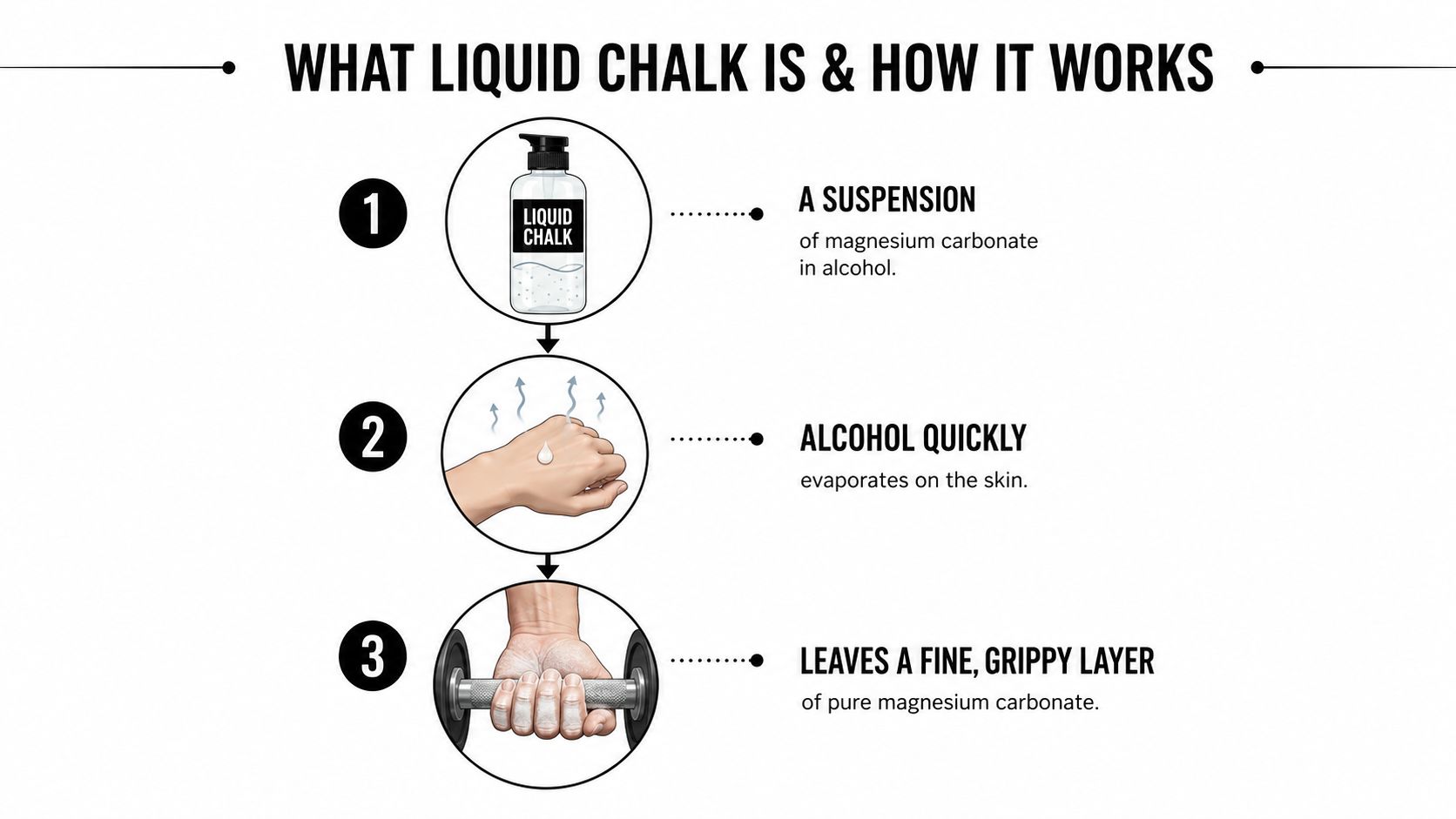
Think of loose chalk as a dusting of flour and liquid chalk as a thin coat of paint. The powder sits on the surface of the hand and can be displaced by sweat, friction, or contact with the bar. Liquid chalk spreads the particles across the palm, fingers, thumb, and creases before the carrier disappears, producing a more uniform starting layer. That doesn't make it universally stronger, but it explains why the feel differs from block chalk.
The drying process matters
Shake the bottle before use, dispense a small amount, spread it evenly, and wait until the coating feels dry rather than tacky. Alcohol evaporates quickly, but the exact experience varies with the formula, the room, and the amount applied. A gritty product may leave a pronounced textured feel, while a smoother formula can feel more like a fine matte film.
Bottle design affects application, too. Smaller bottles are easy to carry between warm-up areas, while larger containers suit home gyms where speed and economy matter more than portability. A dabber or applicator cap can distribute product gradually, whereas a squeeze nozzle gives you more direct control over the amount.
Formulas may also include binders or thickeners. Those additions can change how the product spreads and how much residue it leaves. The EVMT explanation of liquid chalk drying formulas is useful for understanding why a bottle that dries cleanly can feel very different from one that remains sticky or clumps under sweat.
Practical rule: A dry, thin film is the target. If your hands look coated in wet paste, you've already moved past the useful amount.
The practical implication is straightforward. Liquid chalk's application layer is more even than loose powder at the start, but it isn't identical to a fresh, thick block-chalk coating. That difference becomes obvious when repeated heavy attempts grind the film against aggressive knurling.
Liquid Chalk vs Block and Loose Chalk for Heavy Lifts
For powerlifting, the important comparison isn't which product feels cleaner in a bottle. It's which one gives you the most predictable hand-to-bar contact when a heavy deadlift begins to move.
Independent friction testing has found that liquid chalk can underperform dry chalk in raw surface friction, with powder chalk significantly better across tested surfaces in one study. Another test found no meaningful grip difference between liquid chalk and no agent on steel. The same body of testing also shows that chalk and rosin performed best when moisture was present on non-porous surfaces, so surface material and test conditions matter (friction testing across hand and surface conditions).
| Criterion | Liquid Chalk | Block Chalk | Loose Chalk |
|---|---|---|---|
| Heavy single feel | Even, dry coating, but formulation-dependent | Thick, familiar coating with strong tactile feedback | Highly adjustable coverage and texture |
| Re-coating | Fast and controlled between attempts | Easy to build up before each set | Very fast, but requires a chalk bowl or bag |
| Commercial gym use | Often the easiest format to manage, subject to policy | Frequently restricted because of dust and residue | Most likely to create airborne mess |
| Sweat response | Can clump if over-applied or not dried | Can become pasty when moisture accumulates | Can be reapplied quickly, but may also cake |
| Travel | Compact and spill-resistant when capped | Durable, but leaves chalk dust in a bag | Messy if the container leaks |
| Max deadlift preference | Strong training default or backup | Often preferred for maximum raw grip feel | Strong option where facility rules allow it |
Liquid chalk wins when you need quick re-coating, low visible mess, and portability. It's practical for commercial floors, warm-up rooms, and sessions where you don't want to carry a chalk bag. Block chalk wins when the lift demands a fresh, substantial layer and you want to adjust coverage set by set. Loose chalk gives the fastest response to sweaty hands and lets you work more material into the palm and fingers.
The weakness of liquid chalk appears at the top end. Neutral guidance describes it as effective for most pulling and training work, while acknowledging that experienced lifters may notice a small edge for traditional chalk at absolute max loads such as 1RM deadlifts (neutral liquid grip chalk comparison). That edge isn't quantified there, but the practical distinction is clear: a top single demands confidence in raw grip feel, not just convenience.
For a 500-plus-pound pull, use liquid chalk when it leaves your hands dry and secure during warm-ups. If the coating feels slick, clumpy, or too thin before the attempt, block or loose chalk remains the better tool. The lifting chalk comparison guide can help you compare formats, but the final test should happen with your own bar, skin, and loading pattern.
Applying Liquid Chalk for Squats, Benches, and Deadlifts
Application should be part of your setup, not something you rush after the bar is loaded. Start with clean, dry hands. Shake the bottle, dispense the amount appropriate to the lift, spread it across the contact zones, and let it dry before touching the equipment.
For bench press and other upper-body work, use a pea-sized amount per hand. For squats and deadlifts, use a slightly larger amount and distribute it across the palm, fingers, and thumb web. The finished layer should look like a faint matte film, not a white paste.
Match coverage to the lift
For deadlifts, concentrate on the thumb-index pinch, the base of the fingers, and the palm where the bar sits during the pull. Cover both sides of the hand if you use a mixed grip, because the supinated hand can sweat and shift differently from the pronated hand.
For low-bar squats, a light layer across the heel of the palm can help your hand maintain its position around the bar. Don't confuse hand chalk with chalk applied to the upper back. Facility and competition rules may treat body applications differently, so use only what the venue permits.
For bench press, emphasize the upper palm and fingers. The purpose is to keep the hand from rotating or sliding inside the bar path, especially as the bar comes off the chest. Too much product can make the hand feel unstable rather than planted.
Let the coating dry for 20 to 40 seconds while you set your feet, adjust the belt, or position the bar. The instructional liquid chalk application video demonstrates the basic routine, but your own timing should be based on when the product is fully dry.
For a long training block, reapply only when the grip starts to degrade. First blot sweat, then add a thin coat. Don't layer fresh liquid chalk over tacky residue, because the new product can turn the old film into a paste.
Competition Rules Every Powerlifter Should Check First
Liquid chalk legality depends on the exact rulebook and formula. The 2026 IDFPA/USAPL rulebook states that baby powder or talc and magnesium carbonate chalk are the only substances that may be added to the body and attire, and it permits liquid chalk when it contains no adhesive substances or adhesive properties (2026 IDFPA rulebook reference).
In plain English, a liquid product can be acceptable when it behaves like chalk after drying. A formula that functions like glue, leaves a lubricating film, or transfers heavily to the bar creates a compliance problem. The same rule set prohibits lifters from applying foreign substances directly to platform equipment, while allowing chalk on the hands or back before a lift.
The wording that decides the answer
| Federation or event | Liquid Chalk Status | Key Wording or Caveat |
|---|---|---|
| IDFPA and USAPL rules referenced in the 2026 rulebook | Permitted conditionally | Liquid chalk must have no adhesive substances or adhesive properties. |
| IPF-style technical requirements | Check the current rulebook | Oil, grease, lubricants, and unfair grip substances are prohibited. Chalk must function as a dry grip aid. |
| IronMind Apollon's Axle | Specifically disallowed | Ordinary chalk is allowed on the hands, but liquid chalk isn't allowed in that event. |
The Apollon's Axle rule is a useful warning because it shows that event policies can be narrower than general powerlifting practice (event-specific powerlifting rules). You can't assume a product allowed at one meet will be accepted at another.
Before meet day, confirm the rule with the federation and meet director, read the ingredient list, and pack a backup block of magnesium carbonate chalk. Apply liquid chalk before platform entry when possible, allow it to become fully dry, and carry a small towel in case a judge or staff member identifies accidental transfer. If the rulebook uses language about dry contact, no residue, or no transfer, treat those words as operational requirements rather than suggestions.
Skin Care, Bar Care, and Shared-Gym Etiquette
Liquid chalk reduces airborne dust, but it doesn't remove your responsibility for the equipment or the people training around you. A heavy coating can leave white marks on a bench, platform, belt, or wrap, especially when the product hasn't dried completely.
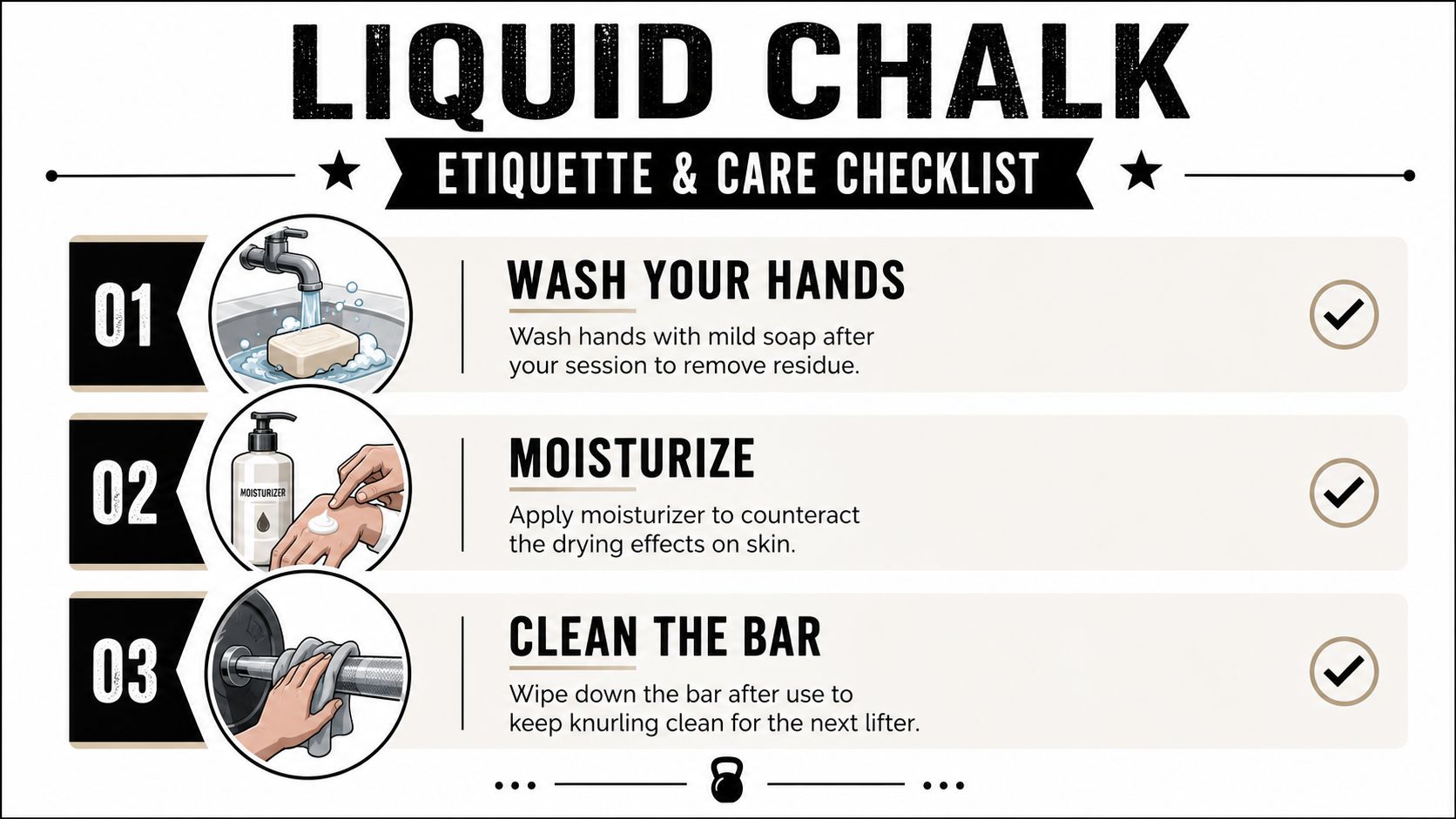
Apply the product away from the bar and bench. Let it dry before you touch the equipment, keep a personal microfiber towel in your gym bag, and wipe your station when the set is finished. These habits address the concerns commercial facilities commonly have about residue and neglected equipment.
Protect the hands that do the work
Alcohol and magnesium carbonate can leave skin dry, particularly when you train frequently. Wash your hands with mild soap after the session, dry them carefully, and apply moisturizer. Healthy calluses are useful. Cracked calluses catch on knurling, hurt during gripping, and can bleed during a deadlift.
Use a pumice stone or callus shaver sparingly. Removing every raised edge can weaken the skin, while aggressive cutting can create a larger tear. The aim is a smooth, resilient callus, not perfectly soft hands.
Leave the bar ready for the next lifter
Liquid chalk usually leaves a thinner film than loose chalk, but the film still belongs on your hands, not permanently in the knurling. Wipe the bar with a damp microfiber towel, then make a dry pass so moisture doesn't remain in the grooves. Plates, belts, and wraps may need the same treatment if you touched them with wet or heavily coated hands.
The barbell cleaning guide provides a useful reference for maintaining shared or home equipment. In a commercial gym, cleaning your station is part of using grip aid responsibly. If your facility bans all chalk, ask before using liquid chalk, because “mess-free” isn't a universal permission slip.
Troubleshooting Sweaty Hands and Stubborn Residue
Most liquid chalk failures come from application errors, not from needing more product. Over-application creates a tacky paste. Skipping the drying window leaves alcohol and chalk on the surface together, which feels slick instead of dry. Contaminated hands, lotion, oil, or sweat can also prevent the coating from spreading evenly.
A cheap or poorly balanced formula may evaporate unevenly and leave magnesium clumps. That doesn't mean every liquid chalk product behaves that way, but it does mean the bottle's drying behavior matters as much as the ingredient label.
| Symptom | Likely cause | Practical fix |
|---|---|---|
| Palms still slip | Insufficient coverage or sweat breaking through under load | Blot the hands, cover the palm and fingers evenly, and allow full drying |
| White flakes appear | Too much product or a thick, uneven coat | Wash or wipe the hands, then apply a thinner layer |
| Tacky paste develops | Fresh product layered over residue or applied before drying | Remove the old layer and wait until the new coat feels matte |
| Bar feels contaminated | Repeated transfer without wiping | Clean the knurling with a damp microfiber, then dry it |
| Grip changes set to set | Uneven coverage or changing sweat levels | Use the same pre-lift routine and adjust only the amount |
If your hands become slippery during a max attempt, don't reflexively squeeze on another wet layer. Step away from the bar, blot the palm and fingers, and inspect the contact zones. The thumb-index pinch and base of the fingers often need attention on a deadlift, while bench press stability depends more on the upper palm and fingers.
Residue that transfers to belts or clothing usually signals too much product, wet application, or contact before the coating dried. Clean warm-up bars and plates between attempts when contamination starts moving from your hands to equipment. A thinner coat that fully dries will usually outperform a heavy coat that looks impressive but breaks apart under friction.
Choosing the Right Bottle and Formula for Your Training
Buying liquid chalk for powerlifting requires more than choosing the bottle with the boldest grip claim. The formula has to match your surface, sweat level, training environment, and competition rules.
Start with the ingredient list. Magnesium carbonate is the functional chalk component, while the alcohol carrier controls how quickly the product spreads and dries. Added resin, adhesive materials, or thickeners can change the feel and may create a rule problem, especially when a federation requires the product to have no adhesive properties.
Build the selection around the session
Training-only use gives you the broadest choice. If you train in a home gym or a facility that approves the formula, prioritize the texture and drying behavior that work best on your bar. A thicker product may provide more substantial coverage, while a thinner one may be easier to spread without clumping.
Meet-eligible use requires a formula that dries fully, leaves minimal transfer, and fits the federation's wording. Read the complete ingredient list instead of relying on the front label. Keep traditional magnesium carbonate chalk as a backup even if liquid chalk has worked throughout training.
Meet-legal-only use means the rulebook is the first filter. Confirm acceptance with the meet director, especially for smaller or local events. A product that performs well in your gym still isn't worth bringing to the platform if officials can reject it.
Choose packaging for where you lift
A precision nozzle helps when you want controlled dispensing before a heavy single. A sponge or dabber cap can spread coverage quickly, but it may be harder to judge the amount being applied. Smaller bottles suit competition bags and travel, while larger bottles are more practical for a home platform. Portable sticks can work for quick warm-up-area touch-ups, provided the formula and event rules allow them.
EVMT Liquid Chalk, from Evermost LLC, is one commercially available option described for weightlifting and powerlifting use, with fast-drying liquid application intended to reduce bar slippage and hand mess. Treat it like any other product: check the label, test it on your equipment, and verify meet compliance before competition.
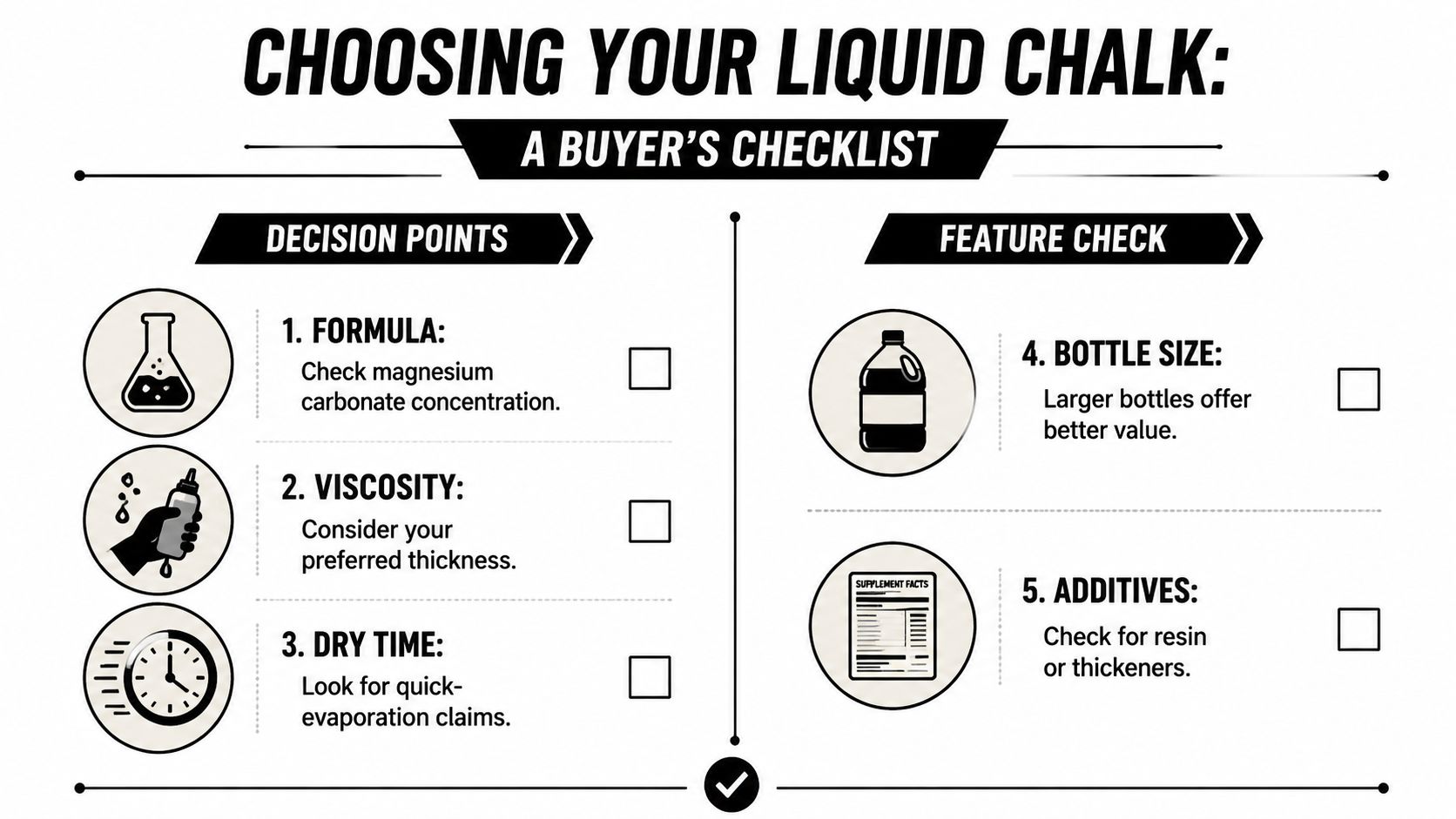
The simplest decision rule is this: choose liquid chalk for clean, repeatable training; keep block or loose chalk available for the heaviest pulls; and use only a formula whose ingredients and residue behavior satisfy the exact meet rules you'll face.
Evermost LLC offers liquid chalk options for athletes who need a fast-drying grip aid across powerlifting training, commercial gyms, and home platforms. Visit Evermost LLC to review the available formulas and choose a bottle that fits your training routine and competition preparation.