


Liquid Chalk Recipe at Home: A Practical DIY Guide
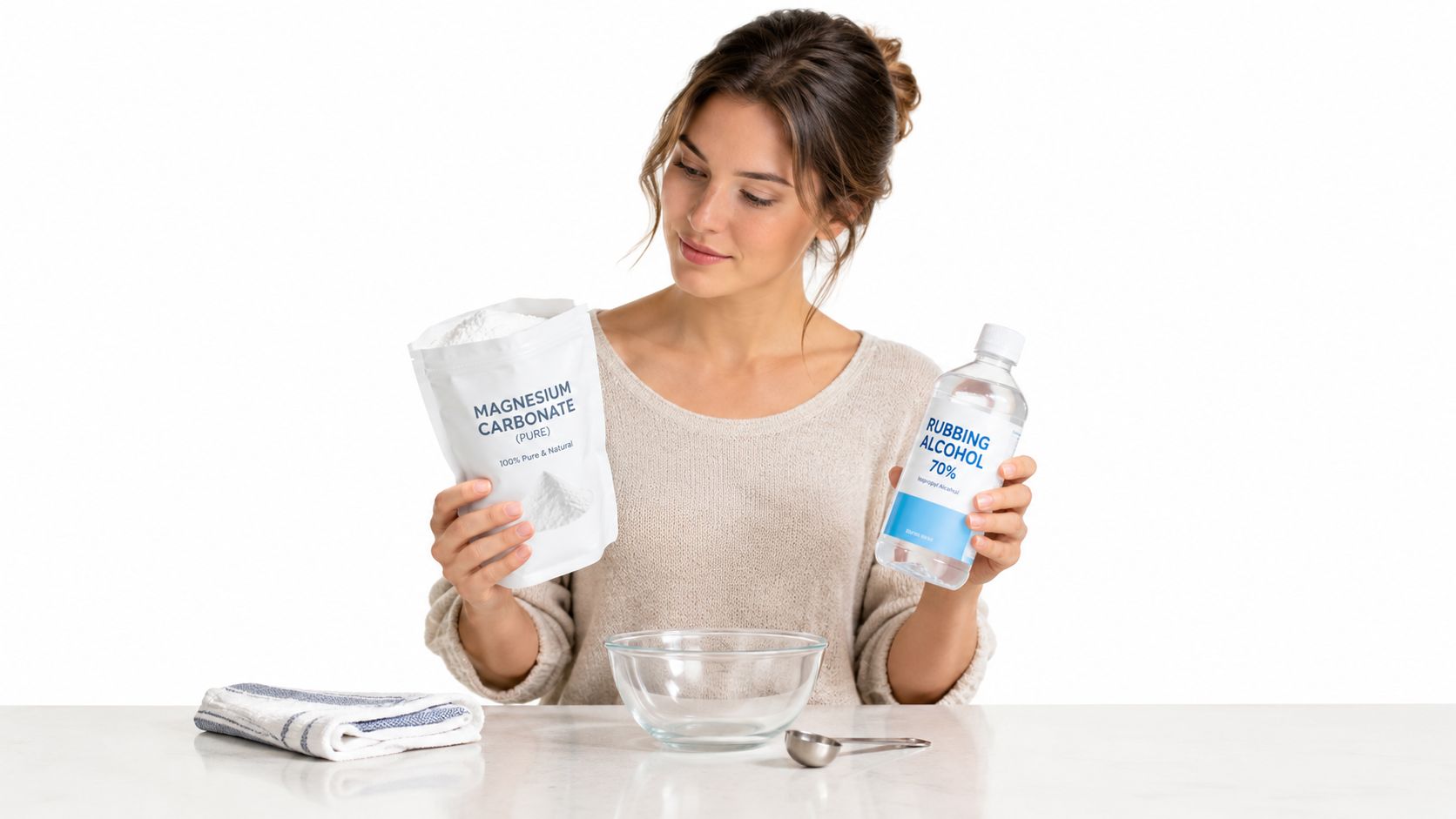
Standing over a counter with magnesium carbonate in one hand and rubbing alcohol in the other, anyone wants the same thing, a liquid chalk recipe that dries fast, grips well, and doesn't turn into a separated bottle of paste by morning. The chemistry is simple enough to recognize, but the part that matters is whether the mix spreads evenly, flashes off cleanly, and leaves skin ready for the next set or the next route.
Table of Contents
- Why Mix Liquid Chalk at Home
- Choosing Ingredients and Ratios That Work
- Mixing the Batch Safely Step by Step
- When Homemade Falls Short and Why
- How to Apply a Homemade Batch for Real Sessions
- Homemade Versus Commercial Liquid Chalk
- Troubleshooting and a Mixing Checklist
Why Mix Liquid Chalk at Home
A homemade batch starts with one simple goal, keep magnesium carbonate suspended in a fast-evaporating alcohol carrier long enough to spread, then let it dry into a workable grip layer. A peer-reviewed 2021 study describes liquid chalk as a mix of magnesium carbonate, alcohol, and water, with optional additives such as resins or proprietary materials, so the recipe is really a suspension problem with a grip outcome PMC study on liquid chalk formulation. People make it at home because they want control over texture, a bottle they can adjust by feel, or a cleaner option when loose powder is not allowed.
What the ingredients are doing
The mineral does the job after the liquid is gone. Alcohol spreads the chalk across the skin and evaporates quickly, while the solid leaves the dry residue that helps with grip.
A small change in the mix changes the feel on your hands. Too much alcohol and too little mineral gives a fast-drying bottle that can feel thin. Too much powder and the batch can clump, separate, or clog the container.
That tradeoff is why a DIY bottle appeals to people who like to tune the feel themselves. It also explains why homemade liquid chalk is not a shortcut to the same consistency you get from a finished formula. Each change in solids, water, or carrier shifts how the film behaves on skin.
Drying behavior matters too. A faster flash-off usually feels cleaner during a set, while a slower one can leave a wetter hand feel before the grip sets in. For a home batch, that means the bottle is only half the story. The other half is how evenly the ingredients stay mixed from one use to the next.
Choosing Ingredients and Ratios That Work
The first trap is copying a ratio without looking at the ingredients around it. A 2:1 chalk-to-carrier starting point can help, but the final feel still depends on particle size, alcohol strength, and any water you add.
Pick the mineral with consistency in mind
Magnesium carbonate should look clean and even, without gritty hard bits. Finer material usually spreads more smoothly on skin and settles less, while coarse material can leave a rougher film and sink faster in the bottle.
Alcohol choice matters too. Published formulation data discusses common carrier options such as ethanol, methanol, and isopropanol, with alcohol levels in a broad working range, roughly 40% to 80%. Higher alcohol content usually flashes off faster. Lower content often leaves a slightly slower, wetter hand feel.
Container choice also affects how well the batch keeps. compare glass shaker materials is a useful reminder that closure quality and evaporation matter more than many first-time mixers expect. A bottle that seals well helps a home batch stay usable between sessions.
| Common Ratio Starting Points | Alcohol concentration | Best fit | Trade off |
|---|---|---|---|
| Thinner mix | Higher end of the published range | Fast application, lighter skin feel | Can dry too quickly or feel sparse |
| Middle-of-the-road mix | Mid-range | General gym use, first test batch | Needs careful blending to avoid lumps |
| Heavier mix | Lower end of the published range | People who want a denser film | Can feel wetter and need more shaking |
A squeeze bottle also needs a formula that flows. The product snapshot for EVMT Liquid Chalk describes a magnesium-carbonate liquid chalk made for grip in weightlifting, gymnastics, rock climbing, and sports, which matches the same basic use case a home batch is trying to serve, only with a tested formula behind it.
For drying behavior, drying formula guidance helps explain why two batches with similar ingredients can feel different on skin. One may set quickly and feel crisp, while another stays wet long enough to smear before it grips. That difference usually comes from the balance between carrier strength, solids load, and how well the mix stays suspended.
Best starting point: weigh the powder and carrier, don't eyeball them. Weight gives a repeatable texture much better than volume.
Mixing the Batch Safely Step by Step
A clean batch starts before the powder touches the bowl. Put the alcohol phase in first, then add water only if the formula needs it for spread or feel. That order matters because dry chalk dropped into a thin liquid tends to form little balls instead of dispersing.
Before mixing, it also helps to confirm the basics of whether chalk itself is non-toxic, since the mineral is safe but the alcohol carrier is not. The safety side is not a side note. A liquid-magnesium safety sheet lists 75% to 90% isopropyl alcohol, 10% to 25% magnesium carbonate hydroxide, and 1% to 5% rosin, and classifies the mixture as highly flammable, an eye irritant, and a possible skin allergen safety data sheet. Open flames, hot surfaces, and poor ventilation do not belong near the mixing area.
A practical mixing order
- Prepare the liquid phase first. Start with the alcohol and any water in the mixing bowl so the chalk has room to disperse.
- Add powder slowly. Sprinkle magnesium carbonate in under moderate shear, whisking or stirring as it falls.
- Check for clumps. A proper batch looks smooth and even, with no dry pockets or chalk islands floating on top.
- Move it to a compatible bottle. Use a solvent-safe squeeze bottle, then shake before each use.
Keeping the base stable first also helps you avoid tossing in problem ingredients too early. Fragrance, rosin, or botanical extras can wait until the main mix is even, since each one can change drying, residue, and irritation risk. Clean handling matters too. The BacteriaFAQ.com sanitation advice is a useful reminder that alcohol-based home mixes depend on clean tools, capped storage, and keeping contamination out of the bottle.
A batch is ready when it pours or squeezes smoothly, coats the skin in a thin film, and does not leave chalky islands on the sides of the container.
When Homemade Falls Short and Why
A homemade bottle can look fine and still fail in use. The chalk can settle to the bottom overnight, the nozzle can clog after a day or two, or the film can sting badly on cracked calluses once the alcohol hits broken skin.
The biggest misconception is that stronger is always better. A peer-reviewed study on chalk friction found that magnesium carbonate can decrease measured friction on certain rock surfaces, with the authors proposing skin drying and a slippery granular layer as possible reasons, and they suggested excess chalk should be removed rather than added PubMed chalk friction study. That matters because a home batch that goes on thick may feel reassuring and still perform worse than a thinner, cleaner coat.
Where a kitchen batch can't compete
- Consistency from bottle to bottle. A handmade mix depends on how carefully it was measured and shaken.
- Controlled irritation screening. A commercial formula can be built around more deliberate testing than a one-off kitchen batch.
- Shelf-life predictability. Homemade bottles can separate, thicken, or lose solvent over time.
- Application reliability. A batch that clogs or sprays unevenly stops being a grip aid and becomes a cleanup problem.
That doesn't mean homemade is useless. It means the batch should be treated as a working experiment, not a promise. If the goal is dependable training use, a tested formula often makes more sense after the first round of trial and error, especially when the bottle needs to survive repeated shaking, sweat, and travel.
How to Apply a Homemade Batch for Real Sessions
The cleanest results come from clean, dry hands. A thin layer should go on first, then the alcohol needs a moment to flash off before the next grip is taken, because rubbing too soon just smears the film around.
For lifters, that usually means one light coat before a set, then a small top-up only when sweat starts to break through. For climbers, the liquid layer works best as a base under powder chalk, not as a replacement for it, because the goal is to give the hands a dry primer before the bag comes out. A climb-specific grip study found chalk improved open-handed and pinch-grip repetitions in a weighted pull-up test, with repetitions rising from 19.7 ± 4.39 to 22.8 ± 4.53 for open-handed work and from 9.1 ± 4.83 to 14.4 ± 4.47 for pinch grip 2018 chalk grip study.
Use cases that make the most sense
- Before a long route: apply the liquid layer, let it dry, then add powder chalk on top if the session needs more staying power.
- During sweaty lifting sessions: reapply sparingly, because piling on layer after layer can create a crust instead of a grip surface.
- On already irritated skin: skip reapplication on cuts and hangnails, because alcohol will sting and make the area worse.
For climbers who want the base-layer approach in more detail, liquid chalk hand grip is the right internal reference to keep in mind. EVMT Liquid Chalk is also built for the same use case, a thin, quick-drying layer before climbing or lifting, with the commercial formula doing the consistent part that a kitchen batch can struggle to repeat.
Grip rule: more product does not mean more control. A thin film that dries fully usually beats a wet layer that never quite sets.
Homemade Versus Commercial Liquid Chalk
Homemade liquid chalk gives control. A commercial bottle gives repeatability. That split matters more than the label on the bottle.
A 2012 indoor-climbing investigation found that ethanol-based liquid chalk produced airborne particulate concentrations comparable to chalk-free conditions, while loose formats generated measurable airborne particles clean-air climbing benchmark. That's the cleaner-air appeal in plain terms, less dust in the room, less residue drifting onto nearby surfaces, and less mess around shared equipment.
| Factor | Homemade batch | Commercial formula |
|---|---|---|
| Consistency | Depends on mixing skill | Designed to repeat bottle to bottle |
| Drying feel | Tunable, but unpredictable | More controlled and stable |
| Residue | Can vary a lot | Usually more uniform |
| Safety labeling | User-managed | Usually clearer and more explicit |
| Gym-friendly cleanup | Often cleaner than loose powder | Built for low-mess use |
That's where a finished product becomes a reasonable next step. A commercial magnesium-carbonate formula such as EVMT Liquid Chalk is meant to handle the part home mixers are trying to approximate, fast drying, controlled grip, and less mess without a kitchen trial every time. Homemade still has value for learning the texture that works best, but commercial is the smarter choice when the bottle needs to behave the same way every session.
Troubleshooting and a Mixing Checklist
A batch that separates usually needs better dispersion or a slower powder addition. A batch that's too wet needs more mineral or a slightly different carrier balance. A batch that dries too fast to spread may be carrying too much alcohol, while a batch that clogs the nozzle is usually too thick for the bottle.
Quick checklist
- Ingredients ready: magnesium carbonate, alcohol, and a clean container.
- Mix order set: liquid phase first, powder second.
- Texture check: no dry clumps, no obvious settling right away.
- Dry test: a thin coat dries without tacky patches.
- Use test: grip feels dry, not chalky and crumbly.
When hands sweat through the layer quickly, the batch isn't automatically failing. The skin may need a fresh coat, or the hands may be sweating enough that chalk alone isn't solving the issue. Persistent sweating can also point to hyperhidrosis, which is more than normal workout sweat and deserves a medical conversation if it affects daily life.
Troubleshooting rule: if the skin is cracked, irritated, or still damp at rest, stop adding chalk and address the skin or sweating pattern first.
A homemade bottle can be useful, but it should earn trust one session at a time. For athletes who want a clean, gym-friendly grip aid that's already formulated for this job, Evermost LLC offers Evermost LLC, and EVMT Liquid Chalk is the product line built around that same moisture-control problem.