


Liquid Chalk Pole
Liquid chalk works on pole mainly by managing sweat and keeping hands dry, not by adding stickiness. Applied thinly and allowed to dry fully, it can steady grip without the residue that powder leaves behind.
Mid-class, a dancer's hands start sliding during a static spin. Another coat seems like the obvious fix, but adding chalk without checking the skin and pole can turn a manageable sweat problem into an over-dried grip problem. The right amount depends on the contact conditions, not how insecure the movement feels.
Table of Contents
- Why Pole Hands Slip and Where Liquid Chalk Fits
- What Liquid Chalk Actually Is
- Liquid Chalk vs Powder Chalk vs Chalk Balls vs Grip Gloves
- How to Apply Liquid Chalk for Pole the Right Way
- Pole Finish, Humidity, and Sweat Level
- When Liquid Chalk Makes Pole Grip Worse
- Pole Care, Skin Care, and Studio Rules
Why Pole Hands Slip and Where Liquid Chalk Fits
A dancer can start class with comfortable hands, then find the same pole difficult to hold after warming up. Before reaching for a bottle, the athlete needs to identify what changed: damp palms, lotion residue, cold contact surfaces, or an existing coating of grip product.
Pole grip depends on usable skin-to-pole contact. Excessive sweat can create a fluid layer between skin and metal. Oils and lotion can also interfere with contact, while temperature changes how the hands and pole feel together.
That makes a liquid chalk pole routine a preparation decision, not an automatic response to every slip. A drying aid belongs in the routine when moisture is the problem. It doesn't belong there just because another dancer uses it.
Quick Comparison of Pole Grip Aids
| Aid | How it controls sweat | Residue on pole | Studio rules | Best pole context |
|---|---|---|---|---|
| Liquid chalk | Deposits moisture-absorbing chalk on the hands | Formula and application matter | Check permission for the exact formula | Sweaty hands needing a controlled application |
| Powder chalk | Applies dry chalk directly | Loose powder can mark shared surfaces | Powder restrictions may apply | Permitted spaces with a cleanup routine |
| Chalk balls | Deliver chalk through a contained applicator | Still introduce powder | Don't assume exemption from powder rules | Athletes who prefer contained powder handling |
| Grip gloves | Don't apply a drying mineral | No chalk deposit from the glove itself | Verify venue acceptance | A permitted alternative to bare-hand contact |
The table is a selection aid, not a promise that every category will work on every pole. A studio's pole fitness grip guidance is a useful starting point for matching hand preparation to pole-specific demands.
Diagnose Before Applying
- Damp palms: A minimal drying layer is a sensible test.
- Slippery lotion or oily residue: Cleaning comes before chalk.
- Cold, dry hands: Warm-up comes before any decision about a drying product.
- Coated hands: More chalk shouldn't be the default response.
Practical rule: A grip aid should correct an identified problem, not conceal an unidentified one.
The useful verdict is conditional but clear: liquid chalk can help sweat-driven slip, do little for already-dry contact, and make grip worse when drying goes too far.
What Liquid Chalk Actually Is
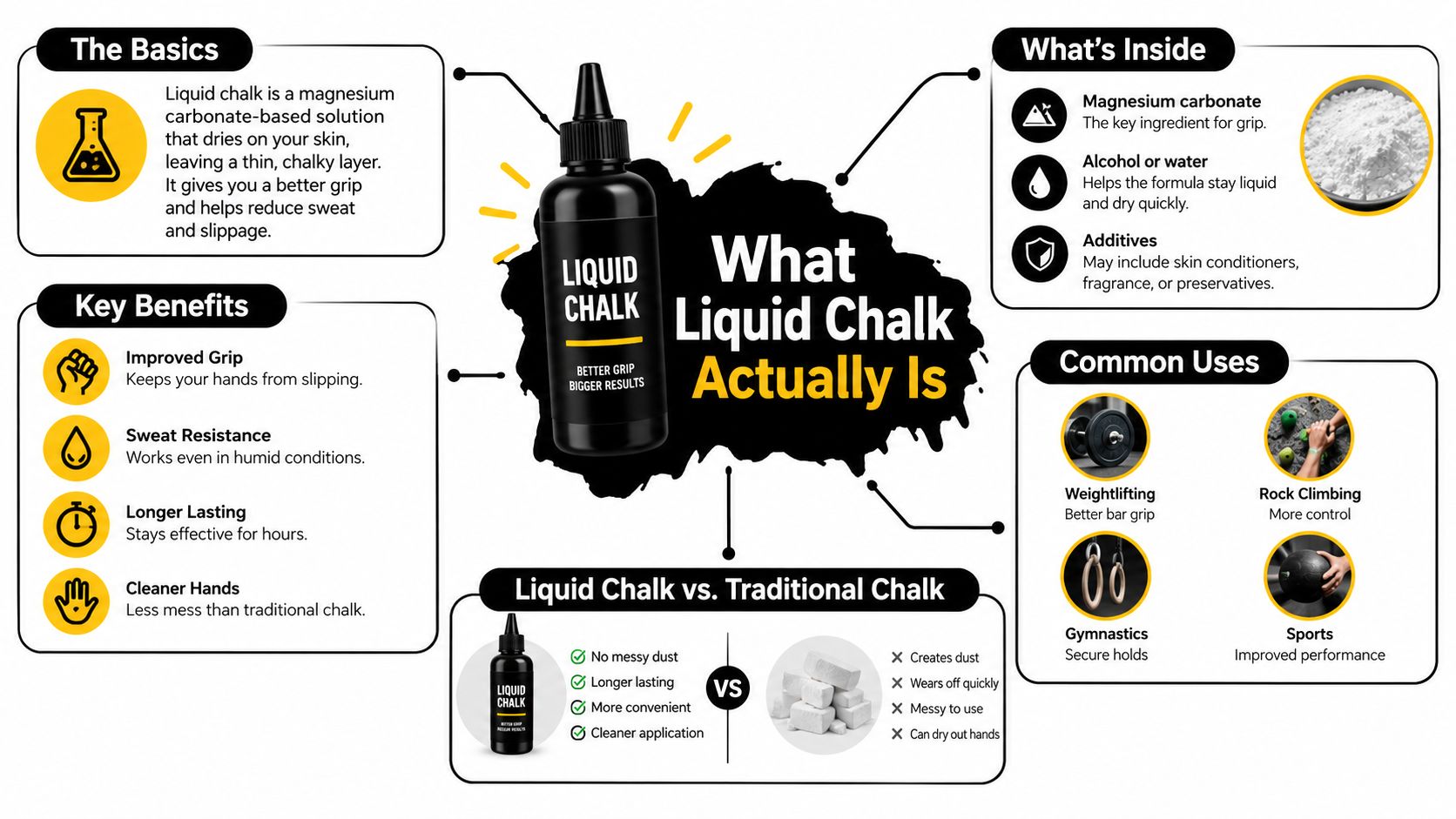
Liquid chalk is chalk delivered in a spreadable carrier. A controlled sports-grip study defined it as powdered magnesium carbonate suspended in alcohol with a thickener, and found that it performed similarly to an untreated finger on a dry contact surface; moist conditions favored granular powder-based agents in that test.
The alcohol evaporates after application, leaving chalk particles on the skin. Those particles manage surface moisture. The formula isn't a glue, and a white coating isn't proof of increased friction.
What the Delivery Method Changes
With powder, the athlete handles loose particles before touching the apparatus. With liquid chalk, the athlete spreads the product where it's needed, then lets the carrier evaporate. That makes a small, localized application easier to build into class preparation.
EVMT LIQUID CHALK is a magnesium-carbonate liquid option sold in single bottles and multi-packs. It dries in seconds, makes no dust, and leaves no residue on bars or poles. It fits gyms that permit liquid chalk while banning powder, although an individual studio's approval still needs checking.
Those delivery benefits aren't the same as universal grip benefits. A clean application can still be the wrong choice for a dancer whose skin needs less drying, not more.
What a Buyer Should Evaluate
- Spread: A small amount should cover the intended contact zone without a thick coating.
- Dry-down: The hand should be ready for contact only after the liquid has fully dried.
- Skin response: Comfort matters more than a dramatic drying sensation.
- Actual contact: The useful test is whether the prepared hand holds predictably under the session's conditions.
The research finding on dry fingers is especially important for buyers. It removes the assumption that liquid chalk must improve every hand because it contains chalk.
A dancer choosing between drying products should judge the resulting skin condition, not the strongest marketing language. More absorbent isn't automatically more suitable for pole.
Liquid Chalk vs Powder Chalk vs Chalk Balls vs Grip Gloves
For pole, the comparison isn't just about which aid feels strongest. The athlete shares a contact surface with other dancers, moves between hand and body contact, and needs the pole to remain predictable. Cleanup and tactile feel belong in the buying decision.
Liquid chalk offers a controlled way to apply a drying mineral without handling loose powder. Powder gives direct access to dry chalk, but the studio must be willing to accommodate its mess. A chalk ball changes how powder is dispensed; it doesn't turn powder into a liquid formula.
Dust Is a Separate Decision From Grip
Indoor climbing research measured PM10 concentrations up to 4,000 micrograms per cubic meter and PM2.5 concentrations up to 500 micrograms per cubic meter, while an ethanol suspension of magnesium carbonate produced dust concentrations similar to those observed when chalk was prohibited.
That study concerns climbing gyms, not pole studios. It supports the dust-management case for liquid chalk, but it doesn't establish which product produces the strongest pole grip.
| Buying priority | Practical choice |
|---|---|
| Avoiding loose chalk around a shared pole | Consider a permitted liquid formula |
| Keeping an existing powder routine | Confirm that powder use and cleanup are accepted |
| Using a chalk ball under a powder ban | Ask first, since the contents are still chalk powder |
| Preserving bare-hand feedback | Test hand-applied products before choosing a glove |
| Managing already-dry skin | Avoid selecting solely by drying strength |
Gloves Aren't Another Kind of Chalk
A glove changes the contact interface rather than leaving bare skin against the pole. That makes it a different decision from choosing liquid or powder chalk. It shouldn't be treated as an interchangeable answer to the same moisture problem.
A broader hand grip aid comparison can help separate drying aids from options that change contact feel. For pole, the athlete should choose according to the actual failure: sweat, unsuitable skin condition, or a venue limitation.
The recommendation is straightforward: start with a permitted liquid formula when sweaty hands and powder mess are the concerns. Keep powder only where it suits the venue, and don't buy gloves on the assumption that every grip aid performs the same job.
How to Apply Liquid Chalk for Pole the Right Way
A useful application starts before the bottle opens. The athlete needs intact skin, clean hands, a prepared pole, and enough warm-up to judge the hand condition. Applying chalk to cold hands and then judging it immediately produces a poor test.
The target is a minimal, even film, not a thick white shell. Each application should solve the current damp area rather than cover every available patch of skin.
The Application Sequence
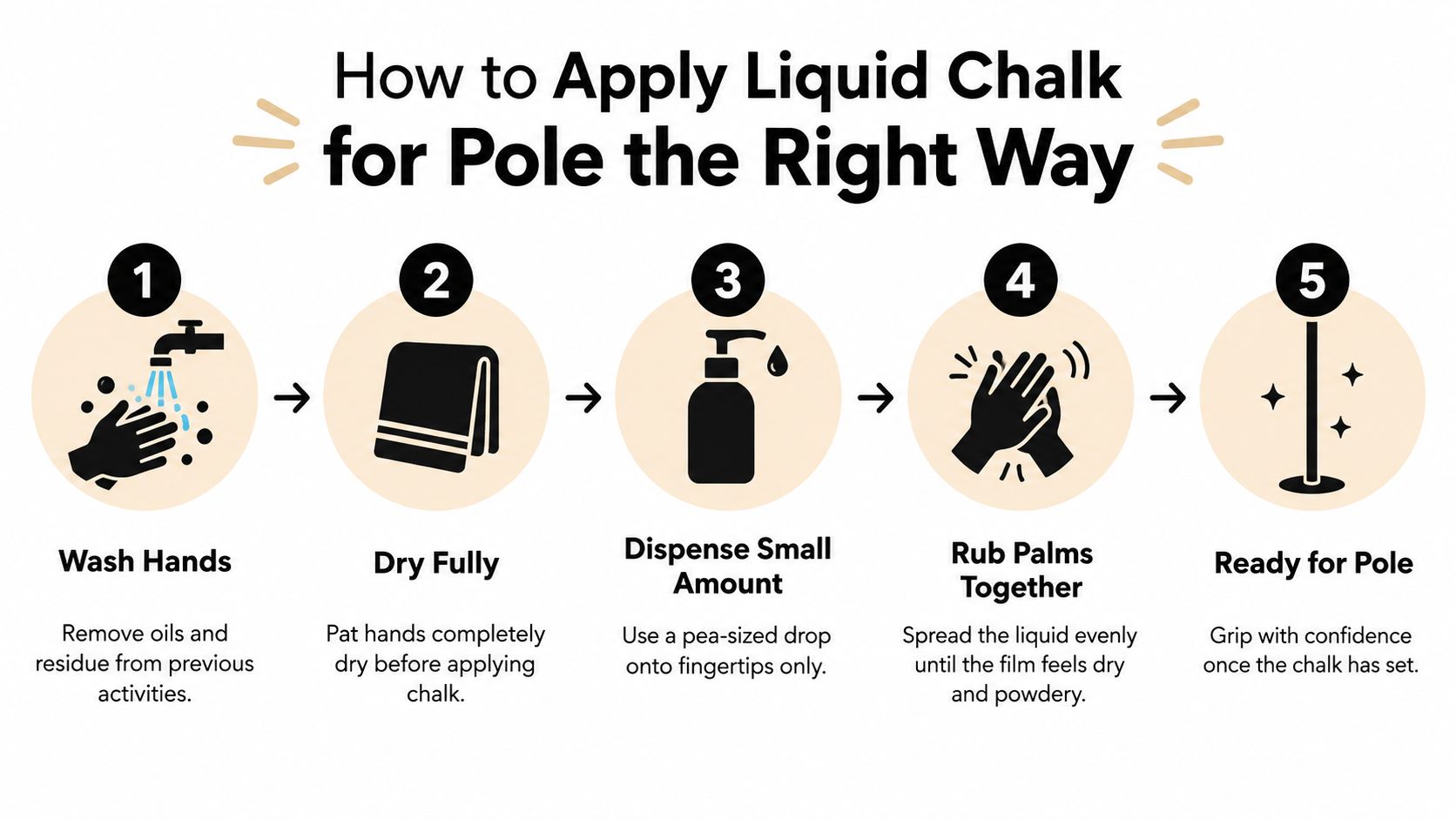
- Clean first: Wash away lotion, oil, and previous product. Prepare the pole using the studio's approved cleaning method.
- Dry and warm up: Dry the hands fully, then reassess whether sweat needs controlling.
- Apply sparingly: Dispense a small amount onto the fingertips and spread it across the affected finger pads or palm areas.
- Allow complete evaporation: Rub the film evenly and wait until no wet carrier remains. A wet application isn't ready for pole contact.
- Test conservatively: Check the result with a low-risk, coach-approved contact test before attempting demanding skills.
The athlete shouldn't chase a sticky sensation during dry-down. The product's job is moisture control, so “ready” means fully dry and comfortable, not adhesive.
Reapplication should follow the return of sweat, not a timer or anxiety about the next attempt. If the existing layer still feels dry, another coat has no clear purpose. Patchy buildup calls for cleaning and reassessment rather than stacking.
Broken Skin Is a Stop Signal
Alcohol-containing chalk shouldn't go on open cuts, torn calluses, bleeding cracks, or raw fingertips. Available guidance warns that alcohol can aggravate damaged calluses and recommends patch-testing, minimal application, and stopping for redness, itching, or persistent burning (liquid chalk skin-safety guidance).
Burning isn't evidence that a grip product is working. It's a reason to stop applying it.
A dancer with sensitive skin should test a small intact area before routine use. An athlete with hyperhidrosis still needs a skin-tolerance check; heavy sweating doesn't make damaged skin suitable for alcohol exposure.
The common application errors are avoidable: lotion underneath, excessive quantity, contact before drying, and repeated coats over an existing layer. A careful first application beats an aggressive attempt to rescue grip mid-session.
Pole Finish, Humidity, and Sweat Level
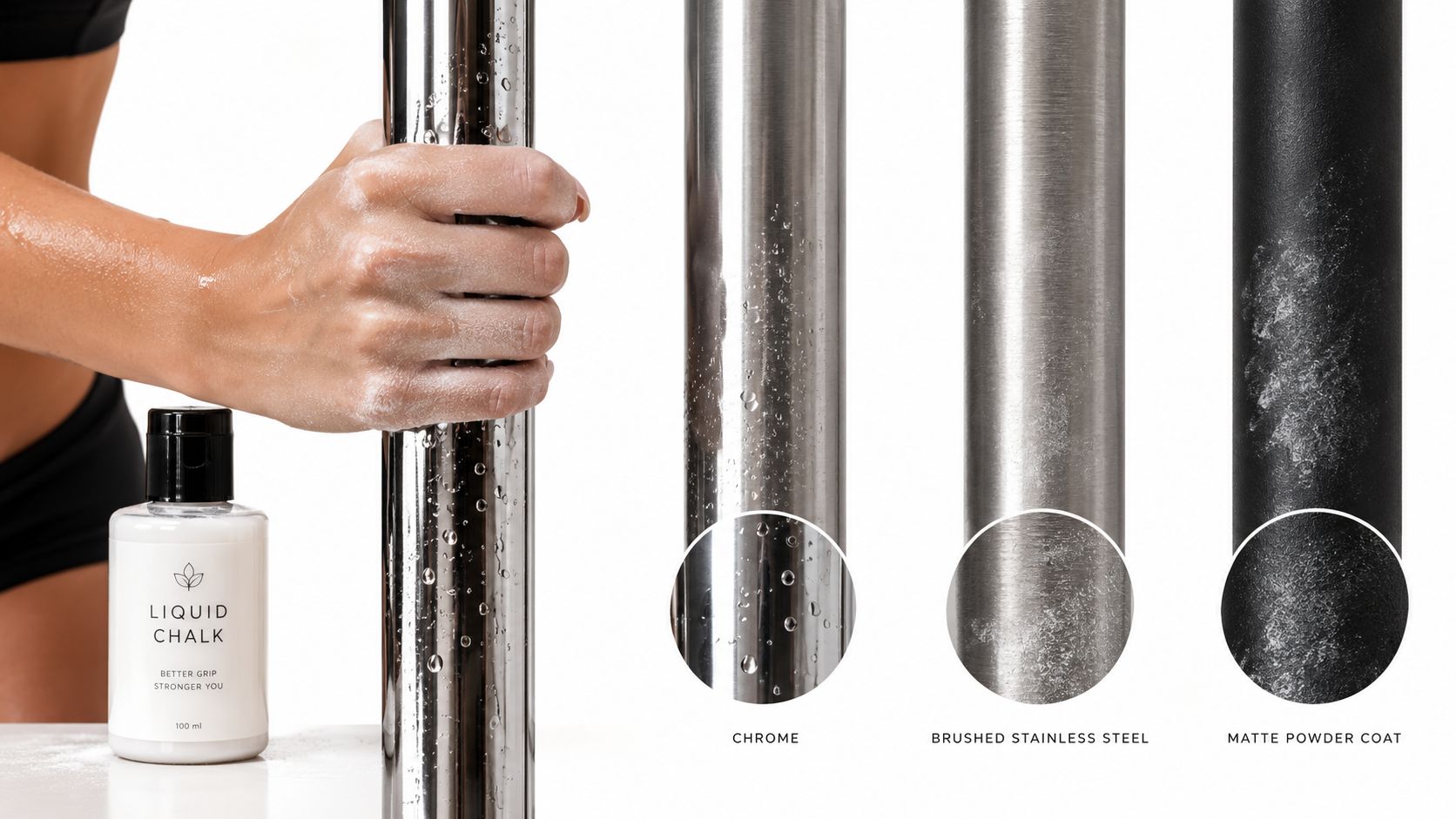
A bottle shouldn't be judged independently of the pole beneath the hand. Chrome, stainless steel, and powder-coated finishes interact differently with skin condition, temperature, and humidity, so a result on one finish can't be assumed on another (pole surface and moisture guidance).
The important principle is a usable moisture window. Excessive sweat can separate skin from the surface, while unusually dry skin can lose the slight tack and compliance that support contact. The same drying application can help one condition and push another in the wrong direction.
Record the Conditions That Matter
| Variable | Useful training note |
|---|---|
| Pole finish | Chrome, stainless steel, or powder coat |
| Room conditions | Humid, comfortable, cold, or unusually dry |
| Hand condition | Damp, neutral, dry, or irritated after warm-up |
| Reapplication | What prompted it and whether contact improved |
A coach doesn't need a complicated tracking system. A short note can distinguish a helpful formula from a helpful combination of formula, surface, and environment. The athlete should also record whether the pole was shared and freshly cleaned.
Compare Like With Like
Consider a dancer who finds a light application useful in a humid class on chrome, then dislikes it in a cold room on powder coat. That isn't a controlled product comparison. The finish, temperature, and skin state changed together.
A better test keeps the preparation routine consistent and changes as little as practical. The dancer can compare untreated and minimally treated hands on the same clean pole, under coach supervision, before drawing a conclusion.
- Humid session with damp palms: Test a small application and monitor returning sweat.
- Cold session with dry hands: Complete warm-up before deciding whether drying is needed.
- Different finish: Restart with a minimal test rather than carrying over the previous dose.
- Unclear result: Record the conditions instead of immediately adding product.
The useful question isn't whether the bottle worked yesterday. It's whether the prepared skin and current pole produce reliable contact today. Training notes make that decision more repeatable than a verdict based on a single good or bad attempt.
When Liquid Chalk Makes Pole Grip Worse
Stronger drying can mean weaker pole grip. Chalk absorbs moisture rather than stopping perspiration, and pole guidance notes that chalk-style aids can make naturally dry hands slide more (pole grip selection guidance).
That's the failure many dancers misread. The hand feels less secure after chalk, so the athlete applies more. If excessive dryness caused the problem, the second application moves the skin further from a useful contact condition.
A Controlled Hand-Only Test
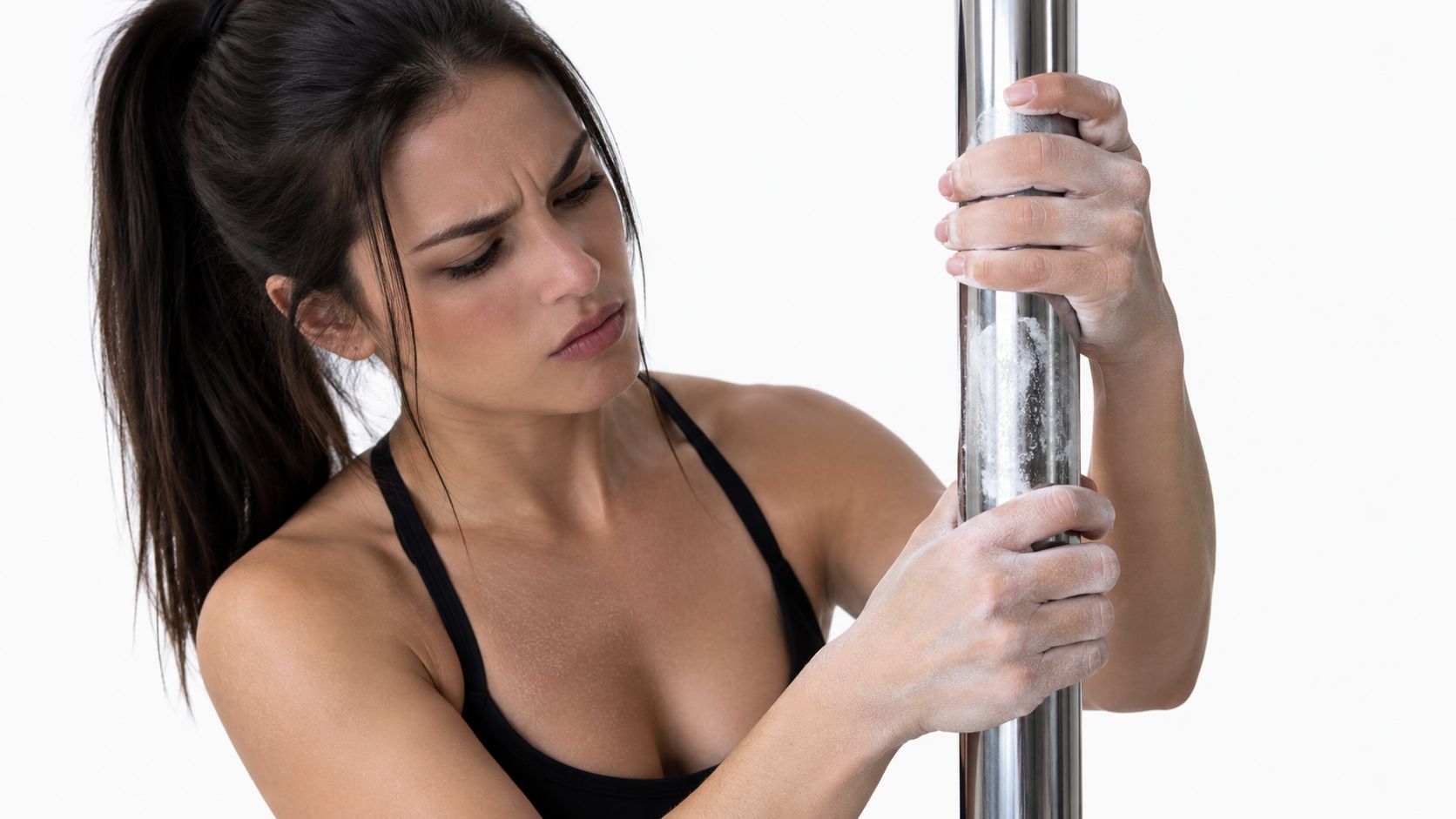
The dancer should begin with warmed, clean hands and a familiar pole. A low-risk contact test provides a baseline before product goes on. A minimal hand-only application can then be compared under similar conditions.
- Improved contact with comfortable skin: Keep the application small.
- Dampness returns and contact deteriorates: Consider a localized reapplication.
- Hands feel tight and contact worsens: Remove the product and reduce or skip chalk.
- Cracking or irritation appears: Stop the test rather than adjusting the dose.
A coach should supervise any comparison that could lead to a slip. An unfamiliar inversion or demanding static hold isn't an appropriate product experiment.
Keep Hand Grip and Body Grip Separate
A palm that needs drying doesn't prove that the thighs, torso, or other contact zones do. Broad body application can interfere with the skin-to-pole friction a dancer needs for a particular hold. Hand-only testing is the sensible starting point.
A dancer can need chalk on sweaty palms and no chalk on body contact zones during the same session.
Sweat-driven slip usually arrives with renewed dampness. Over-dry slip appears when the skin feels stripped or tight and another application makes contact worse. Neither should be diagnosed solely by how frightened the athlete feels.
Skipping chalk is a valid result. A grip product earns its place by improving the current contact condition, not by being used every class.
Pole Care, Skin Care, and Studio Rules
Class ends, and the dancer's job changes from managing contact to leaving the pole and skin ready for the next session. Shared equipment should be wiped according to the studio's approved method. A damp microfiber cloth may suit routine cleanup where the venue permits it, but finish-specific instructions take priority.
The athlete should inspect the pole for visible product or other residue rather than assuming a clean-looking application eliminates cleanup responsibilities. The next dancer needs a predictable surface, not a mixture of leftover products.
Separate Grip Preparation From Skin Repair
Wash chalk off with mild soap after training, then moisturize between sessions. Repair products belong far enough from the next class that residue won't compromise grip; the liquid chalk removal guide provides a practical cleanup reference.
For athletes organizing post-training care, ALODERMA's guide can help find your skincare routine sequence. Cosmetic product order isn't a substitute for assessing irritated or broken skin.
- Persistent stinging: Stop application to the affected area.
- Sensitive skin: Treat “dermatologist tested” as a testing description, not a guarantee of individual tolerance.
- New venue: Confirm the exact liquid formula is permitted before class or competition.
Permission Is Specific
A powder ban doesn't automatically authorize every liquid grip product. Apparatus-specific restrictions in USA Gymnastics equipment rules illustrate why athletes must check the applicable policy rather than assume chalk has universal approval.
For pole, the studio or competition organizer has the final word. Clean application, careful skin care, and explicit permission are all part of responsible grip management.
Evermost LLC offers magnesium-carbonate liquid chalk in single bottles and multi-packs for athletes who need sweat control without powder dust. Pole athletes can visit Evermost LLC to review the product, confirm studio permission, and choose a bottle for a minimal, hand-only trial.