


Grip Tape for Hands: What It Does and When to Use It
A bar begins to slide during the middle of a set. A pole feels less secure after repeated climbs. A climber reaches for another chalk top-up because sweaty palms have erased the dry, confident grip from the opening moves. In each case, grip tape for hands may help, but it isn't automatically the cleanest or most reliable answer.
Tape creates a physical traction layer on the skin. Liquid chalk changes the surface around the hand without wrapping it. The better choice depends on whether the main problem is a hot spot, a tear, finger support, sweaty palms, airborne chalk, or a venue rule. The global grip tape market is estimated at USD 356.3 million in 2024 and is projected to reach USD 537.6 million by 2034, with sports and recreation representing more than 45% of end-use demand in the cited forecast, so this is a serious performance category rather than a niche accessory (market forecast for grip tape).
Table of Contents
- What Grip Tape for Hands Actually Does
- Types of Grip Tape and the Materials Inside
- How Grip Tape Performs Across Sports
- Grip Tape Versus Liquid Chalk, Rosin, and Gloves
- Choosing the Right Grip Aid for Your Hands
- Application, Removal, and Skin Safety
- The Verdict on Grip Tape for Hands
What Grip Tape for Hands Actually Does
The traction layer on the skin
Halfway through a climbing session, one finger may start rubbing raw while the rest of the hand still feels secure. A gymnast may notice a hot spot during repeated bar work, or a pole athlete may lose comfort at one contact point long before the whole hand becomes slippery. Grip tape for hands addresses that local problem by placing a structured material layer between skin and equipment.
The tape's backing and adhesive change the feel of contact. They can add texture, reduce direct rubbing, and give a small area more protection when skin is the weak link. The result is closer to adding a thin patch to a worn handle than coating the entire hand with a new surface.
That distinction matters during a full session. Tape can remain useful while one protected finger or hot spot is doing repeated work, but sweat can work under the edges as sets, climbs, or holds accumulate. Once the palm itself becomes slick, a strip aimed at one problem may leave the larger grip problem untouched.
Tape fits targeted jobs:
- A single hot spot hurts: a carefully placed layer can reduce direct rubbing.
- A finger needs support: a narrow strip can reinforce a limited area without covering the palm.
- A contact point keeps wearing down: tape can act as a protective barrier during repeated movement.
- The whole palm becomes sweaty: a hand-applied chalk product may address moisture across a wider contact area.
A useful analogy is a rain cover over one leaking seam. It protects the seam, but it does not dry the entire jacket. Tape works in much the same way. It adds material where friction, pressure, or skin damage is concentrated. It does not automatically control moisture across every part of the hand.
Practical rule: Use tape when the failure point is specific. Reassess the grip aid when sweat spreads across the palm or the tape begins lifting.
A venue that restricts loose powder may also make liquid chalk a cleaner choice because it dries onto the skin with much less airborne dust than loose powder. That is a different session problem from protecting one sore finger.
For example, an athlete can tape a ring-finger hot spot before the first set, then find by the third set that the uncovered palm is sliding. Guidance on athletic tape for hand support can help with protective placement, while the session itself reveals whether local coverage is enough or a whole-palm moisture solution is cleaner.
Types of Grip Tape and the Materials Inside
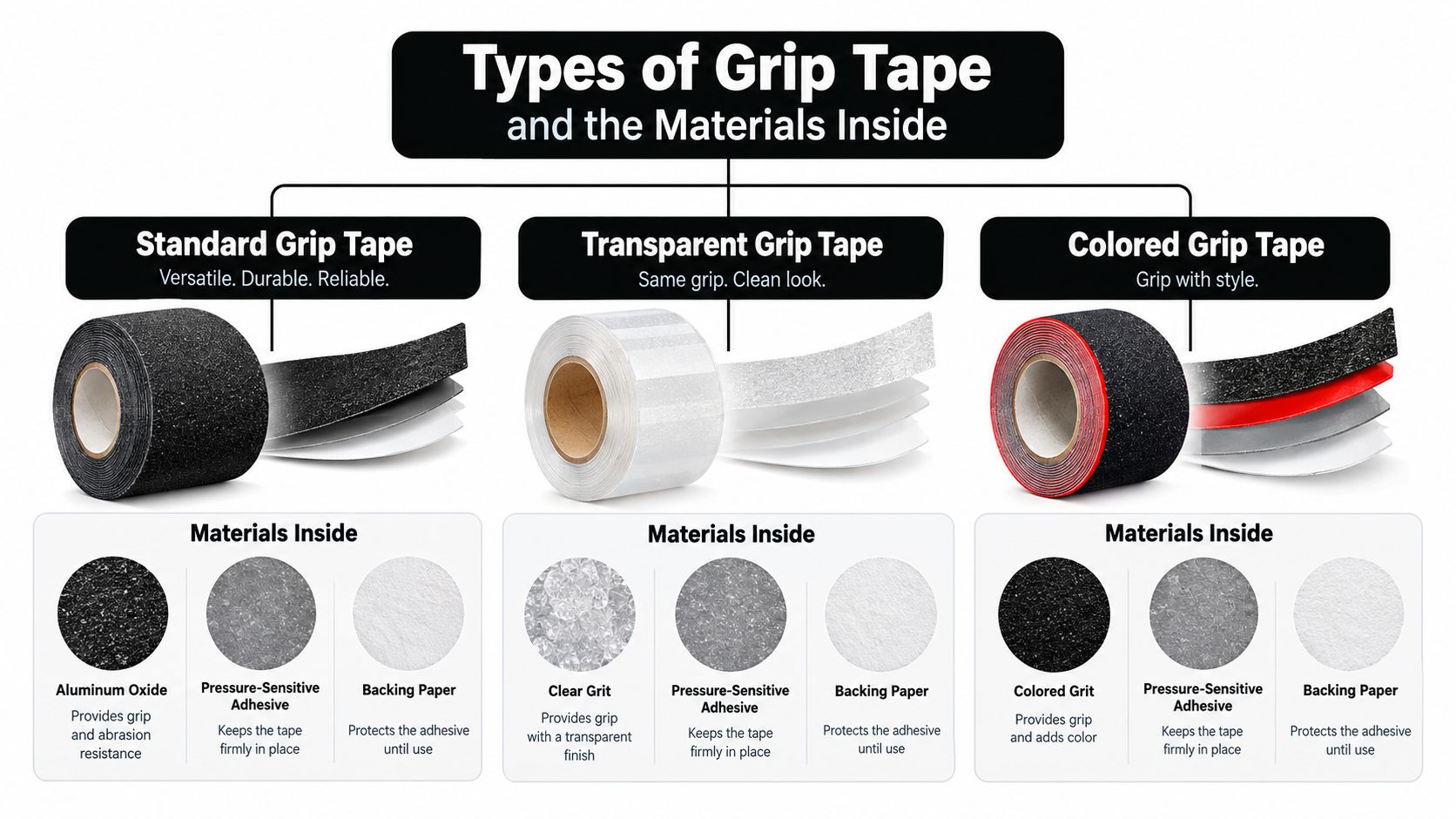
Tape rolls can look similar while behaving very differently on a humid bar, climbing hold, or pole. The main variables are the backing material, the adhesive, the surface texture, and whether the product is designed to stretch, conform, or stay rigid.
Cloth and cotton-based tape
Textured cloth and cotton-based tapes usually feel familiar because they conform to the contours of fingers and hands. Their woven surface can offer friction without relying only on a sticky coating. Breathability is often better than with an impermeable strip, but moisture can still reach the adhesive and loosen the edges.
Cotton-based tape tends to suit targeted applications. It can cover a hot spot, reinforce a finger, or create a short protective barrier. Athletes should inspect the weave and try a small section before committing to a full session. A soft, flexible backing may feel comfortable, while a coarse texture can become irritating after repeated movement.
Silicone-based grip strips
Silicone-based strips generally rely more on surface grip and conformability than on conventional adhesive. They can feel secure on contact and may resist some movement better than a basic cloth strip. The trade-off is that the sensation can be more pronounced, especially on a pole or another smooth surface where the strip contacts equipment directly.
Packaging clues matter. A product described as reusable, self-adhering, or silicone-based may behave differently from a disposable athletic tape. Athletes should check whether it is intended for skin, whether it stretches, and whether the manufacturer warns against use on damaged or irritated skin.
Resin-coated athletic wraps
Resin-coated wraps use a tackier coating to increase hold. That tack can help a gymnast or athlete who needs a firm relationship with a grip surface, but it may also feel sticky, collect residue, or become uncomfortable as sweat builds. Resin isn't the same as dry friction. A surface can feel adhesive at first and still become difficult to manage when moisture changes the contact layer.
Surface texture matters more than a sticky first impression. A tape that feels very tacky in a dry room may not remain comfortable or stable once sweat reaches the backing.
The difference between athletic tape for hands and finger taping is worth considering before purchase. The right format depends on whether the material must protect one joint, cover skin, stabilize a finger, or create a broader contact layer. Packaging that identifies the backing, adhesive behavior, stretch, and intended use gives a better prediction than color or thickness alone.
How Grip Tape Performs Across Sports
A gymnast finishes a bar sequence with one tender patch on the palm. A climber feels a split catching on the next hold. A pole athlete notices sweat changing every transition. These situations look similar, but grip tape performs differently according to the surface, movement, and amount of moisture involved.
Gymnastics and cheer
Gymnasts often use tape for a specific hot spot, small tear, or finger that needs focused support. A well-placed strip shields that area from repeated contact while the rest of the hand remains available for the bar. The benefit is local protection, not moisture control for the whole palm.
A damp hand exposes the limitation quickly. Sweat can soften the adhesive, lift the edges, or make the tape bunch under repeated swings and releases. Once a folded edge sits between the hand and bar, the tape may become a distraction rather than a protective layer. Clean, dry skin gives it the best starting point, although a long routine can still test the bond.
Cheer athletes face the same trade-off while gripping, supporting body weight, and contacting shared equipment. Tape can settle a known sore point, especially when the strip stays outside the main load area. Broad palm sweat is a different problem. Covering one patch does not make every grip surface dry.
Rock climbing and bouldering
A climber may tape a split, tender skin, or a finger that needs support. The strip works like a small guard over a vulnerable contact zone. That can help an athlete finish a session without pressing the same damaged area directly against every hold.
Placement matters on small holds. A thick or poorly positioned edge can reduce fingertip feedback, catch on a hold, or collect sweat underneath. Short bouldering attempts may give the tape little time to shift, while a long route creates more heat, movement, and moisture. Climbers should check the strip on an easy hold before trusting it on a demanding sequence.
Liquid chalk has a separate role for climbers who already use loose chalk. It can form a base layer before powder is added, rather than replacing the usual chalk routine. Guidance on combining liquid chalk and powder recommends applying the liquid layer before sweating, then adding loose chalk as needed.
Pole fitness and dance
Pole athletes need predictable contact with a smooth surface. Tape may protect a localized sore area, but its edges can catch during transitions or change the feel of the pole under the hand. On a smooth pole, test a small strip first. A piece that feels secure while standing still may bunch or lift once the hand rotates, slides, and bears weight.
Sweat also changes the adhesive relationship over a long practice. Tape can win when the athlete needs targeted coverage and the strip can remain clear of the main sliding zone. It becomes less suitable when the whole palm is wet or when a raised edge interrupts a transition.
For athletes whose main issue is palm moisture, liquid chalk can provide a dry layer without the loose powder associated with some chalk routines. Pole-focused guidance describes its use for grip-intensive activity and notes that it can be washed away with soap and water (pole and liquid chalk guidance).
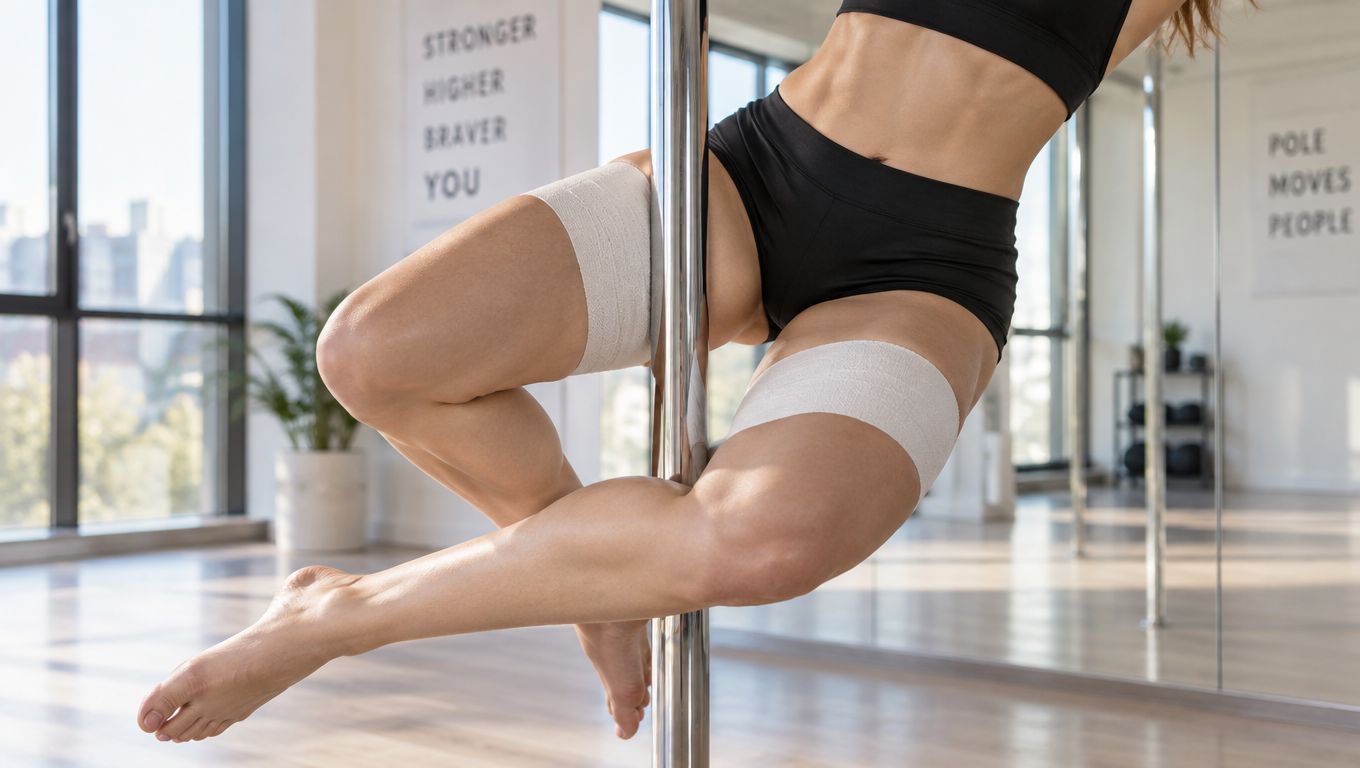
Tape durability varies with preparation, humidity, sweat, and session length. One independent guide says grip may last anywhere from a couple of hours to all day, so athletes should treat that as a condition-dependent range, not a promise. Washing and drying the hands, or using an alcohol wipe before application, can improve the starting conditions, but it cannot prevent every failure mode.
Grip Tape Versus Liquid Chalk, Rosin, and Gloves
A sweaty palm and a tender hot spot create different grip problems. Tape changes one contact area, while liquid chalk treats moisture across the hand. Rosin adds tack, and gloves place a material barrier between skin and equipment. The right choice depends on whether the session demands protection, dryness, direct contact, or extra adhesion.
How liquid chalk works
Liquid chalk is magnesium carbonate suspended in alcohol. Rubbed across the hand, it dries into a thin chalk layer with much less airborne dust than loose powder. That makes it useful in gyms where powder is restricted, while still giving the skin a dry contact surface.
EVMT Liquid Chalk follows this format. It dries in seconds, produces no loose dust, and is designed to leave little residue on bars or poles once dry. It can suit weightlifters, powerlifters, CrossFit athletes, climbers, gymnasts, cheer athletes, pole athletes, and home-gym users who need moisture control without powder spreading through the room.
Session length changes the comparison. In a 60-minute humid session, repeated bar contact can loosen tape edges after 20 to 30 minutes. A single liquid chalk base layer can maintain dry contact for 30 to 45 minutes before a light reapplication is needed. Tape therefore works like a small patch over a known problem, while liquid chalk works more like a surface treatment for sweaty palms.
| Grip Aid | Sweat Handling | Mess and Residue | Gym and Venue Rules | Best For |
|---|---|---|---|---|
| Grip tape | Targets a hot spot, though moisture can loosen edges | Usually low during use, with adhesive waste after removal | Often accepted, subject to venue policy | Hot spots, finger support, and localized protection |
| Powder chalk | Manages moisture and can be reapplied during activity | Creates airborne dust and visible transfer | Often restricted or banned | Climbers and athletes in venues that permit loose chalk |
| Liquid chalk | Dries onto the skin and supports a broad dry contact layer | Low airborne mess once fully dry | Often workable where powder is restricted, but rules should be checked | Sweaty hands, clean gyms, bars, poles, and climbing bases |
| Rosin | Builds tack, though the feel may become uncomfortable as moisture accumulates | Can leave a sticky film | Depends on the sport and venue | Sport-specific tack requirements |
| Grip gloves | Adds a physical barrier and changes contact feedback | Little loose mess | May be prohibited or discouraged in some sports | Athletes who prioritize coverage over direct skin contact |
Tape wins when the problem is narrow and skin protection matters. Liquid chalk is usually cleaner when the whole palm becomes slick. Powder remains useful for climbers who want loose chalk during a route, and liquid chalk can serve as a base layer beneath it.
Glove material also changes the result. This explanation of synthetic vs leather golf gloves shows how material choice affects breathability, fit, durability, and contact sensation. The same principle applies to grip gloves: the covering influences how moisture leaves the hand and how clearly the athlete feels the surface.
A broader guide to hand grip aids helps separate a traction problem from a skin-protection problem. Those needs can overlap, but tape and liquid chalk solve different parts of the session.
Choosing the Right Grip Aid for Your Hands
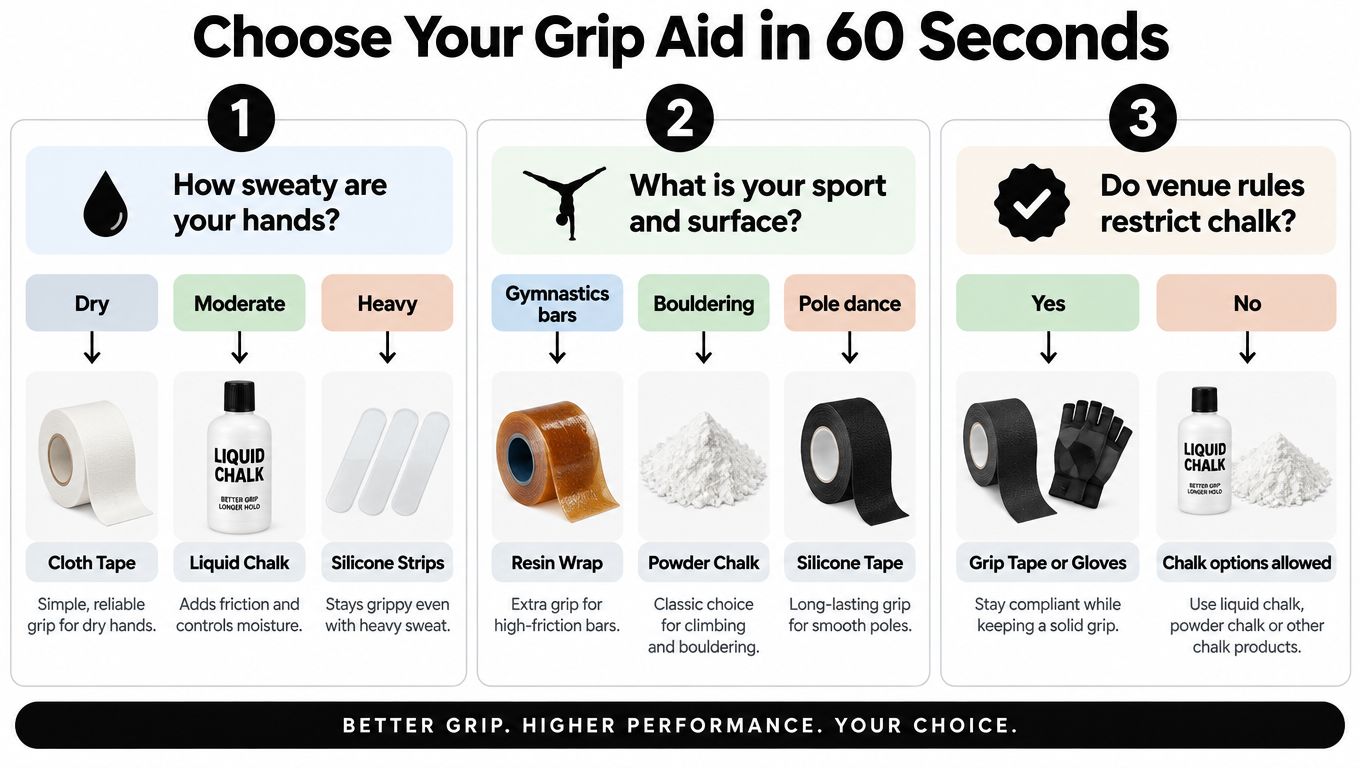
A practical decision can start with three questions: how much the hands sweat, what surface the athlete must control, and what the venue permits.
Start with sweat
Dry hands don't need the same solution as palms that become slick halfway through a session.
- Dry or mostly dry hands: Tape may be appropriate when a finger or hot spot needs protection.
- Moderately sweaty hands: Liquid chalk can create a quick-drying coating without the loose dust of powder.
- Heavy sweat: A whole-hand liquid chalk layer often addresses the broader issue more directly than a narrow tape strip, though the formula and application routine still matter.
A 2026 climbing buying guide reports that alcohol-based liquid chalk can dry in about 5 to 20 seconds, while alcohol-free formulas can take around 90 seconds. That difference matters between rapid attempts, quick transitions, and sessions where a slower-drying formula feels more comfortable.
Match the aid to the surface
A gymnast protecting a known tear has a different requirement from a lifter whose palms become slippery on a bar. A climber often needs precise friction and may already have a powder chalk routine. A pole athlete may care as much about clean equipment and predictable skin contact as about moisture control.
Many climbers combine aids rather than choosing only one. The standard sequence is a coat of liquid chalk on dry hands, full drying before the first attempt, and loose chalk on top as normal. The liquid layer creates another layer of grip, so the coat can last through more moves before re-chalking, and sweat has to work through two layers instead of one. That approach is especially useful on long sport routes, multi-pitch climbing, and humid gyms, while short boulder problems may not justify the extra step.
Check the venue rule
A home-gym owner may need to avoid dust on flooring and surfaces. A commercial gym may restrict loose powder but allow a liquid format. A competition or studio may have its own rule, so athletes should check before arriving rather than assume that every chalk product receives the same treatment.
For athletes who need a narrow support method, information about buddy taping and H-slings can clarify how finger-focused taping differs from applying a broad grip coating. The right choice depends on whether the hand needs stabilization, skin coverage, moisture management, or a combination.
Application, Removal, and Skin Safety
After a sweaty warm-up, tape can either protect a hot spot or become another distraction. The difference starts before the strip touches the hand. Clean, fully dry skin gives the adhesive a fair chance to hold. Lotion, oil, sweat, and leftover product can make tape slide, bunch, or lift early.
Applying tape without creating a new problem
Tape should feel secure, not restrictive. A wrap that is too tight can create pressure or numbness, while a loose wrap may fold and rub against the bar, hold, or pole. Keep the edges flat, especially across joints and other areas that bend repeatedly.
Use this sequence:
- Clean the skin. Remove sweat, oil, and residue.
- Dry completely. Moisture beneath the tape weakens the adhesive.
- Cover only the needed area. Extra layers add bulk and change the hand's contact feel.
- Check movement. Flex the fingers and look for tingling, numbness, or color changes.
- Replace a failing strip. A lifted edge can catch, roll, or create more friction than the original sore spot.
Test the taped hand on an unloaded bar or easy hold before starting hard work. If the edge catches during a slow rehearsal, fix it then. Waiting until a heavy set turns the strip into a loose flap can distract you at the wrong moment.
Removal needs patience too. Pulling tape quickly from irritated skin can strip the surface. Loosen one edge gradually, peel in the direction the skin lies, and stop if removal becomes painful. Warm water can help soften stubborn adhesive, but athletes should avoid scrubbing a tender area.
Applying liquid chalk cleanly
Liquid chalk follows a different routine. Spread a small amount over the parts of the hand that contact the equipment, then wait until the layer dries before gripping. A thick coat takes longer to dry and can leave buildup, so add product sparingly.
Once the layer is dry, test the grip on the bar before loading weight. If the hand still feels damp or overly tacky, allow another 10 seconds instead of adding a second coat immediately. That pause helps prevent buildup and shows whether the first layer is doing its job.
Liquid chalk can be washed off with soap and water and creates less powdery residue on equipment or clothing than loose chalk, according to liquid chalk use for pole and gymnastics. That can suit studios, home gyms, and venues where visible dust is a concern.
Skin check: Burning, persistent redness, cracking, or worsening irritation means stop using the product and reassess the formula, application, and skin condition.
Adhesive and alcohol-based products affect sensitive skin differently. Test a small area before a full session. Do not aggressively cover damaged skin. A deep, infected, or slow-healing tear needs appropriate medical advice and careful attention to venue rules.
The Verdict on Grip Tape for Hands
Grip tape for hands earns its place when the need is targeted. It can protect a hot spot, cover a vulnerable area, or provide focused finger support. It makes the most sense when a specific part of the hand is failing and the athlete wants a physical barrier in that exact location.
For the everyday problem of sweaty palms on bars, poles, or climbing surfaces, a fast-drying liquid chalk layer is usually the cleaner default. It covers the broader contact area, avoids loose powder clouds, and doesn't require an adhesive edge to survive every movement. It also fits athletes training in home gyms or venues that restrict powder, although each venue's rules still need to be checked.
The two solutions can coexist in one gym bag. A climber may use liquid chalk as a base layer and keep powder chalk for normal top-ups. A gymnast may use chalk for general hand traction and tape for one vulnerable spot. A pole athlete may choose liquid chalk for a clean session and reserve tape for a localized skin issue.
The simple rule is this: tape the problem area, chalk the sweaty hand. Alcohol-based liquid chalk suits athletes who need a quick dry between attempts, while alcohol-free formulas may suit athletes who prefer a longer drying process. The right choice is the one that matches the session rhythm, skin condition, sport, and venue.
Evermost LLC offers EVMT Liquid Chalk in single bottles and multi-packs for athletes who want a fast-drying, dust-free grip layer for lifting, climbing, gymnastics, cheer, and pole training. Visit Evermost LLC to choose a clean alternative to broad palm taping when sweat, residue, or venue chalk rules are getting in the way.