

CrossFit Gear for Grip: Liquid Chalk for High-Rep Sets
Round four starts, the legs still have reps left, and the bar begins to slide. Fingers open a fraction early, a pull-up set breaks, and the athlete drops to shake out hands that feel slick despite a fresh dip in chalk. That's the moment CrossFit gear stops being a shopping list and becomes a grip problem. Shoes, plates and ropes matter, but sweat at the hand usually decides whether the next set happens.
Table of Contents
- Common CrossFit Gear and Where Grip Fits
- Liquid, Powder and Chalk Ball Compared
- Why Grip Fails in High-Rep Workouts
- How to Apply Liquid Chalk for a High-Rep Session
- Gym, Competition and Venue Rules for Chalk
- Liquid Chalk as a Base Layer for Climbers
- Pole, Gymnastics and Cheer Grip with Liquid Chalk
- Pick Your Grip Aid Before Your Next Session
Common CrossFit Gear and Where Grip Fits
Most CrossFit gear falls into a short list, and only part of it has anything to do with holding on.
| Item | Used for | Grip relevance |
|---|---|---|
| Barbell and bumper plates | Loaded lifts and drops; bumpers absorb impact | Bar is the grip surface in cleans and snatches |
| Weightlifting or flat training shoes | Change squat and clean positions | None directly |
| Jump rope, medicine ball, plyo box | Conditioning and power work | Low; sweat is a minor factor |
| Kettlebells and dumbbells | Swings, carries and presses | Handles need a dry, controlled grip |
| Pull-up bar and rings | Pulls, hangs and muscle-ups | Hardest grip test; sweat fails here first |
| Wrist wraps and lifting straps | Support the wrist or lock the bar to the wrist | Support, not sweat control |
| Chalk (powder, chalk ball, liquid) | Controls skin-to-implement contact | Core focus of this article |
| Grip gloves | Protect the palm | Protection, not sweat control |
The One Category That Manages Sweat
Barbells, shoes and boxes set the movement. Chalk manages the contact point where skin meets steel, wood or a coated handle. Wrist wraps support a joint position, straps tie the bar to the wrist, and gloves add a layer over the palm. None of those dry the skin itself, which is why athletes comparing options should separate palm protection from sweat control. The distinction behind CrossFit and gloves matters here, because a protected palm can still be a wet, sliding palm.
On pulls, hangs, cleans and muscle-ups, the hand is usually the first link to fail. Once sweat rebuilds between rounds, friction drops and every rep costs more finger effort. The useful question isn't which piece of CrossFit gear looks most complete. It's which chalk format keeps skin dry, where that format is allowed, and how it behaves when reapplied under fatigue.
Liquid, Powder and Chalk Ball Compared
| Format | Dust and spread | Application and drying | Residue on bars and poles | Gym rules | Best use |
|---|---|---|---|---|---|
| Powder chalk | Heavy airborne dust that settles on equipment and floors | Dip or rub on; no drying time | Visible white residue | Frequently restricted in commercial gyms | Short sets in open-air or powder-friendly spaces |
| Chalk ball | Less dust than loose powder, still released when squeezed | Dip and rub; no drying time | Some residue on bar | Check the gym policy before use | Quick top-ups where loose chalk is allowed |
| Liquid chalk | Little to no dust; does not spread like powder | Wipe on; dries in seconds | Minimal residue once dry | Check each gym; may be allowed where loose chalk is banned | High-rep sets, long sessions and humid gyms |
| Grip gloves (not chalk) | No chalk dust | Put on before the session | No chalk residue; glove material contacts the bar | Check the gym policy before use | Protection for specific movements, not sweat control |
Powder and Chalk Ball
Powder is instant. There's no drying time, and athletes can rebuild a coat in seconds between sets. The trade-off is spread. Loose chalk leaves the hands, settles on the rig, floor and nearby plates, and hangs in the air around a chalk bucket. That mess, not performance, is why many commercial gyms restrict it.
A chalk ball tones that down by holding powder inside mesh, so each squeeze releases less. It's still powder, though. It puffs when handled, can coat unevenly, and doesn't form the thin, sealed layer that a liquid leaves once dry. For quick top-ups in a powder-friendly space it's fine. In a shared training room with a dust complaint already on record, it doesn't solve the underlying problem.
Liquid Chalk and Gloves
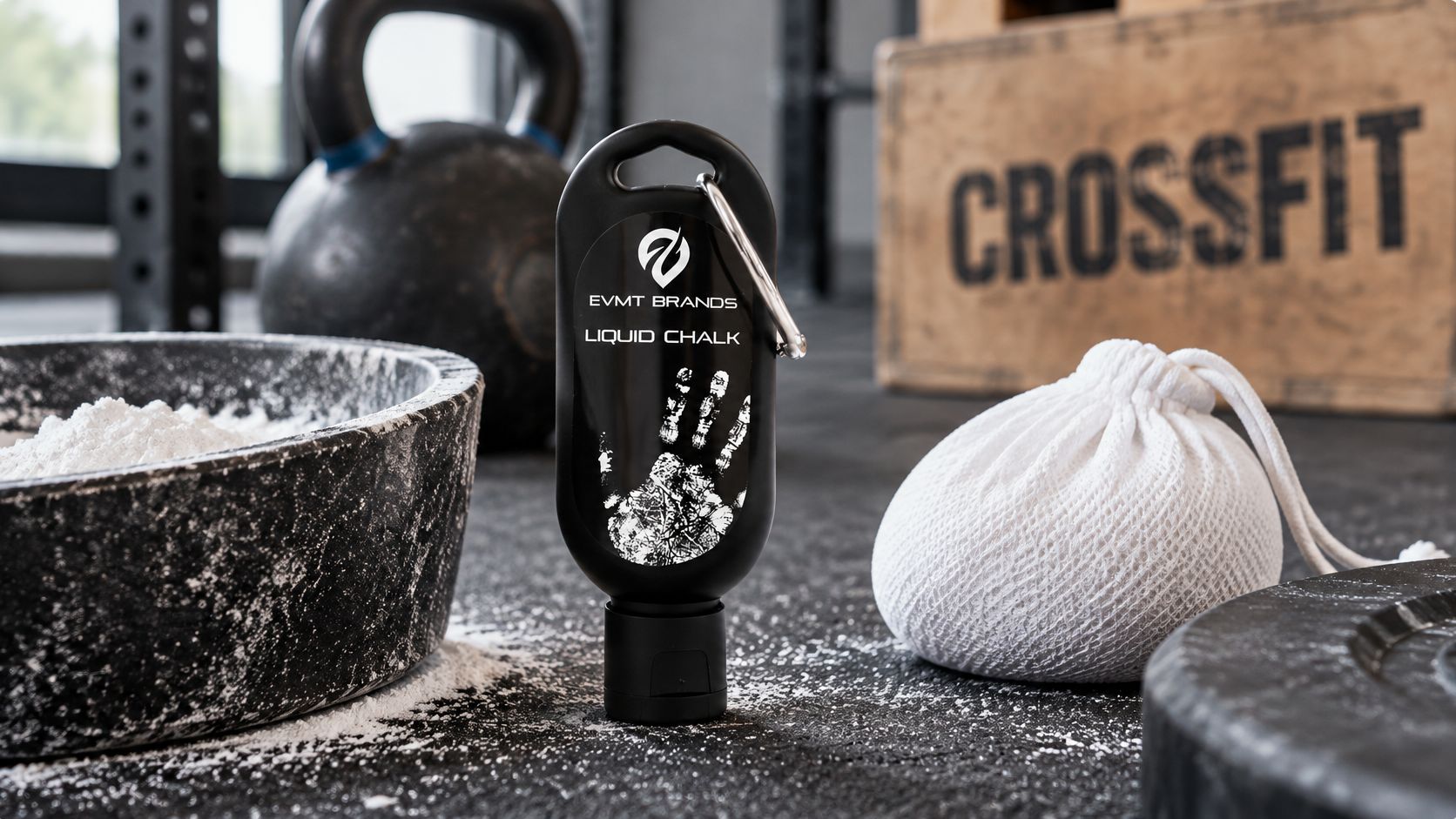
Liquid chalk goes on wet and dries in seconds, so the chalk stays on skin instead of drifting across the room. Once dry it leaves minimal residue on barbells, pull-up bars and poles, which suits high-rep work where hands re-sweat every round and the next athlete needs a clean bar. EVMT LIQUID CHALK is a magnesium-carbonate option in this category, described as providing grip and lasting performance for weightlifting, gymnastics, rock climbing and sports.
Gloves sit outside the chalk decision entirely. They shield skin from friction, but sweat still builds underneath and bar feel changes because fabric or leather sits between hand and implement. An athlete who wants palm protection may still choose them. An athlete whose problem is moisture needs a drying format instead.
Rule of thumb: Choose liquid where dust or loose-chalk bans apply, keep powder for open-air or powder-friendly spaces, and treat gloves as protection rather than sweat control.
That same residue logic explains demand beyond CrossFit. Gymnastics, cheer and pole athletes share apparatus between turns, so a format that dries on the hand and stays off the equipment has a practical advantage before performance even enters the discussion.
Why Grip Fails in High-Rep Workouts
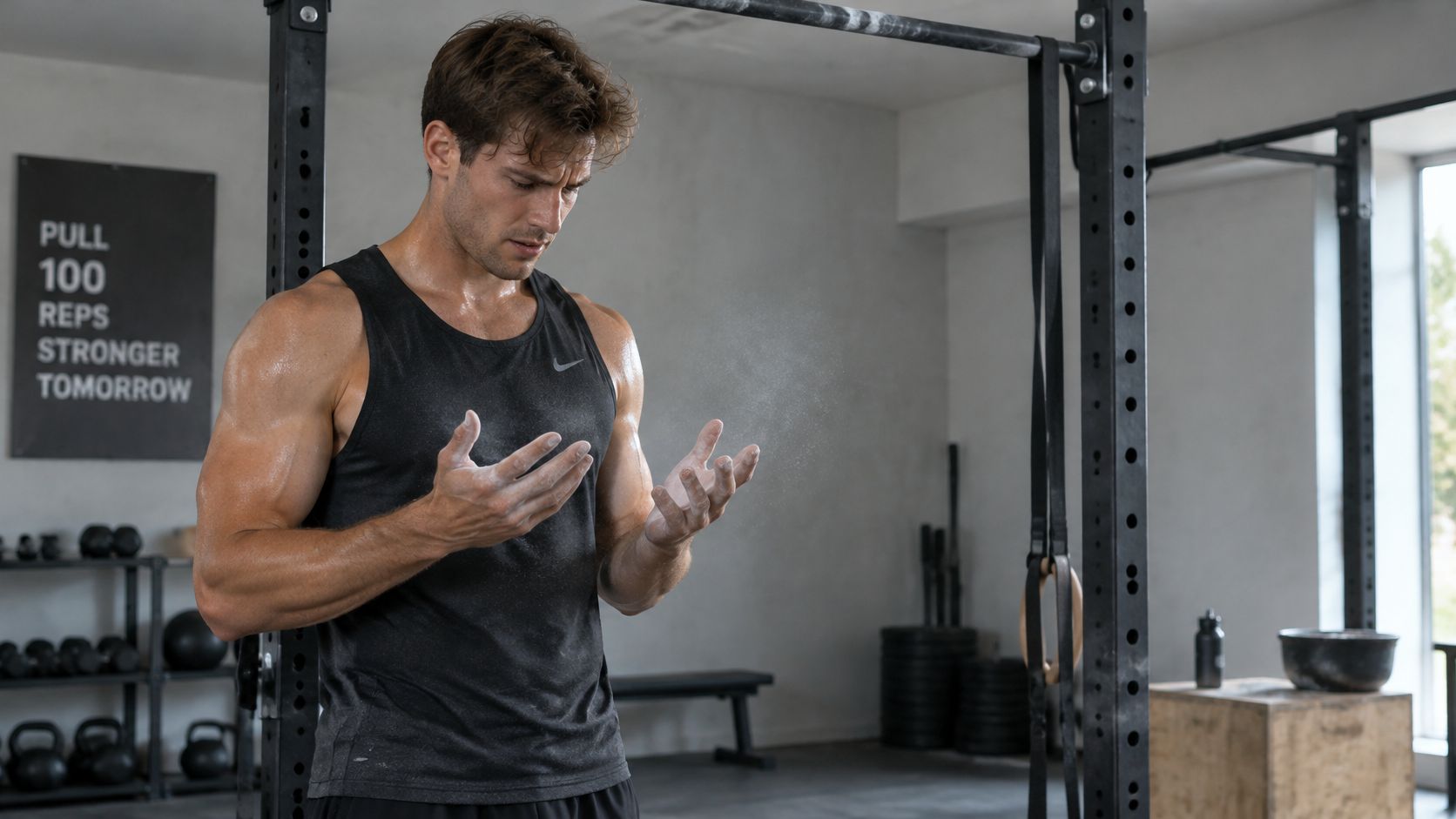
Sweat builds faster than dry chalk absorbs it, and each round of pulling adds more moisture than the coat can hold. Skin turns slick within a few sets, so the fingers must squeeze harder just to hold the same load. Fatigue makes it worse, because tired fingers tolerate less slip before the grip opens.
That is why the failure lands at the end of a set rather than the start. The legs and lungs often have more left when the hands give out, and a bar that felt secure in the early rounds starts to roll the moment the grip can no longer reset mid-rep. Grip is the gear decision that breaks first under high-rep work, ahead of belts, grips or footwear.
What the Injury Numbers Add
Grip failure also carries injury risk. In a 2025 cross-sectional study of 456 CrossFit athletes, 36.4% reported at least one injury during the previous six months, overuse injuries represented 49.2% of reported injuries, and the palm accounted for 14.5% of the most affected areas. That palm figure connects directly to pulling volume, where skin blisters or tears across rough, repeated contact. EVMT states its formula is backed by research to improve grip and help prevent blisters and slips, but no chalk turns broken skin into a reason to keep pulling.
| Symptom | Likely cause | Fix |
|---|---|---|
| Bar slips on the last reps of a set | Moisture outpaces the chalk layer during the set | Re-coat before the set and keep the layer thin and even |
| Chalk clumps and falls off after a few pulls | Powder sits on wet skin and dries out unevenly | Switch to a liquid format and reapply after wiping the hand |
| Blisters or tears on rough pulls | Friction with no buffer across many reps | Coat before the session; cut reps or sets once skin breaks |
| Grip fails on pull-ups while legs and lungs are fine | Sweat and fatigue at the fingers | Re-coat between rounds and keep the grip set short |
| Chalk dust on bars and floors, gym issues a warning | Powder spreads beyond the hands | Move to a liquid format that dries without dust |
Diagnosis comes before more product. A slip caused by a wet, clumped coat needs a format change, while a tear needs fewer reps or a stopped set. Athletes building capacity alongside chalk use can pair that judgment with ways to improve grip strength, since stronger fingers and drier skin solve different halves of the same failure.
Extra gear shouldn't be used to push through pain or obvious fatigue. Fix the cause first, then reduce load or stop when skin breaks.
How to Apply Liquid Chalk for a High-Rep Session
A thin coat applied to clean, dry skin outperforms a thick coat smeared over sweat. The routine below works because each step removes a reason the layer would clump, flake or transfer to the bar.
Before the First Set
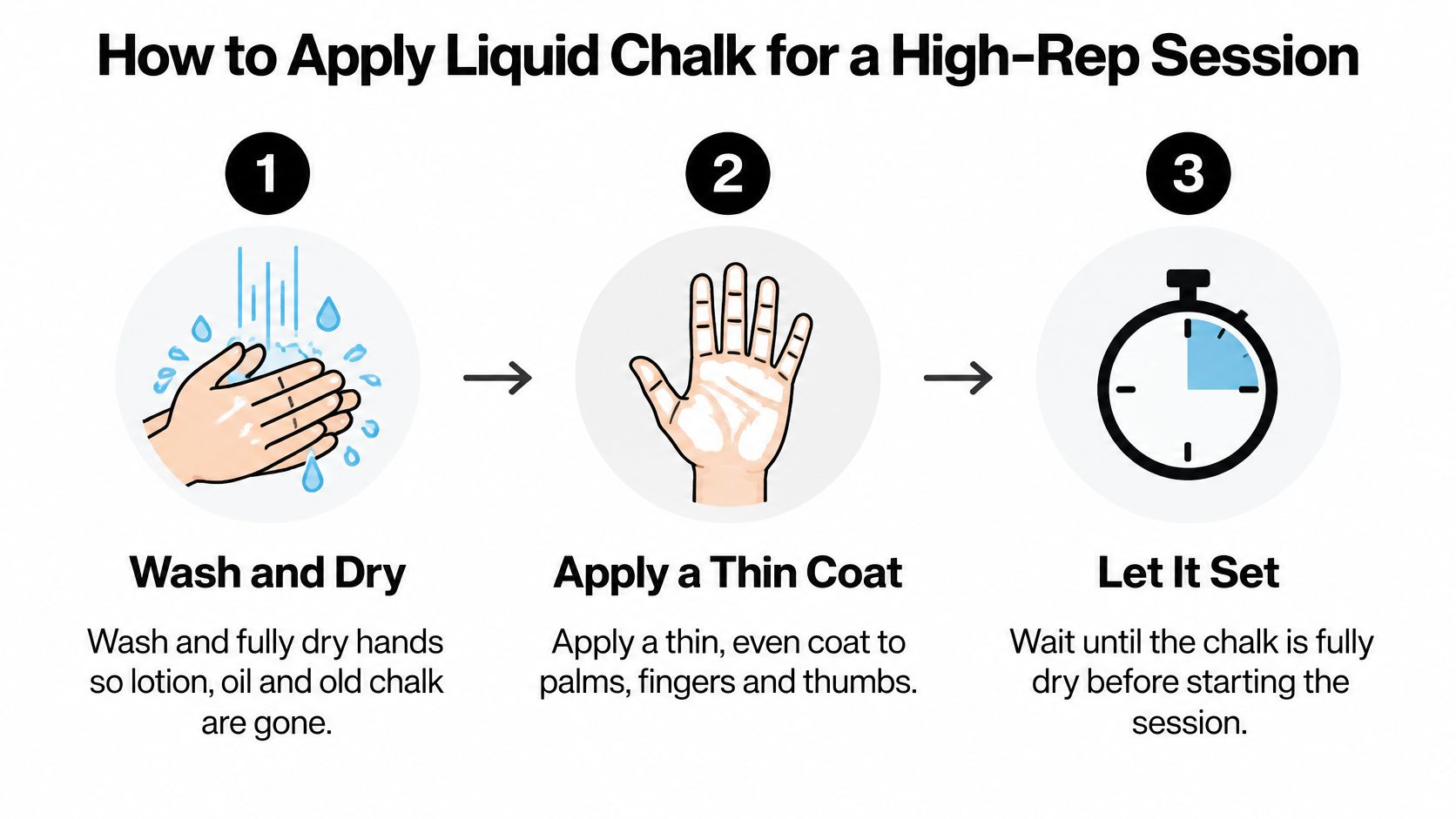
- Wash and fully dry the hands. Soap removes lotion, oil and old chalk that would sit under the new coat and weaken contact. Drying matters just as much, because liquid spread over damp skin dilutes before it sets.
- Apply a thin, even coat. Cover palms, fingers and thumb pads, since those surfaces carry the bar during pulls and hangs. A thick coat takes longer to dry and can flake once the hand closes.
- Wait until the surface no longer feels tacky. Drying takes seconds, but skipping the check is the common slip. A wet coat transfers straight to the bar and smears instead of gripping.
- Test on a light pull or hang. A short dead hang or easy row confirms the coat feels locked in before load and fatigue arrive. If one finger pad feels bare, a small touch-up now costs less time than a broken set later.
Between Rounds and Afterward
- Re-coat when the grip starts to feel slick. Wipe sweat off first, then add another thin layer rather than stacking liquid over moisture. Between rounds is the natural window, while breathing and heart rate settle.
- Wipe shared equipment if residue shows. A dry cloth across bars, rings or poles after the session keeps the next athlete's setup predictable. Liquid chalk spreads far less across the floor than powder, so cleanup is a quick wipe rather than a sweep.
- Wash hands with soap and water. Removal after training clears the coat and lets skin recover before the next pulling session. Leaving dried chalk on for hours adds dryness without adding grip.
The success test is plain. The bar stays in the hand through the final rep, there's no mid-set wipe on shorts or a towel, and reapplication happens by choice between rounds rather than by emergency after a slip. If the coat still fails early, the likely fault sits in preparation, usually damp skin, leftover lotion or a layer applied too thick to set evenly.
Home-gym owners get a second benefit from the same routine. Because the chalk arrives as a liquid and sets on skin, it doesn't drift onto stored equipment, flooring or nearby household surfaces the way loose powder does during repeated dips.
Gym, Competition and Venue Rules for Chalk
The venue sets the rule, not the product label. A format that trains perfectly well on Tuesday can still be illegal on a competition floor, so the setting has to be checked before money is spent.
| Setting | Liquid chalk status | Basis | Action before use |
|---|---|---|---|
| Commercial gym that bans loose chalk | Check with the gym; may be allowed | Gym policy varies; liquid leaves little dust | Ask the front desk in writing before the first session |
| Climbing competition under international climbing rules | Permitted | Dry or liquid magnesium-carbonate chalk allowed; tack-adding agents banned | Check the event equipment rules |
| CrossFit Games live competition | Prohibited | Liquid chalk listed among adhesive products banned in place of chalk | Use only chalk the event permits |
| CrossFit training gym with its own policy | Gym decides | Each gym sets its own rule | Ask in writing before buying |
| Home gym | Allowed by the owner | No venue rule; shared equipment still needs wiping | Wipe bars and poles after each session |
Training Gyms Versus Live Competition
Commercial gyms write their own chalk policies, and staff tolerance often tracks mess. Most gyms allow EVMT Liquid Chalk because it creates almost zero mess compared to loose chalk, but that general pattern doesn't replace written confirmation from the specific front desk. A short email asking whether liquid chalk is permitted prevents a first-session argument beside the rig.
Live CrossFit competition is stricter. The CrossFit rulebook permits chalk, defined as magnesium carbonate, on the body and attire, but prohibits adhesive products used in place of chalk, including resin, rosin, sandpaper, tacky products, liquid chalk, liquid adhesives and waxes in live competition. Liquid chalk therefore belongs in permitted training environments, and athletes can't assume it transfers to every event.
Resin and rosin sit in a separate adhesive category altogether, which is why they keep appearing on banned lists. Chalk manages moisture on skin. Adhesives change the stickiness of the contact itself, and rulebooks treat that difference seriously.
For travel, container choice also matters. A compact, securely closed bottle travels better than an open powder container, won't spill across a gym bag, and gives venue staff a sealed liquid to inspect rather than a leaking tub. Athletes should still wipe any spill immediately and keep the bottle off shared matting.
Three checks close the gap between training and competition habits.
- Ask in writing. Get the gym or event answer before the first session, not at check-in.
- Read the equipment section. Rulebooks name permitted and banned grip aids directly.
- Test in training. Never debut a new format on competition day, even where it's legal.
Liquid Chalk as a Base Layer for Climbers
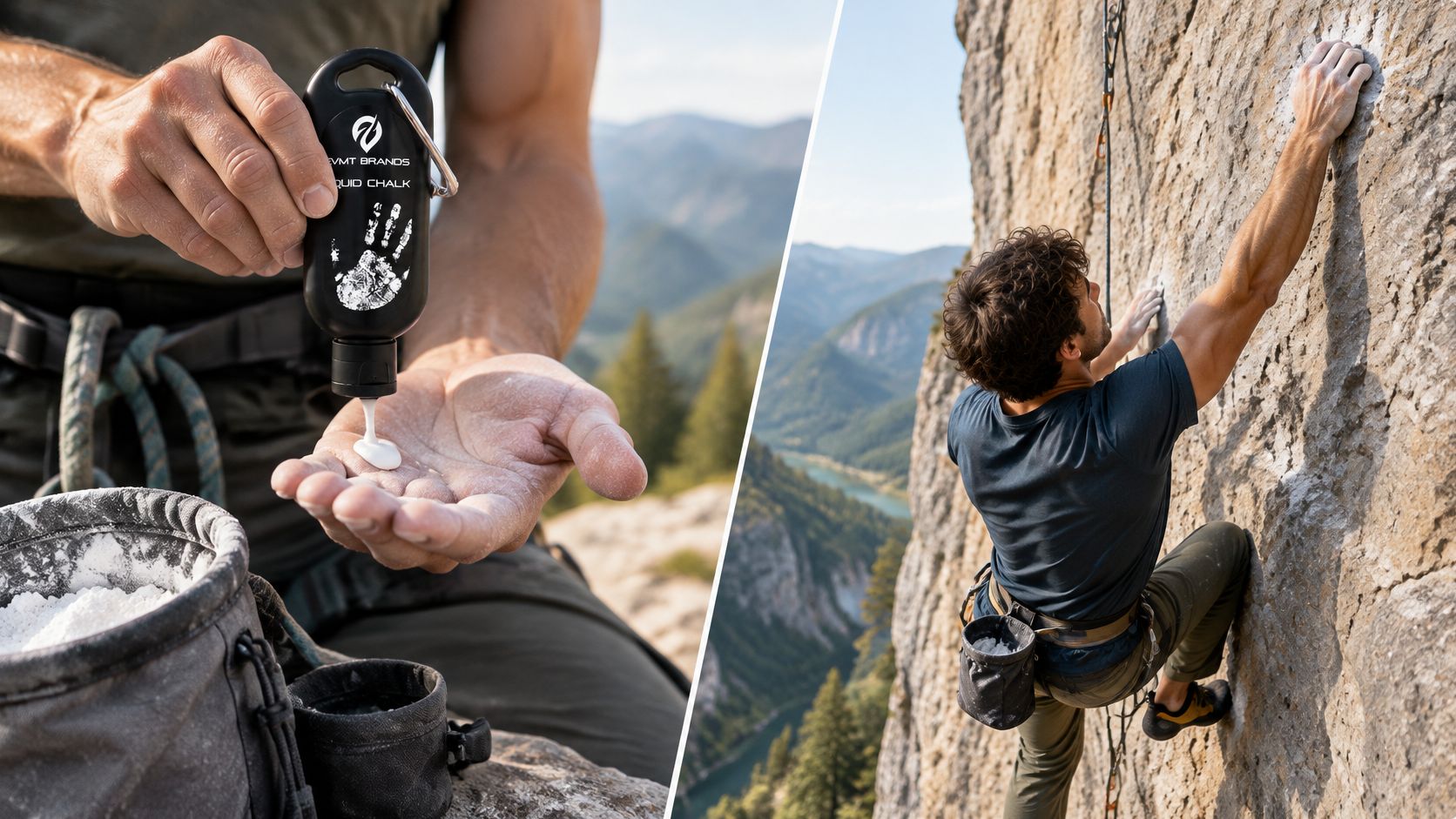
Chalk works differently on rock than it does on a barbell. A lifter re-chalks between sets with both feet on the floor and the bar racked. A climber mid-route has to find a rest, hang on one arm and reach into the bag without giving up position. Liquid chalk's role in climbing starts from that constraint. Liquid works alongside the powder climbers already use, sitting under it as a base coat that keeps the outer layer effective for longer.
Liquid First, Powder Second
The sequence is three steps. Coat dry hands with liquid chalk before the session, let it dry fully, then climb on powder as normal. EVMT Rock Climbing Liquid Chalk can be used as a primer under regular loose chalk for better adherence and longer grip on tough routes.
The logic is mechanical. The dried liquid layer sits beneath the powder, so sweat has to work through two coats instead of one. Each dip into the bag refreshes the surface rather than rebuilding grip from bare, damp skin. The payoff is real but bounded: a longer-lasting coat and fewer trips to the bag, rather than a fixed count of extra moves or minutes per application.
Where Layering Helps Most
Long sport routes reward the base layer because chalking opportunities are limited and every one interrupts position. Multi-pitch climbs add time, sun and repeated belay transitions, while humid indoor gyms rebuild hand moisture quickly between attempts. In all three settings, fewer trips to the bag protect both forearms and focus.
Short boulder problems tell a different story. A fresh powder dip takes seconds between attempts and the climber stands on the ground, so the base layer adds preparation without removing much inconvenience. Boulderers with very sweaty hands may still prefer it, but the advantage shrinks as re-chalking gets easier.
The format also fits the rulebook. The international climbing rules permit commercially available dry or liquid climbing chalk, define chalk as magnesium carbonate (MgCO3) whether pure or combined with additives, and prohibit compounds that alter holds or the climbing surface for later competitors. A magnesium-carbonate base coat on the hands sits inside the permitted category, provided it isn't applied as a tacky substance to modify holds.
Application timing decides whether layering works at all. Liquid spread over already sweaty skin, or powder dumped onto a still-wet coat, produces paste instead of two distinct layers. Dry skin first, full drying time, then powder. Climbers who respect that order get the extended coat. Climbers who rush it get clumps and blame the product.
Pole, Gymnastics and Cheer Grip with Liquid Chalk
A pole fitness athlete needs hands that hold through a spin and release cleanly at the right moment, without leaving a film for the next person. Powder makes that balance harder, because dust settles on poles and nearby mats and changes the surface everyone shares. Some studios restrict loose chalk for exactly that reason.
Liquid chalk suits the setting because it bonds to the skin rather than sitting on the apparatus. Gymnastics and cheer athletes face the same shared-equipment problem on bars, where residue left by one athlete becomes the next athlete's grip condition. The guidance behind gymnastics grip reflects that reality, where clean contact matters between turns.
Lotion deserves attention in this setting. Dance and pole athletes use it on skin that will touch the same apparatus everyone else uses, and any trace of it under a chalk coat breaks contact faster than sweat does. Hands need a proper wash before the coat goes on, not just a towel pass.
The dry-time check matters more on a pole than on a knurled bar. A wet coat transfers and smears across smooth metal, creating the slick film the athlete was trying to avoid. Testing on a low-stakes move before a full routine confirms the coat has set and the grip level suits the skill.
Studio rules still govern. Each gym or studio sets its own chalk policy, and youth gymnasts, cheer athletes and dancers should use grip products under adult supervision. Grip performance should be confirmed in training rather than assumed from a label.
Pick Your Grip Aid Before Your Next Session
Chalk choice starts with the setting. Three checks settle most decisions before product or price matters: whether the venue permits chalk at all, whether it restricts the loose kind, and what the session involves. A short metcon in a permissive gym is a different problem from a competition platform or a shared pole studio, and each setting narrows the usable formats on its own.
For athletes landing on liquid chalk, EVMT sells three types matched to different work: Classic Liquid Chalk for gym and CrossFit sessions, Weightlifting Liquid Chalk with an extra-thick consistency for maximum bar coverage, and Rock Climbing Liquid Chalk for precision holds or as a primer under loose chalk. The formula is made with 100% non-toxic magnesium carbonate that absorbs moisture, reduces slippage and improves grip strength, and it stays sweat-resistant through a session, which is why gyms that ban loose chalk often still allow it. Bottles come in 50 ml and 250 ml sizes; the smaller one fits a gym bag, and select portable options include a carabiner ring for easy carry. A sealable bottle also travels well to venues where liquids get checked at the door.
The practical next step is small. Confirm the gym's rule, test one thin coat in the next session, and note whether grip holds through the hardest set before settling on a format or bottle size. "Excellent product. Able to lift without fear of slipping," as Wayne put it after making the switch.
Athletes who lose sets to sweaty hands can find fast-drying liquid chalk from Evermost LLC, with Classic, Weightlifting and Rock Climbing formulas in 50 ml and 250 ml bottles for training, climbing and studio use. Confirm the venue rule first, pick the format that matches the session, and put a thin coat to work in the next high-rep workout. CrossFit gear earns its place by surviving that test, and chalk is no exception.