


A Guide to Using Chalk for Grip and Dominating Your Lifts
It’s the moment of truth in a heavy lift or a long set of pull-ups. Your muscles are firing, but your hands start to slip. It’s not a failure of strength, but a failure of grip—and it’s one of the most frustrating barriers an athlete can face. This guide is dedicated to breaking through that barrier by mastering the single most effective tool for the job: chalk for grip.
Your Grip: From Weakest Link to Competitive Edge
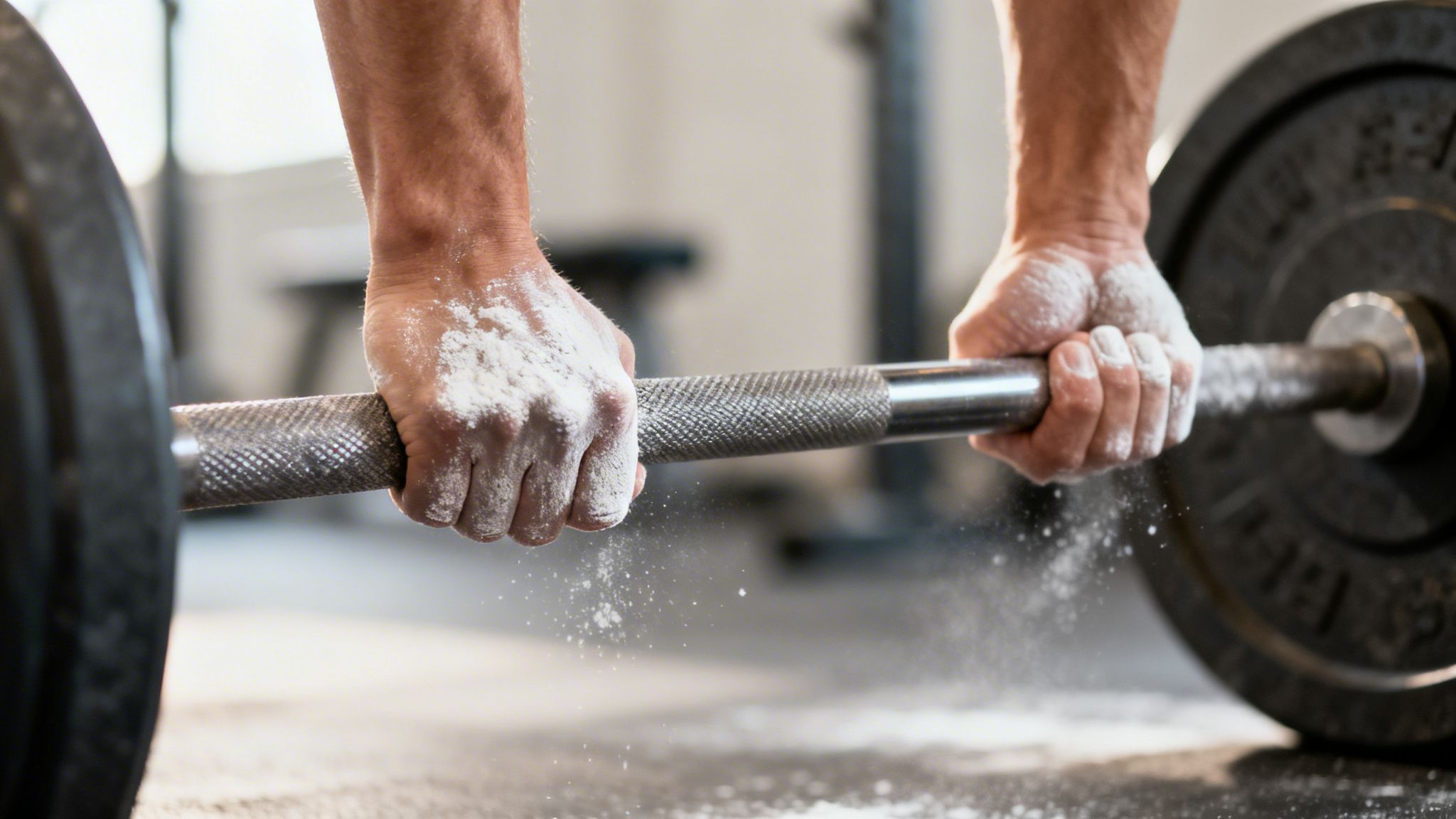
Whether you’re pulling a one-rep max deadlift or battling for position on a climbing wall, your grip is the final point of power transfer. In a high-stakes performance environment, the slightest amount of sweat can compromise that connection, turning a potential PR into a missed attempt. For a competitive athlete, this isn't a minor issue; it's the variable that can determine the outcome of a competition.
Picture an Olympic weightlifter preparing for a clean and jerk on the international stage. Every element is controlled: their breathing, their setup, and the condition of their hands. The aggressive, dry texture provided by chalk ensures that 100% of their force is transmitted directly into the barbell. There is no slip, no hesitation—only pure power.
From Problem Solver to Performance Multiplier
This is where high-quality grip chalk becomes an indispensable piece of equipment. Its primary function is simple: absorb moisture. By eliminating sweat, it dramatically increases the friction between your hands and the bar, rock face, or gymnastics rings.
A secure grip delivers tangible performance outcomes:
- Maximal Strength Output: A locked-in grip allows you to lift heavier and pull with more force, as grip strength is no longer the limiting factor.
- Improved Muscular Endurance: You can execute more reps and sustain longer holds when you aren't constantly fighting hand fatigue from a slipping grip.
- Enhanced Safety: A secure grip significantly reduces the risk of a bar slipping during maximal efforts, which is critical when pushing physiological limits.
By transforming a sweaty, unreliable point of contact into a locked-in asset, chalk allows your true strength to be tested. The goal is simple: make sure your hands can keep up with your ambition.
The Science of a Stronger Grip
At its core, using chalk for grip isn’t a gym superstition—it’s applied physics. The white powder or liquid film used by elite lifters and climbers is magnesium carbonate, a simple compound with a powerful hygroscopic property, meaning it excels at absorbing moisture. This single characteristic is the key to turning your weakest link into an undeniable strength.
Attempting to hold a smooth, steel barbell with sweaty palms is a losing battle. Moisture creates a slick, low-friction surface, much like a car hydroplaning on a wet road. This is precisely what happens when a heavy deadlift slips or a gymnast loses their hold on the rings. Your actual strength becomes irrelevant if you cannot maintain a solid connection to the equipment.
How Chalk Manipulates Friction
Chalk addresses this problem through two primary mechanisms. First, it acts as a desiccant, instantly absorbing sweat and oils from your skin. This eliminates the slippery layer between your hand and the equipment, immediately restoring a dry, high-friction contact point.
Second, chalk adds a microscopic, textured layer to your palms and fingers. This fine coating fills the tiny ridges of your skin, increasing the total surface area and creating thousands of additional points of contact. The result is a significant increase in the coefficient of friction—the scientific measure of grip.
This enhanced friction creates a secure, 'locked-in' feel between you and your equipment. It enables maximum force transfer, so your energy is directed into moving the weight, not just fighting to hold onto it.
The Performance Payoff
The benefits are immediate and tangible. When your grip is no longer the limiting factor, you can push your primary muscles to their true physiological limits.
A powerlifter pulling a PR deadlift can focus entirely on leg drive and back tension without worrying about the bar slipping. A climber can commit to a precarious hold with confidence, and a CrossFit athlete can perform more unbroken pull-ups because their grip endures as long as their lats do.
By mastering the science of friction, chalk enables more reps, heavier lifts, and longer holds. It ensures your hands can match your strength, turning a common point of failure into your most reliable asset.
Liquid Chalk vs. Powder Chalk: The Modern Dilemma
Choosing between liquid and powder chalk for grip is a strategic decision that impacts performance, hygiene, and gym accessibility. For decades, the cloud of powder chalk was synonymous with serious training, offering a tactile feel and quick application between sets.
However, this traditional method has significant drawbacks. Powder chalk creates airborne dust that degrades air quality and is often prohibited in commercial gyms due to the mess it leaves on equipment and floors.
The Rise of a Cleaner Alternative
Liquid chalk is the modern solution for high-performance training environments. By suspending magnesium carbonate in an alcohol-based solution, it allows an athlete to apply a thin, even layer that bonds directly to the skin as the alcohol evaporates.
This bond creates a durable, sweat-resistant base coat that lasts significantly longer than a light dusting of powder. For an athlete in a grueling CrossFit WOD or a climber on a demanding route, this eliminates the need for frequent re-chalking, saving valuable time and energy. The grip you start with is the grip you finish with.
The chart below breaks down how chalk works its magic, absorbing sweat to lock in your grip.
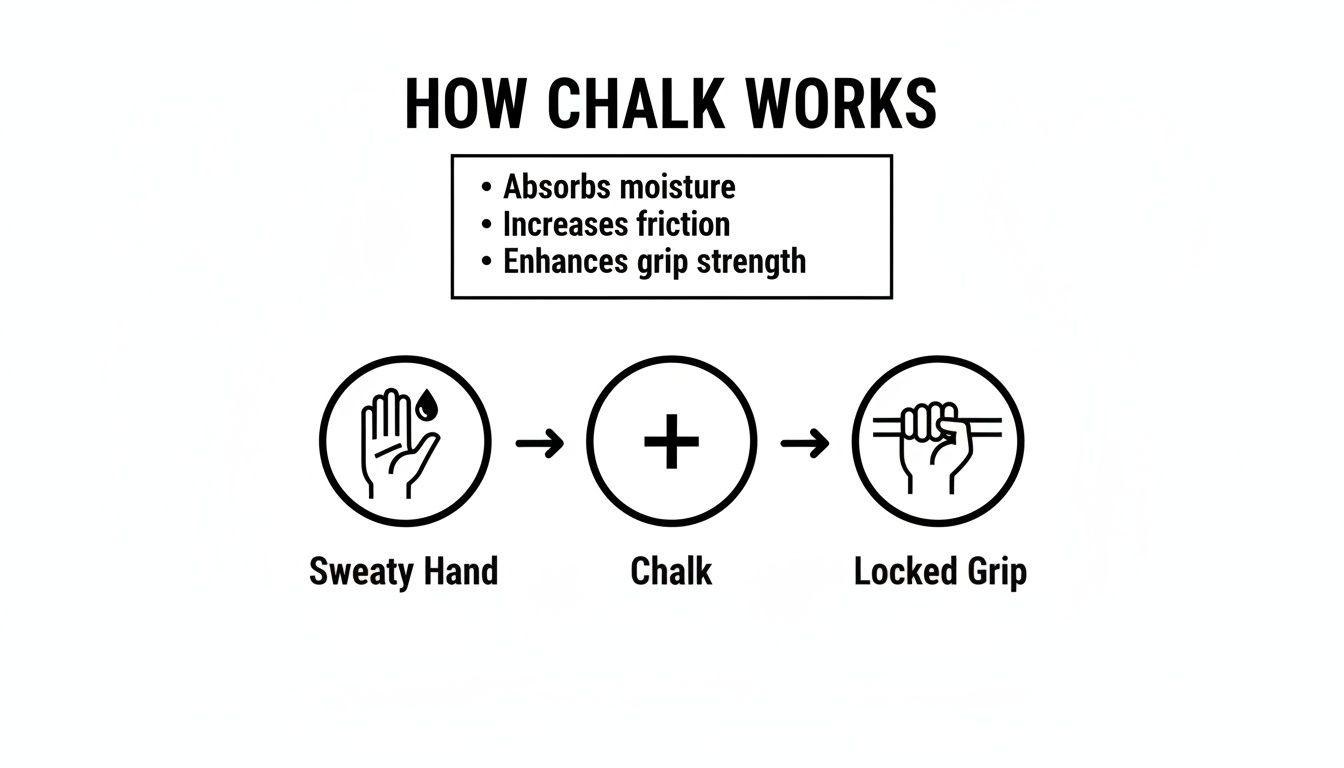
This simple three-step process—soaking up sweat, boosting friction, and securing your hold—is exactly where athletes find their edge.
Performance When It Really Counts
Consider the demands of elite competition. A powerlifter has three attempts to hit a maximal lift; there is no room for grip failure. A gymnast on the parallel bars requires absolute control from the first move to the dismount. Liquid chalk delivers this level of reliability without the environmental drawbacks of powder.
EVMT Liquid Chalk, for example, is engineered for these precise moments. It provides a clean, fast-drying, and exceptionally durable grip that is approved in virtually any training facility. It solves both the "no powder chalk" rule and the messy application problem while delivering a superior, long-lasting hold. We explore why facilities are making the switch in our guide to liquid chalk in the gym.
The core dilemma for today's athlete is balancing tradition with innovation. While powder chalk has its place, liquid chalk offers a more efficient, cleaner, and often more effective solution for modern training environments.
Market trends confirm this shift. The global liquid chalk market was valued at USD 100 million in 2023 and is projected to reach USD 432 million by 2031, growing at a 20% CAGR. This growth reflects the demands of serious athletes for maximum grip without the mess, especially as more gyms enforce stricter facility rules.
To help you decide what's best for your training, here's a direct comparison of how the two types of chalk stack up.
Liquid Chalk vs Powder Chalk Performance Comparison
| Feature | Liquid Chalk | Powder Chalk |
|---|---|---|
| Grip Longevity | Lasts longer; fewer reapplications needed. | Requires frequent reapplication, especially during long sessions. |
| Mess & Air Quality | Virtually no dust; clean application. | Creates significant airborne dust; leaves residue on everything. |
| Application | Precise and even coverage; bonds to skin. | Can be uneven; relies on hand-to-hand transfer. |
| Gym Friendliness | Widely accepted in commercial gyms. | Often banned in commercial gyms due to mess. |
| Convenience | Portable, spill-proof bottle. | Can be messy to transport; bags can rip or spill. |
| Cost Per Use | Higher upfront cost but less is needed per session. | Lower initial cost but you use more of it over time. |
Ultimately, while both chalk types serve the same fundamental purpose, liquid chalk offers a cleaner, more durable, and gym-friendly experience aligned with the demands of the modern athlete.
Matching the Right Chalk to Your Sport
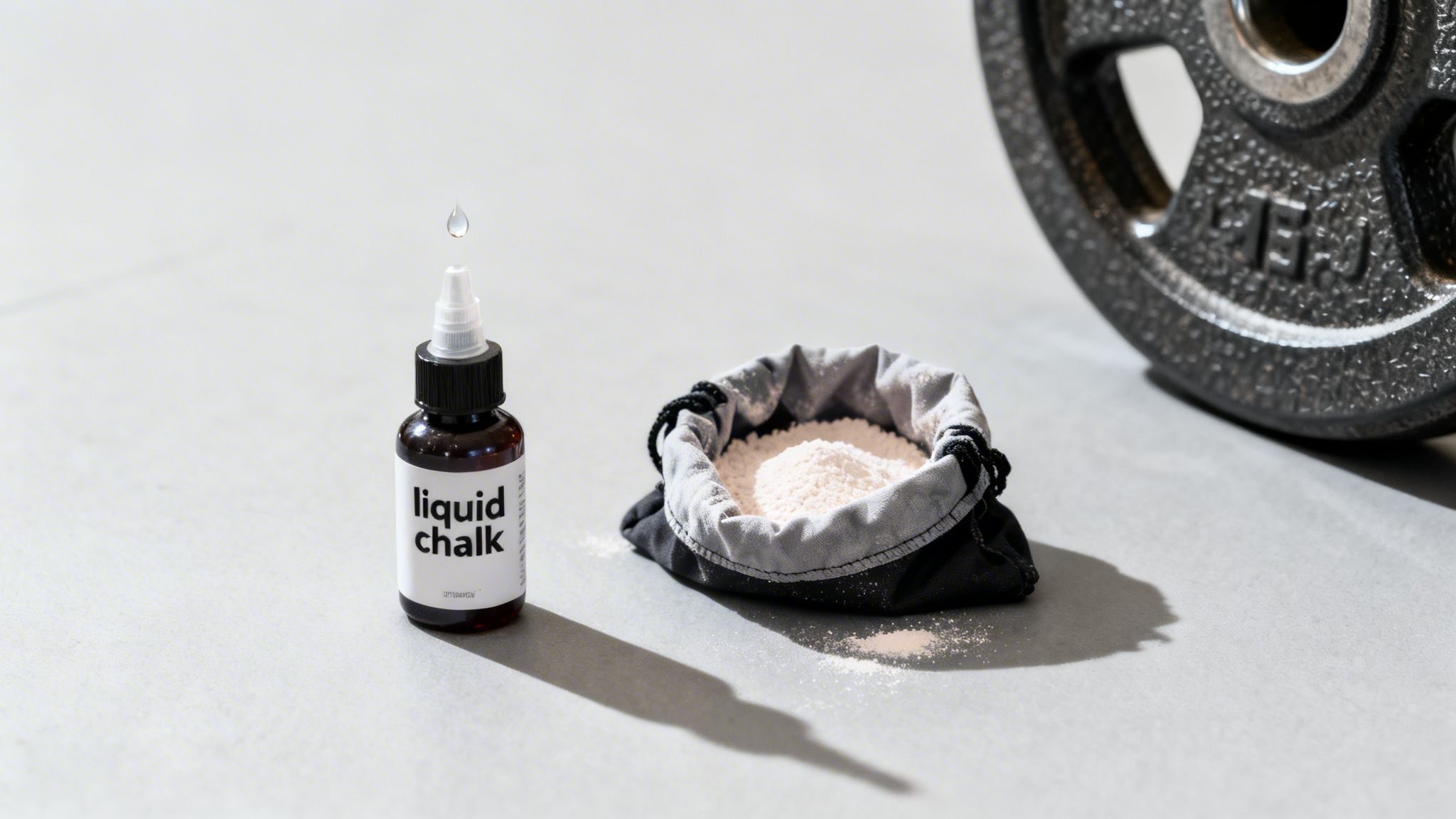
The ideal chalk for grip is not a one-size-fits-all solution. An athlete's discipline dictates the specific demands on their grip, whether it’s a single, all-out effort or sustained endurance. The right choice enhances performance, while the wrong one can be a distraction.
Powerlifting and Weightlifting
In strength sports like powerlifting and Olympic weightlifting, success is measured in maximal, single-effort attempts. When a lifter approaches a 500-pound deadlift or a heavy snatch, their grip must function as a seamless extension of their body, transferring every ounce of force into the barbell without compromise.
This is where a tacky, high-friction liquid chalk excels. It creates an aggressive, uniform layer that bites into the bar's knurling. Unlike powder, which can wear off mid-lift, a quality liquid chalk application provides a durable, sweat-proof grip that lasts through warm-ups and maximal attempts.
Rock Climbing and Bouldering
Climbers face a different challenge, relying on sustained grip endurance and precise movements across varied holds. A difficult bouldering problem or a long sport route requires a consistent grip from the first move to the last.
Many elite climbers now employ a hybrid strategy. They apply liquid chalk as a durable, sweat-blocking base layer before starting a climb. For fine-tuning on the wall, they dip into a traditional chalk bag for a light dusting, allowing them to dry a specific fingertip just before latching onto a small crimp or slippery sloper.
For the modern athlete, choosing chalk is about matching the tool to the task. It's understanding that the grip needed for a V7 bouldering problem is fundamentally different from the one required for a record-breaking clean and jerk.
CrossFit and High-Intensity Training
CrossFit athletes operate in a state of constant transition, moving from heavy barbell cycles to high-rep gymnastics movements like muscle-ups and toes-to-bar. In a competitive WOD, every second counts. Stopping to re-chalk is a time deficit that can cost an athlete their ranking.
The long-lasting sweat resistance of liquid chalk is a significant competitive advantage here. A single application at the start of a workout can maintain its integrity through an entire metcon, from the pull-up rig to the final snatch. This allows athletes to focus on output, ensuring their grip is never the reason they slow down.
The grip chalk revolution really kicked off in the mid-20th century, but modern liquid formulas have sent the market soaring from USD 250 million in 2024 to a projected USD 400 million by 2033. This boom is powered by the explosion in grip-heavy sports, as liquid chalk can boost friction on metal bars by 25-50%, helping athletes lock in their hold when it counts.
Mastering Your Chalk Application Technique
Your application technique is just as critical as your choice of chalk. Proper application maximizes the product's effectiveness, providing a stronger, more reliable hold. A sloppy, rushed application wastes chalk and can compromise your grip at a critical moment.
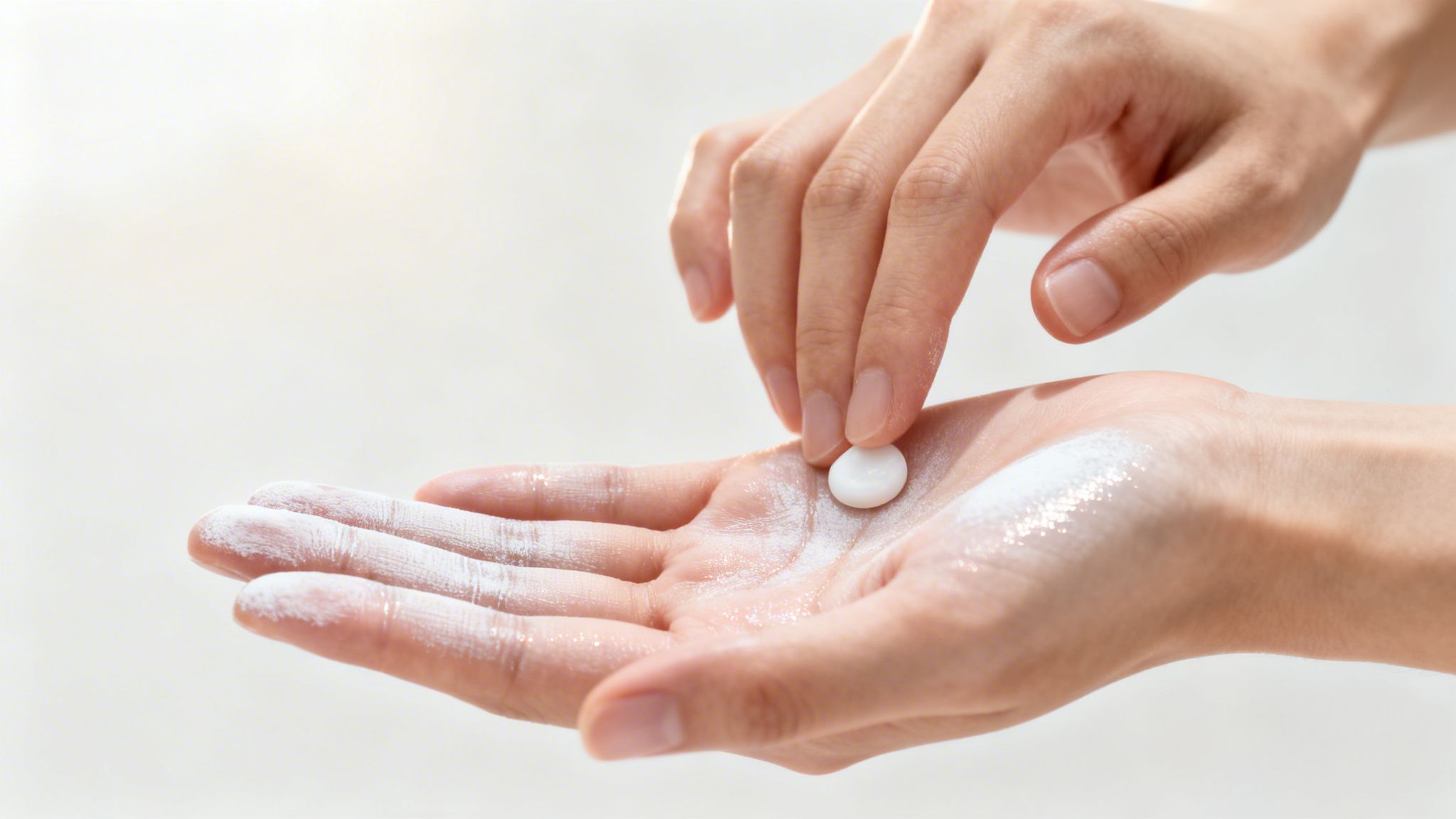
The goal is always a thin, even layer that feels like a second skin—not a thick, cakey residue that can reduce friction. Correct technique ensures a durable grip that lasts through an entire training session, preventing frustrating and avoidable slips.
Applying Liquid Chalk for a Flawless Base
Liquid chalk is designed for precision and longevity, but only with proper application. The most common mistake athletes make is rushing the drying process.
Follow these steps for a perfect, long-lasting coat:
- Start Clean: Begin with clean, dry hands. Oils, lotions, or residual sweat will prevent the chalk from bonding effectively to your skin.
- Use a Small Amount: Squeeze a dime-sized drop into your palm. With a high-quality formula like EVMT Liquid Chalk, a little goes a long way.
- Spread Evenly: Gently rub the liquid over both palms, fingers, and between the fingers to create a complete, thin film.
- Air Dry Completely: This is the most critical step. Do not rub your hands together to accelerate drying. Let them air dry for 15-20 seconds until a solid white coating forms. Rubbing creates flakes and compromises the bond.
This method creates a durable, sweat-resistant base that will not fail mid-set. To learn more about optimizing your lifts, explore our guide on liquid chalk for weightlifting.
The Art of Using Powder Chalk
With powder chalk, the mantra is "less is more." The objective is a light dusting, not a thick coating.
The biggest mistake with powder chalk is over-application. Caking it on creates a slippery layer between your hand and the bar, defeating the entire purpose of using chalk in the first place.
For best results, dip your fingertips into your chalk bag or bowl. Lightly rub the chalk across your palms and fingers to achieve an even, thin coat. The final step: clap your hands together inside the bag to remove excess. This contains the dust, demonstrates good gym etiquette, and ensures you get maximum friction without waste.
Skin Care and Gym Etiquette for Athletes
Using chalk for grip is a non-negotiable for serious athletes. However, its use comes with a responsibility to maintain your hands and respect your training environment.
The magnesium carbonate that provides excellent grip does so by absorbing all moisture—including the natural oils your skin needs to remain healthy. Frequent use can lead to dry, cracked skin and painful callus tears that can derail your training.
Proper hand care is not an afterthought; it is a critical component of recovery. Immediately after your final set, wash your hands thoroughly to remove all chalk residue. Follow up with a quality moisturizer or hand salve to restore hydration. This simple routine keeps your hands tough yet pliable, preventing minor skin issues from becoming session-ending injuries.
Being a Better Gym Citizen
Your chalk usage impacts everyone in the gym. Loose powder chalk creates a fine white dust that settles on equipment, floors, and lingers in the air.
This is the primary reason an increasing number of facilities are banning its use. They are prioritizing cleanliness and better air quality—a decision that benefits the entire community.
Choosing a mess-free liquid chalk like EVMT is a sign of respect for your training space and fellow athletes. It allows you to achieve elite-level grip without leaving a trace, ensuring the gym remains a clean and professional environment for everyone.
This trend is a response to the rapid growth of fitness. The global bodybuilding market hit $13 billion in 2024, and over 30,000 indoor climbing gyms are now operating worldwide.
As gyms become busier, rules become stricter. There has been a 40% increase in powder chalk bans since 2020. This is where products like EVMT's portable bottles become essential, offering a gym-approved solution that dries fast and enhances grip without the mess. You can discover more insights about the liquid chalk market and its rapid growth to see where the industry is headed.
Your Top Chalk Questions, Answered
Even with a solid understanding of the basics, specific questions often arise. Clear answers help you select the right product and use it effectively for a better grip in every session.
Here are the most common questions from dedicated athletes.
Is Liquid Chalk Better Than Powder Chalk?
For most athletes training in a commercial or home gym, the answer is yes. Liquid chalk offers superior performance, providing a more reliable, longer-lasting grip with zero airborne dust. This is why it is almost universally accepted in commercial fitness facilities.
While some traditional climbers may prefer the ritual of a chalk bag, many now use a liquid chalk base for its superior sweat-blocking properties on long routes. For weightlifting, powerlifting, and CrossFit, the combination of durability and cleanliness makes liquid chalk the clear winner.
Will Chalk Damage My Skin or Equipment?
Chalk's moisture-absorbing properties can dry out your hands with frequent use. This is easily managed by washing your hands thoroughly post-workout and applying a quality hand moisturizer or salve to restore skin health. It is also worth noting that premium liquid chalk formulas are often designed to be less harsh on the skin.
As for equipment, chalk is not harmful to barbells or pull-up bars. In fact, by absorbing sweat, it can help prevent rust. The only requirement is proper gym etiquette: always brush off any chalk residue you leave on equipment when you are finished.
How Much Chalk Should I Actually Use?
This is a critical point: with chalk, less is more.
One of the biggest mistakes we see is caking it on. A thick, pasty layer of chalk can actually make your grip worse by reducing friction. You're aiming for a thin, even coat that feels like a second skin.
If you're using liquid chalk, a single dime-sized drop is typically sufficient for both hands and should last your entire session. With powder, a light dusting is all that's required. Apply it once, and only reapply if you genuinely feel your grip beginning to slip.
Ready to feel a truly locked-in grip without the cloud of dust? Evermost LLC makes high-performance liquid chalk engineered for athletes who demand the best. Upgrade your grip and shop EVMT Liquid Chalk today.