


Best Weight Lifting Grips for Stronger Safer Lifts
You're halfway through a heavy deadlift, the bar has cleared your knees, and your back and legs still have more to give. Then your palms begin to slide. The failed lift isn't a strength problem. It's a contact problem.
That moment shows why the best weight lifting grips aren't chosen by material alone. A powerlifter peaking for a meet, a CrossFit athlete moving from barbell work to pull-ups, and a home-gym owner training beside sensitive equipment may all need different solutions. Sweat level, lift type, gym rules, hand protection, and the amount of direct bar feel you want should drive the decision.
The useful question isn't “Which grip is best for everyone?” It's “Which tool keeps my hands secure for this task without creating a new limitation?” The comparison below gives you the short answer first, then the practical details behind it.
| Grip Type | Bar Feel and Contact | Moisture Control | Durability and Mess |
|---|---|---|---|
| Liquid chalk | Direct contact with the bar, with a thin dry layer on the hands | Strong moisture management after drying | Portable, low-mess, suitable where loose powder is restricted |
| Loose powder chalk | Very direct contact and familiar bar feel | Strong absorption for sweaty hands | Low-cost and effective, but dusty and often restricted |
| Leather grips | Cushioned contact with more palm coverage | Limited direct moisture absorption | Durable when cared for, may collect sweat and need drying |
| Carbon fiber grips | Textured, structured contact with substantial palm protection | Depends on the surface and hand preparation | Durable, but less natural bar feedback |
| Rubber grips | Cushioned, high-friction interface | Can help contact, but isn't a substitute for drying sweat | Wear varies, and some surfaces feel bulky |
| Lifting straps | Reduces the hand's holding demand during pulls | Doesn't dry the hands | Durable with care, but changes the purpose of the set |
| Gloves | Soft barrier between skin and bar | Usually limited, and may retain heat or moisture | Comfortable for some users, but can reduce bar sensitivity |
Introduction Why Grip Fails Before Strength Does
A lifter can have the hip drive to finish a pull and still lose the bar because the fingers can't maintain a stable connection. That failure feels frustrating because the rest of the body is ready. The hands make the decision first.
Gym chalk has addressed this problem for decades. Chalk was already a staple of black iron gyms by at least the 1950s, with earlier use documented in gymnastics and climbing. A historical review of chalk in barbell training explains that the earliest specific accounts date to that decade, after which use became widespread in heavy barbell work and Olympic lifting. You can read that history in this overview of what gym chalk does.
The reason is straightforward. A barbell, kettlebell handle, pull-up bar, or climbing hold becomes harder to control when sweat reduces friction between skin and surface. Raw hand strength still matters, but moisture can prevent you from expressing it.
Research on 168 competitive master weightlifters found that maximal grip strength differed across the athletes and between male and female participants. The overall average was 359.3 ± 115.3 N, while the male average was 453.9 ± 112.5 N and the female average was 301.2 ± 69.6 N. The same study reported an overall right-to-left grip ratio of approximately 1.06 ± 0.10, showing that grip capacity is measurable and that balance between hands can be assessed rather than guessed. Those findings appear in the peer-reviewed weightlifting grip-strength research.
Coaching rule: If the bar is slipping before the target muscles are fatigued, fix the interface before assuming you need stronger hands.
This guide treats grip selection as an environment-and-task decision. Liquid chalk can be the cleanest choice in a commercial gym, while straps may be better for high-volume posterior-chain work and full grips may make sense when palm protection is the main concern. The goal is consistent contact, not loyalty to one accessory.
What Weight Lifting Grips Actually Do For Performance
A grip aid changes one or more of three things: friction, moisture, and contact structure.
Friction is the resistance that keeps your hand from sliding along the bar. Moisture can reduce that resistance by creating a slick layer between skin and steel. Contact structure refers to anything that changes how the hand meets the implement, such as leather, carbon fiber, rubber, or a strap wrapped around the bar.
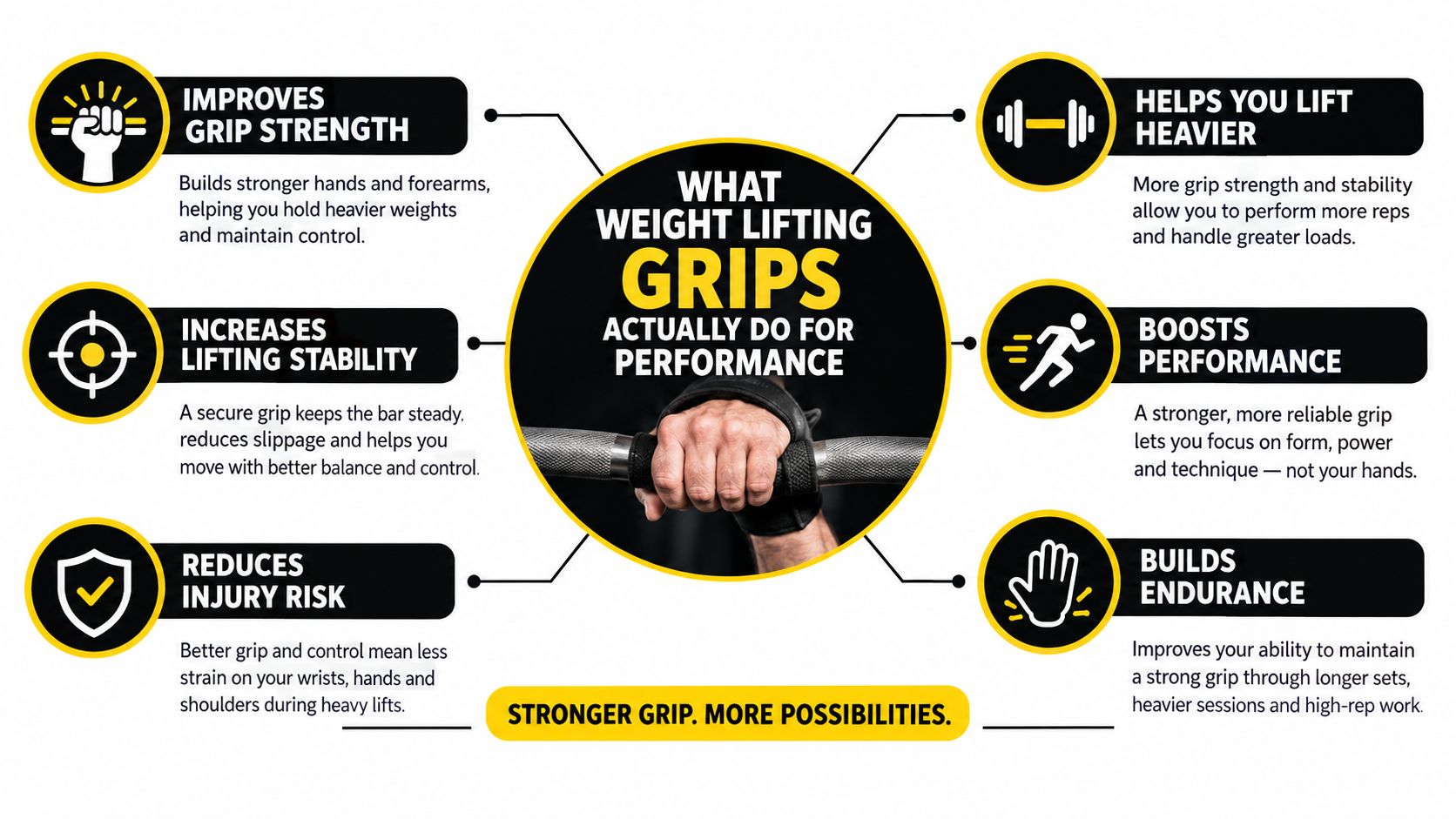
Three ways grip aids change the lift
Chalk and liquid chalk add friction by managing moisture. They leave your hand in contact with the bar rather than placing a fabric or mechanical connection between you and it. That makes them useful for deadlifts, cleans, snatches, rows, and pull-ups where bar feedback matters.
Leather, carbon fiber, and rubber grips add structure. These materials cover part of the palm and can reduce direct skin contact. They're valuable when repeated friction causes discomfort or when a session includes many hanging or kipping movements. The trade-off is feel. More material between your hand and the bar can make the implement feel less immediate.
Straps assist holding rather than drying the hand. A strap transfers some of the holding demand from your fingers to the connection around your wrist and the bar. That's useful when the target is back, hamstrings, or hips, but it means the set no longer measures unsupported grip in the same way.
Why stronger lifters still use aids
A strong lifter can fail because the task lasts longer than the hands can support, because sweat builds during high-rep work, or because the implement has a difficult texture or diameter. Grip aids don't erase those demands. They change which limitation appears first.
For a technical explanation of how grip support fits into weightlifting practice, see this weightlifting grip guide. The useful takeaway is simple: choose the aid that preserves the quality you're trying to train.
A deadlift intended to challenge raw supporting grip should usually retain direct hand involvement. A heavy rowing block intended to load the back may justify straps. A pull-up session that repeatedly tears at the same palm area may call for structured grips. The right choice follows the training objective.
Comparing the Main Types of Weight Lifting Grips
No grip aid wins every test. Powder chalk has a different job from straps, and palm-protective grips solve a different problem from liquid chalk. Compare them by what they change during the actual movement.
Liquid chalk
Liquid chalk uses a spreadable formula that dries into a thin layer on the hands. It preserves a close connection with the bar and avoids the loose dust associated with traditional powder. That makes it useful in commercial gyms, travel settings, and shared spaces where visible chalk clouds or residue create problems.
The limitation is application timing. You need to spread it evenly and let it dry before gripping the bar. Some formulas also feel drying on the skin, so athletes with sensitive hands should pay attention to comfort and reapplication needs.
Loose powder chalk
Loose magnesium carbonate remains the practical benchmark for heavy compound lifting because it absorbs moisture directly and provides familiar bar contact. It's especially effective for sweaty hands during deadlifts, cleans, snatches, and heavy holds.
The downside is environmental. Powder can spread across platforms, benches, clothing, and gym equipment, and many commercial facilities restrict or prohibit it. It can also encourage over-application, which may create clumps instead of a clean contact layer.
Leather grips
Leather grips protect the palm and can make high-volume hanging work more manageable. They're common in gymnastics-style movements, pull-ups, toes-to-bar work, and other exercises where the hand repeatedly rubs against the bar.
They don't manage moisture as directly as chalk. A leather grip that becomes damp may shift, fold, or feel less predictable, especially if its shape doesn't match the athlete's hand.
Carbon fiber grips
Carbon fiber grips offer a structured, textured surface and substantial palm coverage. They can suit athletes who want a durable protective barrier and a firm interface during gymnastics or pull-up work.
The cost is sensitivity. The surface can feel less like a bare hand on knurling, and the fit must be precise. If the grip folds or the wrist attachment moves, the material can become a distraction rather than a solution.
Rubber grips
Rubber creates a cushioned, high-friction surface and can reduce direct abrasion. It may suit dumbbell work, certain pull-up setups, and athletes who prefer a softer interface.
Rubber isn't a moisture-management system by itself. Sweat can still affect the hand-to-rubber connection, and a thick design can reduce precision on a narrow bar.
Lifting straps
Straps are the most direct way to reduce the hand's holding responsibility during pulls. They're useful for high-volume deadlifts, Romanian deadlifts, rows, shrugs, and accessory work when grip isn't the quality you want to limit.
Use straps to train the target, not to hide a grip weakness on every set.
Straps don't replace grip training, and they aren't ideal when the session is meant to test competition-specific unsupported holding.
Gloves
Gloves create a soft barrier between your skin and the implement. They can be comfortable for general fitness or for athletes who dislike rough knurling, but they often reduce bar sensitivity and may retain heat or moisture.
For a lifter who wants maximum contact and precise feedback, gloves are usually less useful than a thin chalk layer. For someone prioritizing comfort over tactile feedback, they may still be appropriate.
How Grip Materials Perform Under Real Training Stress
A grip aid has to work after the first rep, not just during a product demonstration. Real training introduces sweat, repeated contact, changing implements, and fatigue that alters how firmly you close the hand.
Magnesium carbonate chalk has the strongest case when moisture is the immediate problem. In a controlled exercise study, participants completed 11.1 ± 5.1 repetitions with chalk compared with 9.1 ± 3.1 without chalk during the clean-grip midthigh pull. That represented a 22.5% increase and a moderate effect size of 0.6 SD, according to the controlled chalk performance study.
The result doesn't mean chalk makes every lift stronger. It means a grip aid can extend high-intensity work when the hands are the bottleneck. Pulling movements are the clearest application because the bar must stay in the hand while the hips, back, and legs continue producing force.
Why low-contact grips can gain more
Open-hand and pinch positions expose weaknesses that a broad, fully wrapped grip may hide. Research in recreational rock climbers found that chalk increased open-hand weighted pull-up repetitions from 19.7 ± 4.39 to 22.8 ± 4.53, a 16% increase, while pinch-grip repetitions rose from 9.1 ± 4.83 to 14.4 ± 4.47, a 58% increase. The findings are reported in this chalk and weighted pull-up performance study.
That matters beyond climbing. Gymnasts, functional-fitness athletes, and lifters using narrow handles or awkward implements may benefit most when the contact area is limited.
Liquid chalk behaves differently from loose powder. Alcohol-based formulas typically dry quickly and leave a controlled layer, but they may require reapplication during long, sweaty sessions. Powder tends to absorb moisture continuously while it remains on the hand, though it creates more residue.
Competition changes the routine
International weightlifting rules permit magnesium carbonate chalk, and the International Weightlifting Federation technical rules state that chalk and rosin must be available near the competition platform. The Olympics' explanation of the sport also describes athletes applying chalk to keep their hands dry and reduce bar slippage, while tape can support the wrists and thumbs.
That setup makes preparation part of performance. At a meet, you don't want to discover during the attempt window that your hands are damp, your chalk is missing, or your grip aid changes the feel of the bar.
Skin comfort deserves the same practical attention as performance. Repeated applications can feel uncomfortable for athletes with sensitive skin or unusually sweaty hands, and a grip that causes irritation won't earn consistent use. Test the formula in training, not for the first time before a heavy single.
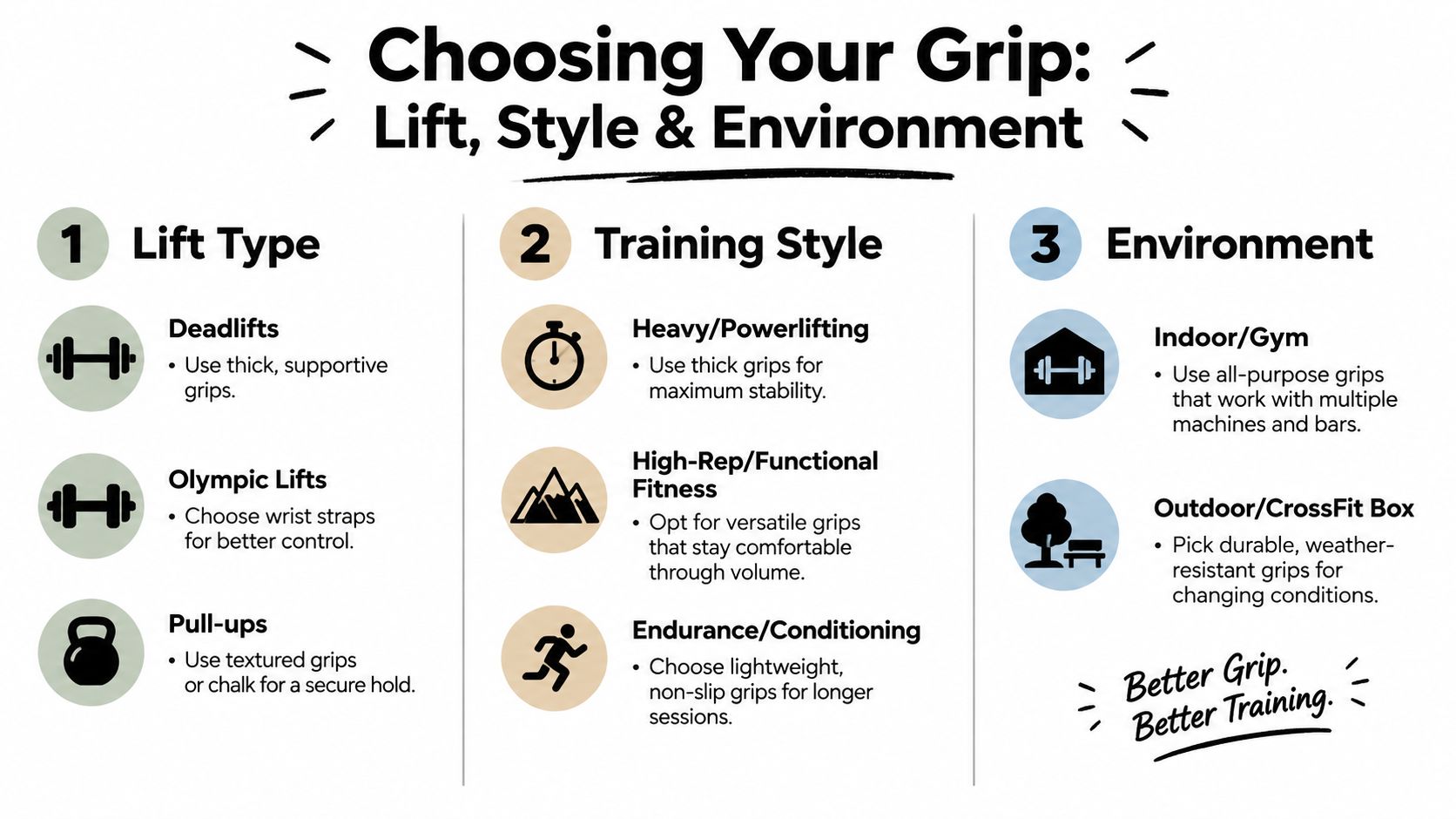
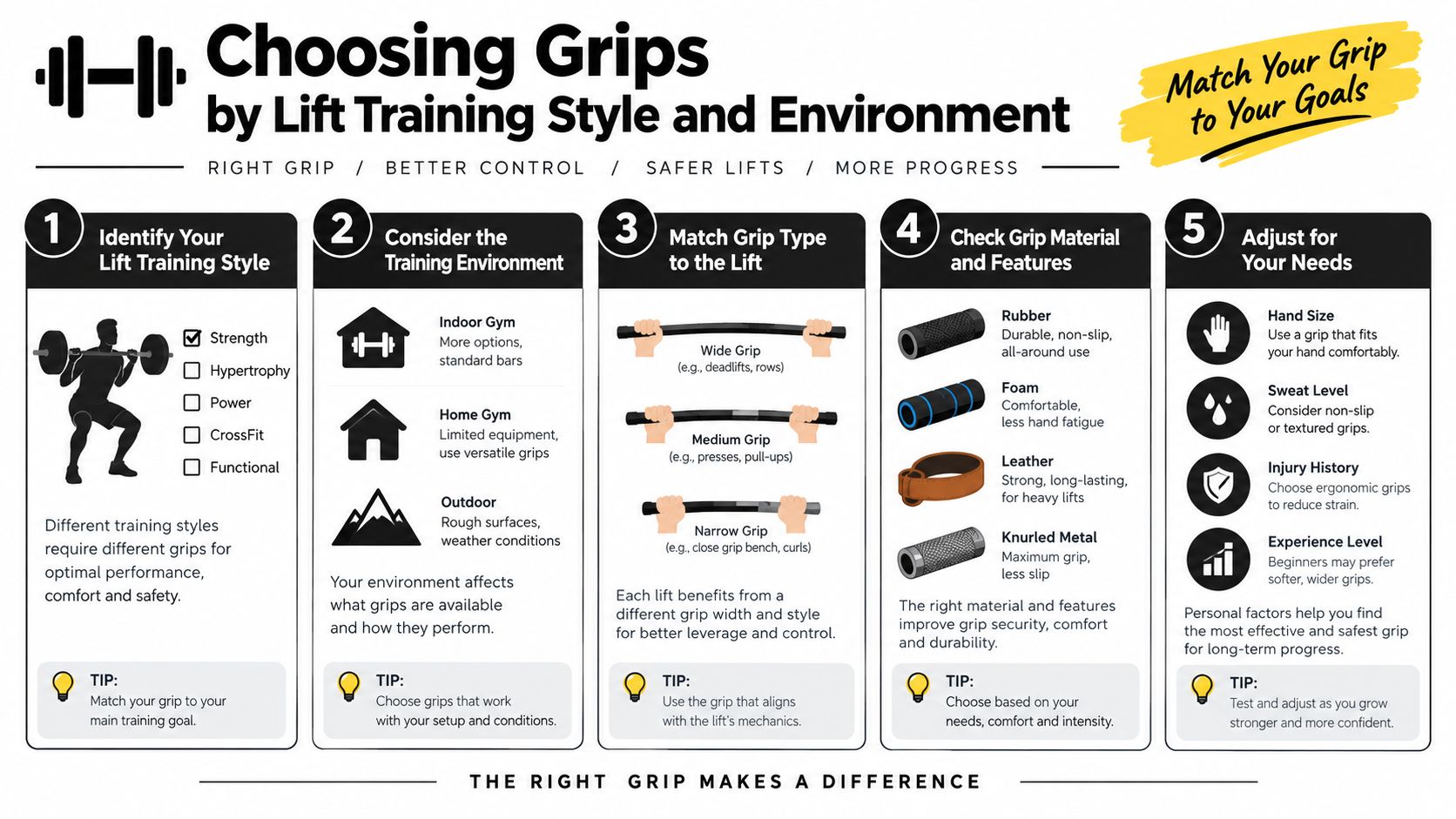
Choosing Grips by Lift Training Style and Environment
The most useful grip decision starts with the task. Ask what you're lifting, how long the set lasts, how much sweat is present, and whether the facility allows the product you want to use.
Heavy barbell lifting
For heavy deadlifts, begin with the grip style required by your training goal. Double overhand work develops unsupported holding. A hook grip suits Olympic lifting and heavy pulls when you need symmetrical hand placement and a locked-in connection. Straps make sense for volume or accessory work when the back and posterior chain, rather than the hands, should determine the set.
A powerlifter preparing for a meet should practice the competition grip under realistic conditions. Liquid or powder chalk can improve hand dryness, but it won't replace technical consistency, setup tension, or the need to train the grip that the event demands.
Olympic lifting
The snatch and clean require speed, precision, and a grip that stays connected through explosive movement. Chalk is standard preparation, and the IWF rules make its availability near the platform part of meet logistics. Hook grip technique, thumb tolerance, and a consistent chalking routine matter more than adding bulky palm material that changes bar feel.
Liquid chalk can be useful when loose powder is restricted during training. It gives the lifter a dry contact layer without turning the platform into a dusty work area.
High-rep functional fitness
A CrossFit athlete may cycle a barbell, move to pull-ups, then handle kettlebells or dumbbells in the same workout. One grip solution rarely handles every movement equally well.
Use liquid chalk when the gym limits loose powder, especially for barbell cycling and pull-up transitions where direct contact matters. Add leather, carbon fiber, or rubber grips when palm protection becomes the limiting factor. Use straps for programmed pulling volume when preserving back or hip output matters more than testing unsupported grip.
Gymnastics and climbing
Gymnastics-style bar work places repeated stress on the palm, so structured grips can be more appropriate than chalk alone. Climbing demands precise contact on small holds, and both dry and liquid climbing chalk are permitted in IFSC competition under the IFSC competition rules. USA Climbing also distinguishes legal chalk from substances that alter the condition of holds or the climbing surface.
The same rules recognize chalk as normal competition equipment. The USA Climbing rulebook allows athletes to carry a small bag with chalk or liquid chalk to the field of play.
Commercial gyms and home gyms
Commercial gyms often prioritize cleanliness, equipment protection, and shared-air comfort. Liquid chalk usually fits those constraints better than loose powder, provided the facility allows it. A home gym gives you more control, so powder may be practical if you're willing to clean the platform and store it responsibly.
Travel favors compact products. A small liquid-chalk bottle is easier to keep in a gym bag than a loose container that can spill through your clothing and accessories. For a broader comparison of grip aids in these settings, use this guide to wrist straps with hooks.
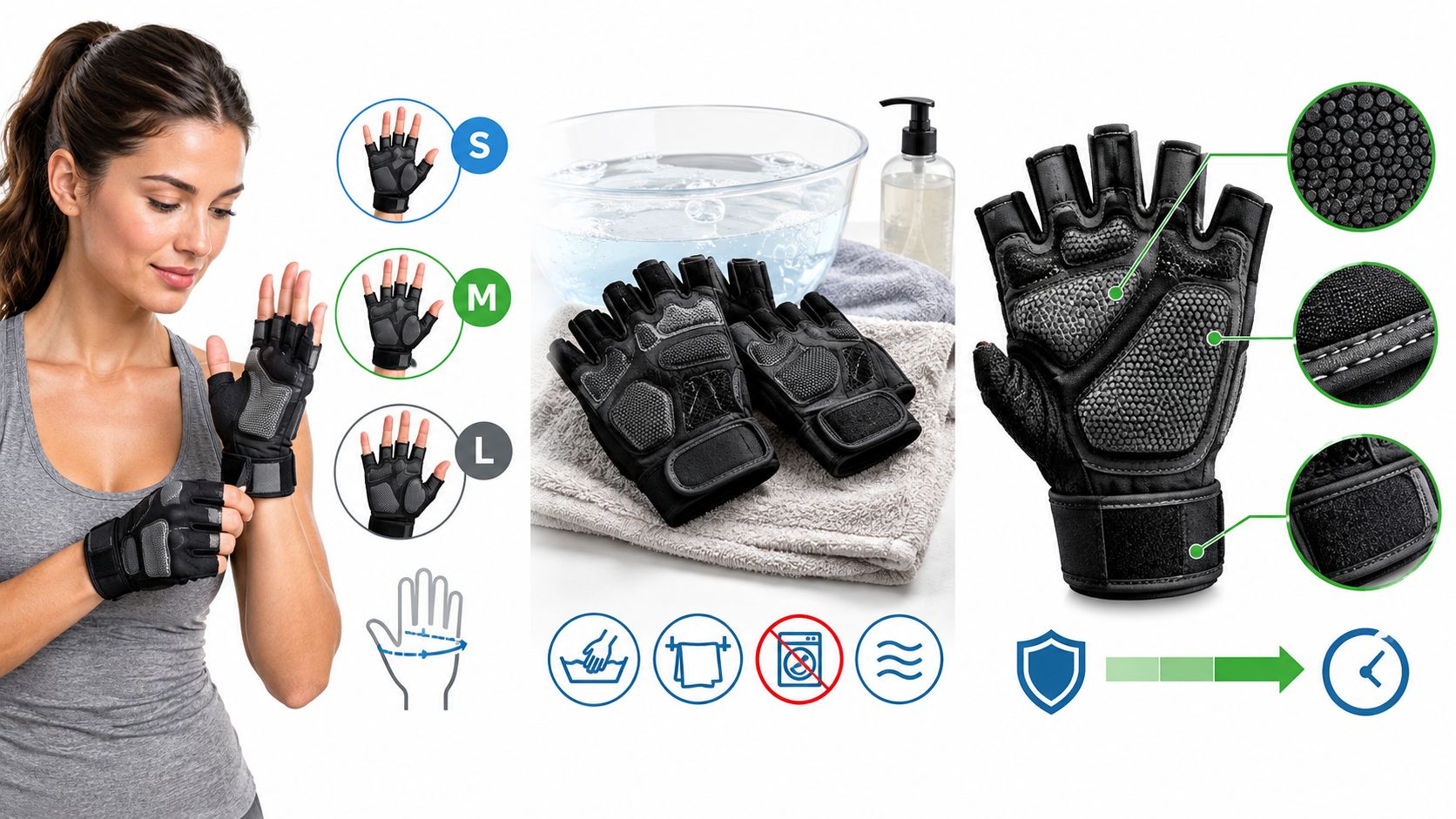
Sizing Fit and Care That Keep Grips Performing Longer
A grip that doesn't fit can create the exact problem it was meant to solve. Measure according to the manufacturer's method, then check where the finger holes, palm edge, and wrist attachment sit when your hand is closed around the bar.
Finger holes shouldn't pinch or force the fingers into an awkward angle. The palm section should cover the area that rubs without folding into a ridge. Wrist straps should hold the grip in place without restricting normal wrist movement.
Test the fit before a hard session
Wear new grips during warm-ups and moderate sets first. Check for three warning signs:
- Folding: The material bunches under the fingers or across the palm.
- Sliding: The grip shifts toward the wrist as you pull.
- Hot spots: One edge concentrates pressure or rubbing in a small area.
A grip can feel fine while your hand is open and fail once you wrap around a loaded bar. Test it under the same hand position you'll use for pull-ups, cleans, rows, or deadlifts.
Break-in changes the feel of leather and some structured materials. Use controlled sessions to soften the contact points, but don't sand, cut, or alter a grip unless the manufacturer specifically permits it. A damaged edge can turn a comfort issue into a control issue.
Apply liquid chalk with restraint
Start with clean, dry hands. Apply a thin, even layer across the palm and fingers, then allow it to dry fully before touching the bar. More product isn't automatically better. Thick, uneven patches can flake, feel clumsy, and transfer residue.
Reapply when sweat has broken through the dry layer or when the bar begins to feel less secure. During long high-rep workouts, small, deliberate applications are easier to manage than one heavy coating at the start.
Store leather, fabric, and rubber grips where they can dry between sessions. Don't leave damp gear sealed in a gym bag. Wipe equipment-facing surfaces according to the product's care instructions, and inspect stitching, edges, wrist closures, and finger holes before relying on the grip for a demanding set.
How to Choose the Right Grip and When Liquid Chalk Wins
Use this decision path:
- Check the rules first. If loose powder isn't allowed, choose liquid chalk or a permitted structured grip.
- Identify the limiter. If sweat causes slipping, use chalk. If the palm is taking the damage, consider leather, carbon fiber, rubber, or gloves. If the target muscles are failing after the hands, use straps.
- Protect bar feel when technique matters. Olympic lifts, heavy deadlifts, and precise pulling usually benefit from direct contact.
- Match the aid to the set. Don't use straps automatically on grip-focused work, and don't force bare hands when the session's purpose is back or posterior-chain volume.
- Test comfort under load. A grip that irritates your skin or moves during the set won't improve consistency.
Liquid chalk wins when you need direct bar contact, fast application, and low mess in a commercial gym, competition setting, or travel bag. EVMT Liquid Chalk is positioned as a clean, gym-approved option that dries quickly and creates a sweat-resistant layer for weightlifting, climbing, gymnastics, and other grip-intensive training. It doesn't replace straps when the goal is to unload the hands, and it doesn't replace palm-protective grips when repeated friction is the main concern. Use this liquid chalk guide for lifting to refine the choice around your training environment.
Your next session should have a clear grip plan. Chalk the hands before the first demanding set, reserve straps for work where grip shouldn't limit the target muscles, and use structured grips when palm protection determines whether you can complete the session.
Evermost LLC offers liquid chalk and grip-focused training products for lifters, climbers, gymnasts, and functional-fitness athletes who need reliable contact without loose powder. Visit Evermost LLC to choose a grip solution that matches your lifts, gym rules, and training environment.