


Best Chalk for Weightlifting
The bar is loaded, the hands are sweating, and the last thing a lifter needs is a grip aid that creates more problems than it solves. The best chalk for weightlifting depends on the lift, the athlete's sweat level, and the room's rules. A powerlifter in a dedicated strength gym needs a different setup from an Olympic lifter in a polished training hall or a home-gym owner who can't have chalk dust settling everywhere.
For most lifters training in shared spaces, liquid chalk is the strongest overall choice. It delivers a controlled magnesium-carbonate layer, dries quickly, produces no dust, and fits venues that restrict powder. Traditional block, loose, and ball chalk still have legitimate uses, especially when rapid reapplication and maximum dry coverage matter more than cleanup.
Table of Contents
- Why Chalk Choice Can Make or Break a Heavy Lift
- How Chalk Actually Improves Grip on the Bar
- Liquid Block Loose and Ball Chalk Compared Side by Side
- Matching Chalk Format to Your Style of Lifting
- How to Apply Liquid Chalk and Get the Most From It
- Gym Rules and Competition Rules That Decide Your Pick
- The Best Chalk Picks for Weightlifters in 2026
Why Chalk Choice Can Make or Break a Heavy Lift
The deadlift is nearly locked out. The bar has passed the knees, the hips are driving forward, and the lifter has enough leg and back strength to finish. Then the fingers open slightly. The bar rolls, the lockout disappears, and a lift that looked secure becomes a failed attempt.
That failure often starts before the pull. Sweat and skin oils reduce the dependable contact between hand and knurling. As friction drops, the bar can rotate inside the hand, a hook grip can lose its bite, and fatigue arrives earlier because the lifter is squeezing harder to keep the bar from moving. Chalk can't replace strength or sound lifting judgment, but it can protect the hand-to-bar connection that transfers force.
The format matters because each type handles moisture differently:
- Loose chalk gives fast, broad coverage, but it can spread through the room.
- Block chalk offers controlled application and long use, though it must be broken down before it coats the hands.
- A chalk ball limits airborne dust while retaining a familiar powder feel.
- Liquid chalk leaves a bonded layer on the skin after its alcohol carrier evaporates.
A poor choice creates predictable friction problems. Too little coverage leaves damp spots across the palm and fingers. Too much loose powder cakes into the hand and bar. An over-applied liquid layer can feel thick rather than secure. The wrong formula may also leave residue on equipment, force repeated cleanup, or violate a gym's chalk policy.
Practical rule: The best chalk is the format that preserves grip without creating a new failure point for the lift or the room.
A commercial-gym lifter can waste a session searching for an approved setup after being told to put a loose chalk block away. A home-gym owner can spend the next training day cleaning powder from the floor and nearby surfaces. A competitive lifter can also lose focus if the chosen chalk requires constant reapplication between attempts.
The decision should therefore begin with the actual lift and venue, not a generic grip ranking.
How Chalk Actually Improves Grip on the Bar
Sweat makes the skin slide more easily across a knurled bar. Skin oils can add another slippery layer, especially when the hands are already warm or the bar has collected residue from previous sessions. Chalk changes that contact by reducing surface moisture and creating a drier interface between skin and steel.
Weightlifting chalk is magnesium carbonate, or MgCO3, not classroom chalk. Its long use in strength sports reflects a straightforward mechanism, absorbing sweat to improve friction. The material became a standard grip aid in strength sports by the 1950s, with accounts placing it among the staples of black iron gyms by that decade. The history and basic function are outlined in this explanation of what gym chalk does.
Absorption and barrier are different jobs
Powder chalk sits on the skin and absorbs moisture as the hand contacts the bar. Block, loose, and ball formats all work from that basic principle, although they differ in how quickly and evenly they distribute the material.
Liquid chalk uses the same core chalk material in an alcohol suspension. The alcohol evaporates after application, leaving a bonded layer rather than loose powder. That layer acts as a controlled barrier, so new sweat has to work through the coating before it reaches the bar-contact surface. A neutral overview of the material and application difference appears in this guide to magnesium-carbonate gym chalk.
The distinction explains the feel:
- Powder feels dry and textured. It suits lifters who want to refresh the hands between attempts.
- Liquid feels smooth or lightly tacky once set. It creates even coverage without a cloud of loose material.
- A thick coating can reduce feel. More chalk isn't automatically more friction.
- A thin coating preserves contact. The hand should still feel the bar's knurling rather than a soft layer sitting above it.
Some lifters prefer a dry, gritty interface for deadlifts. Others want a slight tackiness for repeated pulling or high-sweat sessions. Olympic lifters may also prefer a surface that supports a secure grip without making the hands feel glued to the bar during rapid turnover.
Independent friction research supports a measured approach. In a climbing-surface study, chalk increased finger-hold friction by 18.7% on limestone and 21.6% on sandstone, while an earlier study found that chalk could decrease friction under some conditions. Those results are reported in the PubMed record for the friction research. Chalk is a grip-management tool, not a universal guarantee. Surface, moisture, and application method still decide the outcome.
Liquid Block Loose and Ball Chalk Compared Side by Side
The format comparison below focuses on what matters in an actual weight room: how the chalk touches the bar, how quickly it can be applied, how much it spreads, and whether the venue will tolerate it.
| Criterion | Liquid Chalk | Block Chalk | Loose Chalk | Chalk Ball |
|---|---|---|---|---|
| Bar contact | Even, bonded layer with controlled coverage | Dry, textured coverage after rubbing or crumbling | Fast, broad dry coverage | Moderate coverage with less airborne spread |
| Tackiness | Can feel lightly tacky, depending on thickness | Usually dry and chalky | Dry and powdery | Dry with controlled powder transfer |
| Residue | Low when applied thinly and allowed to dry | Moderate, especially if broken or heavily rubbed | Highest, with dust and transfer | Lower than loose chalk, though powder still transfers |
| Drying time | Usually 10 to 30 seconds, depending on formula thickness, according to this liquid-chalk application guide | Immediate | Immediate | Immediate |
| Cost per session | Efficient when a thin coat lasts through multiple working sets | Usually economical for frequent gym use | Economical in bulk, but easy to over-apply | Economical with controlled dispensing |
| Mess level | Lowest | Moderate | Highest | Low to moderate |
| Travel-friendliness | Excellent in a sealed bottle, subject to venue and transport rules | Good, but can crumble | Poorer because loose powder spills | Very good when stored in a sealed container |
| Best setting | Commercial gyms, home gyms, restricted venues | Traditional lifting gyms and Olympic platforms | Dedicated strength rooms | Shared rooms that allow limited powder |
Liquid chalk
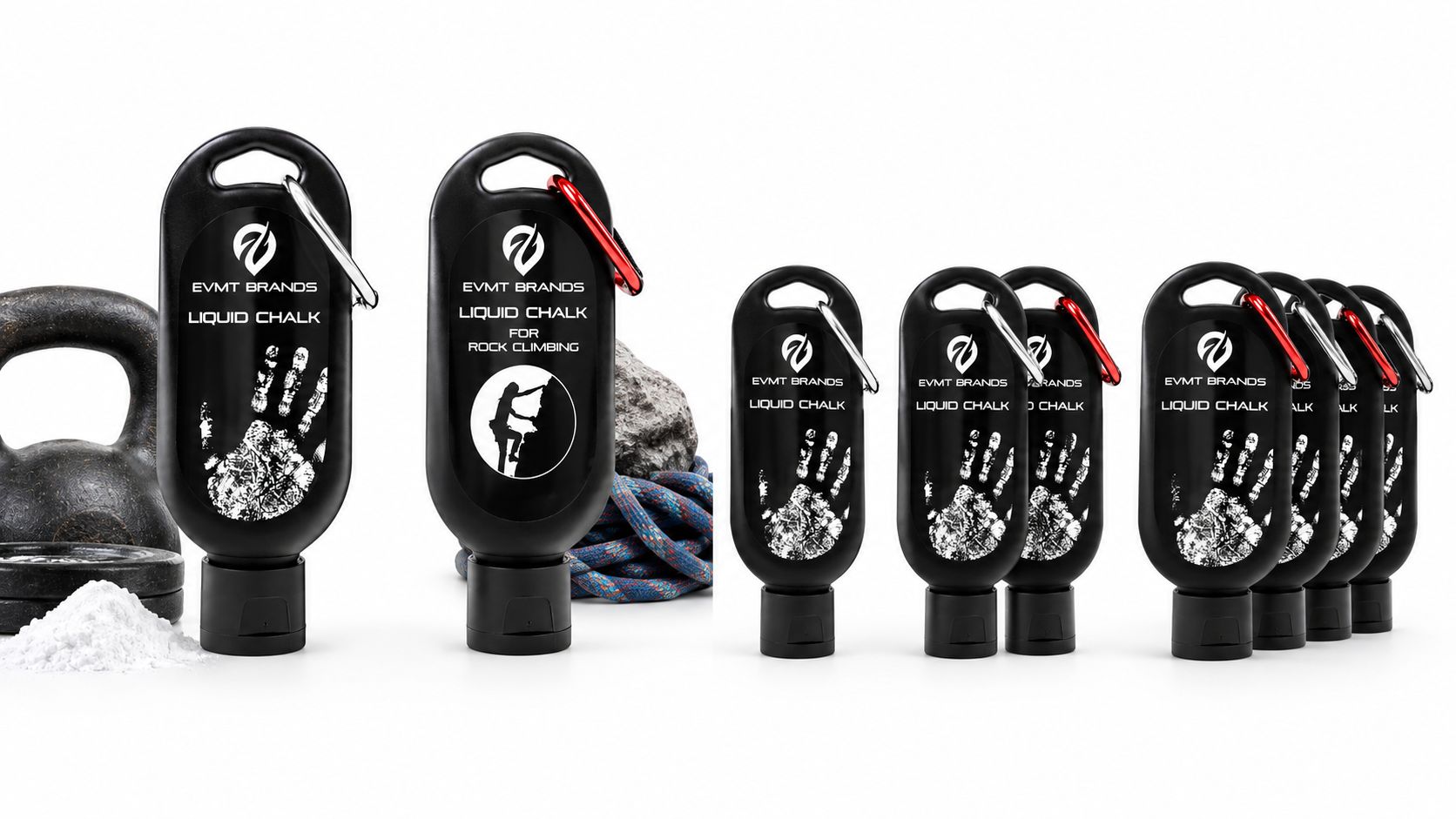
Liquid chalk wins on clean application, consistent coverage, and policy flexibility. It's a magnesium-carbonate suspension in alcohol. Once applied, the alcohol evaporates and leaves chalk bonded to the skin instead of floating through the room. EVMT Liquid Chalk is available in single-bottle and multi-pack formats, with the catalog snapshot listing 11 variants.
The weakness is application discipline. Wet hands, lotion, or a thick coat can leave an unpleasant film. Liquid also needs a short setting period, so it isn't the fastest choice when a lifter wants to slap on chalk between rapid attempts.
Block chalk
Block chalk is the dependable traditional option. A lifter can rub the block directly onto the palm and fingers, or break off a piece for more precise application. It's easy to store and doesn't create the same loose cloud as a pile of powder, although the block can crumble and leave residue around the training area. More detail on the format appears in this guide to gym chalk blocks.
Loose chalk
Loose chalk covers the hand quickly and gives the most familiar dry-powder feel. It's the practical choice in a dedicated strength room where the venue permits it and cleanup is part of the culture. It's also the easiest format to overuse. A large dust cloud, powder on nearby equipment, and chalk worked into knurling can turn a useful grip aid into a room-management problem.
Chalk balls
A chalk ball is the clean middle ground. It meters powder through the fabric, so the lifter can build coverage gradually rather than dumping a handful into the palm. It still behaves like powder on the bar, but it creates less airborne material and travels neatly when sealed.
There's no honest universal winner. Liquid is the best default for shared gyms and home spaces. Loose chalk is the strongest choice for maximum dry coverage in an approved room. Block chalk suits Olympic lifting and simple home use. A chalk ball balances powder feel with better control.
Matching Chalk Format to Your Style of Lifting
A deadlift-focused powerlifter, a snatch specialist, and a home-gym owner aren't solving the same chalk problem. The right choice follows the lift's grip demand and the room's tolerance for residue.
| Discipline | Top Pick | Why It Works | Runner-Up |
|---|---|---|---|
| Powerlifting | Loose chalk | Maximum coverage and easy reapplication for heavy pulls | Liquid chalk |
| Olympic weightlifting | Block chalk | Fast, controlled rubbing before explosive attempts | Liquid chalk |
| Bodybuilding | Liquid chalk | Moderate grip support with low mess during volume work | Small block |
| Home gym | Liquid chalk | No dust and simple cleanup | Chalk ball |
Powerlifting
Powerlifters pulling heavy deadlifts often want the driest, most adjustable hand surface available. Loose chalk ranks first when the gym allows it because the lifter can add a small amount before an attempt and refresh the fingers without rebuilding the entire coating.
Liquid chalk becomes the better pick when powder is prohibited or when the platform is shared. It also works well as a base layer, followed by a minimal powder touch-up if the venue permits both. That setup gives the lifter consistent coverage without turning every warm-up into a chalk event.
Olympic weightlifting
Block chalk is the cleanest traditional choice for snatches and clean and jerks. A quick rub coats the palm and fingers without requiring a loose pile or a full pause to spread powder. The format also keeps the athlete's chalk routine compact during a session where timing and hand feel matter.
Liquid chalk suits lifters who train in facilities with strict cleanup rules. It also creates more uniform coverage than a hurried block rub, provided the hands are dry and the coat has fully set.
Bodybuilding
Barbell curls, rows, and presses usually don't demand the same extreme grip management as a maximal pull, but sweaty hands can still interrupt a set. Liquid chalk is the sensible first choice because it provides moderate support without coating benches, clothing, and nearby handles in powder.
A small piece of block chalk works for lifters who prefer a traditional dry feel. Loose chalk is usually unnecessary for this style unless the athlete is dealing with unusually sweaty hands or a particularly grip-limited movement.
Home gyms
Home-gym owners should prioritize containment. Liquid chalk is the clear winner where dust on flooring, storage, or electronics is unacceptable. A chalk ball is the next-best option for athletes who prefer powder and can keep it inside a sealed tray.
Room-first decision: If the venue bans loose powder, the rule settles the comparison before grip preference enters the discussion.
How to Apply Liquid Chalk and Get the Most From It
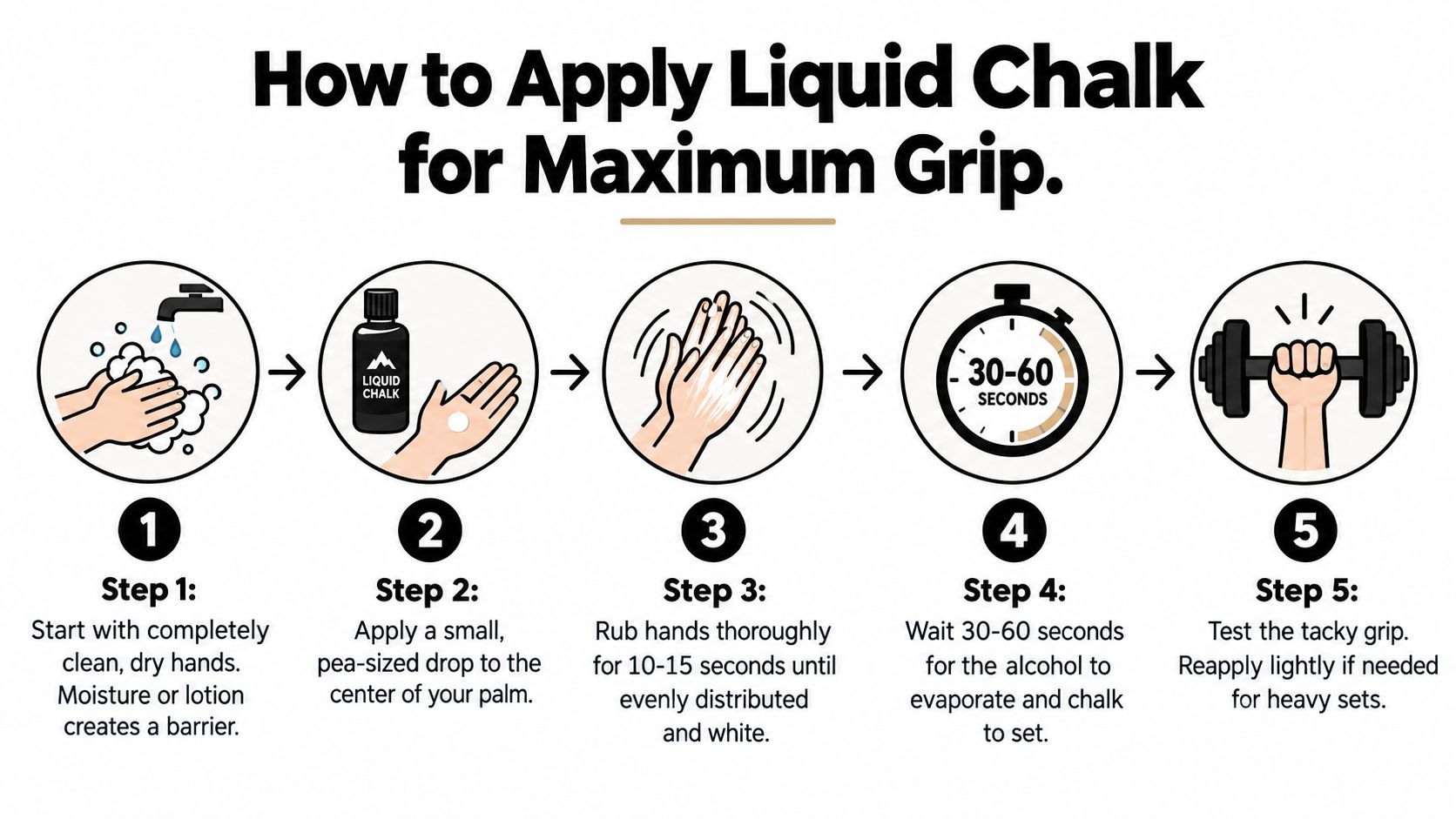
Liquid chalk works best as a thin, even film on clean, dry skin. Sweat, lotion, and oil prevent the alcohol suspension from spreading properly, so applying it over damp hands can create a patchy or slippery result instead of a reliable grip layer.
The application sequence
- Wash and dry the hands. Remove sweat, lotion, and residue before opening the bottle.
- Use a small amount. Spread the chalk across the palm, fingers, thumb web, and the contact areas at the base of the fingers.
- Rub it evenly. A thin coat is more useful than a thick, caked layer.
- Let it set fully. Independent guidance places typical drying time at roughly 10 to 30 seconds, depending on formula thickness, with thinner versions drying faster and thicker formulas taking longer. The product label should take priority.
- Test the bar contact. If coverage is incomplete, add a light second coat rather than flooding the hand.
The mandatory process visual uses a longer practical wait range for lifting application. A lifter should follow the bottle's listed drying time and avoid touching the bar while the film still feels wet.
Layering and cleanup
For heavy singles or a competition attempt, a light dusting of loose chalk or a controlled rub from a chalk ball can go over the fully dry liquid layer when venue rules allow powder. This isn't necessary for every session, but it gives traditional powder users a way to keep their familiar top layer while using liquid chalk underneath.
At the end of training, wash the hands with warm water and mild soap. Liquid chalk can leave skin feeling dry because of its alcohol base, so hand cream or a suitable moisturizer helps keep calluses flexible. Rubbing aggressively at the bar or using excess product won't improve the next session. Proper removal and a thin application will.
Gym Rules and Competition Rules That Decide Your Pick
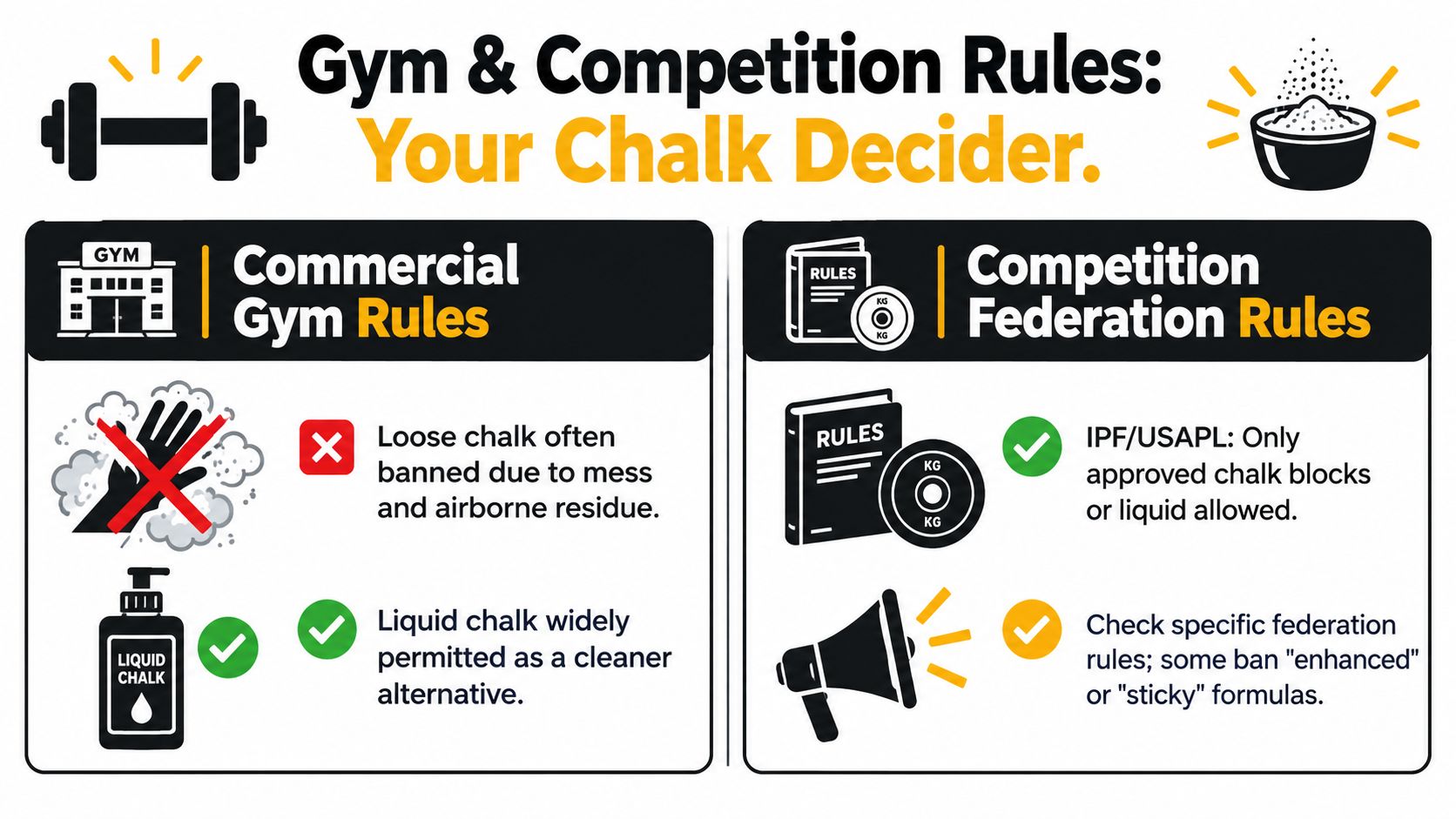
The room's chalk policy can matter more than grip feel. Commercial gyms often restrict loose powder because residue travels across equipment, flooring, and ventilation systems. Liquid chalk is usually easier to accept because it dries on the hand without creating the same dust cloud. Check the posted rules before choosing a format.
Commercial facilities
A “no powder” sign rules out loose, block, and ball chalk unless staff approve a controlled alternative. For shared commercial gyms, liquid chalk is the practical choice when you need grip support without spreading dust. EVMT uses a magnesium-carbonate formula designed to dry quickly and avoid airborne powder, making it suitable for gyms that ban loose chalk.
Some facilities also monitor residue on poles, bars, and shared handles. Apply a thin layer and let it dry fully. A heavy coating transfers more readily during repeated contact, so wipe equipment whenever the venue requires it.
Competition settings
Competition rules vary by federation and event. Check the current rulebook and ask the meet director before relying on a specific formula, especially if it feels sticky or contains ingredients beyond standard magnesium carbonate.
Some competitions restrict chalk to specific approved formulas, so approval status can decide the right pick for an athlete. College, school, commercial, and sanctioned environments may impose different restrictions. A routine that works in your gym may not be accepted on meet day.
For powerlifting events following IPF or USAPL conventions, loose chalk is commonly part of platform practice, but the event's written rules control. Olympic lifting venues may also specify where athletes can apply chalk to protect the platform and surrounding area. Powerlifters should prioritize the permitted format for the attempt. Olympic lifters should prioritize clean application and the venue's designated chalk area.
Travel and verification
Liquid chalk travels well because a sealed bottle keeps the application contained. A chalk ball or compact block works when the event permits powder. No format is automatically legal at every venue.
Competition advice: Pack the format allowed by the event, then confirm the exact formula before competition day.
For practical guidance on applying liquid chalk in powerlifting, see this liquid-chalk powerlifting resource. The decision order is straightforward: check the gym first, check the federation second, then choose the format that fits the lift and the room.
The Best Chalk Picks for Weightlifters in 2026
The overall verdict is clear. EVMT Liquid Chalk is the best default for most weightlifters in 2026, especially those training in commercial gyms, home gyms, or any room where loose powder creates conflict. It dries in seconds, makes no dust, leaves no residue on bars or poles once dry, and is positioned for gyms that ban powder chalk.
The best value format is still block chalk for lifters who train frequently in a permitted room and want a simple product that can be rubbed directly onto the hands. Loose chalk is the value choice when a lifter buys in bulk and controls application carefully, but its mess lowers its practical value in shared spaces.
For very sweaty hands, liquid chalk takes the lead as a base layer because it creates a bonded coating rather than relying only on loose powder sitting on the skin. The controlled film can be topped with a light chalk-ball or loose-chalk application when the rules permit it. That layered approach is more useful than repeatedly dumping powder onto hands that are already wet.
| Pick | Format | Best For | Price Range | Key Strength |
|---|---|---|---|---|
| Overall pick | Liquid chalk | Shared gyms and home gyms | Not specified | Clean, even coverage with no dust |
| Value pick | Block chalk | Frequent training in powder-friendly rooms | Not specified | Simple application and long use |
| Sweaty-hand pick | Liquid chalk with optional powder layer | High-sweat lifting and repeat pulling | Not specified | Bonded moisture barrier with controlled top-up |
| Maximum-coverage pick | Loose chalk | Dedicated strength rooms | Not specified | Fast, broad dry coverage |
| Travel pick | Chalk ball or sealed liquid chalk | Meets, hotel gyms, and mobile training | Not specified | Compact storage and controlled handling |
A controlled exercise study found that magnesium-carbonate chalk improved repeated pull-up performance compared with no chalk. Open-handed repetitions rose from 19.7 ± 4.39 to 22.8 ± 4.53, and pinch-grip repetitions rose from 9.1 ± 4.83 to 14.4 ± 4.47, with the reported results linked to the full controlled exercise study. That evidence supports chalk for fatigue-heavy grip work, but it doesn't erase the need to match the format to the room.
The one-line takeaway is simple: choose liquid chalk for the cleanest all-around solution, block chalk for traditional Olympic lifting, loose chalk for approved strength rooms, and a chalk ball when powder control matters.
Evermost LLC offers EVMT Liquid Chalk for weightlifters, climbers, gymnasts, pole athletes, and home-gym owners who need magnesium-carbonate grip support without powder dust. Visit Evermost LLC to choose a liquid-chalk format that fits the athlete's training space and chalk rules.