


Bar a Pull Up: Liquid Chalk Grip That Lasts Every Set
Three reps into a set of pull-ups, the bar starts to twist in your hands. That isn't a strength problem. Sweat has thinned whatever was on your palms, your fingers open a fraction, and the set ends at the hands while the lats still have work left in them.
So you go looking for chalk, and the front desk tells you the gym doesn't allow it. Two questions decide everything from there: what the venue's written policy permits, and how your hands fail under sweat. Answer them in that order and the slipping stops being a mystery.
Table of Contents
- Which Chalk Format Your Venue Allows
- Apply Liquid Chalk to Dry Hands in Four Steps
- Fix Slips, Smears and Residue on Bars
- Liquid Chalk as a Base Layer for Climbers
- Your Next-Session Routine
Which Chalk Format Your Venue Allows
The locker-room sign is usually one line. The written policy is the page that names formats. Read it before you spend money. A ban on loose powder rarely covers grip aids, so ask which format is named. The venue rule picks the format. How your hands fail under sweat picks the coat.
| Grip aid | Dust | Where it is allowed | Best for | Main drawback |
|---|---|---|---|---|
| Liquid chalk (magnesium carbonate) | None once dry | Gyms that ban loose chalk; competitions where liquid is permitted | Sweaty hands while pulling or lifting; home gyms | Needs full drying before gripping |
| Loose powder chalk | Heavy airborne dust | Often allowed in climbing gyms; frequently banned in commercial gyms | Long climbing sessions with heavy re-chalking | Dust settles on equipment and in the air |
| Chalk ball | Low, contained | Where the written policy names that format | Bouldering refills between attempts | Less even coverage across the palm |
| Grip gloves | None | Where the written policy permits them | Users who want a barrier rather than a chalk coat | Adds a barrier layer, not a chalk-based grip |
Liquid chalk covers the most bar work. Once dry it leaves no dust, so it fits commercial gyms with a powder ban and home setups that will not accept airborne chalk. Anna uses it for deadlifts and pull-ups and likes that the liquid stays mess free. A parent with a home gymnastics bar likes the same thing: it is not messy. The limit is drying time. Grip too early and the coat smears onto the bar.
Loose powder still fits long climbing sessions where the venue allows it and dust is tolerated. It is cheap, fast to reapply, and needs no drying window. It does not travel well into a commercial lifting gym.
Chalk balls and gloves solve narrower problems. A ball holds the dust in and suits bouldering refills when the policy names that format. Gloves put fabric between the palm and the bar. Use them only where the written rule blocks every chalk format.
A No Chalk Sign Is Rarely a Full Ban
Dartmouth's climbing gym bans loose chalk while allowing chalk balls, chalk socks and liquid chalk. A verbal no at the desk still needs a follow-up: which format is banned. Liquid chalk goes on skin, so there is no cloud from pouring or rubbing. That cloud is usually the complaint behind a powder ban.
How facilities write and enforce these rules is laid out in gym chalk policies and how they're applied in practice.
Competition Rules Add a Second Test
USA Climbing's 2025-2026 rulebook permits competitors to use commercially available dry or liquid climbing chalk on their hands. The same document limits liquids on the field of play to consumption unless competition rules specifically permit them, and it names liquid chalk as an allowed exception. It also prohibits substances that modify the condition of holds or the climbing surface, which rules out tackifying agents such as resin or rosin. A conventional magnesium-carbonate product fits those rules. A grip enhancer that changes how the hold feels does not.
Decision rule: write down four things. The venue rule, your dust tolerance, session length, and how much your hands sweat. Pick the row that satisfies the most of them. A home gym that cannot have dust treats the dust column as decisive. A boulderer with a permissive policy and a two-hour session stays on powder.
Ask staff whether liquid chalk is named as permitted. A friendly yes at the counter and the written document often disagree. Check bars, poles, holds and mats separately, because some venues regulate each one differently. Pole studios, gymnastics clubs and cheer facilities use the same test: the written rule picks the format, then the way your hands fail picks the coat.
Apply Liquid Chalk to Dry Hands in Four Steps
A bar a pull up set rarely ends at the back. It ends at the hands. Sweat thins the coat, the fingers open a few degrees, and the last two reps never happen. More product doesn't fix that, because a thick layer holds moisture and transfers onto the bar. A short, repeatable application does.
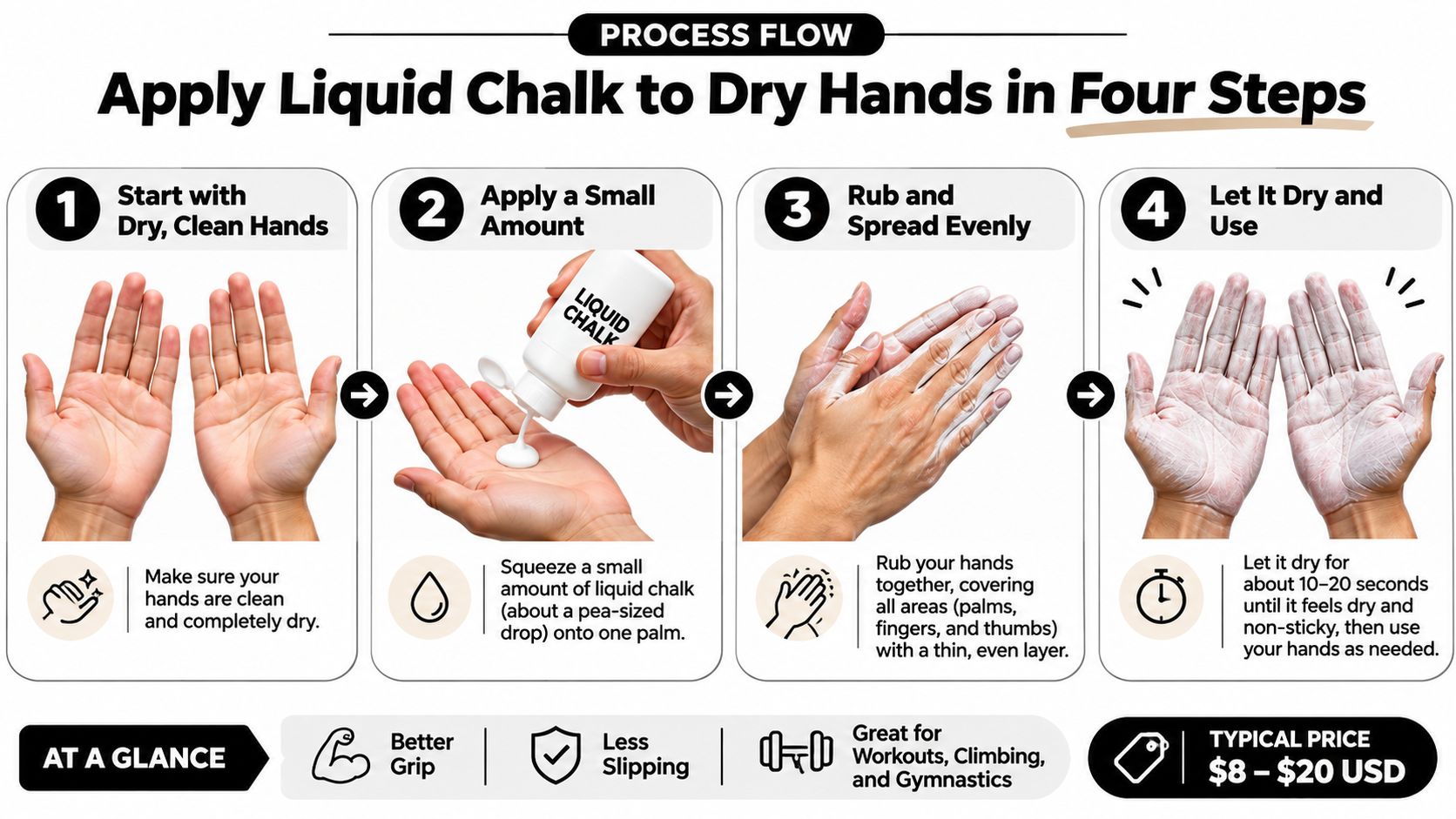
- Wash and dry your hands completely. Lotion, hand cream and residual soap film stop the coat from bonding, so the layer sits on oil and slides. Dry the backs of the hands and between the fingers, not just the palms.
- Shake the bottle and use a small amount. Squeeze onto the palms and the finger pads that wrap the bar. A thick coat clumps, holds moisture and smears under load, which is the opposite of what the bottle is for.
- Spread it evenly and wait for the carrier to evaporate. This is the step people skip, and it decides whether the coat works. Application guidance for gymnastics chalk makes the same point across pull-ups, weightlifting, cheer and pole fitness: too much product, or gripping before it dries, undercuts the clean low-transfer finish that makes the format worth using.
- Test with one hang before the working set. If the hands feel tacky rather than dry, or the bar shows a film, wipe the bar and reapply thinner. One steady hang tells you more than staring at your palms.
Gripping early is the most common mistake. A wet layer smears across the bar, the chalk ends up on the steel instead of your skin, and the next attempt starts from nothing. One lifter put the problem plainly, saying "my hands would slip making it impossible for me to do really hard sets," and reported that a single proper application solved it.
Between sets, a thin re-coat brings grip back without a full reapplication. Two seconds of product and a few seconds of drying is enough.
Readiness check: hands dry and matte, no visible white film, and one steady hang before the working set.
Fix Slips, Smears and Residue on Bars
A bar can feel slick even when your hands are dry. Sweat, skin oil and chalk residue change the contact surface, so identify whether the problem is on your hands or the bar before changing your grip.
| Symptom | Likely cause | Fix |
|---|---|---|
| Hands slip during a set | Sweat or a surface that does not provide enough grip | Check whether the bar is clean and dry; follow the venue's chalk rules |
| Chalk smears or leaves a film | Excess product or contact before the coat is dry | Wipe the bar clean and use less product next time |
| Bar feels slick or sticky | Chalk buildup on the bar | Clean the bar according to the facility's instructions |
| Forearms burn before the back tires | Over-gripping on a slippery or dirty bar | Clean the bar, shorten sets and reassess your grip |
| Skin stings, peels or blisters | Too much friction or sensitive skin | Reduce friction, rest between hanging sets and check your skin before the next session |
The Over-Grip Trade-Off
Maximum friction does not produce maximum performance. Over-gripping increases skin stress, while a slick or contaminated bar can make the forearms tire before the back. Keep your grip secure without squeezing harder than the movement requires.
Practical rule: Excess product can hold moisture and smear onto the bar. More chalk does not solve a dirty surface or poor grip mechanics.
Hand position alone may not solve slipping. In a study of physically active men who performed pull-ups to exhaustion under two hand positions, the average repetition counts were similar, and the difference was not statistically significant, according to the published pull-up grip study. Focus first on sweat, skin contact and the condition of the bar.
Bars collect chalk, skin oil and dust over time. Wipe the surface according to the facility's cleaning instructions, using safe gym equipment cleaning products that do not leave a residue. If liquid chalk remains on hands or equipment after training, follow this guide to remove liquid chalk.
A lifter's grip should remain reliable without adding avoidable strain. One reviewer described the result: “Excellent product. Able to lift without fear of slipping.”
Handle the problem at the right timescale: clean a dirty bar during the session, adjust sets if your forearms fatigue early, and make bar cleaning part of your regular routine.
Liquid Chalk as a Base Layer for Climbers
Climbers already own powder and don't need to give it up. The useful move is adding a layer underneath it, which is why liquid chalk is worth a bottle even for someone with a full chalk bag.
- Start clean and dry. Wash the hands, dry them fully, then apply a thin coat of liquid chalk across the palms and finger pads. Lotion and sweat both stop the layer bonding.
- Let it dry completely. This isn't optional. Powder applied over a wet carrier smears and takes the second layer with it, so you end up with less grip than powder alone.
- Powder on top as normal. Once the base is dry and matte, chalk up exactly as you always have.
Liquid first, full dry, then powder. Skip the drying window and the top layer slides off the bottom one.
Where a Base Layer Earns Its Place
The point of the extra layer is endurance, not a magic number. Sweat has to work through two layers instead of one, so the coat lasts through more moves before you re-chalk and you make fewer trips to the bag mid-route. That pays off most on long sport routes, on multi-pitch climbs where the bag isn't hanging at your hip, and in humid gyms where powder alone seems to vanish between moves. On short boulder problems you're re-chalking between attempts anyway, so the benefit shrinks.
Layering only works where both formats are allowed. Confirm the venue rule before the first session rather than at the base of the wall. Facilities draw lines between loose powder and liquid, and some name each format explicitly in the policy, so treat the check as part of packing. The breakdown of climbing chalk formats and where each one fits is worth five minutes if the policy wording is vague.
A simple check before the first move: the top layer should feel dry and matte, not tacky, and the hands shouldn't look caked. If they do, brush off the excess and start thinner next time.
Your Next-Session Routine
A gym's written chalk policy sets the format; the movement and your grip problem determine the coat.
Before your next session, check the comparison table above and confirm the venue's policy in writing. Many gyms ban loose chalk but allow liquid chalk. If the policy is on the gym's website, save it so you can check the exact wording.
At the bar, begin with dry hands and apply a thin coat. Let it dry fully, then test your grip on one working set. Reapply between sets if your hands start to slip.
EVMT Liquid Chalk comes in Classic, Weightlifting and Rock Climbing formulas. Classic suits gym work, CrossFit, gymnastics and dance, and reduces hand sweat while improving grip. Weightlifting has an extra-thick consistency for coverage on powerlifting, Olympic lifts and bodybuilding, and helps prevent bar slippage and callus tears. For climbers layering liquid chalk under powder, let the base dry before applying the powder. Select bottle sizes include a carabiner clip.
What Success Looks Like
Your grip stays solid through the working set, and the bar is free of visible chalk buildup. A dry, thin coat should reduce slipping without leaving excess residue. If your hands still slip, check that they were dry before application and that the bar was clean; then adjust the coat or drying time.
Choose the formula and bottle size to suit your training. EVMT Liquid Chalk is available in 50 ml and 250 ml bottles. Select portable sizes have a carabiner clip. Evermost LLC offers Classic, Weightlifting and Rock Climbing formulas.