


Gym Chalk Ball vs Liquid Chalk: Which Grip Aid Wins
The bar starts moving inside the lifter's hands before the legs or back feel finished. Across the gym, a climber keeps adjusting a sweaty palm on the same hold. A gym chalk ball looks like a simple answer, but the useful question isn't whether chalk helps. It's which format controls moisture without creating another problem: loose powder, irritated skin, dirty equipment, or a disagreement with the gym's rules.
Table of Contents
- Why Your Grip Fails Before Your Strength Does
- How a Gym Chalk Ball Works
- What the Research Says About Chalk and Grip
- Chalk Ball vs Loose Powder vs Liquid Chalk
- How to Apply and Maintain a Chalk Ball
- Choosing the Right Grip Aid for Your Sport
- Common Chalk Ball Mistakes and Skin Concerns
- Your Next Step for Cleaner, Longer-Lasting Grip
Why Your Grip Fails Before Your Strength Does
A lifter reaches the final part of a set with strength to spare, yet the bar shifts in a damp hand. A gymnast may face the same problem on an apparatus: the muscles still have energy, but moisture at the contact surface makes a secure hold harder. The grip can fail before the rest of the body is ready to stop.
Sweat changes how skin meets equipment. Squeezing harder rarely fixes sweaty contact; it can add effort without improving the surface between hand and bar. Check what is giving way before choosing a grip aid.
Chalk is one input to that assessment, alongside physical preparation. For broader context on supporting your exercise routine, Vitamin Planet offers a separate exercise-and-fitness resource. Here, the practical question is whether moisture, application, skin comfort, or facility rules shape your choice.
Separate the problem from the product
Different grip aids address the problem in different ways:
- A chalk ball releases powder through fabric, letting you build coverage gradually rather than scoop an open handful.
- Loose powder goes directly onto the hands, so careful application and cleanup matter.
- Liquid chalk applies magnesium carbonate without loose powder drifting through the air, which can suit facilities that restrict airborne chalk.
- Grip gloves add a layer between the hand and equipment, changing the contact rather than applying chalk.
These options are not interchangeable. A climber managing damp fingertips may want controlled powder; someone avoiding dust may prefer liquid chalk, including as a base layer beneath powder. Repeated chalking can also dry the skin, so more coverage is not always better. Consider the sport, the condition of your hands and equipment, and the venue's rules before deciding.
Practical rule: Choose a grip aid for the actual limitation, not because another athlete uses it.
Judge a grip aid by the specific failure it solves: slipping from sweat, dust in a shared room, or skin that cracks under repeated chalking.
How a Gym Chalk Ball Works
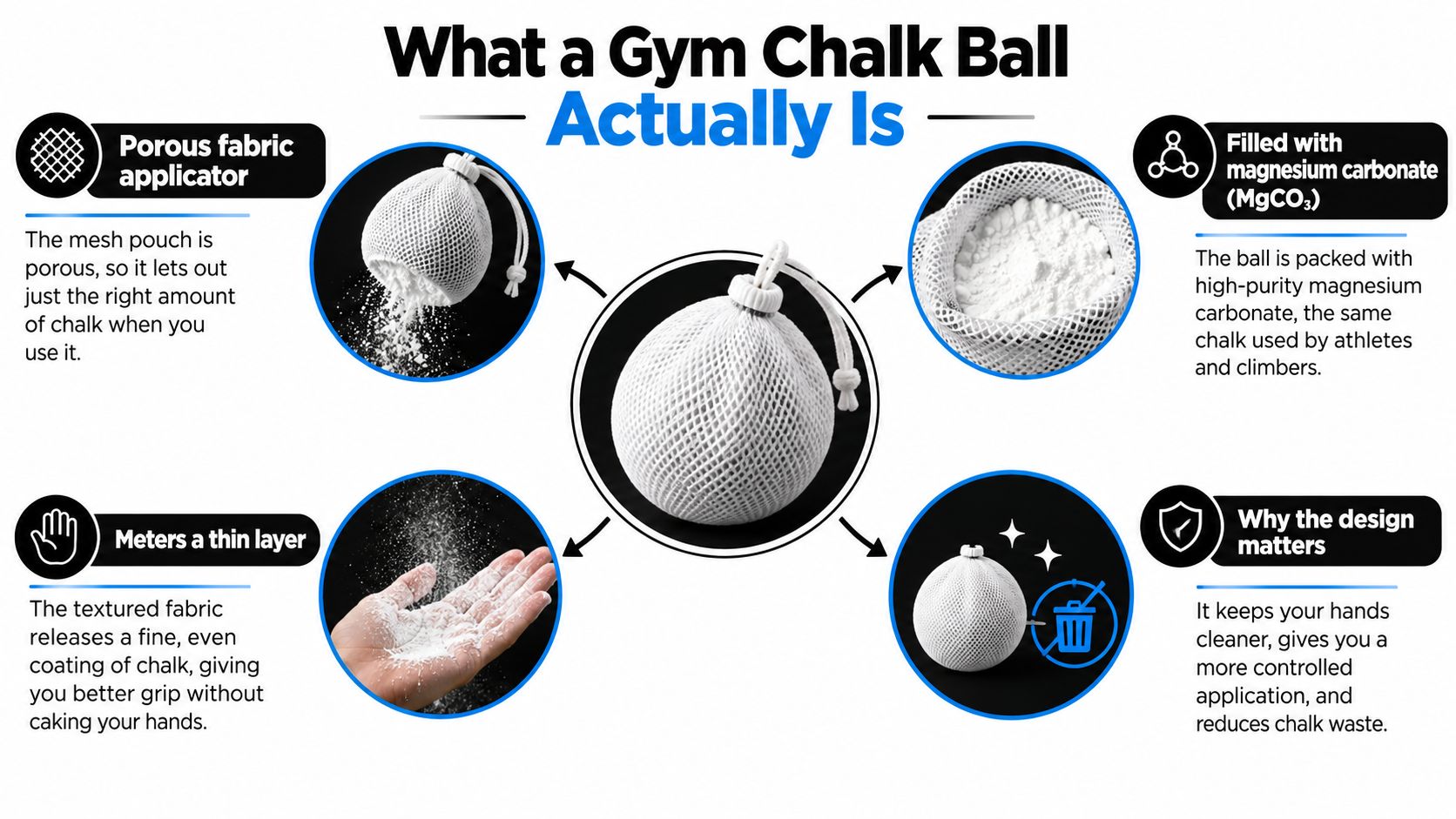
A gym chalk ball is a porous fabric pouch filled with magnesium carbonate, the same active material commonly used in loose gym chalk. The fabric is only an applicator; the grip effect comes from the magnesium carbonate inside it.
Press or gently squeeze the pouch, and powder passes through the fabric onto your hand. This lets you build coverage gradually instead of taking a large pinch from an open container. The ball is best understood as a dosing tool.
What happens at the skin
Magnesium carbonate adsorbs surface moisture. It works like a sponge for moisture on the skin, taking up water that could otherwise sit as a film between your hand and the equipment. It does not change the hand's underlying moisture level.
The fabric meters the powder into a thin coating. The friction you get still depends on how much chalk you apply, your skin's hydration, contact pressure, and the surface texture, as discussed in research on chalk and finger–rock contact.
A chalk ball controls how powder reaches the hand. It doesn't guarantee what happens when that hand meets a bar, ring, or climbing hold.
A heavily whitened palm often means too much powder, not better coverage. The aim is a light coating that manages surface moisture without leaving an unnecessary layer of loose particles. Too much can create dust and leave skin feeling dry, so add chalk in small amounts and judge the result by your grip.
Powder, a chalk ball, and liquid chalk can share magnesium carbonate while feeling different in use. Their delivery methods affect how the chalk is applied and handled. When airborne powder is a concern, liquid chalk can be the better choice; climbers can also use it as a base layer beneath powder.
For buyers, the pouch's practical advantage is controlled transfer. It helps you approach the amount your hands need gradually, rather than assuming a heavier application will produce a stronger grip.
What the Research Says About Chalk and Grip
Evidence supports chalk use, but different tests answer different questions. Hand-compression force, repeated pulling performance, measured friction, and hanging endurance aren't the same outcome.
A controlled study of 106 University of Prishtina physical-education students found better dynamometer hand and compression results with magnesium-carbonate powder than with clean, untreated hands. Both male and female participants performed better under the chalk condition.
That supports a measurable handgrip benefit in the test used. It doesn't establish that the same athlete will lift a heavier barbell, complete a harder gymnastics skill, or climb a more difficult route.
Pulling performance and endurance
In a controlled study of recreationally trained climbers, weighted assisted pull-up performance averaged 22.8 repetitions with chalk versus 19.7 without in open-hand trials, and 14.4 versus 9.1 in pinch-grip trials. Those results concern repeated grip-demanding effort, not an automatic increase in maximal strength.
The distinction between friction and usable endurance is equally important. Research summarized alongside work on chalk and rocks of varying roughness describes a climbing experiment with 19 experienced recreational climbers: measured friction didn't change significantly, but holding time averaged 62.9 seconds with chalk versus 49.3 seconds without.
What those findings justify
- A reasonable expectation: Chalk can help an athlete maintain useful contact during some grip-demanding tasks.
- An important limit: A dynamometer result doesn't establish a sport-specific performance gain.
- A product distinction: Research using magnesium-carbonate powder doesn't prove that every delivery format or commercial formula performs identically.
The publisher's explanation of its drying formula provides product context, rather than independent evidence of superiority.
The practical interpretation is measured: chalk can improve the conditions under which an athlete expresses existing strength. It doesn't manufacture strength, and research on one surface shouldn't be treated as a promise about every other surface.
Chalk Ball vs Loose Powder vs Liquid Chalk
A climber preparing for a shared wall, a lifter approaching a bar, and a home-gym owner all face the same choice: how to improve grip without creating a cleanup or rule problem. The right format depends on how much control the athlete needs and what the space allows.
A chalk ball meters powder through its fabric pouch, making each application more controlled than dipping directly into loose chalk. A chalk ball reduces mess but still releases airborne powder. Pressed chalk and loose powder can also disperse into the air, while liquid chalk avoids dispensing loose powder during application.
Format trade-offs at a glance
| Format | Dust and Mess | Residue on Equipment | Gym Rules | Skin Impact | Application Control |
|---|---|---|---|---|---|
| Chalk ball | Powder can escape during handling | Loose chalk may transfer | Usually treated as powder chalk | Amount applied matters | Fabric meters the powder |
| Loose powder | Easily dispersed during application | Requires attention to excess and cleanup | Often restricted where powder is banned | Heavy application can over-dry skin | Direct application, easy to overdo |
| Liquid chalk | Avoids dispensing loose powder | Depends on the formula and use | Often permitted where powder isn't | Ingredient and skin compatibility still matter | Applied as a coating, then dried |
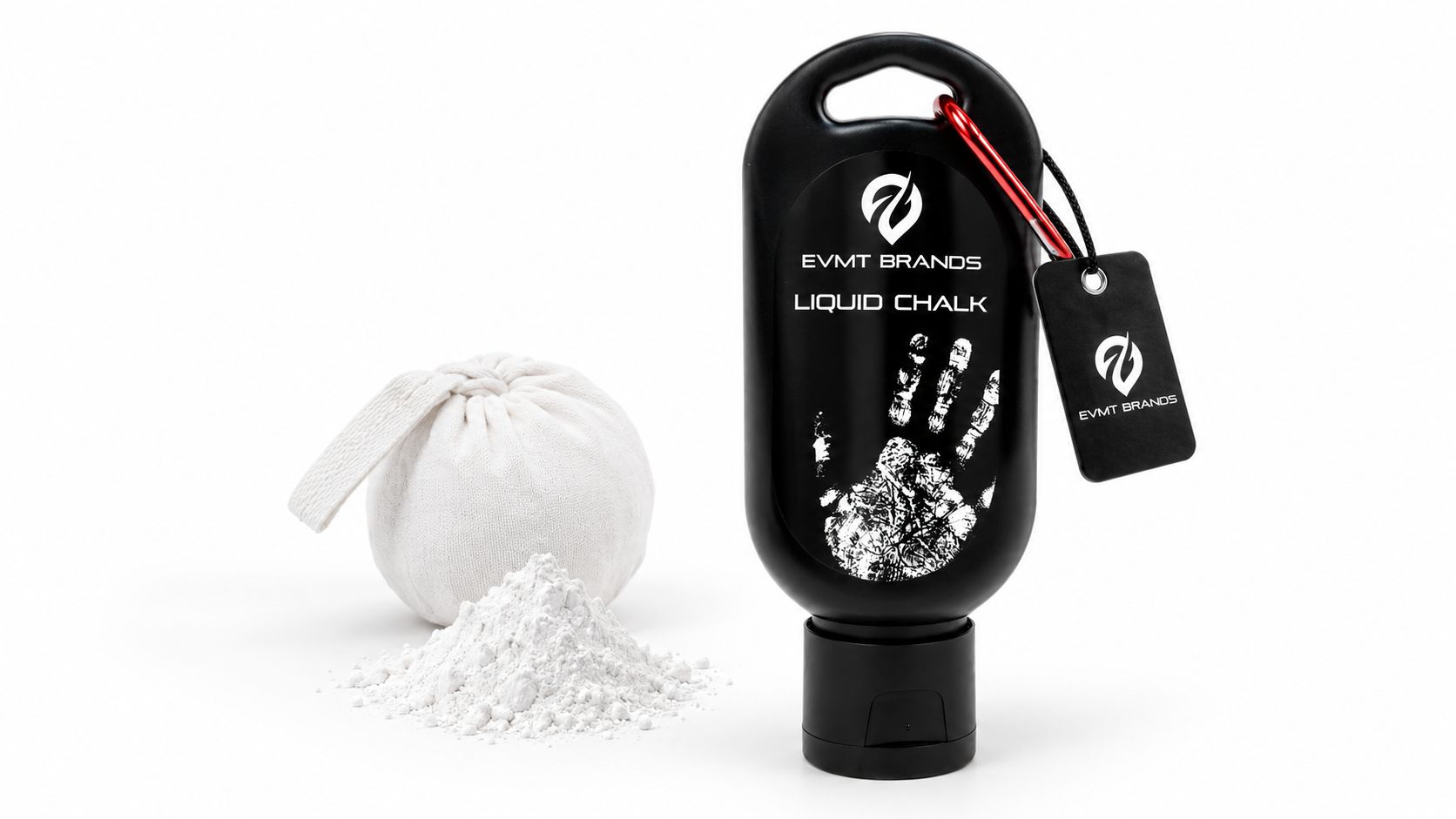
For athletes who need a liquid option, EVMT LIQUID CHALK is a magnesium-carbonate formula intended for weightlifting, gymnastics, rock climbing, and other grip-intensive activities. It dries in seconds, produces no dust during application, and leaves minimal residue on bars or poles once dry.
Liquid chalk can be the better call when airborne powder or equipment cleanup is the main concern. A ban on powder does not automatically permit every other grip product, so staff should confirm the house rule. For climbers who want a powder layer as well, liquid chalk can serve as a base before applying a small amount of loose chalk, subject to the gym's rules.
The chalk ball's strongest advantage is metered powder application. Loose powder gives athletes direct control, but it is easier to over-apply and requires permission and cleanup. Liquid chalk offers a contained coating, although its ingredients and drying effect may not suit every athlete's skin.
No format guarantees grip for an entire session. Sweat, repeated contact, and application habits all affect how long a coating remains useful. Choose for the actual setting: a chalk ball for controlled powder, loose chalk when direct application is allowed, or liquid chalk when dust control matters most.
How to Apply and Maintain a Chalk Ball
Good application should leave the contact zones prepared, not buried. The athlete needs enough powder to address dampness while retaining a clear sense of the surface beneath the hand.
A repeatable application routine
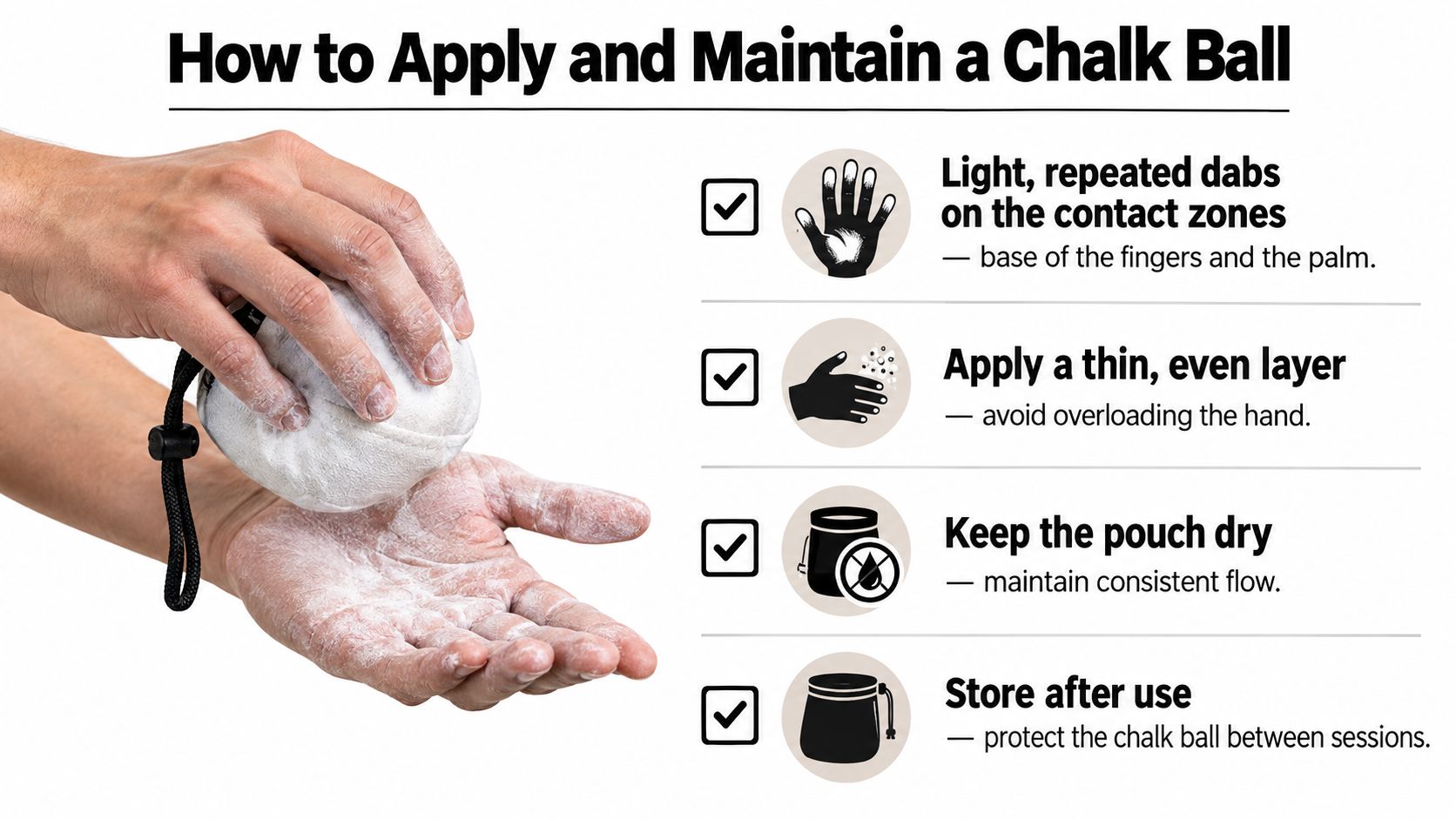
- Start with clean, dry hands. Remove obvious moisture before reaching for the pouch rather than trying to cover a wet palm with more powder.
- Dab the contact zones. Use light, repeated touches around the base of the fingers and palm creases.
- Check the coating. A thin, even application is the target. Visibly loose powder should be wiped away before a maximal gripping effort or technical climb.
- Reassess after use. Refresh when sweat returns and compromises contact, not whenever there's a pause between efforts.
The publisher's guide to how to use weightlifting chalk offers additional application context. The practical habit is to observe the hand after a set and adjust the next application accordingly.
Storage and shared use
Keep the pouch dry and contained between sessions. A chalk ball doesn't need protection from “drying out” in the way a liquid product does, but it should be protected from damp towels, spills, and rough handling that damages the fabric.
In a shared gym, a sensible routine includes:
- Containing the applicator: Put it away rather than leaving powder across a bench or floor.
- Avoiding unnecessary handling: Shared supplies deserve clean hands and consideration for other users.
- Cleaning the surrounding area: Visible powder accumulation is a cleanup issue, not evidence of effective use.
Liquid application follows a different sequence: a small amount is rubbed across the intended contact areas and allowed to dry fully before equipment is touched. After training, chalk should be washed off with soap and water rather than left on the skin unnecessarily.
Neither format benefits from rushed application. The athlete should finish preparing the hands before taking the working grip.
Choosing the Right Grip Aid for Your Sport
The same athlete may reasonably choose different chalk formats in different venues. A permissive lifting gym, a shared pole studio, and a humid climbing wall present different constraints.
Lifting, mixed workouts, and apparatus
Powerlifters and Olympic lifters who prefer powder can use a chalk ball to control placement on the palm. The buying question is whether that dispensing control is worth accepting powder handling and cleanup.
CrossFit athletes moving through grip-intensive efforts may find a fast-drying liquid application more convenient. Athletes also considering conditioning preparation can consult Tecton Ketones™’ resource on fueling strategies for kettlebell cardio workouts, while keeping that separate from the immediate choice of grip aid.
For gymnasts, cheer athletes, and pole fitness athletes, apparatus compatibility and studio policy should come first. A clean application is useful only when the coach or venue permits that formula on the relevant equipment.
Climbers can keep their powder
Liquid chalk needn't replace an established powder routine. A practical climbing approach uses it as a base layer:
- Before climbing: Apply the liquid to dry hands and let it dry completely.
- Over the dry base: Apply powder chalk as normal.
- During climbing: Refresh according to actual moisture and contact, rather than expecting the base to eliminate re-chalking.
The layered approach puts another coating beneath the powder, so sweat has to work through the base as well as the upper layer. The intended benefit is a longer-lasting coat and less frequent re-chalking, without assigning a guaranteed duration or move count.
That makes the approach more relevant to long sport routes, multi-pitch climbing, and humid gyms than to a short boulder problem with an immediate opportunity to re-chalk.
For a climber, liquid chalk can complement the existing powder routine rather than compete with it.
Home-gym owners who cannot have dust have a clearer decision: a dust-free liquid formula addresses that constraint directly. Athletes in powder-restricted facilities should seek explicit permission for liquid chalk rather than assuming that all chalk is either permitted or prohibited.
Common Chalk Ball Mistakes and Skin Concerns
During a set, a hand can feel less secure even after another squeeze of the chalk ball. Adding chalk does not reliably increase grip, and it can make contact worse if loose powder builds up between the skin and the surface. A chalk ball helps control how powder is dispensed, but it cannot tell whether your hands need more.
Correct the habit, not just the quantity
Start by checking what is affecting contact. Dampness may call for a small amount of chalk; a dry or irritated palm, loose residue, or an unsuitable surface calls for a different response. Adding chalk to already-dry skin gives no grip advantage and can irritate the skin.
Common mistakes include:
- Chalking already-dry hands: A familiar routine does not mean the skin needs another coating.
- Ignoring loose residue: If powder shifts visibly on the palm, use less and let the remaining chalk settle.
- Treating chalk as protection: Chalk cannot prevent every slip or make up for poor technique.
- Continuing through irritation: Painful or cracked skin needs attention, not another layer.
Callus care is a separate part of training comfort. Follow practical advice on preventing calluses from lifting, and choose chalk based on grip needs rather than expecting it to solve a skin problem.
Sensitive skin and respiratory concerns
If you have eczema, cracked skin, asthma, or hyperhidrosis, don't assume a commonly used gym product will suit you. Keep the area ventilated, avoid applying chalk over open wounds, wash your hands after training, and stop if irritation develops. Persistent symptoms, or a respiratory condition that makes exposure a concern, are reasons to ask a clinician for guidance. Hyperhidrosis may need care beyond repeatedly adding chalk.
Skin check: Comfortable contact matters more than a heavily whitened hand.
Shared-use habits matter too. Keep chalk contained, limit airborne powder, and leave equipment clean. A pouch can help control application, but it does not replace ventilation, hygiene, or attention to symptoms.
Your Next Step for Cleaner, Longer-Lasting Grip
A climber reaches for the next hold, or a lifter sets up for a heavy pull. If the grip problem is dust, cleanup, or uneven application, choose the format that addresses that constraint. A chalk ball meters powder onto the hands; liquid magnesium-carbonate chalk avoids loose powder during application. Either format can still feel uncomfortable or need refreshing.
Keep the comparison simple. An athlete who already owns a chalk ball can test a different format during familiar training rather than changing equipment and routine at the same time.
A useful next-session comparison
- Check permission first. Ask whether the facility allows liquid magnesium-carbonate chalk, especially if its posted rule only mentions powder.
- Keep the session familiar. Use the same equipment and pay attention to contact, comfort, cleanup, and how often you need to reapply.
- Choose the outcome that matters. Cleaner hands and equipment may matter most in a home gym; fewer interruptions may matter more on a climbing route.
- Stop if the skin objects. Stop using a coating that causes discomfort, even if it lasts longer.
For climbers, the base-layer method described above is the most useful trial. Lifters and apparatus athletes can start by checking whether a fully dried liquid application feels comfortable and leaves a manageable cleanup.
Keep the expectation realistic
Liquid chalk can change how magnesium carbonate is applied; it does not increase an athlete's underlying capacity. Treat it as a grip aid, not a promise of a heavier lift, an unbroken workout, or a harder climbing grade.
Check competition requirements separately. The International Federation of Sport Climbing Equipment Code recognizes commercially available dry and liquid magnesium-carbonate climbing chalk. Athletes should still confirm the rules that apply to their event.
Choose one practical adjustment: more controlled powder dosing, less dust, or a different application for climbing. Then assess the result on the hands and equipment.
Evermost LLC offers magnesium-carbonate liquid chalk in 50 ml portable and 250 ml high-volume sizes. Visit Evermost LLC to explore the liquid option for lifting, apparatus training, or use as a climbing base layer beneath existing powder chalk.