


Where Can I Buy Liquid Chalk: 2026 Shopping Guide
A lifter searches for liquid chalk before training, opens a marketplace, and finds grip chalk beside chalk markers, classroom supplies, and unrelated cleaning products. A climber may face the same problem, only to order a bottle that was never designed for sweaty hands or gym equipment.
The answer to where can I buy liquid chalk isn't just “the nearest online store.” The right purchase comes from a channel that clearly identifies sports-grade magnesium-carbonate liquid chalk, explains the intended use, and shows whether the formula suits the venue. EVMT Liquid Chalk is built for weightlifters, powerlifters, CrossFit athletes, climbers, boulderers, gymnasts, cheer athletes, pole athletes, and home-gym owners who need grip without airborne powder.
Table of Contents
- Understanding the Liquid Chalk Market
- Top Purchase Channels for Athletes
- Buying Directly from EVMT
- Navigating Marketplace Confusion
- Identifying Authentic Products
- Making Your Final Purchase Decision
Understanding the Liquid Chalk Market
The liquid-chalk market looks simple until a buyer searches for it. A marketplace search can return a professional grip aid, a chalk marker for writing, and products intended for household or classroom use. Those products may share the words “liquid chalk,” but they don't share the same purpose, ingredients, or skin-contact expectations.
Sports liquid chalk is generally a magnesium-carbonate grip aid suspended in an alcohol-based formula. After application, the alcohol evaporates and leaves a magnesium-carbonate layer on the hands. A climbing-focused product explanation describes this process and also warns that residue can transfer to poles, clothing, or floors, so “no airborne dust” doesn't mean “nothing can transfer” if the product is overapplied. This explanation of liquid chalk mechanics helps separate a legitimate athletic formula from a writing product.
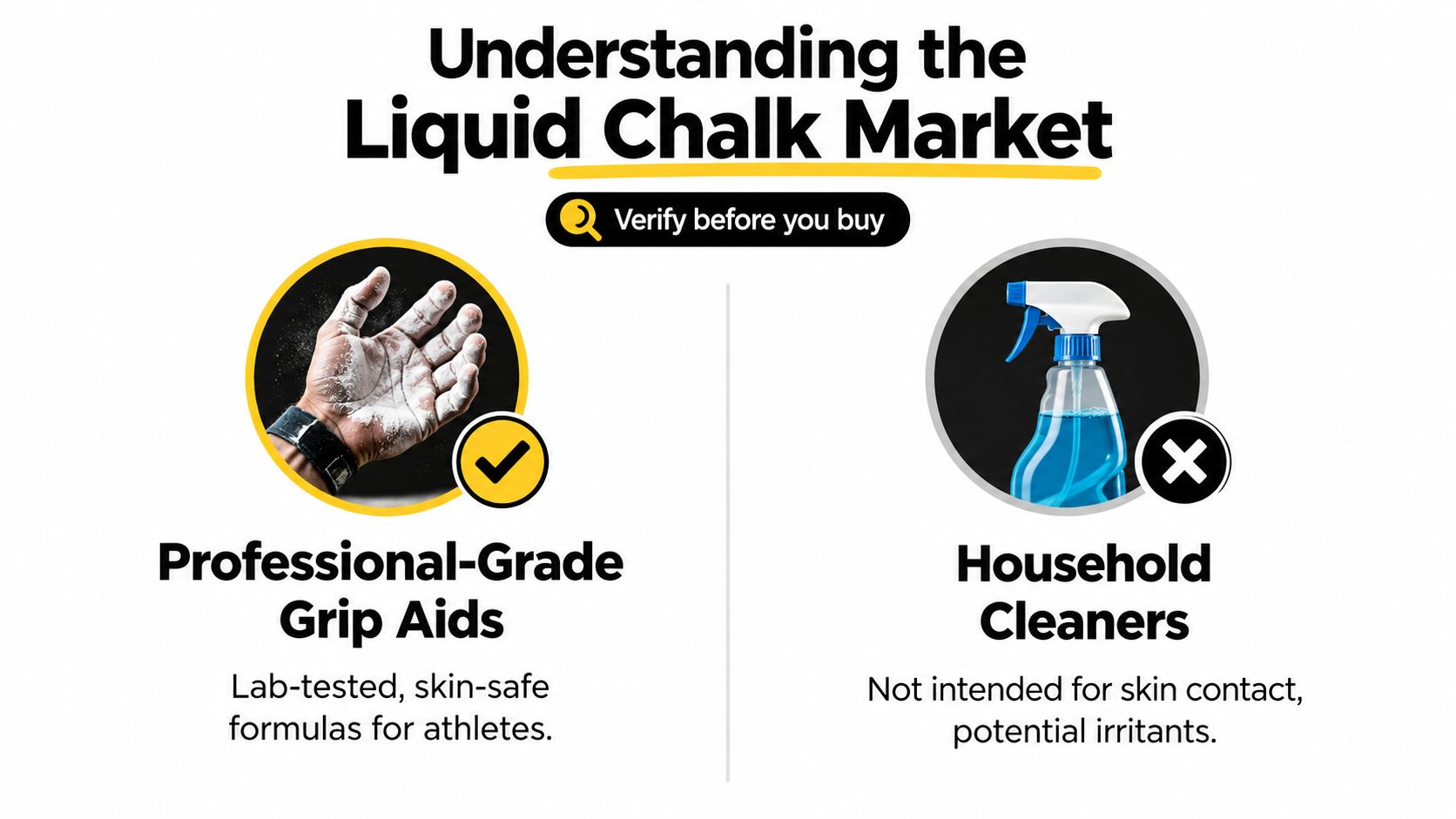
The label matters more than the search result
A credible sports product should identify hand grip, climbing, lifting, gymnastics, pole, or gym use. It should also explain application, drying, and cleanup. A bottle that only promises marks on boards or sidewalks belongs in a different category, regardless of how prominently it appears in search results.
Buyers should also consider the venue before ordering. Liquid chalk is often chosen for gyms that limit powder because it reduces airborne dust and is easier to control. A climbing retailer describes liquid chalk as a low-dust base layer that helps keep fingers dry, especially in climbing gyms. The climbing-focused product description is a useful reference for the type of use and wording buyers should expect.
The same discipline applies to the rest of an athlete's preparation. People comparing recovery solutions for active adults already understand that a product must match the activity, environment, and body rather than merely match a broad search term. Liquid chalk deserves the same scrutiny.
Practical rule: If the listing doesn't clearly say that the product is made for athletic hand grip, it isn't a safe shortcut.
Top Purchase Channels for Athletes
The best place to buy liquid chalk depends on urgency, product knowledge, and the sport involved. A local climbing or strength retailer can offer useful context, while a brand website usually gives the clearest information about formulas and sizes. Large online marketplaces offer convenience, but they demand the most careful category checking.
Online retail and specialty sporting-goods stores dominate the practical buying environment. Amazon shows 183 liquid-chalk results and 324 climbing-chalk results, while specialty retailers carry liquid-chalk products for climbing-oriented buyers. A 2025 market report estimated online stores at 34.8% of liquid-chalk distribution, specialty stores at 31.4%, and supermarkets or hypermarkets at 26.3%. The same projection estimated online liquid-chalk revenue at about $143.6 million in 2025 and specialty-store revenue at about $129.5 million. The retail listing and market distribution reference support the conclusion that buyers should search both digital and specialist channels.
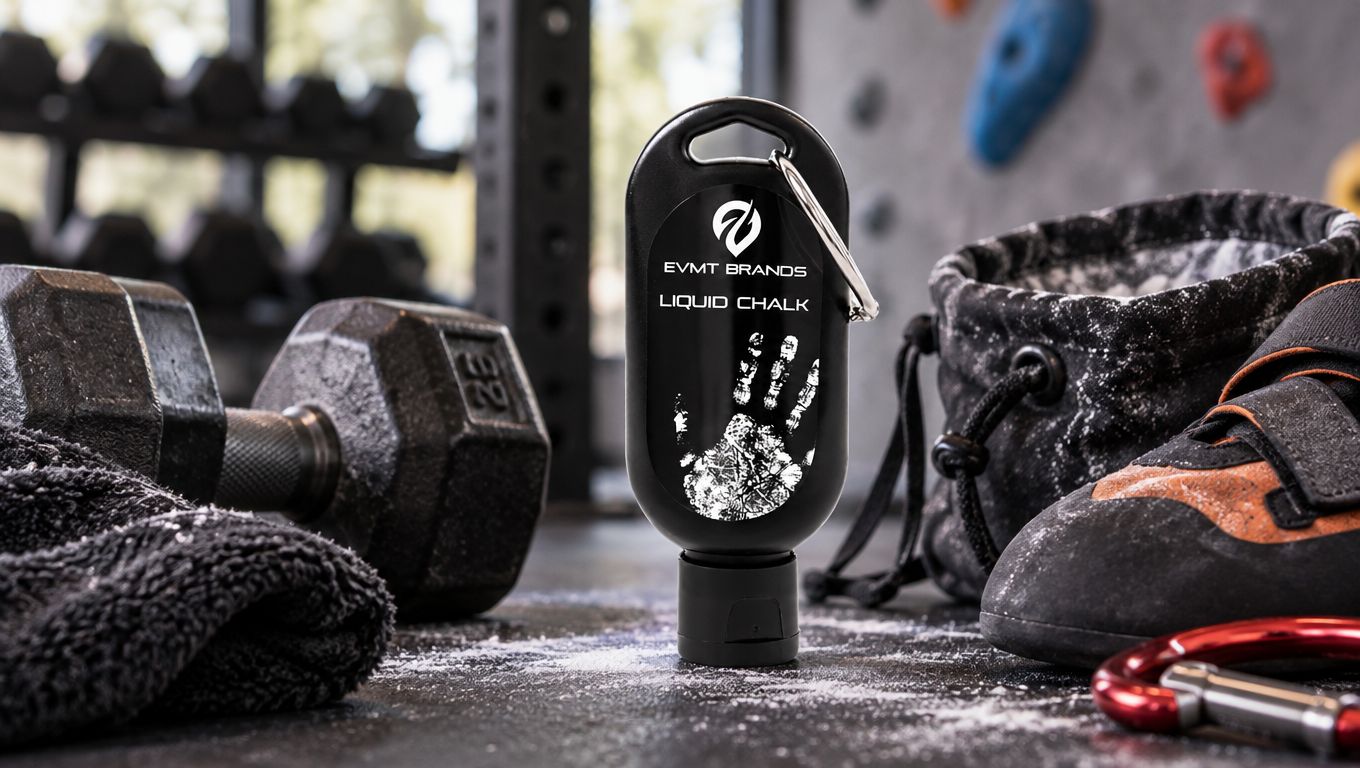
A channel-by-channel decision
Brand website: Best for buyers who want the intended formula, complete size selection, and a direct source. Product pages should state the sport applications and explain whether the product is supplied in single bottles or multi-packs.
Specialty retailer: Strong for climbers, lifters, gymnasts, and pole athletes who already shop at a sport-specific venue. The staff and surrounding product range can make the category easier to understand, although the selection may be narrower.
General marketplace: Convenient when an athlete needs a bottle quickly. It also has the greatest risk of category confusion, so the listing's ingredients, use case, and seller information need close inspection.
International shop: Useful for buyers in Canada and Europe, where regional climbing stores and e-commerce shops ship across major markets. Buyers should check delivery restrictions, regional availability, bottle size, and whether the formula is intended for climbing or gym use. This international climbing-shop listing illustrates the portable and larger-size choices commonly found in regional retail.
A gym that bans loose powder may also direct members toward liquid chalk. A gym-oriented listing describes liquid chalk as suitable for facilities that don't allow block chalk and for home gyms where mess matters, with a small application that dries quickly. This gym-use product listing shows the kind of venue-specific information buyers should look for. For broader outdoor purchasing research, a directory of emergency kit retail partners can also illustrate how specialty retail networks organize regional availability.
Buyers who want to understand how marketplace placement affects product discovery can review gym chalk marketplace guidance, then return to the product label before placing an order.
Buying Directly from EVMT
Buying directly from the manufacturer is the cleanest route when authenticity and product fit matter more than browsing dozens of mixed listings. The official EVMT range includes Classic, Weightlifting, and Rock Climbing formulas, with portable 50 ml bottles and larger 250 ml containers. Single bottles and multi-packs serve different training routines, so a buyer can match the order to occasional sessions, frequent gym visits, or a home setup.
A direct-buying checklist
- Start on the official product page. The buyer should confirm that the page describes magnesium-carbonate liquid chalk for athletic grip rather than a marker, cleaner, or general-purpose chalk product.
- Choose the activity first. Weightlifters need a formula suited to bar contact, while climbers may want a liquid base layer under loose chalk. Gymnasts, cheer athletes, and pole athletes need controlled application and a venue-friendly finish.
- Select the bottle size. A smaller bottle makes sense for a training bag or travel. A larger container suits athletes who apply liquid chalk frequently or keep a bottle in a home gym.
- Select a single bottle or multi-pack. The right choice depends on usage frequency and whether several athletes share a training space. The product range provides both formats.
- Review delivery and return terms before checkout. This prevents a buyer from discovering after payment that the destination, bottle format, or venue requirements aren't suitable.
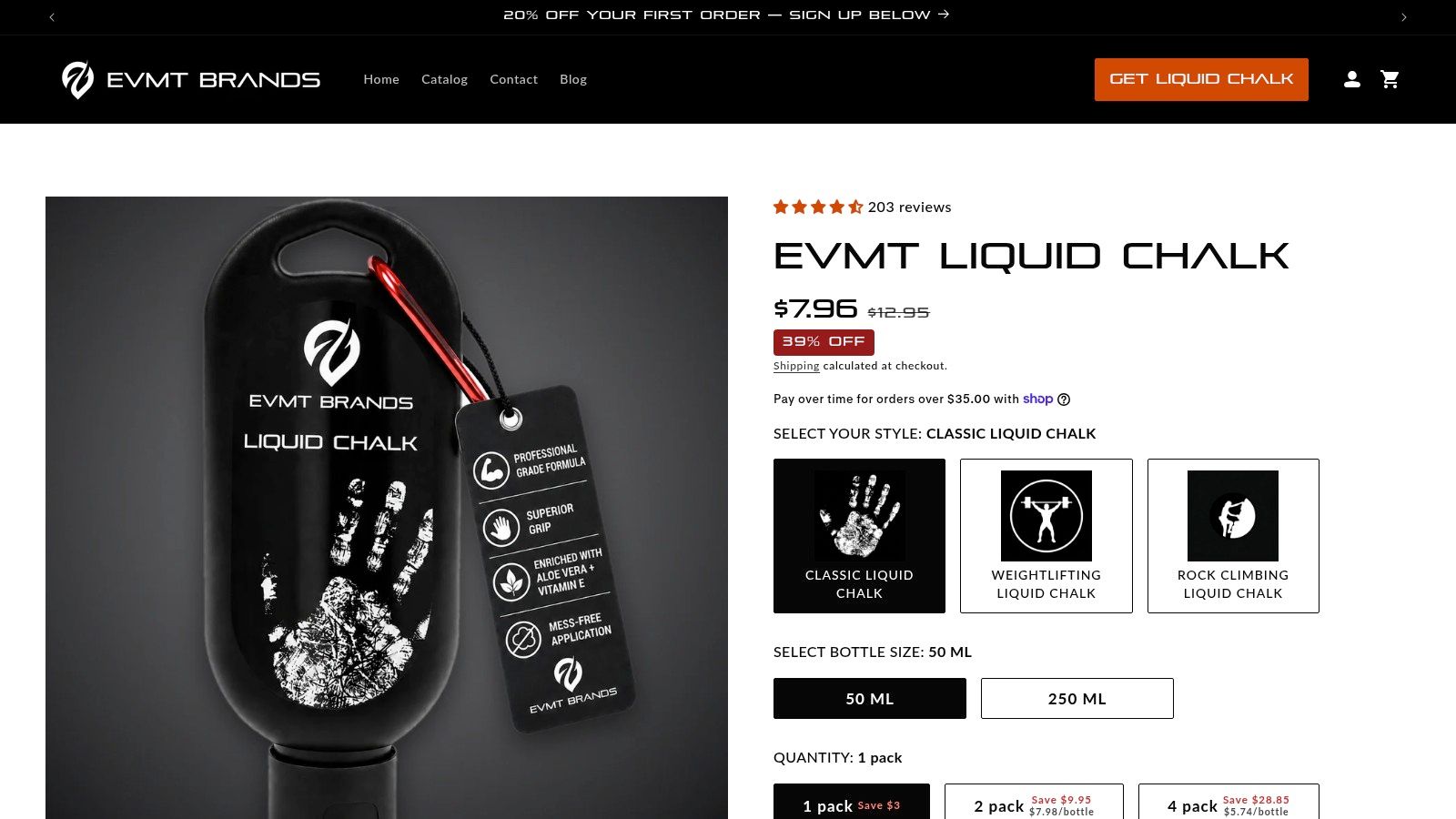
The direct route also reduces the risk of receiving an altered listing or an incorrectly categorized product. The official EVMT Liquid Chalk product page presents the product as a grip aid for weightlifting, gymnastics, rock climbing, and sports, with 11 variants across the available options. That information gives buyers a clearer starting point than a marketplace page that places several unrelated liquid products under one search heading.
EVMT Liquid Chalk dries in seconds, makes no dust, and is designed for gyms that ban powder chalk. The formula is also intended to leave no residue on bars or poles when applied correctly. Those details matter because an athlete isn't only buying friction. The athlete is buying a grip aid that fits the rules and cleanliness expectations of the training space.
Navigating Marketplace Confusion
The biggest marketplace mistake is treating every product with “liquid chalk” in its title as athletic chalk. Search results frequently mix sports grip products with chalk markers and other writing supplies. A buyer who chooses by title alone can receive a bottle that was designed to create visible marks, not to dry sweaty palms or support contact with a bar, hold, pole, or gymnastics apparatus.
This confusion exists because marketplaces organize products around broad words rather than the buyer's actual task. “Chalk” can describe a writing material, a classroom supply, a climbing product, or a lifting aid. The word “liquid” narrows the format but doesn't establish skin safety, grip performance, or gym suitability. Marketplace search results for liquid chalk demonstrate why the category needs manual verification.
Four checks before checkout
Read the use case. The description should mention athletic hand grip, climbing, bouldering, weightlifting, gymnastics, pole, or gym training. A listing focused on boards, sidewalks, craft projects, or writing should be rejected.
Look for the active grip ingredient. Sports liquid chalk commonly uses magnesium carbonate in an alcohol-based formula. If the ingredient information is missing, vague, or unrelated to hand grip, the product isn't a sensible purchase for training.
Check the application instructions. A legitimate sports listing should explain applying a small amount to the hands and allowing it to dry. Instructions that describe drawing, marking, spraying surfaces, or cleaning objects indicate a different product category.
Confirm the venue fit. Climbers should check whether the product works as a base layer under powder. Lifters and gym-goers should check whether the facility permits liquid chalk. Pole athletes should consider transfer to the pole and clothing.
A product can also be technically genuine but still unsuitable for a particular athlete. High-alcohol formulas can feel especially drying, and fragrance may bother people with sensitive skin. Independent buying guidance discusses dryness, odor, and gym policies as practical factors, not minor details. This guidance on choosing chalk for different uses gives buyers a useful reason to inspect the formulation rather than trusting a large number of reviews.
A marketplace badge can't replace a clear ingredient list and a sport-specific use case.
The correct purchase should leave no doubt that the bottle belongs on an athlete's hands. If the listing makes the buyer guess whether the product is a marker, cleaner, or grip aid, the listing has already failed.
Identifying Authentic Products
Authenticity starts with the seller, but it doesn't end there. A genuine athletic product should have a consistent product name, clear packaging, a stated use case, and instructions that match hand application. Buyers should avoid listings that reuse vague stock descriptions, omit ingredients, or promise grip without explaining what creates it.
A practical inspection can happen before the bottle reaches the training bag.
What to verify on the listing
Formula language: Look for magnesium carbonate and an appropriate alcohol-based system when the product is presented as a fast-drying liquid chalk. The listing should explain what remains after drying and how the product supports grip.
Skin and fragrance information: Sensitive athletes should look for clear statements about fragrance and drying characteristics. A high-alcohol formula may dry skin more aggressively, so users with cracking or irritation should patch-test cautiously and stop if discomfort develops.
Application directions: The instructions should recommend clean, dry hands, a small amount, and complete drying before training. More product isn't automatically better. Excess application increases the chance of transfer to equipment and clothing.
Gym compatibility: A product intended for gyms should state whether it is meant to reduce dust and whether it suits venues that restrict powder chalk. The final rule still belongs to the facility, so athletes should check posted policies.
Seller consistency: The brand name, bottle images, ingredients, and instructions should agree across the listing. Inconsistent photos or missing packaging details deserve caution.
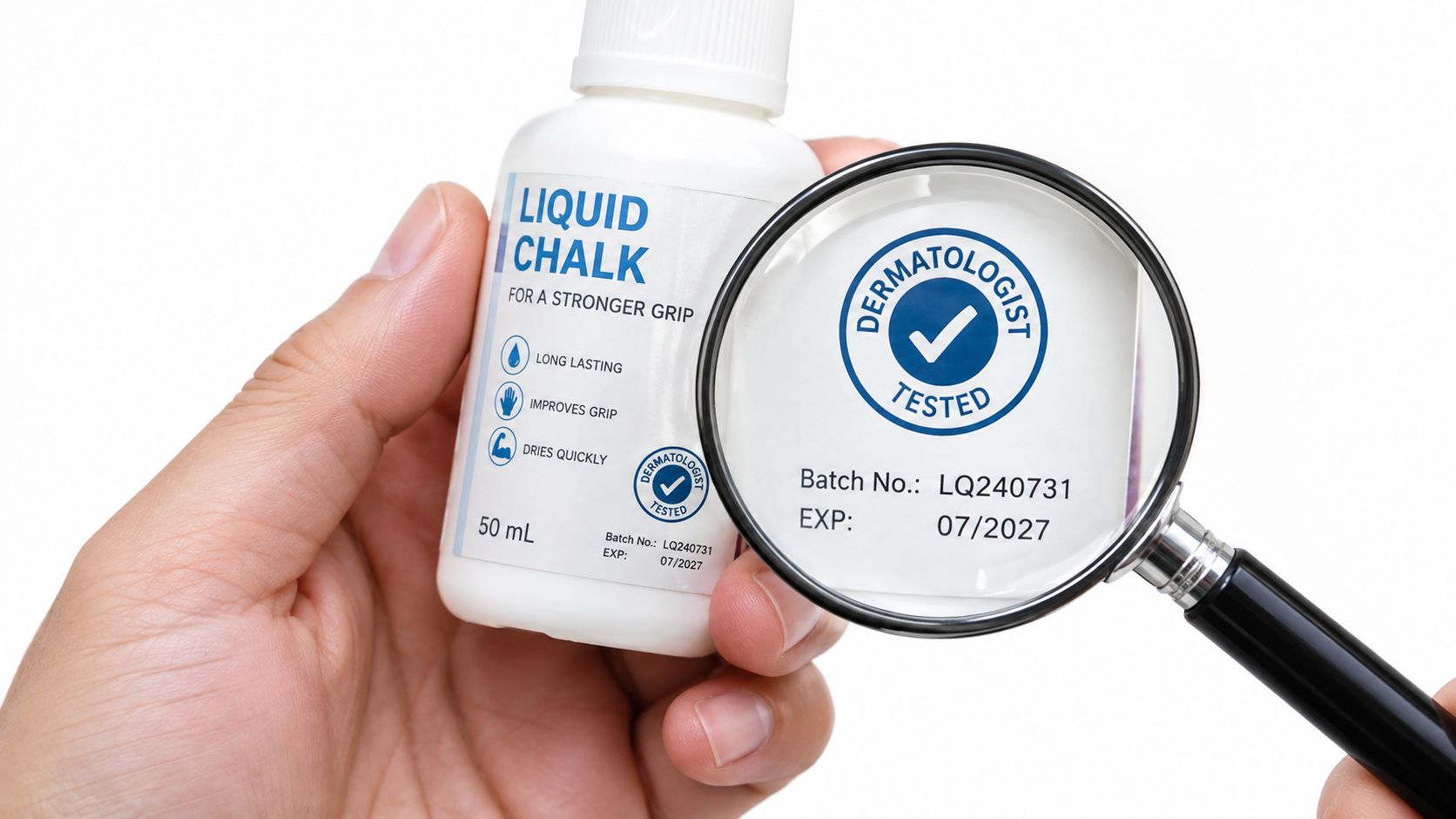
Skin, odor, and cleanup are purchase criteria
Grip is only one part of the decision. Liquid chalk can be a better fit for a dusty indoor venue, but alcohol-based formulas can leave some users feeling dry. Athletes with sensitive skin should prefer transparent product information over aggressive performance language and should avoid continuing with any formula that causes persistent irritation.
Pole athletes need an extra check because residue can move from hands to the pole. Pole-specific guidance recommends washing and drying the hands, applying a small amount, rubbing it in, and waiting for it to dry before use. This pole-grip application guidance explains the controlled process. A damp cloth and normal handwashing can help remove remaining product after training, while equipment should be cleaned according to venue rules.
A buyer looking for more context on ingredients and skin contact can consult this explanation of whether chalk is non-toxic. The key question remains practical: does the product clearly identify itself as an athletic grip aid, and does its formula suit the athlete's skin and venue?
Making Your Final Purchase Decision
The final decision should be based on fit, not the loudest marketplace claim. A buyer needs a sports-grade product, a bottle size that matches usage, a formula compatible with the athlete's skin, and a seller that makes delivery and returns understandable. If a gym prohibits powder, the product must also fit that rule.
A simple comparison can prevent an unnecessary order:
| Decision factor | What the buyer should confirm |
|---|---|
| Category | The product is liquid chalk for athletic grip, not a marker or household item |
| Formula | Magnesium carbonate and clear application information are provided |
| Venue | The gym, climbing facility, pole studio, or competition permits the product |
| Size | The bottle suits travel, regular training, or shared home-gym use |
| Value | The buyer compares the amount of product, shipping, and multi-pack contents |
| Returns | The seller explains the return process before checkout |
| Skin comfort | Fragrance, alcohol, and drying characteristics are clear enough to assess |
Climbers should make a separate decision about layering. Powder chalk doesn't need to be discarded. The recommended approach is to apply EVMT Liquid Chalk to dry hands before the session, let it dry fully, and then apply powder chalk as normal. The liquid layer functions as a primer, giving the hands another grip layer and helping reduce how often a climber needs to re-chalk. That setup is more useful on long sport routes, multi-pitch climbing, and humid gyms than on short boulder problems.
Lifters, gymnasts, cheer athletes, and pole athletes generally benefit from the same basic discipline: clean, dry hands, a small application, full drying, and compliance with the venue's chalk policy. Home-gym owners gain control over dust, while athletes with sweaty hands gain a targeted way to manage moisture without carrying loose powder through the training space.
The direct recommendation is clear. Buyers should start with an official sports-grip product, verify the formula and venue rules, choose the smallest sensible format for a first purchase, and move to a multi-pack only after the product suits the athlete's hands and training environment.
Evermost LLC offers EVMT Liquid Chalk in single bottles and multi-packs for athletes who need fast-drying, low-mess grip during lifting, climbing, gymnastics, pole, and other grip-intensive training. Athletes ready to buy from a direct source can visit Evermost LLC and choose a liquid-chalk format that matches the venue and training routine.