


Using a Spiky Foot Massage Ball for Peak Performance
A sprinter can feel sharp off the blocks in warm-ups, then lose that snap once the sole of the foot starts barking. A powerlifter can lock in bracing and bar path, yet still leak force through a foot that feels stiff, cramped, or irritated.
The Foundation of Every Athlete
Serious athletes usually chase performance bottlenecks in obvious places. They look at hip mobility, bar speed, stride mechanics, shoulder position, sleep, and nutrition. Meanwhile, the feet get ignored until soreness becomes persistent enough to change how they squat, run, land, or cut.
That's a mistake. Your feet are the first contact point with the floor, and they're where force transfer begins. If that base is irritated, tight, or guarded, the rest of the chain pays for it. The knee tracks differently. The hip loses clean timing. The athlete starts compensating without noticing it.

I've seen this with athletes who weren't injured enough to stop training, but weren't healthy enough to express power. They could still lift. They could still run. They just couldn't hit clean positions repeatedly, especially late in a session or late in a competitive block.
What stalled athletes often miss
A small loss in foot function creates bigger downstream problems:
- Force leaks into the floor: The athlete can't push or receive force as cleanly.
- Balance gets expensive: Stabilizing takes more effort, so technical consistency drops.
- Recovery slows down: Tight, irritated tissue under the foot stays angry and keeps influencing movement the next day.
That's why a spiky foot massage ball matters. Not as a luxury item. Not as generic self-care. It's a compact precision tool that helps athletes maintain tissue quality under the part of the body that has to absorb load, create stiffness, and relay feedback every time they move.
Feet aren't a side issue. They're the platform your training stands on.
If you care about stable squats, stronger takeoffs, cleaner landings, and better day-to-day movement quality, foot maintenance belongs in the same conversation as mobility drills and soft tissue work. That's also why balance work matters more than most athletes think, especially when foot integrity is part of the equation. Practical setups like equipment for balance training reinforce the same point. A strong athlete still needs a reliable base.
Deconstructing the Spiky Massage Ball
A spiky foot massage ball changes pressure in a way smooth tools do not. The raised points narrow the contact area, so load reaches smaller sections of the plantar tissue instead of spreading across the whole sole. For athletes, that matters because problem spots under the foot are rarely broad and uniform. They are usually specific. One irritated band through the arch. One tender point near the heel. One overloaded channel toward the forefoot after repeated jumping, sprinting, or cutting.

That more concentrated contact is what gives the tool value in a training setting. A smooth ball can be useful for general rolling. A spiky ball is better when the goal is to find a stubborn area, apply pressure with control, and restore tolerance so the athlete can load the foot cleanly again in the next session.
Why spikes feel different from a smooth ball
A smooth ball works like broad coverage. A spiky ball works like a more precise probe.
That difference shows up fast under a fatigued foot. After heavy lower-body work or field sessions, athletes often do not need more random pressure. They need targeted input to areas that are limiting pronation, supination, or arch recoil. The tool helps expose those restrictions instead of sliding over them.
Three mechanisms matter most.
| Mechanism | What it does in practice | Why athletes care |
|---|---|---|
| Focused pressure | Reaches a smaller, more exact area under the foot | Better targeting for hot spots that change stance or push-off mechanics |
| Mechanical stimulation | Loads tissue with enough intent to reduce guarding | Helps the foot accept pressure again before lifts, runs, and change-of-direction work |
| Circulation support | Brings movement and local blood flow to overworked tissue | Useful after sessions where the feet feel flat, stiff, or beat up |
How the Tool Works
The first mechanism is local tissue release. Under repeated load, the sole of the foot can become dense, irritated, and less tolerant of pressure. Controlled rolling gives the athlete a way to expose that tissue to load in small doses. The goal is not to crush it. The goal is to reduce sensitivity and restore movement between layers so the foot can do its job under bodyweight, barbell load, or sprint velocity.
The second mechanism is trigger point pressure. Sometimes the problem is not the whole foot. It is one exact spot that changes how the athlete lands, cuts, or sets pressure in the squat. In those cases, holding pressure on a single point for a short period often works better than rolling everywhere.
That precision matters in serious training environments. If an athlete cannot tolerate pressure under the medial arch or lateral forefoot, compensation starts early and repeats often. Coaches who use tools such as Cross Symmetry shoulder and recovery systems already understand this principle higher up the chain. Small positional faults become performance faults when they show up under load.
A quality visual on manual therapy can help athletes understand what they are trying to achieve. This image on Bayside Osteopathic pain relief gives a simple reference point for how targeted soft tissue work fits into a broader recovery approach.
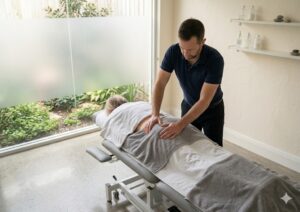
Practical rule: If pressure feels random, the setup is wrong. The spiky foot massage ball works best when the athlete finds one line of tension, applies controlled load, and lets the tissue settle.
What doesn't work
Fast rolling usually creates noise instead of a useful response. So does dropping full bodyweight onto the ball and trying to force change through pain. That approach often makes the foot guard harder, especially in athletes already dealing with plantar irritation or high weekly volume.
Better results come from patience. Slow passes. Brief pauses. Enough pressure to get a response without losing the ability to breathe, relax the toes, and keep the ankle quiet.
Used that way, the spiky ball becomes more than a comfort tool. It becomes part of foot maintenance for athletes who need reliable stiffness, clean pressure transfer, and fewer avoidable setbacks over a long season.
How Foot Health Translates to Performance Gains
A sprinter can look sharp in warmups, then lose pop halfway through acceleration work because one foot stops accepting load cleanly. A lifter can have the leg strength for the attempt, then miss because the foot never gave them a stable platform to drive from. Those problems often get blamed on hips, knees, or “tight calves.” The foot is often where the leak starts.
A spiky foot massage ball matters because the foot is the first contact point with the ground. If that contact is irritated, guarded, or poorly controlled, force transfer gets messy. Power output drops. Positions shift. Compensation starts.
Better feet mean cleaner force transfer
The foot has to do two jobs that seem opposite but need to happen together. It needs enough mobility to adapt to the ground and enough stiffness to pass force up the chain. Serious athletes feel the difference right away. When the underside of the foot is restricted or sore, they stop loading evenly, lose pressure through the big toe, and rotate around the problem without always noticing it.
That shows up fast in training.
Runners lose stride efficiency because the foot no longer loads and recoils the same way each step. Lifters struggle to create a stable tripod foot under heavy squats, pulls, and jerks. Court and field athletes get sloppier on cuts and landings because deceleration starts with a foot that can accept force without collapsing or guarding.
This is one reason small faults lower in the chain can turn into bigger performance issues higher up. Athletes who already understand shoulder positioning from Cross Symmetry workout ideas usually grasp this quickly. Better input at the edge of the system improves what the rest of the chain can do under speed and load.
If the foot loses integrity, the knee and hip inherit work they should not have to solve.
What that means in real training
In-season athletes rarely get into trouble from one dramatic moment. More often, they stack days of partial compensation. The foot gets tender. Push-off gets shorter. Landing mechanics get noisier. The athlete still trains, but the quality of each rep drops a little and the cost of each session rises.
That trade-off matters.
A healthy foot helps an athlete hold position longer, produce force more directly, and recover faster between hard sessions because less energy is wasted in avoidable compensation. A restricted, irritated foot does the opposite. It changes pressure maps, delays clean ground contact, and can make ankle motion feel unavailable even when the ankle joint itself is not the main issue.
For athletes dealing with recurring symptoms, Aspen Falls foot and ankle care is a useful reference, especially when soreness stops acting like normal training fatigue and starts changing gait, squatting mechanics, or daily walking.
Recovery and movement quality are tied together
Athletes often treat foot work like a comfort drill. In practice, it supports better movement quality if it is used with intent. When the plantar tissue settles down and the athlete can spread the toes, load the forefoot, and tolerate pressure through the arch again, ankle motion usually looks cleaner and force transfer feels more direct.
That does not mean a spiky ball fixes every limitation. Sometimes the limiter is calf stiffness, joint restriction, or training volume that is too high for the tissue to recover from. But in many athletes, better foot tissue quality improves squat balance, running rhythm, landing control, and how confidently they can attack the ground.
That is the performance case for using it. The goal is not a relaxing minute on a recovery tool. The goal is a foot that can accept load, return force, and stay reliable through a long season.
Mastering Your Technique for Safe Results
A fast athlete can lose clean force transfer from a foot that feels flat, guarded, or overloaded. The tool does not fix that by brute force. It helps when pressure is precise, breathing stays calm, and the athlete can step off the ball with better contact to the floor than they had before.
Start by deciding the job. Use slow rolling when the whole sole feels stiff after training, travel, or long hours in shoes. Use a sustained hold when one specific spot is changing how the foot loads. Those are different inputs, and athletes should treat them that way.

The pressure sweet spot
Good pressure creates a change the tissue accepts. Too little does nothing. Too much makes the foot brace, the toes claw, and the calf tighten, which is the opposite of what a sprinter, lifter, or field athlete needs before asking the foot to transmit force.
A useful benchmark for a tender spot is controlled pressure for 30 to 90 seconds at a discomfort level around 6 or 7 out of 10, based on GoChirp's guide to deep tissue spiky ball use. If breathing gets choppy or the rest of the leg starts tensing up, reduce pressure and retry. The goal is a foot that softens enough to load well, not a foot that feels attacked.
A simple setup that works
Seated work is the cleanest place to start because it lets the athlete control load. Put the ball under the foot, move from the base of the toes toward the heel, and keep the passes slow enough to notice where the pressure changes. On a general recovery pass, one to two minutes is usually enough. For a targeted hold, stay on the spot only while the pressure remains controlled and the tissue starts to ease.
Standing can work well for stronger athletes, but it raises the chance of using bodyweight too aggressively. I usually want standing pressure reserved for athletes who can stay relaxed through the foot and keep the ankle quiet instead of dumping force straight down into a sore point.
Use these distinctions:
- General rolling: Cover the full sole with slow passes for a short session. This fits after practices, road travel, or long periods in cleats or lifters.
- Targeted hold: Pause on one relevant spot and let the pressure settle before moving on.
- Adjacent tissue work: If the foot still feels restricted, spend brief time on the calf or peroneals with the same tool. Sometimes the foot is reacting to tension upstream, not creating the whole problem itself.
Here's a visual demo before you try to fine-tune your own pressure:
Common errors that waste the session
The first mistake is speed. Fast rolling turns the drill into noise. Slow pressure gives the athlete useful feedback about where the foot is guarding and whether it is easing.
The second mistake is chasing pain. A hot spot under the arch does not always need more force. In a heavy training block, that spot may be a signal to reduce impact volume, adjust footwear, or clean up landing mechanics.
The third mistake is ignoring the skin. A foot with friction buildup, hot spots, or early blistering will not tolerate pressure well and will not load confidently under speed. Athletes who spend long hours in spikes, cleats, or race shoes should pair tissue work with practical blister prevention strategies for training and competition.
Use enough pressure to improve the foot's response under load. Stop well before the point where the foot fights back.
Sample Routines for Your Training Cycle
The best routine is the one that matches the session in front of you. A spiky foot massage ball can wake the foot up before training, calm it down after impact work, or keep it from getting stiff during sedentary parts of the day.

The lifter's pre-session foot prep
An Olympic lifter doesn't need a long session before touching the bar. They need enough input to feel the floor.
Try this before squats, pulls, or Olympic lifts:
- Light arch roll for 30 seconds. Keep the pressure moderate.
- Heel-to-toe passes. Move slowly and cover the sole without hunting pain.
- Brief pause on one sticky spot. Only if it clearly limits how the foot feels on the platform.
This routine is about readiness, not deep release. You want the foot alert and responsive.
The runner's post-run reset
After a harder run, the foot usually responds better to patience than aggression. Sit down, place the ball under the arch, and use slow passes. If you hit one obvious tender point, hold briefly, then move on.
A useful structure:
- Opening scan: Roll the full sole and notice where the tissue feels dense.
- Targeted hold: Pause on the most relevant spot instead of trying to fix everything.
- Finish with easy movement: Let the foot relax rather than ending on high pressure.
A short, repeatable recovery routine beats the heroic session you won't do again tomorrow.
The desk-bound maintenance option
A lot of serious athletes still spend hours sitting for work, travel, or class. That's one reason the feet can feel flat and unresponsive by the time evening training starts.
For daily maintenance, keep the ball under your desk and use it in short passes during lower-demand periods of the day. Roll slowly, then stop on one or two points that need attention. The goal isn't exhaustion. It's preserving mobility and tissue quality so the next session starts from a better place.
Choosing Your Tool and Knowing Your Limits
Not every athlete needs the most aggressive ball on the shelf. For foot work, firmness and size matter more than gimmicks. A 3-inch format is established in the products referenced earlier, and that size tends to give enough surface area to work the sole without feeling too blunt or too pinpoint.
If you're choosing between smooth and spiky, use the state of the tissue as your guide. Spiky usually gives a more focused input. Smooth is often the better opening option when the foot is irritable, reactive, or not tolerating direct pressure well.
When to pull back
For plantar fasciitis management, users must maintain discomfort at or below 5 to 6 out of 10 and hold on tender spots for only 10 to 20 seconds per foot, because excessive pressure can aggravate symptoms. The tool is also an adjunct therapy, not a standalone cure, according to BodySpec's trigger point massage ball guidance.
That's the line athletes need to respect. A spiky foot massage ball can help, but it can also be too much for actively inflamed tissue if the athlete treats pain tolerance like a badge of honor.
Use judgment, not ego
Skip the tool, or get professional input first, if you're dealing with:
- Open skin or obvious acute irritation
- Pain that worsens during the session instead of settling
- Symptoms that feel nerve-related or unusually sharp
- Persistent foot pain that keeps changing your mechanics
A smart athlete treats this tool as part of a bigger recovery system. Footwear, load management, calf and ankle work, and sport-specific programming still matter. If pain keeps hanging around, the right move isn't more rolling. It's a qualified sports medicine or foot specialist evaluation.
Evermost LLC makes EVMT Liquid Chalk for athletes who need dependable grip without the mess of traditional powder chalk. If your training depends on secure hand-to-bar contact in lifting, climbing, gymnastics, dance, or high-rep functional fitness, EVMT offers a clean, gym-approved option that dries fast, resists sweat, and fits serious training environments.