


Pole Dancing Grip Tips: 7 Fixes for Sweaty Hands
Halfway through a climb, the pole stops cooperating. The hands slide a fraction on the pull, the shoulders roll forward, and the shape that worked five minutes ago collapses. Strength isn't the missing piece. Friction is, and friction changes the second sweat, dry studio air, or someone else's hand cream enters the picture.
These pole dancing grip tips cover the fixes that hold up in real training spaces: managing sweat, choosing a clean grip aid, handling studio chalk rules, applying product properly, layering under powder, removing residue, and packing for competition. Shared floors, backstage changeovers, and venues with opinions about dust are the conditions that matter, not a perfect home setup.
Keep oils and heavy lotions for recovery, not for class. A post-session massage is a different job, and ALODERMA's grapeseed massage oil guide covers that side of the routine without turning your palms into a slipping hazard.
Table of Contents
- 1. Liquid Chalk for Pole Dancing: Dries in Seconds, No Dust
- 2. Liquid Chalk for Pole Dancing vs Powder: Our Verdict
- 3. Liquid Chalk for Pole Dancing: Apply Before Your Set
- 4. Liquid Chalk for Pole Dancing: Layer It Under Powder
- 5. Liquid Chalk for Pole Dancing: Studios That Ban Chalk
- 6. Liquid Chalk for Pole Dancing: Clean Removal From Skin
- 7. Liquid Chalk for Pole Dancing: Competition and Travel
- 7 Grip Strategies for Pole Dancing at a Glance
- Build a Grip Routine That Survives Any Studio
1. Liquid Chalk for Pole Dancing: Dries in Seconds, No Dust
Liquid chalk is magnesium carbonate held in a liquid carrier, painted onto clean, dry hands and left to set. It dries in seconds and leaves a thin film that absorbs sweat, so the palms stay tacky instead of slick against chrome or brass. A University of Wisconsin analysis of magnesium-carbonate chalk explains the mechanism: alcohol and water keep the chalk fluid, then evaporate after application and leave the chalky film behind.
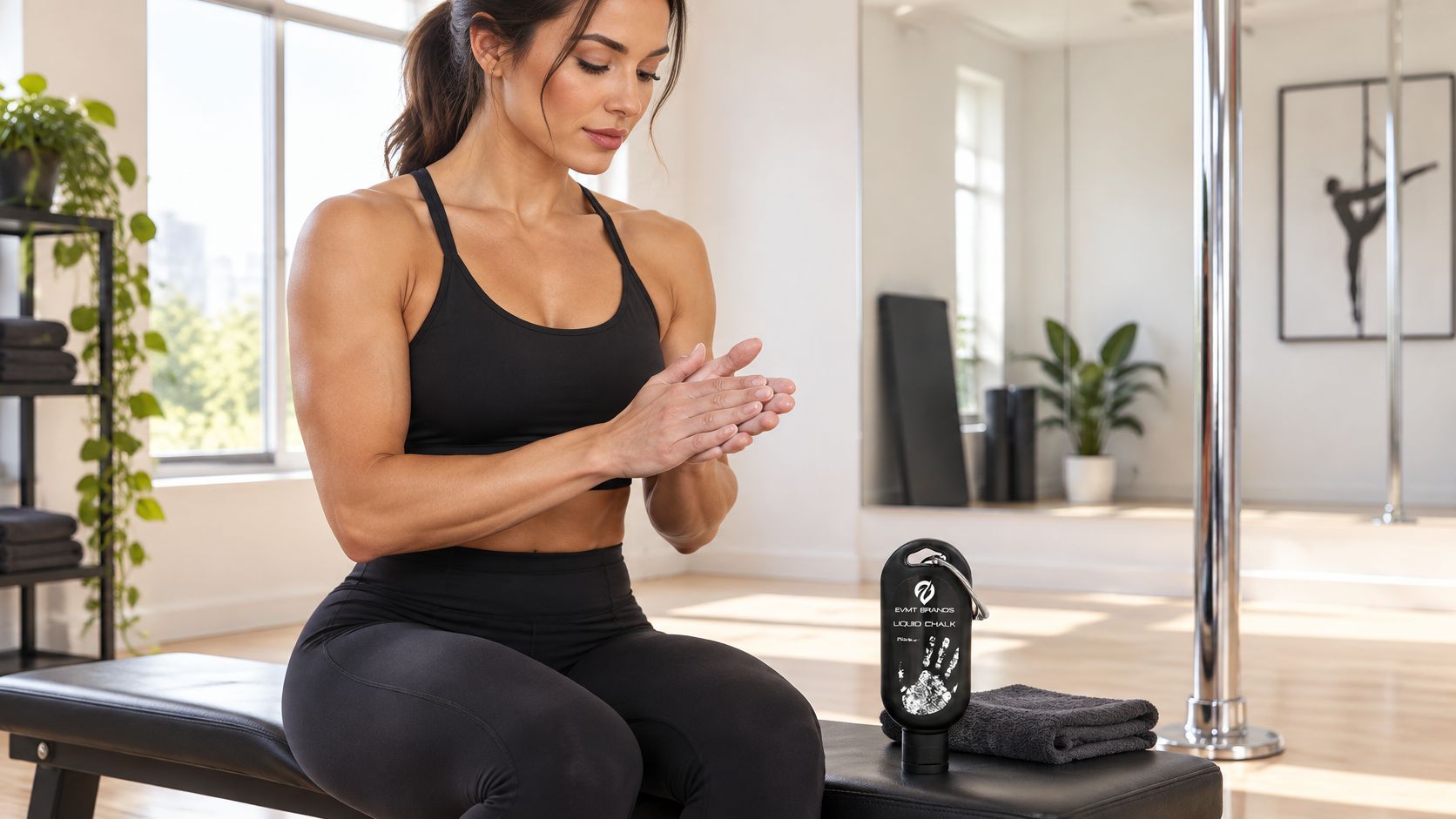
That's also why it suits studios. Nothing puffs into the air, so nothing settles on mirrors, mats, or the floor between classes. The magnesium carbonate does the work on skin, and the effect is measurable: in a pull-up study, open-hand repetitions rose from a no-chalk mean of 19.7 ± 4.39 to 22.8 ± 4.53 with chalk (p = 0.006), and pinch-grip repetitions from 9.1 ± 4.83 to 14.4 ± 4.47 (p = 0.007), per the Western Kentucky University pull-up study.
Three details that decide whether it works
- Start clean and dry. Lotion, oil, or leftover sweat under the film stops it bonding.
- Wait for the set. Gripping the pole while the carrier is still wet smears the coat.
- Go thin. One even layer beats three thick ones, and it comes off faster afterwards.
A student with wet palms paints a coat before the first sequence and stops leaving prints on the pole. A home-studio owner uses it because a spare-room pole can't produce a dust cloud. EVMT Liquid Chalk is one magnesium-carbonate option, sold as single bottles and multi-packs with portable 50 ml sizes for a dance bag.
2. Liquid Chalk for Pole Dancing vs Powder: Our Verdict
Powder still wins on raw friction, and that's worth saying plainly. A study of friction between hand and surface under different conditions tested dry, wet, powder-chalked, and liquid-chalked hands on artificial climbing holds, sandpaper, and Perspex. Powder chalk produced significantly greater friction than liquid chalk across the tested surfaces, and liquid chalk did not outperform a dry hand on an artificial hold.
Context decides the rest. In a studio that permits loose chalk and cleans its own floors, powder is legitimate. In a shared space with mirrors, mats, and a class changeover every hour, the dust is the problem, and a product that applies as a film and sets in seconds solves it without a cloud.
The verdict: liquid chalk where dust is restricted or the floor is shared, powder where it's allowed and the mess is managed. Neither one is a technique fix.
Mechanics outrank tack. A prospective cohort study of 66 pole dancers across 41 Australian studios identified loaded internal-rotation maneuvers, the family that includes positions such as twisted grip, as the primary contributor in 33.3% of shoulder injury onsets, as reported in Scientific Reports. A stickier hand doesn't reduce that torque.
Test a new product in conditioning drills and slow transitions first, then take it into inversions once you know how it behaves under sweat.
3. Liquid Chalk for Pole Dancing: Apply Before Your Set
Application is a sequence, not a smear. Wash the hands with soap, dry them completely including between the fingers, paint a thin even coat, and let it set before touching the pole. A wet coat grabs nothing and transfers onto the surface, where the next dancer inherits it.
Warm up first. In a one-year prospective cohort study of pole dancers, 57.3% of the 103 recorded injuries came from non-contact mechanisms and 62.1% had sudden onset, per the University of Western Australia injury study. Cold wrists and unengaged shoulders are exactly what turn a controlled descent into a catch.
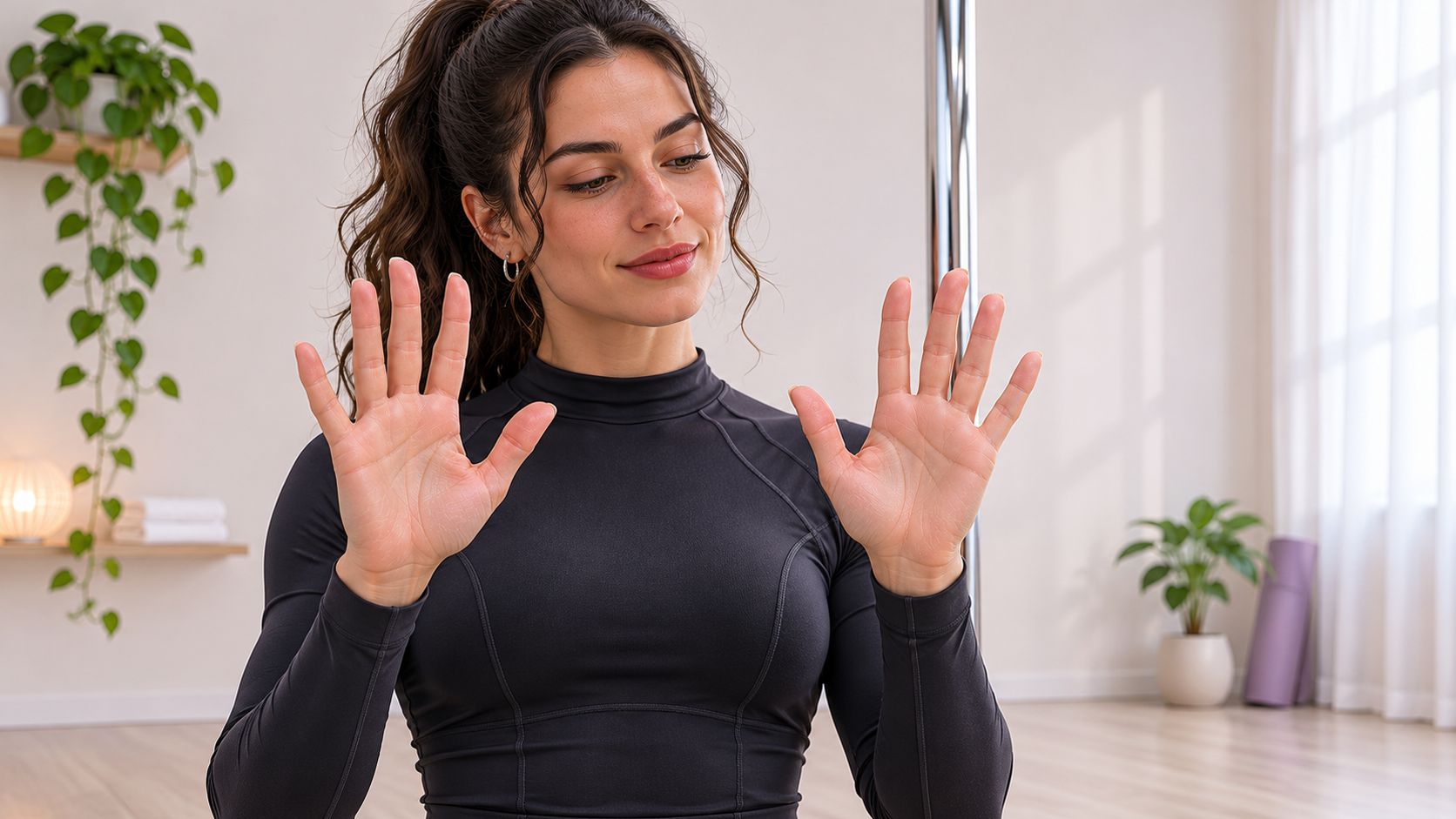
Skin state matters more than brand. Guidance on choosing grip for pole notes that grip aids applied to already-dry skin can worsen grip and increase injury risk, and that repeated washing and alcohol-based cleaning strip the oils skin needs. When hands are papery, another coat usually makes things worse.
Practical rule: if the third coat feels no tackier than the first, stop applying. Clean the pole, dry the hands, and check whether fatigue changed the shape before friction did.
Reapply between sets rather than layering over a tacky, half-dried coat. Grip that starts sliding late in a class is usually a fatigue signal, not a product shortage.
4. Liquid Chalk for Pole Dancing: Layer It Under Powder
Dancers who already carry powder don't have to give it up. Paint a thin coat of liquid chalk on dry hands, let it dry completely, then apply powder on top as usual. The liquid layer bonds to skin and the powder sits on it, so sweat has to work through two layers instead of one and the coat tends to hold longer before the hands feel slick.
Longer is measurable. In a study of 19 experienced recreational climbers, participants hung for an average of 62.9 ± 36.7 seconds with magnesium-carbonate chalk versus 49.3 ± 25.2 seconds without it, a statistically significant difference (p = 0.046), per the Northern Arizona University research listing. The same study found no significant differences in coefficient of friction or muscular activity, so the gain showed up as time on the hold, not a change in technique.
That's the realistic promise for pole: fewer mid-routine re-chalks, not permanent tack.
How to layer without ruining the coat
- Dry first, always. Powder on a wet liquid coat balls up and slides.
- Thin liquid, normal powder. The base is a primer, not a replacement.
- Test it on a long combo. Short spins won't reveal anything useful.
For the powder side of the routine, this breakdown of powder chalk covers what to look for.
5. Liquid Chalk for Pole Dancing: Studios That Ban Chalk
Studio rules exist for reasons that have nothing to do with a dancer's hands. Dust settles into mirrors, floors, and mats, and someone has to clean it before the next class. Many gyms ban loose chalk but allow liquid chalk, which is the practical opening for anyone with sweaty palms.
Ask before you bring anything. A one-line question to the studio manager, naming the product and describing it as a dust-free liquid that dries on the skin, gets a yes or no in seconds and saves an awkward conversation at the door.
The safety case is real. Among injured pole dancers surveyed globally, shoulder injuries were reported by 54.5%, wrist injuries by 34.2%, and back injuries by 24.7%, with 75.5% of injuries acute, according to The Pole Physio research recap. That same guidance recommends landing mats, fall training, and trainer supervision as injury-reduction measures, which is also what a well-run studio will ask of you before anything new.
A studio that restricts powder isn't being difficult. It's protecting the floor, the mats, and the next class.
Bring a mat for new inversions, wipe your own pole, and keep the bottle closed between applications so nothing leaks into a shared bag.
6. Liquid Chalk for Pole Dancing: Clean Removal From Skin
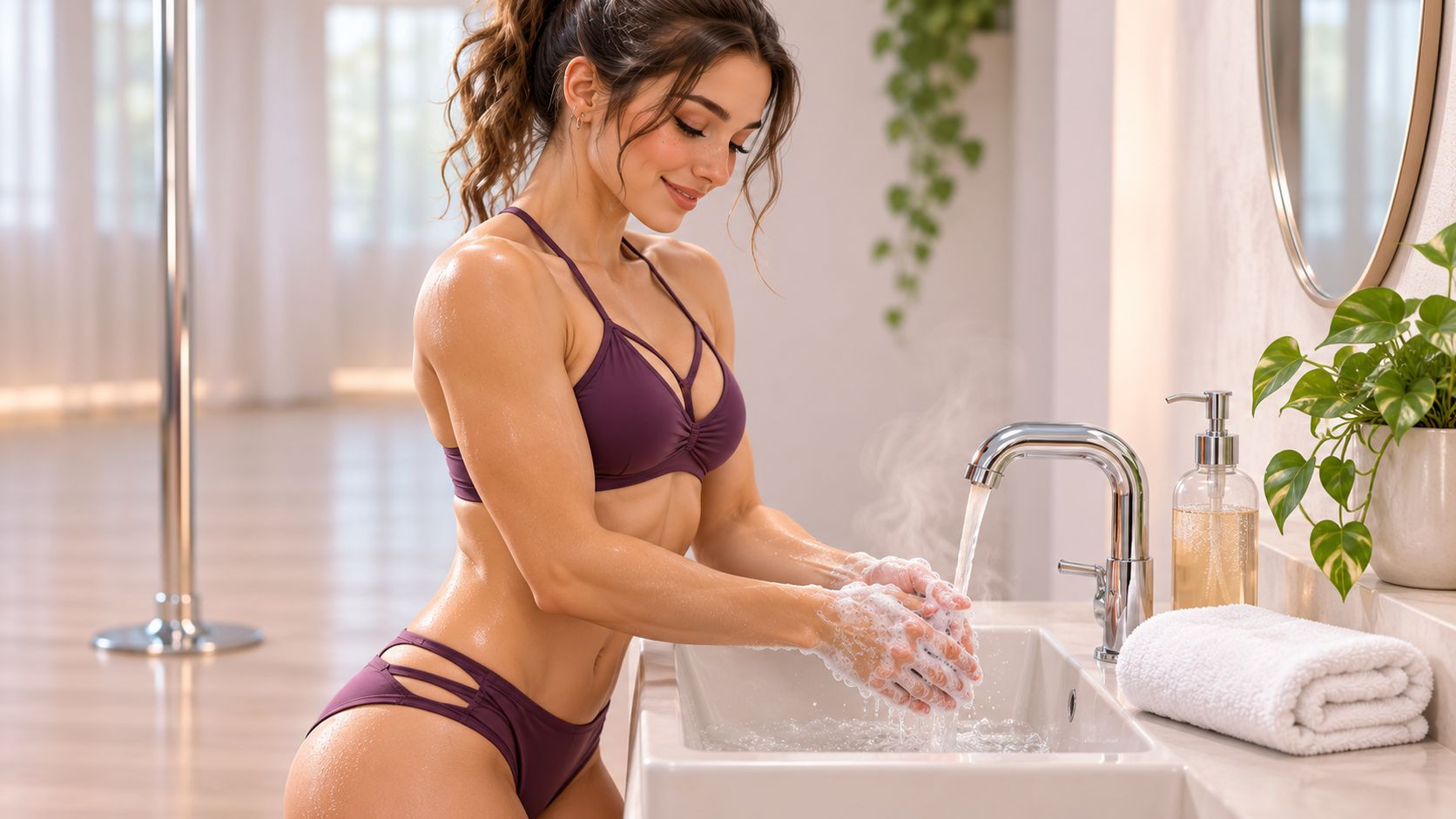
Liquid chalk is designed to leave minimal residue once dry, and what's left on skin comes off with warm water and soap. That's a shorter cleanup than powder, which finds its way into grip bags, clothing seams, and the gap where the pole meets the base plate.
The end-of-session routine
- Wash hands properly. Warm water, soap, and a few seconds of friction, including the creases of the fingers.
- Wipe the pole. A clean, damp microfiber cloth over the contact zones, then dry it.
- Check the base. Chalk collects around the floor plate, so a quick wipe stops buildup.
Use a thin coat during the session and there's less to remove afterwards. Three heavy layers leave a film that flakes onto the studio floor and takes longer to wash off.
Clothing needs nothing special. Wash pole wear normally and check the seams of grip bags, where dried flakes collect.
If skin feels tight after washing, that's dryness, not chalk. Moisturize at night, hours before the next session, and never right before class.
For the full cleanup sequence, this guide to removing liquid chalk covers skin, poles, and fabrics in order.
7. Liquid Chalk for Pole Dancing: Competition and Travel
Competition days compress everything: a short warm-up, a changeover measured in minutes, and a pole that a dozen other athletes have already touched. A grip product that sets fast and leaves no cloud backstage is worth more than one that performs marginally better in a quiet studio.
The sport is organized enough that this matters. The first World Pole Sports Championship in 2012 drew 43 athletes from 14 countries, only 5 of them men, and a youth category that launched in 2013 with 7 athletes grew to 229 athletes from 36 countries by 2017, according to the American Pole League history. Shared backstage areas, shared equipment, and venue rules are standard now.
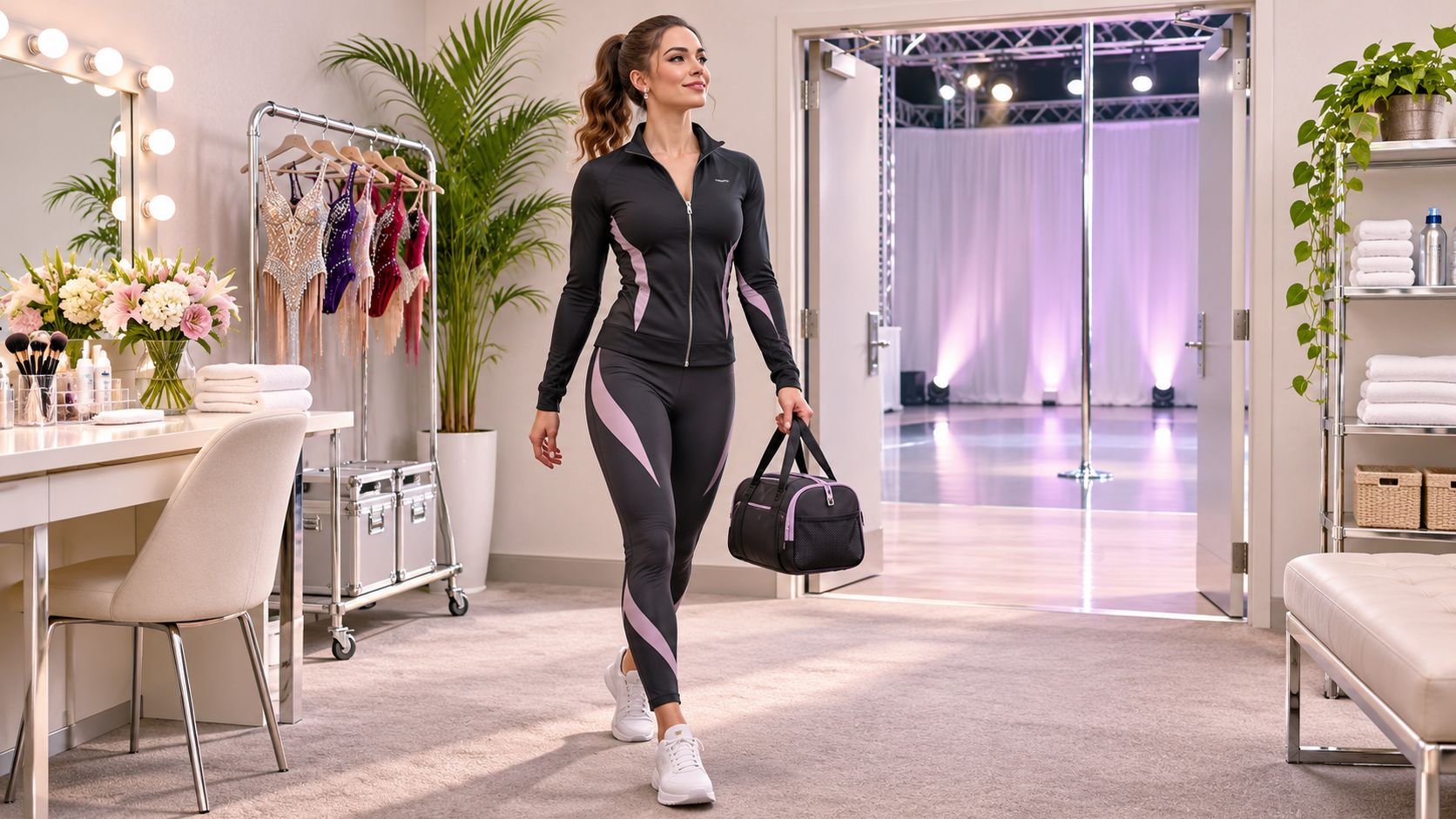
Packing list for a competition weekend
- One 50 ml bottle in the carry-on. Confirm your airline's liquid limits before you fly.
- A spare in the checked bag. Bottles run out at the worst possible moment.
- A microfiber cloth. Wipe the pole before your turn, not after.
Apply between sets rather than once in the morning. Grip that felt perfect at 9 a.m. behaves differently after three warm-up runs and an hour of nerves.
For the wider question of how grip aids fit together, this guide to pole dance grip aids goes deeper.
7 Grip Strategies for Pole Dancing at a Glance
| Item | Best For | Mess Level | Where It Works |
|---|---|---|---|
| Liquid Chalk for Pole Dancing: Dries in Seconds, No Dust | Sweaty hands and dust-sensitive spaces | Low; dust-free | Studios, home setups, shared spaces |
| Liquid Chalk for Pole Dancing vs Powder: Our Verdict | Dancers choosing between liquid and powder chalk | Low with liquid; powder can spread | Studios, gyms, and home practice |
| Liquid Chalk for Pole Dancing: Apply Before Your Set | Quick pre-set grip preparation | Low; thin coat recommended | Before pole sets and routines |
| Liquid Chalk for Pole Dancing: Layer It Under Powder | Dancers wanting extra grip while keeping their powder routine | Moderate; two-step application | Longer routines and competitions |
| Liquid Chalk for Pole Dancing: Studios That Ban Chalk | Dancers seeking approval for grip in restricted venues | Low; no dust cloud | Studios that may allow liquid chalk |
| Liquid Chalk for Pole Dancing: Clean Removal From Skin | Easy post-session cleanup | Low; minimal residue | Skin, poles, and apparel |
| Liquid Chalk for Pole Dancing: Competition and Travel | Compact, mess-free grip on the go | Low; no dust | Competitions, travel, and backstage areas |
Build a Grip Routine That Survives Any Studio
Sequenced, the tips stop being a list and start being a routine. Before class, wash and dry the hands, warm up wrists, forearms, and shoulders, then apply one thin coat of a dust-free liquid chalk and let it set while the warm-up finishes. If powder is already part of your practice and the venue allows it, add it on top of the dry liquid layer. During the session, reapply between sets instead of layering over a tacky coat, and read slipping as information: sweat, a contaminated pole, or fatigue.
The five-step version
- Match the aid to the room. Dust-free liquid where powder is restricted, powder on top where it's allowed and managed.
- Prep the skin. Clean, dry hands and a genuine warm-up beat any product.
- Apply thin, then wait. One set coat outperforms three rushed ones.
- Respect the venue. Ask about the chalk policy before bringing a bottle, and wipe the pole after use.
- Plan the competition day. Portable bottle, a spare, and a cloth in the bag.
Removal belongs in the routine too. Warm water and soap for the hands, a damp microfiber cloth on the pole, and a moisturizer at night, never right before training. Skin that stays intact grips better next week than skin stripped by repeated washing and alcohol wipes.
None of this replaces strength or technique. Loaded internal-rotation positions load the shoulder regardless of how tacky the hand is, and a grip aid can't hold a shape that's already collapsing.
Evermost LLC makes EVMT Liquid Chalk, a magnesium-carbonate formula that dries in seconds, produces no dust, washes off easily with soap and water, and is trusted by more than 250,000 athletes, which suits pole dancers managing sweat in shared or dust-free spaces.
Evermost LLC makes EVMT Liquid Chalk for athletes who need grip that sets in seconds and leaves nothing behind, in portable 50 ml bottles and 250 ml sizes, with no dust cloud and minimal residue on equipment once dry. For pole dancers whose hands give out in a studio that restricts powder, it's the cleanest way to keep contact consistent from the first climb to the last sequence. Visit Evermost LLC to see the sizes and formulas.