


Liquid Gymnastics Chalk: A Practical Guide for Athletes
You've chalked your hands, stepped to the uneven bars, and started the first kip. Then sweat turns the grip uncertain. The routine may be well rehearsed, but one slip changes the rhythm, confidence, and sometimes the entire set. That's where liquid gymnastics chalk can help, provided you treat it as part of a session-long grip strategy, not as a magic coating applied once and forgotten.
Liquid chalk sits between convenience and performance equipment. It can create a clean, even base layer, reduce airborne dust, and help manage moisture. It can also dry sensitive skin, perform differently across surfaces, and lose effectiveness when applied over wet hands. The strongest routine matches the formula, amount, surface, reapplication method, and hand-care plan to the athlete.
What Liquid Gymnastics Chalk Actually Is
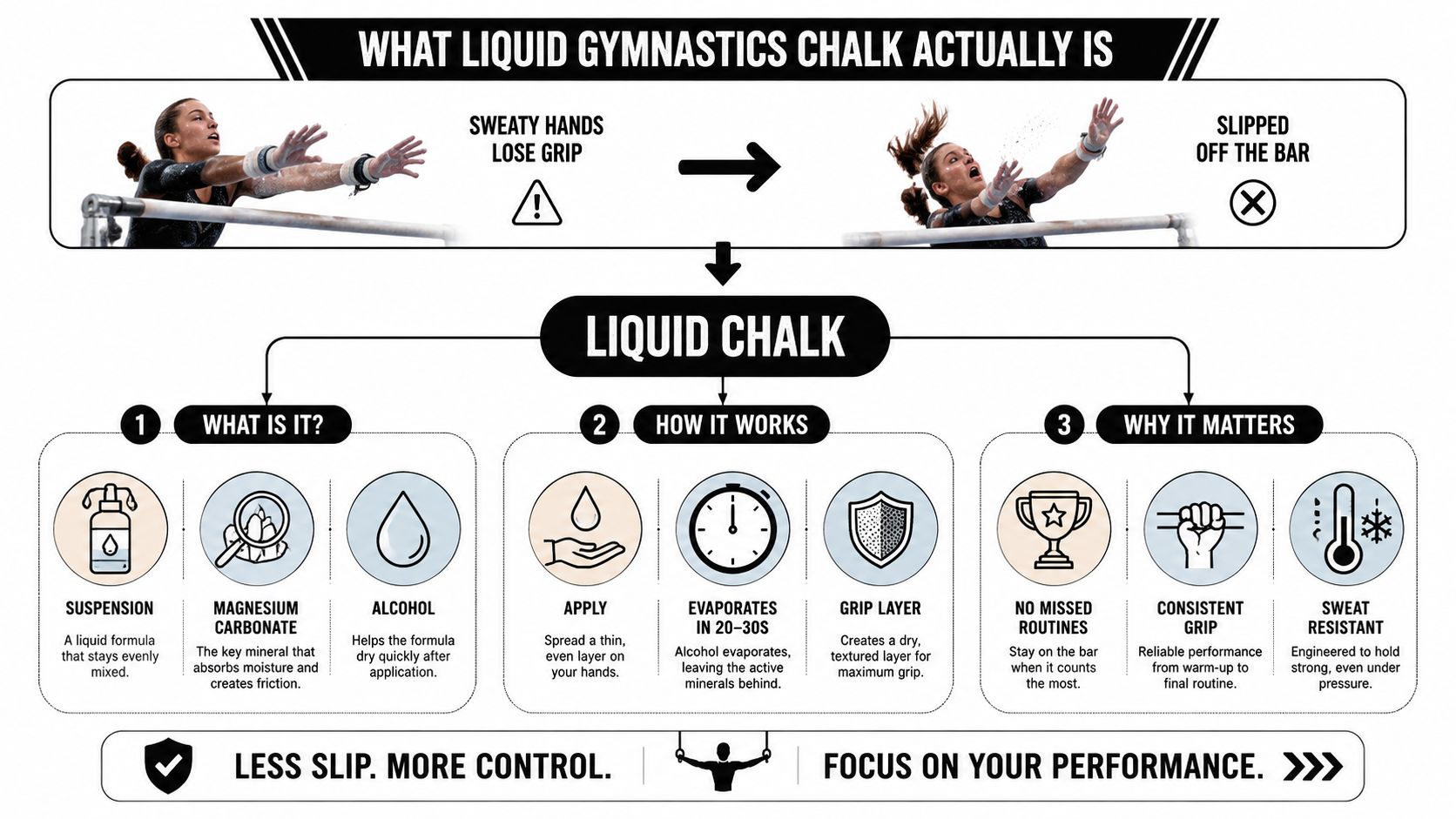
Liquid gymnastics chalk is a suspension of magnesium carbonate in alcohol. Magnesium carbonate has long been used in gymnastics to improve grip on apparatus such as parallel bars and rings. In liquid form, finely milled particles remain distributed through an alcohol carrier until you spread the product across clean, dry palms and fingers.
The application is simple. You rub on a thin film, then wait while the alcohol evaporates within seconds, leaving a light magnesium carbonate layer on the skin. That layer helps manage moisture at the hand-to-apparatus interface. It isn't the same as a spray antiperspirant, and it isn't grip wax. Most formulas don't rely on adhesive polymers to make the hand sticky.
The alcohol matters because it allows the suspension to spread quickly and dry fast. The result should feel dry and controlled, not gummy. A useful explanation of this drying approach appears in EVMT's discussion of a fast-drying chalk formula, although athletes should still check the ingredient label on the bottle they use.
The layer has to be thin
A common mistake is treating more chalk as more grip. Excess product can leave an uneven coating, collect in palm creases, or create residue on a bar. Start with a small amount, spread it over the contact zones, and let it dry completely before gripping.
Formulas also vary in texture. Some feel like a runny lotion, while others behave more like a thicker gel. A runnier product may spread easily over broad palm contact, while a thicker one can place more material on fingertips and high-contact areas. Your apparatus matters too. A formula that feels comfortable on a climbing hold may leave an unwanted feel on a smooth gymnastics bar.
Liquid chalk is best understood as a moisture-management layer, not a universal replacement for every chalk format. Its value depends on sweat, surface texture, application quality, and how long the session lasts.
How Liquid Chalk Made Its Way Into Gymnastics
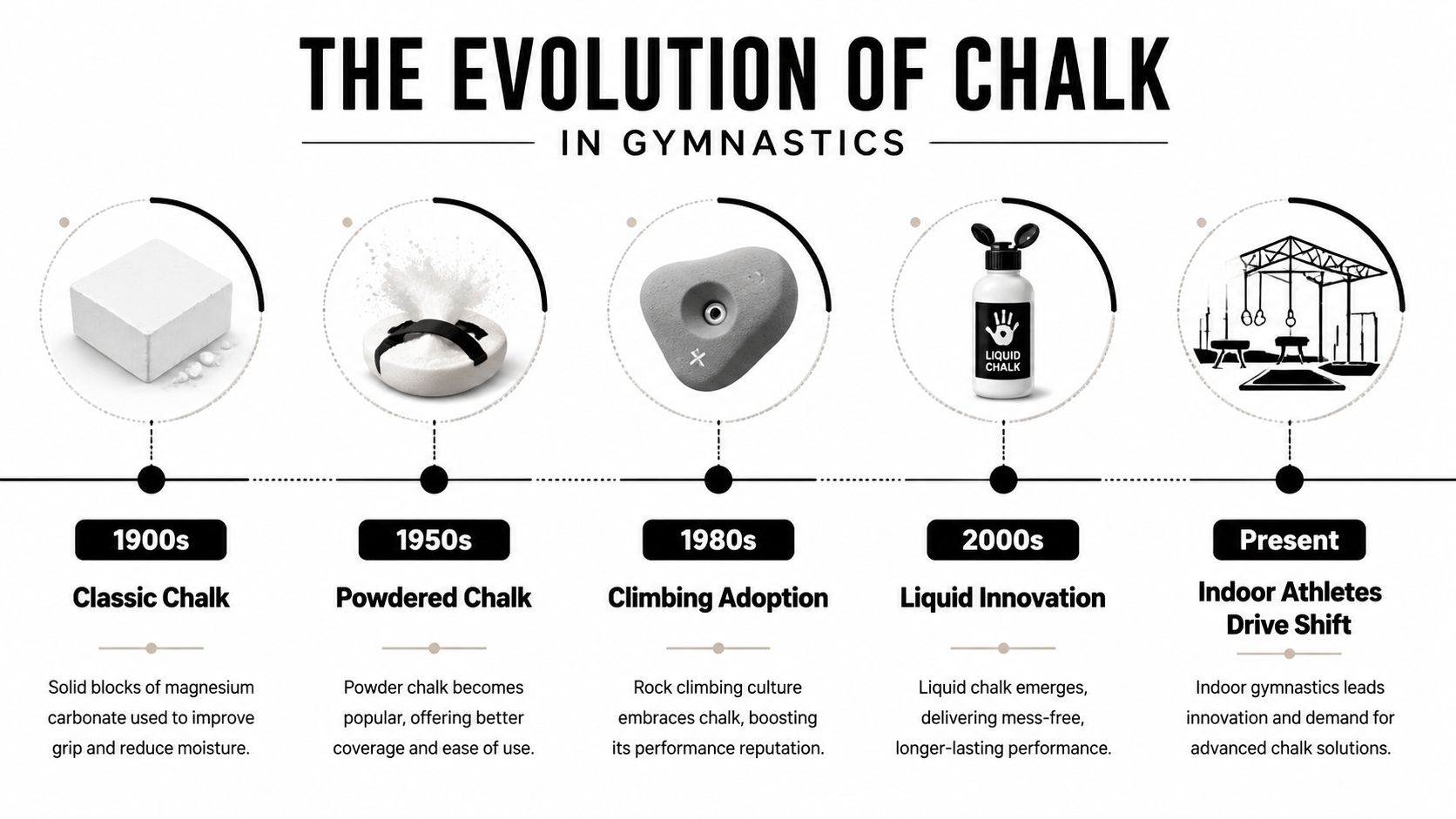
Magnesium carbonate chalk didn't begin with modern squeeze bottles. Gymnasts were already using it to improve contact with apparatus, and climbers later adopted the same basic material for rock grip. A review of climbing chalk history identifies John Gill's late-1950s role in bringing gymnastics-style magnesium carbonate into climbing, helping chalk spread across grip-focused sports.
Loose chalk worked well, but indoor facilities introduced a practical problem. Powder can escape chalk bags, settle on equipment, and circulate through a training space. Gym owners, coaches, and athletes wanted the grip benefit without clouds of airborne residue. Liquid chalk emerged later as a cleaner alternative, particularly for indoor use where dust control matters.
That change didn't erase loose chalk. It changed when and why athletes used each format. A climber might apply liquid chalk before entering a route and carry loose chalk for targeted touch-ups. A gymnast might use a controlled base layer before a high-pressure set, then rely on the apparatus rules and coach preference for any additional chalk.
Why indoor training accelerated the shift
Indoor climbing gyms and gymnastics facilities have to manage shared equipment, ventilation, cleaning, and athlete comfort. Many climbing gyms now permit liquid chalk while restricting loose chalk, especially when dust affects the room or leaves visible buildup. One posted gym policy permits liquid chalk, recommends only a pea-sized amount, and warns that too much can form a paste on holds.
That policy captures the coaching lesson. The format works best when athletes apply enough to create an even film, not enough to coat the apparatus. Word of mouth then does the rest. When a training group sees less mess and fewer interruptions around bars, rings, or holds, liquid chalk becomes an obvious tool to test.
Liquid Chalk vs Block, Loose, and Rosin Options
No chalk format wins every grip situation. The right choice depends on whether your hands are sweaty, how clean the facility must remain, how often you need to reapply, and how your skin reacts.
| Format | Friction on Sweaty Hands | Mess Level | Reapplication Frequency | Best Training Context |
|---|---|---|---|---|
| Liquid suspension | Strong moisture control when applied to dry hands | Low airborne residue | Usually less frequent than loose chalk, but depends on sweat and contact | Clean indoor gyms, pre-routine application, climbing bases |
| Block chalk | Reliable when rubbed directly into contact areas | Low to moderate, depending on handling | Easy to refresh between routines | Gymnastics sessions, quick targeted applications |
| Loose chalk | Flexible coverage and fast touch-ups | Highest airborne and surface residue | Frequent during long or sweaty work | Chalk bags, repeated climbing attempts, high-volume sessions |
| Rosin or grip wax | Sticky feel on selected surfaces | Can leave concentrated residue | Context-dependent | Specialty bar work where resin is permitted |
Liquid chalk usually wins when cleanliness and consistency matter. A gymnast preparing for several apparatus changes may prefer a controlled application that dries before the routine, rather than repeatedly reaching into a loose chalk container. A commercial gym may also prefer a format that doesn't create dust around shared equipment.
Block and loose chalk still have clear advantages. Block chalk gives you direct control over where the material goes, while loose chalk makes rapid reapplication easy. During a long climbing session, a climber can reach into a chalk bag without stopping the entire flow of movement. Research summarized in a gymnastics bars chalk guide also reflects the practical distinction between controlled liquid coverage and traditional apparatus chalking.
Rosin is different enough that you shouldn't treat it as ordinary chalk. Resin-based products can create a tackier feel and may be inappropriate for certain bars, holds, or gym policies. Use them only when the coach, facility, and apparatus manufacturer allow them.
Coaching rule: Use liquid chalk as the clean base when you need even coverage. Keep loose or block chalk available when the session demands fast, precise touch-ups.
Applying and Caring for Liquid Chalk Mid-Session
Application quality determines whether liquid chalk supports the session or becomes another distraction. Start with clean, dry hands. Moisture, lotion, and sweat can prevent the magnesium carbonate layer from forming evenly.
A reliable pre-routine sequence
- Use a pea-sized amount for both palms. Spread it across the palms, fingers, fingertips, and the areas that contact the apparatus. You don't need a thick white coating.
- Let the alcohol evaporate. Give the layer roughly 20 to 30 seconds to dry before gripping. The exact time depends on the formula, room conditions, and how much you used.
- Perform a finger-tap test. Tap the fingers together or lightly touch the palm. The surface should feel dry and evenly coated, without wet patches or clumps.
- Grip only after the film has settled. Wrapping your hands around a bar while the product is still wet can move the chalk instead of anchoring it to the skin.
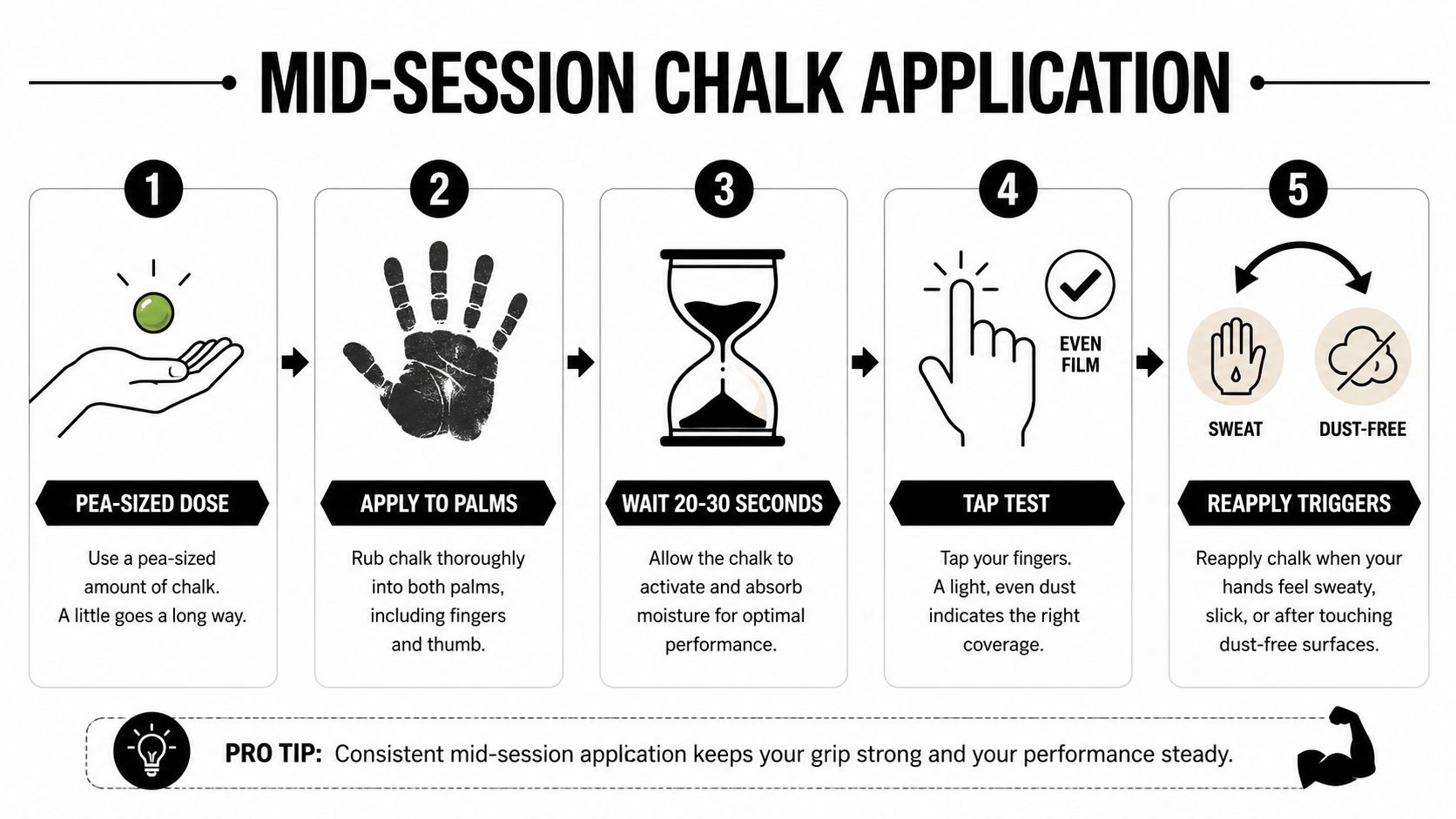
Visible shine, a slip during a kip, or sweat breaking through on bars and rings signals that you should reassess the layer. Don't apply more liquid chalk over wet hands. Dry the hands first, then use a small amount. For extended sessions, many climbers and gymnasts use liquid chalk as a base and add a light layer of loose chalk when humidity or repeated contact overwhelms the first layer.
At the end of training, wash with warm water and mild soap. A soft brush can help remove residue from palm creases, but don't scrub aggressively. Dry the hands thoroughly and apply a moisturizer before the next training block. Coaches managing a busy facility can also pair athlete routines with practical operations resources, including guidance on how to automate billing for Crossfit studios.
A coach's pre-routine checklist
- Hands are clean and dry.
- Small amount applied evenly.
- Drying period completed.
- Finger-tap test passed.
- Bottle closed and stored away from apparatus.
- Loose chalk available only if the facility permits it.
What the Performance Research Actually Shows
The evidence supports a measured conclusion. Chalk can improve grip performance in some situations, but the result changes with the surface, moisture level, contact style, and amount applied.
One controlled climbing study reported longer hang times after chalk use, 62.9 ± 36.7 seconds compared with 49.3 ± 25.2 seconds without chalk, with a reported p value of .046. The same study found no significant change in coefficient of friction, force distribution, or muscle activity. In other words, athletes held longer even though the basic friction measurement didn't change in the same way.
Other grip research found chalk increased friction on limestone by 18.7% and sandstone by 21.6% under dry-fingertip conditions, as summarized in the University of Birmingham climbing research paper. These porous rock surfaces provide a useful contrast with smooth artificial holds and polished bars.
| Surface or Condition | Liquid Chalk Result | Comparison Baseline | Practical Takeaway |
|---|---|---|---|
| Climbing hold hang test | Longer hang time, 62.9 ± 36.7 seconds | 49.3 ± 25.2 seconds without chalk | Moisture control may support endurance even without a large friction shift |
| Dry limestone | Friction increased by 18.7% | Dry fingertips without chalk | Chalk can matter on porous natural rock |
| Dry sandstone | Friction increased by 21.6% | Dry fingertips without chalk | Surface texture and moisture affect the result |
| Steel grip test | No real difference from no agent | No agent applied | Too little liquid chalk may fail to create an effective moisture barrier |
| Repeated open-hand test | 22.8 ± 4.53 reps with chalk | 19.7 ± 4.39 without chalk | Chalk may help repeated open-hand endurance |
| Repeated pinch test | 14.4 ± 4.47 reps with chalk | 9.1 ± 4.83 without chalk | Pinch endurance can respond more strongly in some protocols |
A separate review found dry magnesium carbonate increased pinch-grip duration by 177.7%, while liquid chalk increased it by 108.8%, showing that liquid chalk can improve endurance without necessarily matching loose chalk during every short, high-force effort. A controlled steel test also found liquid chalk performed similarly to no agent, likely because too little product was applied to form a useful moisture barrier, as reported in the White Rose grip-enhancement assessment.
For gymnastics, the practical translation is straightforward. Textured surfaces and sweaty hands may benefit most from a properly applied base layer. Smooth bars, dry hands, and high-force contact may still favor a thin loose-chalk top layer.
Competition Rules and Gym Policies You Should Know
Rules vary by federation, meet organizer, and facility. Don't assume that a bottle permitted in your home gym is automatically permitted at a competition. Check the current event instructions and ask the head coach before bringing a new formula to the floor.
Loose powder is commonly restricted in indoor facilities because it spreads through the air and settles on equipment. Liquid chalk is often easier for gyms to control, especially when athletes use a small amount and wipe down apparatus after training. Some facilities allow liquid chalk only in designated areas or require athletes to keep bottles away from mats and bars.
Confirm the policy before travel
Travel adds another layer. Alcohol-based liquids may be subject to airline carry-on limits, so athletes should check the carrier's current requirements before packing. A venue may also require products to remain in their original labeled containers rather than transferred into an unmarked bottle.
Use this short script with a coach or competition official:
“Is this specific liquid chalk permitted for the event and apparatus? Are there size, alcohol, container, or label requirements, and do I need to apply it only in the marked chalk area?”
That question is more useful than asking whether “chalk” is allowed. It identifies the exact product, the location, and the rules that may apply to application and cleanup.
Gym owners can make expectations clear with signs that specify approved formats, application amounts, and wipe-down procedures. Athletes should follow those rules even when a different routine works elsewhere. A clean grip strategy includes respecting the surface and the next athlete who uses it.
Skin Safety and Smart Use for Sensitive Hands
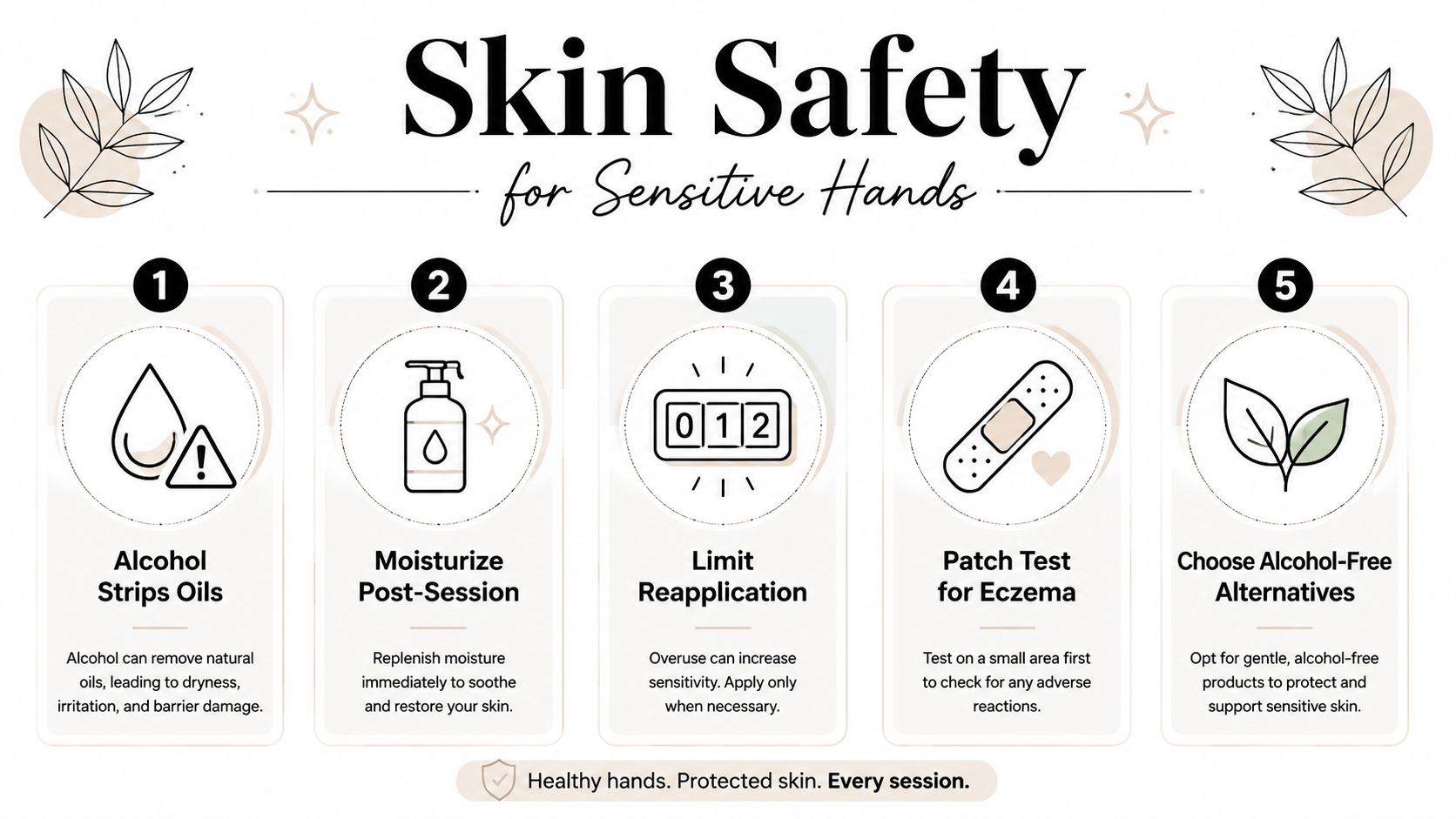
Alcohol helps liquid chalk spread and evaporate, but it can also draw moisture from the skin. Repeated applications may leave hands tight, dry, or irritated, particularly for athletes already managing eczema, dermatitis, tears, or sensitivity.
Treat skin tolerance as a performance variable. Test a small area during practice before using a new formula in a demanding session. Never apply liquid chalk to broken skin, and don't assume that a stronger-feeling product will provide better grip.
Keep the routine controlled
Use a thin layer on clean, dry palms. Avoid filling the creases with excess product, and don't wrap freshly chalked hands while they're drying. Trapping moisture and alcohol against the skin can make the application feel harsher and may interfere with an even finish.
After training, wash with lukewarm water and a fragrance-free cleanser. Dry carefully, then apply a thick moisturizer or barrier balm. Many athletes find that moisturizing at night gives the skin more time to recover before the next session. Guidance on how to calm and correct irritated skin can also help athletes build a gentler post-training routine.
- Patch-test first: Try a small amount during practice, not immediately before competition.
- Read the ingredients: Choose products that identify their ingredients clearly rather than relying on vague “natural grip” language.
- Consider alternatives: Alcohol-free formulas may suit some sensitive athletes when the gym and coach permit them.
- Limit reapplication: Add product only when the existing layer no longer controls moisture.
- Watch the skin: Stinging, redness, cracking, or persistent dryness means you should stop and reassess.
A hand rip needs different care from ordinary dryness. Covering damaged skin with more chalk may make a session possible, but it doesn't solve the underlying problem. Athletes who frequently deal with tears can review practical prevention and recovery guidance in this resource on gymnastics hand rips.
Skin-care standard: Grip tools should protect training quality without compromising the hands that create the grip.
Never share bottles between athletes. Shared applicators can transfer sweat, skin debris, and product contamination. Coaches should set clear hygiene rules, and athletes with ongoing irritation should seek medical advice rather than repeatedly testing products that make symptoms worse.
Choosing the Right Bottle Size and Formula
Bottle choice affects more than convenience. A small bottle is easier to control, simpler to carry, and less painful to replace if the formula doesn't suit your hands. A larger bottle can make sense for a team or frequent user, but it adds weight and demands better leak prevention in a gym bag.
For most individual athletes, starting with a 50 to 100 ml bottle offers practical portability for training and competition bags. Larger 150 to 250 ml bottles suit teams and high-frequency users who go through product quickly. A squeeze bottle with a flip cap or controlled nozzle usually makes dosing easier than a wide-mouth container.
Screw caps and resealable travel bags add protection against leaks. Store the bottle upright, close it after every use, and keep it away from heat and open flames because the alcohol carrier is flammable.
Match the formula to the sport
Gymnasts generally need a light magnesium carbonate suspension that dries quickly and doesn't leave a tacky residue. Climbing formulas may use different concentrations or additional grip ingredients, while weightlifting products can feel thicker and more focused on bar contact. Don't substitute rosin, resin, or a climbing-only formula on gymnastics bars without coach approval.
Check these points before buying:
- Formula: Magnesium carbonate should be clearly identified, with the ingredient list available.
- Drying behavior: The product should dry evenly without leaving a wet or sticky film.
- Skin compatibility: Consider alcohol content and your history of dryness or irritation.
- Dose control: A narrow nozzle or squeeze bottle helps prevent overapplication.
- Facility approval: Confirm that the gym allows the formula and format.
- Session demands: Climbers may need a liquid base plus loose chalk, while gymnasts may prioritize clean, controlled coverage.
Test the product in ordinary practice. Apply a small amount, let it dry fully, and assess grip, skin feel, residue, and how often you need to reapply. The right product is the one that matches your sport and skin, not the largest bottle or the thickest formula.
| Primary Use | Typical Size | What to Check |
|---|---|---|
| Competition or travel bag | 50 to 100 ml | Leak-resistant cap, compact shape, approved label |
| Individual high-frequency training | 100 to 150 ml | Controlled nozzle, drying speed, skin tolerance |
| Team or shared training supply | 150 to 250 ml | Secure storage, individual hygiene rules, consistent formula |
| Gymnastics | Small or medium bottle | Light suspension, low residue, apparatus approval |
| Weightlifting | Small or medium bottle | Bar contact, sweat control, non-tacky finish |
| Climbing | Portable bottle plus optional loose chalk | Base-layer performance, reapplication needs, hold policy |
EVMT Liquid Chalk is one option athletes may evaluate for this use. Evermost LLC describes formulas for gymnastics, weightlifting, and rock climbing, along with portable 50 ml and high-volume 250 ml sizes, so athletes can compare bottle format and sport-specific application against their own gym rules and skin needs.
Visit Evermost LLC to compare liquid chalk formats designed for gymnastics, climbing, weightlifting, and other grip-intensive training. Choose the bottle and formula that fit your apparatus, session length, facility policy, and hand-care routine, then test it in practice before relying on it for a high-pressure set.