


Liquid Chalk for CrossFit: A Practical Guide to Better Grip
You're halfway through a fast workout, your palms are wet, and the pull-up bar suddenly feels smaller. The first few reps looked easy, but now every kip ends with a tighter grip, a slower transition, or an extra pause before you get back to work. That's where liquid chalk for CrossFit can help, but not because it magically makes you stronger.
Liquid chalk is mainly a sweat-management and cleanliness tool. It can help your hands stay more consistent through repeated pulling, hanging, and barbell work, while producing far less airborne mess than loose powder. It can also disappoint when the surface, sweat level, skin condition, or movement demand calls for something else. The useful question isn't whether liquid chalk is universally better. It's whether it matches the session in front of you.
Why Grip Matters More in CrossFit Than You Think
You're deep into a 20-minute AMRAP, somewhere around round eight. The barbell starts slipping out of your hook grip, your forearms are full, and the next set of toes-to-bar breaks after a few reps. You drop to the mat, not because your legs are finished, but because your hands can't keep the same contact with the bar.
That's a distinctively CrossFit problem. A powerlifter may chalk, brace, and perform one heavy deadlift attempt. A bodybuilder may use controlled sets with a planned rest period. CrossFit asks your hands to hang, swing, cycle, and stabilize repeatedly, often while your breathing stays hard and your skin keeps getting wetter.
The grip failure is often cumulative
Pull-ups, chest-to-bar work, muscle-ups, toes-to-bar, deadlifts, kettlebell swings, rope climbs, gymnastics holds, and GHD work all place different demands on the hands. The grip may fail because of finger fatigue, torn skin, forearm fatigue, or simple moisture. In a high-rep workout, those factors stack together.
Fran makes the point clearly. Thrusters load the arms and shoulders, while pull-ups demand repeated contact with the bar under fatigue. In Cindy, the athlete cycles through pull-ups, push-ups, and air squats, so grip can become the limiting factor across many rounds rather than during one dramatic effort.
Practical rule: If you're dropping from the bar because your hands are sliding before your muscles are fully spent, manage moisture before chasing more grip strength.
A basic hand-grip assessment can help separate general hand strength from a specific WOD problem. The Cartwright Fitness normal scores provide useful context for understanding whether your grip capacity is broadly limited or whether sweaty hands and repeated bar contact are the bigger issue.
The practical takeaway is simple. In mixed-modality training, managing hand moisture can be a more useful lever than adding more finger strength work, especially when a finish is being delayed by repeated re-gripping and short unplanned rests.
What Liquid Chalk Actually Is and How It Works
Start with loose chalk. Traditional gym chalk is usually magnesium carbonate in a powder or block that you rub into the hands. It absorbs surface moisture and leaves a dry layer between your skin and the bar.
Liquid chalk uses the same basic grip ingredient in a different delivery system. It's typically a suspension of magnesium carbonate in a volatile carrier, commonly alcohol or a water-alcohol blend. Some formulas also include skin conditioners such as lanolin or glycerin, although the ingredient list varies by product.
The application process
The chalk particles are dispersed through the liquid rather than sitting in a loose block or bucket. When you spread the product across clean, dry skin, the carrier begins to evaporate. What remains is a thin layer of magnesium carbonate across the ridges of your palms and fingers.
The carrier often dries quickly, but the exact set time depends on the formula, the amount applied, and the moisture already on your hands. The key is to wait until the surface feels dry and lightly chalked, not wet or slick.
Think of it as a sweat-resistant base coat for a workout. It isn't adhesive, and it doesn't create new strength in your fingers. It helps reduce surface moisture so the skin and equipment maintain more consistent contact.
Why dry skin matters
Applying liquid chalk to damp hands can create an uneven coating. The product has to compete with the moisture already present, so it may take longer to dry or feel patchy. Multiple thin coats usually provide more uniform coverage than one heavy layer, a point also emphasized in independent discussions of liquid chalk for sweaty hands.
Alcohol-heavy formulas generally dry faster, but they may sting when they reach cracked calluses or small cuts. Water-based blends can feel gentler for some athletes, although they may need more time before bar work. Neither option is automatically right for everyone. Your skin tolerance and sweat pattern matter as much as the label.
Where Liquid Chalk Helps in a Real WOD
Liquid chalk makes the most sense when your workout involves repeated grip contacts, short transitions, and enough sweat to make the bar feel progressively less secure. It can create a consistent starting layer before the clock begins, which is useful when you don't want to stop at a chalk bucket after every round.
Long kipping or butterfly pull-up sets are a common example. The repeated swing increases friction and heat in the hands, while sweat changes the contact between skin and bar. Toes-to-bar and chest-to-bar work create a similar issue. The product may help reduce small re-grip pauses, although it won't remove fatigue from the forearms or protect skin from poor hand care.
Barbell cycling in Fran or Helen can also benefit from a clean base layer. Kettlebell swings, rope climbs, and double-unders create different contact patterns, but the same moisture problem can appear when a wet hand shifts on a handle or cable.
Match the aid to the movement
Liquid chalk is less convincing for a max-effort deadlift or snatch. A thicker layer of loose chalk may provide more immediate dryness for a short, high-force attempt, and independent testing has found that liquid chalk can underperform loose powder on some surfaces, including steel. A White Rose assessment reported no meaningful grip difference on steel between liquid chalk and no grip agent, while other climbing research reported better friction from powder across tested surfaces and noted that dried liquid chalk can crack.
That evidence doesn't make liquid chalk useless. It defines the use case. It's generally better viewed as a repetition-management tool than as a guaranteed one-rep-max enhancer.
| Movement | Liquid Chalk Effectiveness | Why |
|---|---|---|
| Kipping pull-ups | Often useful | Limits surface moisture during repeated bar contact |
| Toes-to-bar | Often useful | Helps maintain a more consistent hand position through volume |
| Barbell cycling | Useful when sweat is the issue | Reduces the need for frequent re-gripping between repetitions |
| Heavy deadlift | Mixed | Loose chalk may provide more peak dryness on steel |
| Prolonged bar hang | Mixed | Skin condition and endurance may matter more than the initial coating |
| Outdoor high-sweat workouts | Limited | Humidity and heavy perspiration can overwhelm the thin layer |
A benchmark such as Cindy or Mary shows why context matters. Across later rounds, a fresh base can make re-gripping feel less disruptive, but the same product may feel underwhelming during the first repetition of a maximal lift. For more detail on hand position and bar contact, review this guide to CrossFit pull-up grip.
How to Apply Liquid Chalk Before and During Training
Application works best when you treat liquid chalk as preparation, not as a panic response after your hands are already soaked.
Wash and dry your hands first, especially if you've used lotion or your palms are visibly damp. About 5 to 10 minutes before the WOD, squeeze a small amount into one palm. A pea-sized to nickel-sized pool is enough to start. Rub your hands together like you're applying hand sanitizer, then spread the product across the fingers, thumb webbing, and lower palm where the pull-up bar or barbell sits.
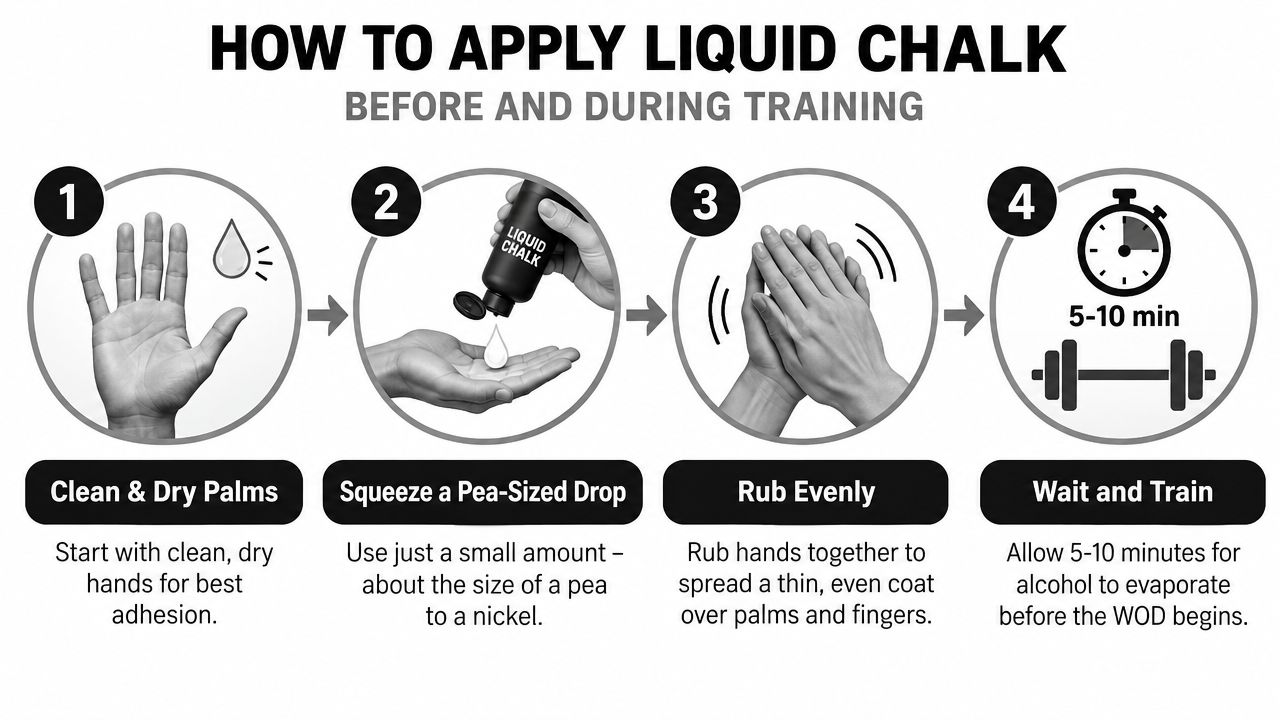
Build a thin, even layer
Wait until the product feels dry and lightly tacky. Wetness means the carrier hasn't evaporated, while a thick, clumped layer can create an uneven surface. Don't coat the backs of your hands or wrists. Those areas add little useful contact and can transfer residue to the bar, grips, or clothing.
If your hands sweat heavily, apply a second light coat after the first WOD block. Reapply during a planned rest or between high-grip sets rather than fumbling with a bottle during a fast couplet.
Liquid chalk can sit over calluses without the bulky buildup associated with loose powder, but it won't repair damaged skin. If a callus is torn or a cut is open, alcohol-based formulas may sting sharply. Gloves can also work against the product by trapping moisture between the fabric and skin, so combining gloves with liquid chalk often reduces the benefit.
A bottle around 50 ml is commonly convenient for a gym bag, and the amount you use depends on hand size, formula, and frequency. Don't measure your progress by how much chalk you apply. Measure it by whether you can complete the intended sets without unnecessary re-gripping.
The application process is also demonstrated in this liquid chalk training video, which can help new athletes see how little product is needed.
Liquid Chalk vs Loose Chalk and Other Grip Aids
The right grip aid depends on what you're trying to solve. If the problem is airborne dust in a shared box, liquid chalk has a clear operational advantage. If the problem is one heavy deadlift on a dry bar, loose chalk may be the more direct choice.
Liquid chalk spreads quickly, dries on the hands, and usually leaves less loose material on barbells and pull-up bars. Loose chalk offers a familiar, easily adjustable layer and can provide stronger immediate drying on some surfaces. Chalk blocks sit between the two. They're tidy to carry, but you still need to break down or rub the block into your hands before training.
Straps and hooks change the movement rather than managing moisture. They may be useful in accessory or strength work where the rules allow them, but they aren't a substitute for a competition-legal grip strategy in most scored WODs. This overview of straps or hooks for training helps clarify where those tools fit outside standard workout constraints.
| Option | Mess Level | Reapply Time | WOD Legality | Best Use Case |
|---|---|---|---|---|
| Liquid chalk | Low when dry | Quick | Depends on gym rules | Mixed-modality, high-rep training |
| Loose chalk | High | Quick, but disruptive in shared spaces | Depends on gym rules | Heavy lifts and athletes who need more drying |
| Chalk block | Moderate | Moderate | Depends on gym rules | Simple personal chalk supply |
| Lifting straps | Low dust, different setup | Moderate | Often restricted in scored WODs | Accessory pulling and selected strength work |
| Grip spray or tacky gel | Variable | May require repeated use | Gym-dependent | Specialized grip situations |
Some boxes permit liquid chalk while restricting loose powder. Others ban all chalk products because residue affects equipment or cleaning routines. Read the policy before bringing a bottle, and use the CrossFit and gloves guidance when deciding whether hand protection is helping your workout.
The honest default is that liquid chalk is versatile, not universal. Keep loose chalk available for sessions where maximum dryness matters, and don't use straps to hide a grip limitation in a workout that's meant to test it.
Gym Air Quality and Shared Space Etiquette
A CrossFit box can run back-to-back classes while sharing ventilation with neighboring spaces. In that environment, loose chalk doesn't stay confined to one athlete's hands. Crushing a block, clapping chalked palms, or dropping onto a bar can send particles into the room, where they settle on rigs, rowers, flooring, and turf.
Research from indoor training environments shows why operators pay attention. One 2014 PubMed-indexed analysis reported airborne particulate concentrations above 150 µg/m³ in a gymnasium where climbing chalk and repeated resuspension contributed to the load (PubMed analysis). Independent gym-air research has also reported average PM10 concentrations around 200 to 500 µg/m³, with peak periods reaching 1 to 4 mg/m³ in chalk-heavy indoor spaces (indoor aerosol review).
Liquid chalk addresses the source more directly by binding most of the powder to the skin before it can drift through the room. A 2012 study found that liquid chalk made with magnesia alba suspended in ethanol reduced dust exposure to similarly low mass concentrations as banning magnesia alba entirely (PubMed study). That makes it useful for facilities that want athletes to manage sweat without imposing a complete chalk ban.
Follow the box's policy
A Wisconsin thesis on visible airborne magnesium carbonate in a gymnastics facility found measured dust levels were minimal relative to OSHA standards, while still recommending reductions to limit potential respirable and dermal irritation (Wisconsin thesis). The point for gym owners isn't that every chalk exposure creates the same risk. It's that cleaner practices can improve comfort even when measurements don't exceed regulatory thresholds.
Use only the chalk your gym approves. Apply away from fans and the coach's station, keep the bottle near your rack, and don't walk across the floor with heavily coated hands. If a box has a liquid-only policy, treat it as an air-quality and maintenance decision, not a judgment about your strength.
For more context on the material and facility concerns, see this explanation of whether chalk is non-toxic.
Tradeoffs and Misconceptions Worth Knowing
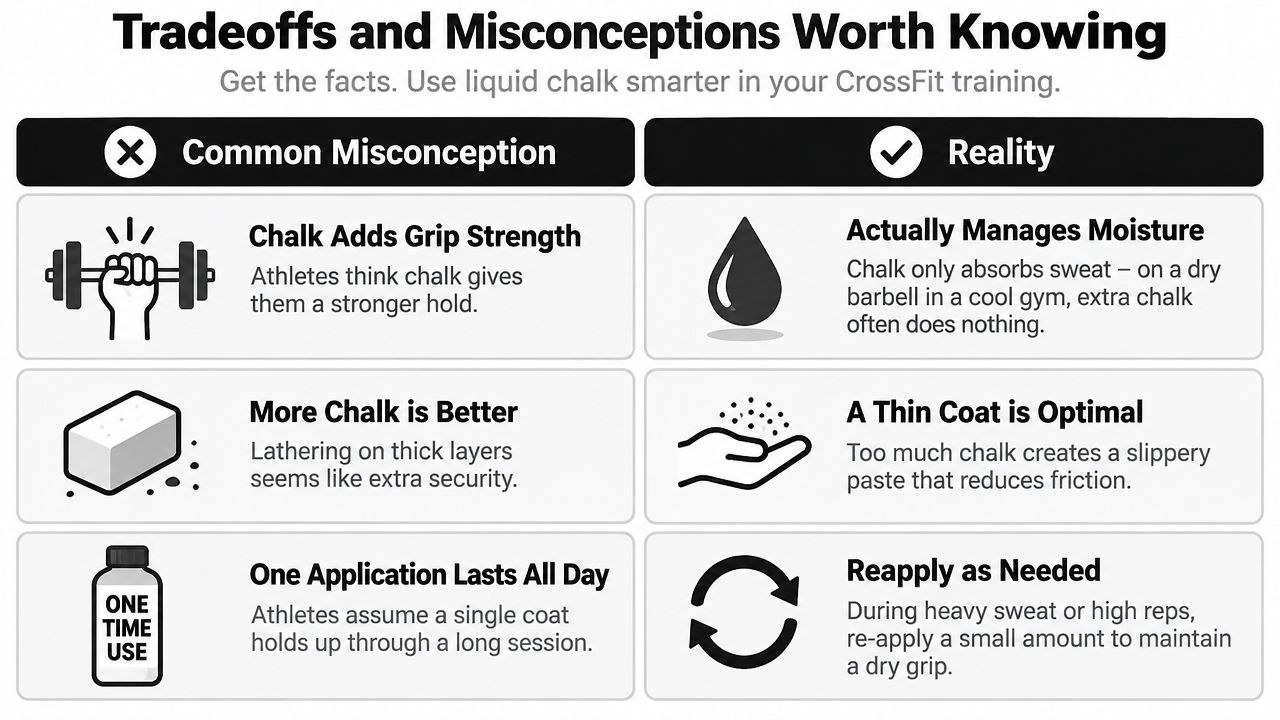
The chalk aisle encourages a simple story: apply more, grip harder, and keep moving. CrossFit is more complicated than that. Liquid chalk can improve contact consistency when sweat is the problem, but it can't replace sound hand care, a strong hook grip, or the ability to pace a high-rep pull.
Chalk doesn't create grip strength
Magnesium carbonate manages moisture. It doesn't strengthen your fingers or make a dry barbell mechanically easier to hold. If your hands are already dry in a cool gym, adding more product may do very little. Independent performance research has found mixed results, including no meaningful liquid-chalk improvement on steel in one assessment (White Rose research).
Skin tolerance is part of performance
Alcohol-based formulas can sting on cracked calluses, small cuts, or torn skin. Frequent exposure may also leave some athletes with drier hands over a long training cycle. If your skin feels tight, irritated, or unusually sensitive, reduce application, change the formula, or stop using it until the skin settles.
More chalk isn't automatically better. A thick layer can flake, clump, or combine with sweat into a paste. Thin coverage usually gives you better control, and a second light application is preferable to one heavy coating.
Gym policy matters too. Some facilities permit liquid chalk, while others restrict it because residue remains on barbells, pull-up bars, or textured grips. Check the posted rules before assuming a product is welcome.
Finally, liquid chalk loses its advantage when sweat pools faster than the magnesium layer can manage it. Very sweaty athletes may still prefer loose chalk for the final round of a long workout, particularly when the surface is steel and peak friction matters more than low mess. Those aren't disqualifiers. They're the reasons to choose the tool for the session instead of treating chalk as magic.
Choosing the Right Bottle and Building Your Routine
Choose the bottle around your training pattern, not around the largest container on the shelf. A compact 50 ml bottle makes sense for a gym bag or competition day. A 100 to 150 ml size suits regular training, while larger refill formats can work for coaches, home gyms, or boxes supplying several athletes. Confirm the actual product size and usage guidance before buying, because formulas don't all last the same amount of time.
Formula selection should follow your hands and your environment:
- Fast-drying formulas: Magnesium carbonate with an alcohol carrier suits athletes who need quick preparation before bar work.
- Sweat-focused formulas: A more concentrated blend may suit athletes whose hands become wet quickly, provided the skin tolerates it.
- Gentler formulas: Added conditioners may be worth considering if you train frequently or notice persistent dryness.
- Mixed equipment sessions: Choose a formula that dries evenly and leaves minimal residue, especially when you share rigs and barbells.
Make the routine repeatable
Apply one thin coat before your warm-up, allowing enough time for the carrier to evaporate. If your hands begin slipping midway through a long WOD, reapply a small amount during a natural rest rather than waiting until the grip has fully failed.
Keep the bottle clean and closed. Wipe the tip if product accumulates, tighten the cap, store it away from heat, and place it in a sealed bag if it travels in your gym kit. Respect posted chalk restrictions even if a product is marketed as gym-friendly.
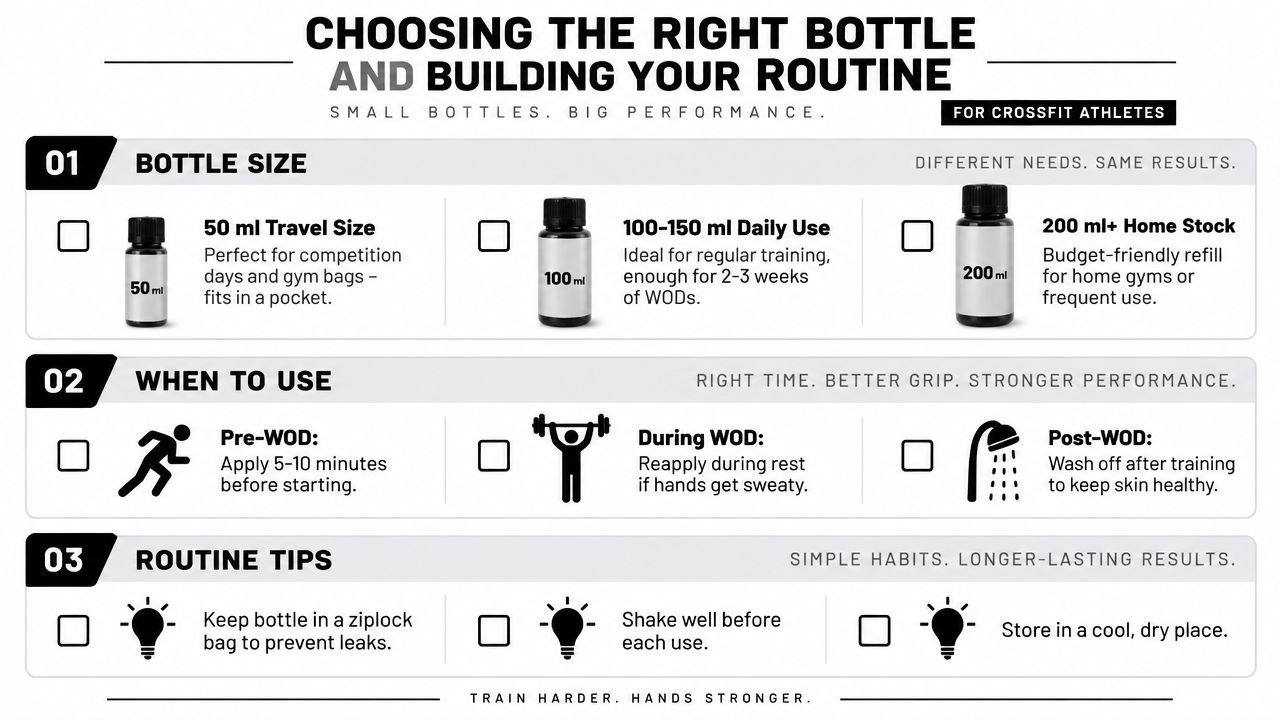
A simple weekly rhythm keeps the decision easy:
- Use liquid chalk for pull-up, toes-to-bar, kettlebell, and barbell-cycling workouts.
- Test it during training before relying on it in competition.
- Keep loose chalk available for heavy strength sessions if your gym permits it.
- Reapply lightly when sweat changes your contact, not automatically after every movement.
- Wash your hands after training and maintain calluses so grip aids don't become a substitute for skin care.
Evermost LLC offers Evermost LLC liquid chalk in portable and higher-volume bottles for athletes who want a fast-drying, low-dust option for grip-intensive training. Visit the site to compare the available formats and choose a routine that fits your CrossFit sessions, gym policy, and skin tolerance.