


Front Squat vs Back Squat: Biomechanics and Grip
A lifter can have strong legs and still miss a squat because the bar rolls, the upper back softens, or sweaty hands weaken the connection to the bar. That failure often gets blamed on mobility or leg strength, but the actual problem may be the way bar position changes torso control, wrist demands, and grip security.
The front squat vs back squat decision isn't just about which variation builds more muscle. It also depends on whether the lifter can keep the bar stable, maintain upper-body tension, and train in a venue where loose chalk is restricted. Liquid chalk can solve part of that problem by improving hand traction without creating a powder cloud around the rack.
Table of Contents
- The Real Limiting Factor in Squat Mechanics
- Trunk Lean and Kinematic Differences
- Joint Loading and Compressive Forces
- Grip Security and Wrist Mobility Demands
- Programming for Strength and Hypertrophy
- Technique Cues and Troubleshooting Form
The Real Limiting Factor in Squat Mechanics
A heavy back squat can fail before the legs reach their limit. The bar starts securely across the upper back, but the lifter loses upper-back tension on the way up. The chest drops, the hips rise first, and the movement turns into a strained good morning pattern. In a front squat, the failure looks different. The elbows fall, the bar rolls forward, and the lifter has to abandon the repetition even though the legs may still have force available.
Both failures begin with the same principle. The bar must stay connected to the body's intended position. Bar placement changes the balance demands from the feet through the knees, hips, spine, shoulders, wrists, and hands. A front-loaded bar asks the lifter to resist forward movement with an upright torso and strong upper back. A back-loaded bar gives the lifter more room to lean forward while keeping the combined center of mass over the feet.
Bar position changes the whole lift
The front squat places the bar across the front of the shoulders. The hands help support and guide the bar, but the shoulders and upper back create the shelf. If the wrists lack mobility, the clean grip can feel restrictive, and a lifter may compensate by dropping the elbows. That small change can make the bar roll toward the fingertips and pull the torso forward.
The back squat usually feels less demanding at the wrists because the hands aren't supporting a front-rack position. However, the shoulders and upper back still need enough mobility to place the bar securely. A poor shelf, loose scapular position, or damp palm can make the bar shift during the descent.
Practical rule: If the bar moves before the hips and knees move, the setup is limiting the squat.
This is why a safety bar can sometimes be a useful alternative for lifters who can't create a comfortable back-rack position. A detailed comparison of that variation appears in this guide to safety bar squats. It changes the hand and shoulder demands, although it doesn't answer the specific front squat vs back squat question.
Grip is part of the kinetic chain
Grip security isn't only a concern for deadlifts or pull-ups. In a squat, the hands may not carry the entire load, but they help prevent unwanted bar movement. Sweaty palms reduce friction between the skin and knurling. That can cause a lifter to squeeze harder, flare the elbows, or change wrist position, all of which can disturb the intended mechanics.
A clean bar connection lets the lifter focus on bracing and leg drive. If a gym bans loose powder, EVMT Liquid Chalk offers a magnesium-carbonate liquid layer that dries in seconds, creates no dust, and leaves no residue on bars or poles once dry. The same product is positioned for weightlifting, gymnastics, rock climbing, and sports, with multiple variants available.
Trunk Lean and Kinematic Differences
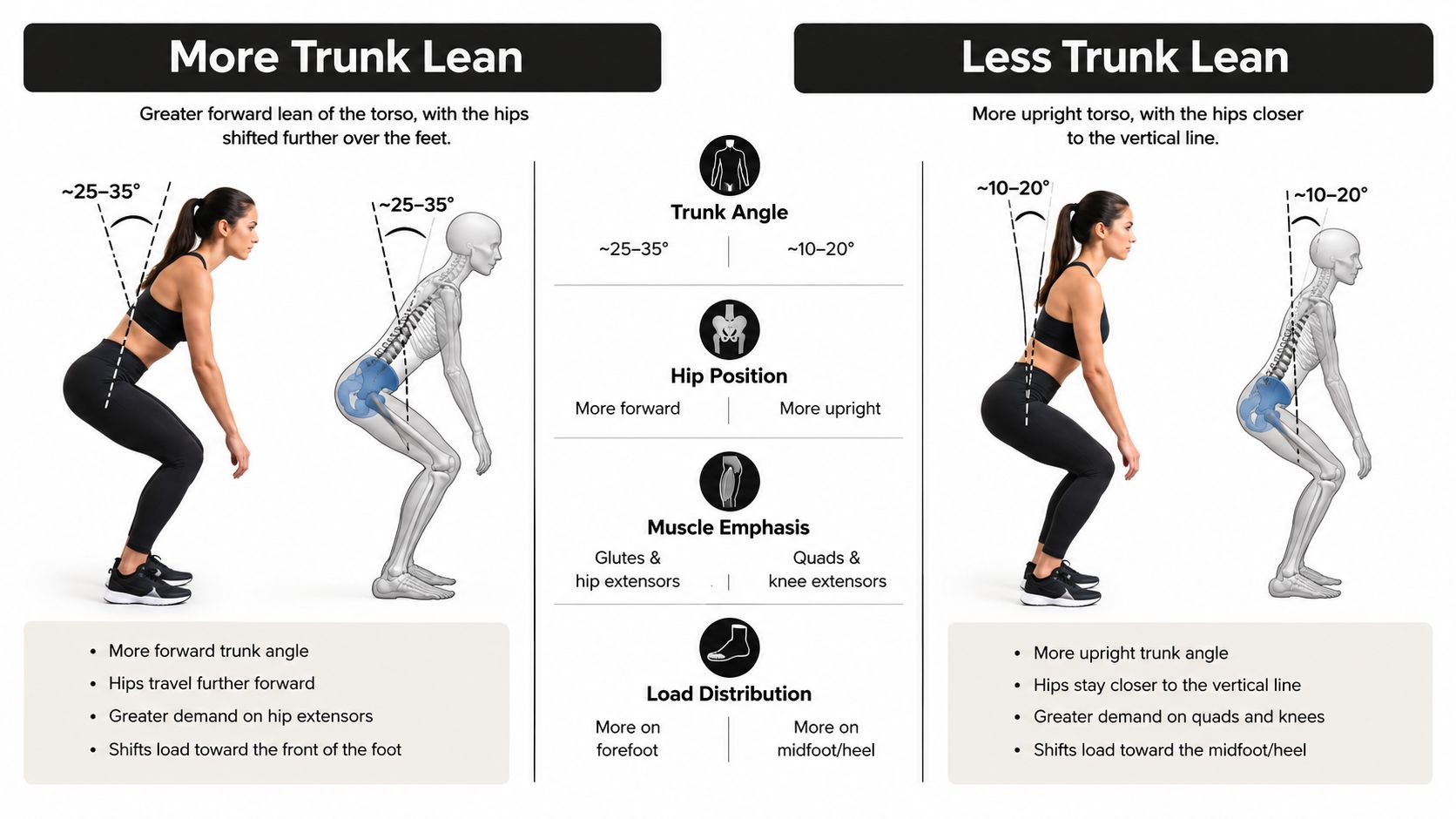
The most visible difference in the front squat vs back squat comparison is torso angle. A front squat generally requires a more upright torso because the bar sits in front of the body. The knees and ankles must contribute enough movement to keep the bar over the middle of the foot, while the upper back works hard to stop the chest from dropping.
A back squat naturally permits more forward trunk lean. The bar sits behind the neck, so the hips can travel farther back while the torso inclines forward to keep the bar balanced over the feet. That doesn't automatically mean poor technique. The angle is a mechanical consequence of bar placement, limb proportions, and the chosen bar position.
A kinematic study involving 12 participants who performed three repetitions of each squat at 50% of back-squat 1RM found significantly greater trunk lean throughout the back squat, with no difference in knee joint kinematics between the variations (study details). The finding matters because lifters often feel a dramatic difference between the movements even when the observed knee motion isn't different.
Why anthropometry changes the experience
Femur length, torso length, ankle mobility, and hip structure all influence how much forward lean feels efficient. A lifter with long femurs may need more hip travel in a back squat to keep the bar balanced. For that lifter, forcing a perfectly vertical torso can push the knees forward excessively or make the heels lose contact with the floor.
The front squat exposes ankle and upper-back limitations quickly. If the ankles can't allow sufficient forward knee travel, the lifter may compensate by raising the heels, folding the torso, or allowing the bar to drift. A more upright posture isn't achieved just by telling the chest to stay up. The entire body must create enough room for that posture.
A back squat shouldn't be forced into front-squat geometry, and a front squat shouldn't be rescued with a collapsing torso.
The practical test is simple. Film a set from the side and watch whether the bar stays over the middle of the foot. If the back squat shows more trunk inclination while the bar remains balanced, that may be an efficient position. If the front squat shows the elbows dropping and the bar moving forward, the limiting factor is more likely upper-back tension, wrist mobility, or grip security than leg strength.
Joint Loading and Compressive Forces
Torso angle tells only part of the story. The force transmitted through the knee also changes between the two variations, and the difference should inform exercise selection for lifters managing joint sensitivity.
A 2009 biomechanical comparison in trained lifters found higher peak compressive forces at the knee during the back squat than during the front squat. The reported averages were 11.0 ± 2.3 N·kg−1 for the back squat and 9.3 ± 1.5 N·kg−1 for the front squat (biomechanical comparison). The same comparison found higher knee extensor moments in the back squat, while knee shear forces were small, directed posteriorly, and didn't differ between the variations.
That result supports a specific conclusion, not a universal prescription. In that classic comparison, the back squat was the more joint-loading version at the knee. It doesn't mean every lifter will experience pain in a back squat, and it doesn't establish that the front squat is automatically safe for every knee or back condition.
Joint Loading Comparison
| Biomechanical Factor | Front Squat | Back Squat |
|---|---|---|
| Peak knee compressive force | Lower in the cited comparison, 9.3 ± 1.5 N·kg−1 | Higher in the cited comparison, 11.0 ± 2.3 N·kg−1 |
| Knee extensor moment | Lower in the cited comparison | Higher in the cited comparison |
| Knee shear force | Small and posteriorly directed | Small and posteriorly directed |
| Trunk demand | More upright torso and strong upper-back control | Greater trunk lean and strong spinal bracing |
| Primary practical concern | Bar position, elbow height, wrist mobility | Bar position, trunk control, shoulder mobility |
The back squat's greater trunk lean can increase the demand on the hips and posterior chain, while the front squat's upright position often makes the quadriceps and upper back feel more prominent. Those descriptions explain where the lifter may feel the movement, but they shouldn't be treated as a guarantee of how every body distributes stress.
Choosing around a sensitive joint
A lifter with knee irritation may tolerate one squat variation better than another, but pain response, load, depth, stance, and training history all matter. A lifter with shoulder or wrist restrictions may find the front squat limited by the rack position, while another may prefer it because the upright torso feels easier to control.
The sensible approach is to compare controlled repetitions, not chase a label such as “joint-friendly.” Reduce the load when the bar shifts, the torso collapses, or pain changes the movement. Persistent or worsening symptoms warrant assessment from a qualified clinician rather than a forced choice between two barbell variations.
Grip Security and Wrist Mobility Demands
The front squat has two common hand positions, and each solves a different problem. The clean grip places the fingers under the bar with the elbows driven forward. It gives a strong shelf when the wrists, triceps, shoulders, and upper back can support the position. The cross-arm grip removes much of the wrist extension demand by crossing the arms over the bar, but it still requires the shoulders and upper back to keep the bar from rolling.
A front squat bar shouldn't be held like a curl. The shoulders support the bar, while the hands guide it and keep it from drifting. If the elbows point down, the bar loses its shelf. If the wrists are forced into a painful angle, the lifter often relaxes the upper back to escape the discomfort.
Fixing the front-rack position
A practical setup sequence looks like this:
- Create the shelf. Raise the elbows and let the bar sit across the front deltoids rather than in the hands.
- Use the grip the joints allow. A full clean grip isn't mandatory if it causes pain or makes the elbows drop.
- Keep the upper back active. The chest stays lifted because the thoracic spine and scapular muscles hold the position, not because the neck pulls upward.
- Control the descent. A forward-rolling bar usually signals lost elbow height, poor upper-back tension, or insufficient friction at the hands.
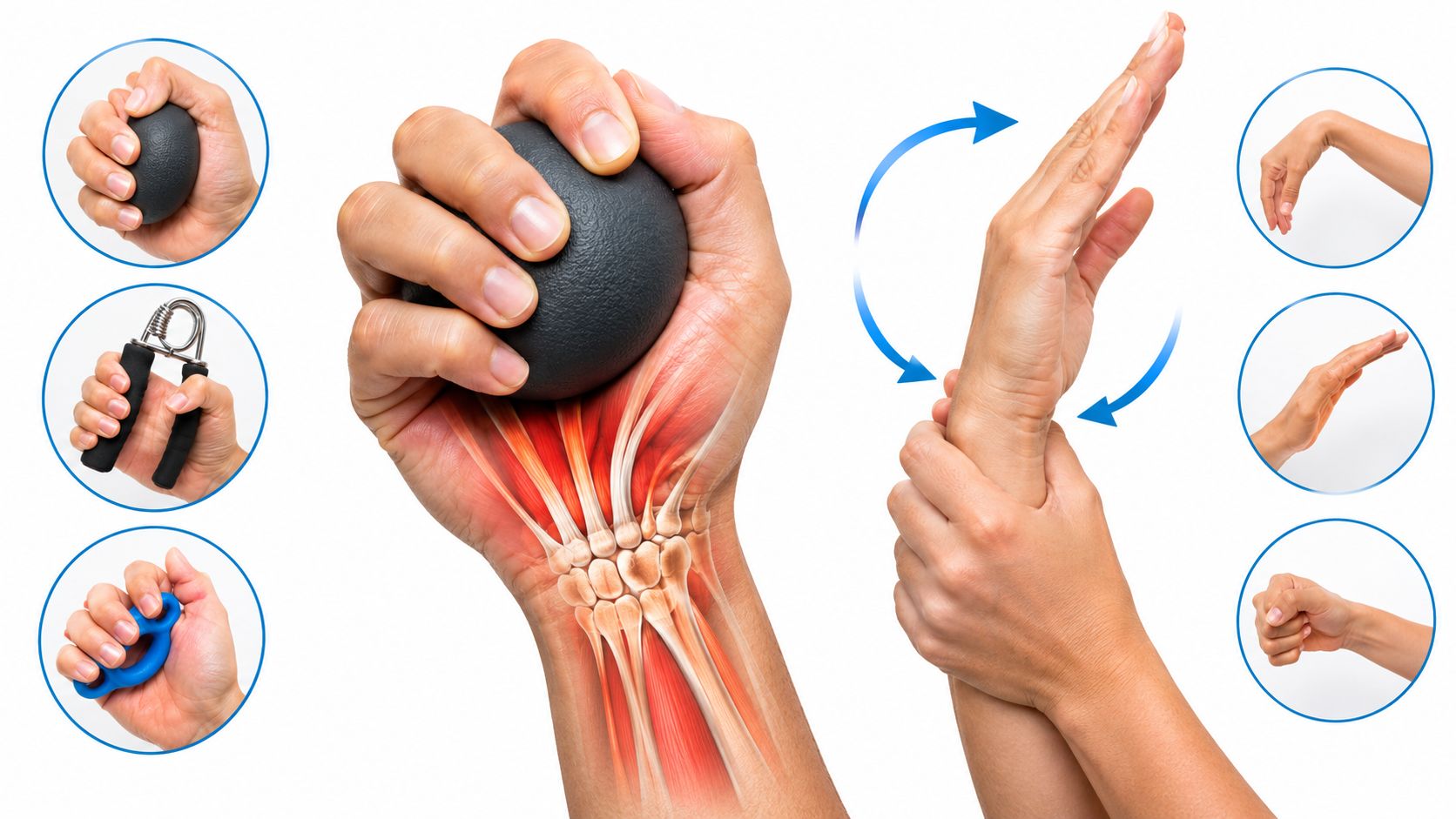
Sweaty hands can make even a sound setup unreliable. A thin layer of liquid chalk on clean, dry hands can improve traction without the dust created by loose powder. EVMT Liquid Chalk dries in seconds, produces no dust, leaves no residue on bars or poles, and is allowed in gyms that ban powder chalk. That makes it relevant for lifters training in commercial gyms, home gyms, or competition venues where loose chalk isn't practical.
Making the back-rack grip secure
The back squat usually allows more freedom in hand placement. A wider grip can reduce shoulder and wrist strain for some lifters, while a narrower grip can increase upper-back tightness when mobility allows it. Neither position should force the wrists to carry the bar's load. The bar should rest on a stable muscular shelf, with the hands maintaining contact and the elbows positioned to support upper-back tension.
Before blaming wrist mobility, the lifter should check whether the bar is placed too high, whether the elbows are flaring, and whether the palms are sweating. Grip aid can help with friction, but it can't correct an unstable bar position. For additional context on wrist support around squatting, see wrist wraps for squats, while remembering that wraps and chalk address different problems.
Programming for Strength and Hypertrophy
The front squat and back squat can both earn a place in a strength program, but they shouldn't be treated as interchangeable repetitions. The back squat generally suits lifters who need a stable platform for heavier loading and greater hip contribution. The front squat suits lifters who want an upright squat pattern that challenges the quadriceps, upper back, and trunk without relying on the same degree of forward torso inclination.
The correct choice depends on what limits the lifter first. If the legs finish every set but the bar rolls from the front rack, more front-squat volume won't solve the underlying grip problem. If the back squat repeatedly turns into a good morning because upper-back tension disappears, more weight only rehearses the breakdown.
Match the variation to the goal
| Training priority | More suitable emphasis | Reason |
|---|---|---|
| Maximum squat strength | Back squat | Greater loading potential and hip contribution |
| Quadriceps-focused work | Front squat | Upright torso and substantial knee extensor demand |
| Olympic lifting transfer | Front squat | Front-rack posture resembles the receiving position |
| Upper-back and trunk control | Front squat | The bar position punishes elbow or chest collapse |
| Posterior-chain emphasis | Back squat | Forward trunk inclination increases hip and back demands |
A lifter can place the back squat earlier in a session when absolute strength is the priority, then use the front squat later with a load that preserves torso position. Another option is to alternate emphasis across training days. The decision should account for total fatigue, especially when the back and upper back already carry substantial work from other movements.
For athletes building broad movement capacity, a current list of CrossFit core movements for 2026 can help place squatting within a wider exercise context. The useful question remains specific: does the chosen squat improve the athlete's ability to maintain position under the demands of the session?
Keep progression tied to position
Progression should stop when the intended bar path or torso angle disappears. A modest load with secure hands, high elbows, and a controlled descent is more productive than a heavier set that ends with a forward bar dump.
Powerlifters may give the back squat the largest share of specific practice, while weightlifters may prioritize the front squat because of its receiving-position demands. Athletes who want both qualities can use one as the primary lift and the other as a secondary movement, rather than pushing both to maximal fatigue in the same session. A broader discussion of strength-program selection appears in this guide to the best powerlifting programs.
Technique Cues and Troubleshooting Form
A useful front squat vs back squat checklist starts with the bar, not the knees. The hands, wrists, and upper back must establish a stable connection before the lifter worries about adding load.
When the back squat becomes a good morning
If the hips rise faster than the shoulders, the lifter has likely lost upper-back tension or started with a position that can't be maintained. The cue is to brace before the descent, keep the bar over the middle of the foot, and drive the upper back into the bar while standing. A slightly wider hand position may help a restricted shoulder, but forcing a narrow grip can make the bar unstable.
If the heels lift or the knees stop tracking naturally, ankle mobility and stance may need attention. A general guide to unlocking better mobility can provide broader mobility ideas, but the squat still needs movement-specific testing.
When the front squat dumps forward
Dropped elbows are the first visible warning. Raise the elbows, keep the upper back tall, and allow the bar to sit on the shoulders rather than trying to hold it in the hands. If the clean grip causes the wrists to lose position, use a cross-arm grip or reduce the load while mobility improves.
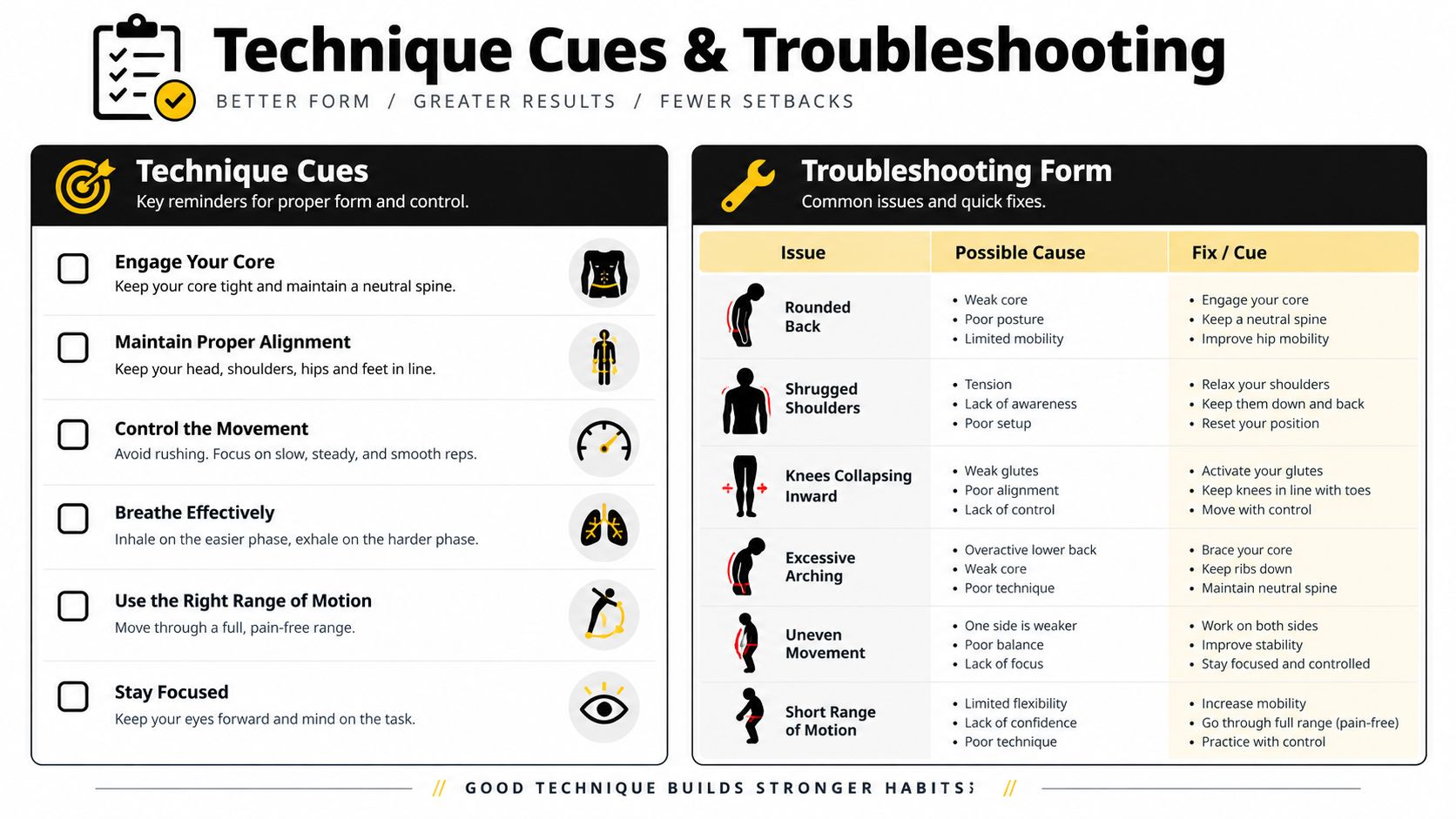
The final check is grip friction. Clean and dry hands, a thin liquid-chalk layer, and a secure bar shelf can prevent sweat from becoming the reason a technically sound repetition fails. Chalk won't replace mobility or bracing, but it can remove one avoidable variable when the gym allows only a clean, dust-free option.
Evermost LLC offers liquid chalk for athletes who need secure, low-mess hand traction during lifting, climbing, gymnastics, pole, and other grip-intensive training. Visit Evermost LLC to choose a practical grip solution for front-rack work, back squats, and training spaces where powder chalk isn't permitted.