

Bouldering Gear: Liquid Chalk Grip That Holds Longer
The first attempt feels secure. By the next, sweaty fingertips slide across the same starting hold, and another heavy chalk-up leaves more white dust than useful grip. Before adding more bouldering gear, the climber needs to distinguish a moisture problem from a chalk-application problem.
Liquid chalk works best as a base beneath the powder most climbers already own, not as an automatic replacement. The useful choice comes down to the venue's dust policy, the humidity, and whether the chalk needs to survive a short attempt or a longer stretch of climbing.
Table of Contents
- Chalk Formats Compared for Bouldering Grip
- Where Gyms and Competitions Allow Liquid Chalk
- When Layering Keeps Your Grip Longer
- How to Layer Liquid and Powder Chalk
- Wash Off Liquid Chalk and Watch Your Skin
- Pack Liquid Chalk for Gyms and Competitions
Chalk Formats Compared for Bouldering Grip
| Format | Dust | Drying | Residue on holds | Best for |
|---|---|---|---|---|
| Loose powder chalk | High, settles on walls and mats | Absorbs sweat, needs frequent re-chalking as hands become damp | Builds up on holds over a session | Quick chalk-up between attempts |
| Liquid chalk alone (EVMT Liquid Chalk) | Low, no dust cloud | Dries in seconds | Minimal once dry | Many gyms that ban loose chalk, where liquid is explicitly allowed |
| Liquid chalk as base under powder | Low from the liquid layer, normal from the powder on top | Liquid dries first, powder added afterward | Minimal from the base, normal from the powder | Long routes, multi-move problems, humid gyms |
The table compares formats, not competing brands. Its practical distinction is between a fast top-up, a contained application, and a layered setup that gives sweat another barrier to work through.
Powder remains convenient between attempts. A climber can coat damp fingertips quickly without waiting for a liquid application to set, then return to the problem. Its weakness is containment: excess powder escapes during application and transfers to the climbing surface.
Liquid alone makes sense when loose chalk isn't permitted. The bottle keeps application controlled, but another application requires a pause for drying. Trying to climb while the coating is still wet defeats the point.
Choose for the actual restriction
A chalk ball can help meter powder, but it doesn't turn powder into a dust-free format. The gym chalk ball guide is useful for distinguishing controlled dispensing from a venue's outright ban on loose chalk.
Layering preserves the familiar powder routine. The liquid goes on before climbing, and powder remains available for touch-ups where permitted. Adding a liquid base doesn't make the powder on top dust-free, so the layered option isn't a workaround for a powder ban.
Choosing rule: If the gym bans loose chalk, start with an approved liquid format.
If the session is long or humid and powder is allowed, try liquid beneath powder.
For a climber whose existing powder already lasts through each attempt, another product may add little. The best chalk setup solves an identifiable problem rather than adding another ritual to every warmup.
Where Gyms and Competitions Allow Liquid Chalk
A bottle of liquid chalk may be allowed in one facility and prohibited at a competition. Check the rules for the specific gym, event, and climbing area before choosing what to carry.
Gym policies vary. Some facilities restrict loose chalk to reduce dust, while others set rules by training area or require chalk to be applied in designated locations. A liquid format may meet a gym's dust policy, but the written policy decides.
| Setting | Liquid chalk status | What to check |
|---|---|---|
| Commercial gym, training sessions | Policies vary; some restrict loose chalk and allow liquid chalk | The gym's written policy, including restrictions on particular areas |
| USA Climbing competition | Commercially available dry or liquid climbing chalk permitted on hands under the 2025–2026 USA Climbing rulebook | Event requirements; no tack-adding products or unauthorized application of liquids to holds |
| CrossFit Games | The 2026 CrossFit Games rulebook names liquid chalk among prohibited substitutes for chalk | The event rulebook before competing |
| Gymnastics apparatus | The FIG apparatus norms place the uneven-bars foot chalk box 171 cm plus or minus 1 cm from under the rail | Facility rules, apparatus arrangements, and competition requirements |
For climbing competitions, check what the rules permit on hands and on holds. The USA Climbing rulebook permits commercially available dry or liquid climbing chalk on hands, while prohibiting tack-adding products and unauthorized liquid applications to holds. Chalk transferred from hands during climbing does not authorize applying liquid directly to a hold or using resin or rosin to alter its surface.
CrossFit Games rules treat liquid chalk differently, naming it among prohibited substitutes for chalk. A training gym's policy does not determine what an event allows.
Written permission beats assumptions
Gymnastics apparatus standards specify where chalk-related equipment is placed, but they do not grant blanket approval for every chalk format. Cheer and pole fitness facilities may also set their own surface-care rules.
Before packing chalk, confirm three details:
- Permitted format: Liquid, loose powder, contained powder, or no chalk.
- Permitted location: Hands only, designated application areas, or particular training zones.
- Cleanup expectations: Whether staff require wiping equipment or brushing holds after use.
A dust-controlled format can suit a gym's policy, but only the facility or event rules can confirm permission.
When Layering Keeps Your Grip Longer
Humidity can bring sweat back before a boulder circuit is finished. A thin liquid-chalk base beneath your usual powder helps the coating hold up through repeated efforts, reducing how often you need to re-chalk. For small holds and crimps, EVMT Rock Climbing Liquid Chalk is made to support control and can be used as a primer under powder.
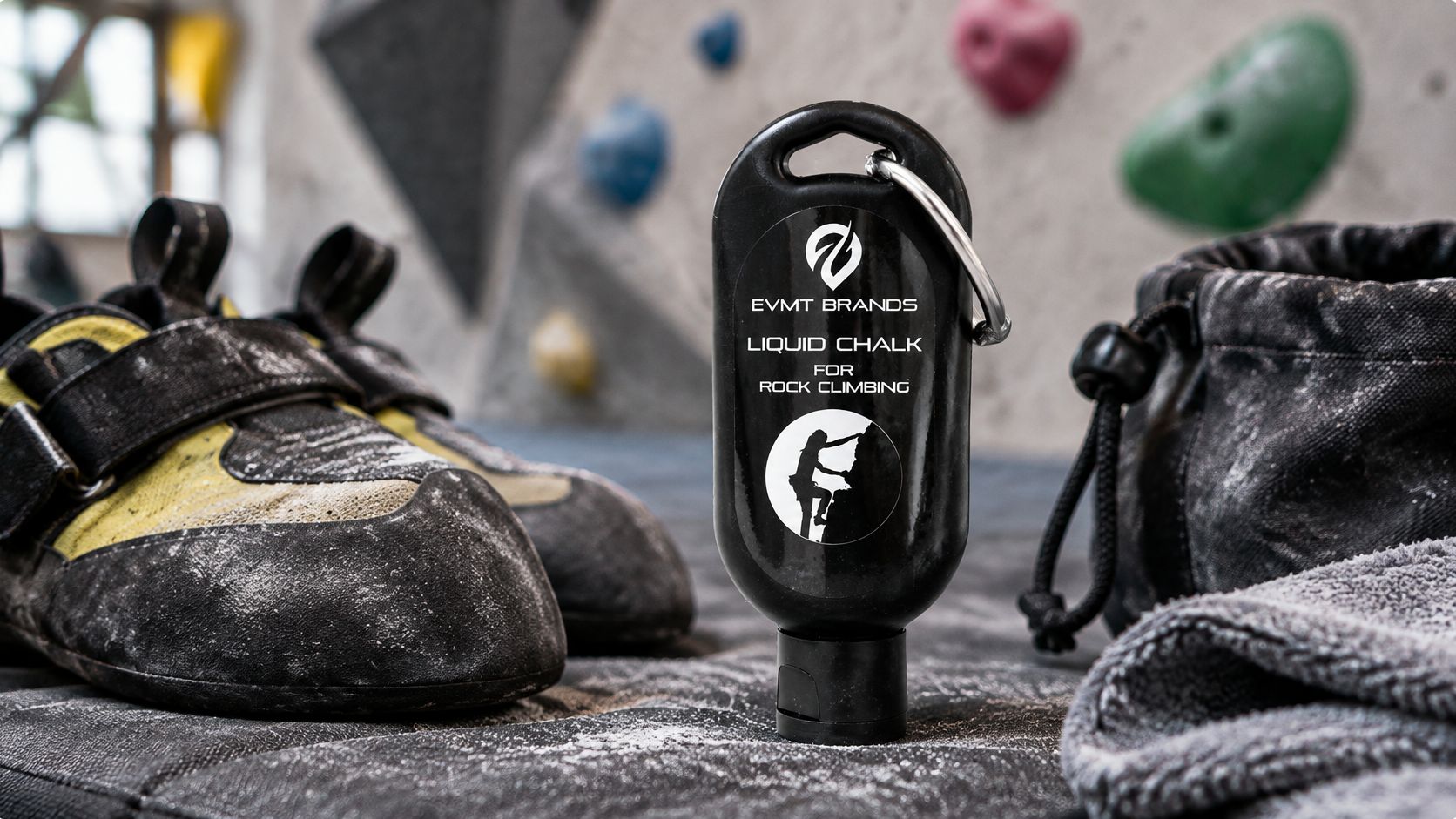
Use the primer when moisture builds during a long, humid session or repeated attempts leave your hands needing frequent chalk-ups. Skip it for a single short problem in a dry gym if one application of powder already keeps your hands dry. For a longer session, the extra base can help powder adhere and maintain grip between attempts.
More layers don't mean thicker layers
A peer-reviewed study in Proceedings of the Institution of Mechanical Engineers, Part P found significant differences in chalk's effect on static friction across 9 of 12 tested rock-contact groups. Skin moisture, rock texture, and application thickness affect grip, so results on indoor resin do not automatically apply to outdoor stone.
Excess chalk can create a loose, granular layer between fingertips and holds. Aim for a thin coating that manages moisture, not a visible crust. On small holds and crimps, a climbing-specific liquid chalk primer can support control, but it cannot fix poor hand placement, dirty holds, or sore fingers.
Layering is useful when sweat or repeated attempts make grip fade before the session ends. For climbers who also train at home, HearSmart's evidence-based guide to home gym gear offers broader equipment-planning context.
How to Layer Liquid and Powder Chalk
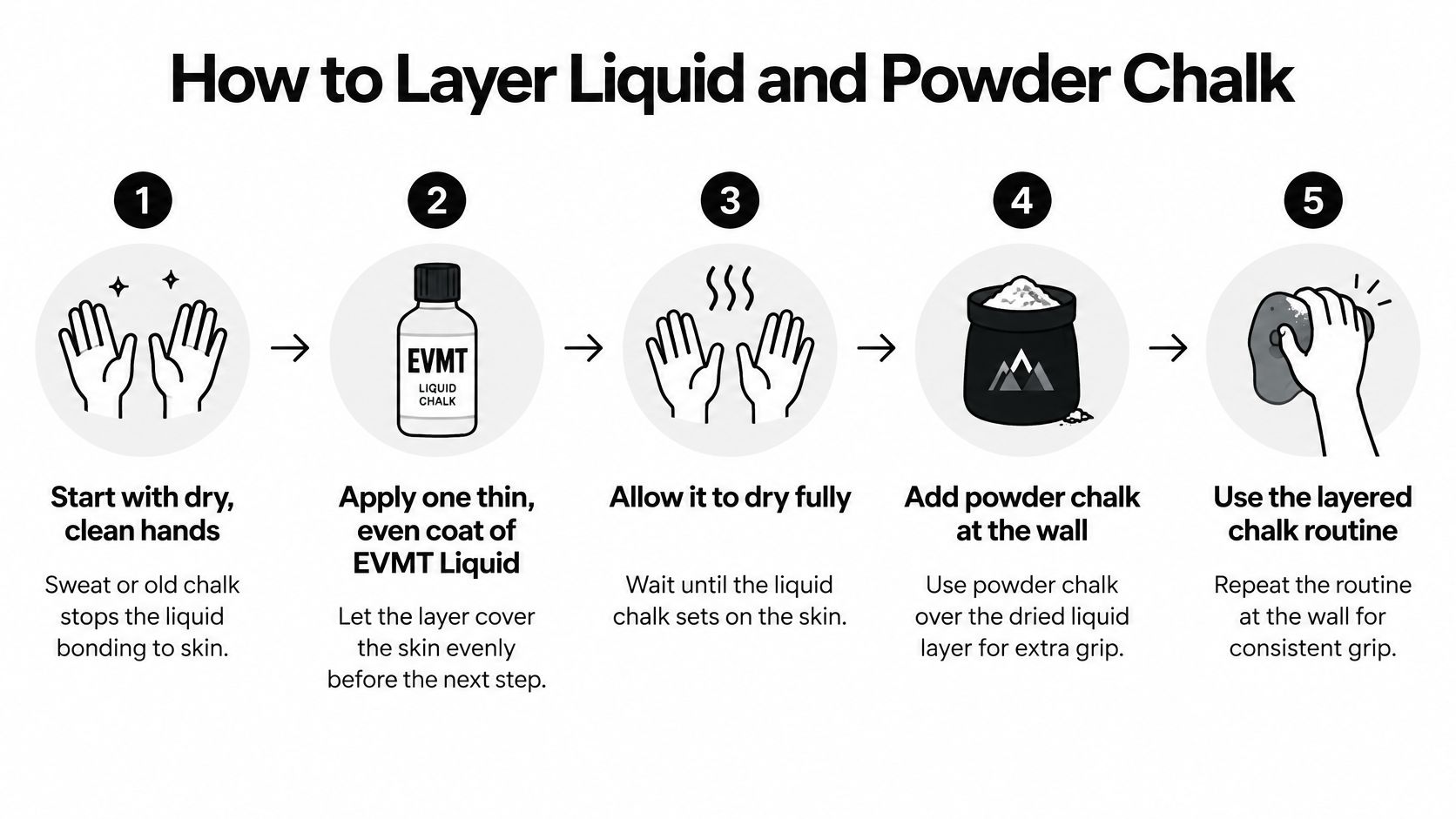
The liquid must dry before powder goes on top. The routine should produce an even base, not a mixture of wet liquid, old chalk, and fresh powder rubbed together.
A small application is easier to control and easier to assess. If the coating is patchy, a little more can fill the gaps; starting with a thick puddle creates unnecessary drying and cleanup problems.
- Start with dry, clean hands. Sweat or old chalk stops the liquid bonding evenly to skin, so loose buildup should be removed and the hands dried first. Applying liquid over damp fingertips is a common reason for an uneven coating.
- Apply one thin, even coat. A small amount should be spread across the palm and finger contact areas before more is added. The common mistake is treating visible thickness as proof of better protection, when complete, light coverage is the useful goal.
- Allow it to dry fully. The hands should no longer feel wet or tacky before the next step. Rubbing the coating or adding another application before it sets can smear the base rather than improve it.
- Add powder chalk at the wall. Powder goes over the dried liquid layer using the climber's normal chalk-up, with excess tapped off. Packing powder into a thick shell can leave loose material between the fingertips and the hold.
- Brush loose chalk from skin and holds. A climbing brush removes excess from a hold, while loose powder on the hands can be lightly worked off away from other people. Brushing should follow local access rules and preserve the surface, not scrub it aggressively.
- Re-chalk only when sweat returns. The next application should respond to dampness or declining grip consistency, not a timer. Repeating the whole routine between every attempt can add buildup without solving a moisture problem.
The sequence is easier to remember as preparation, drying, and a controlled top-up.
Check the feel before committing
A good coating feels dry and secure when the fingers settle onto a warmup hold. It shouldn't feel slippery, gummy, or thick enough to shed loose material immediately.
If the hold still feels slick, more chalk isn't automatically the answer. The climber should check whether the base dried, whether the hold needs brushing, and whether sweat is returning faster than expected.
A short warmup comparison is more useful than covering every contact area with another coat. The aim is reliable contact with less interruption, not the whitest possible hands.
Wash Off Liquid Chalk and Watch Your Skin
After a bouldering session, wash your hands gently with ordinary soap and water. Rinse thoroughly, then dry them without scrubbing tender fingertips. The aim is clean skin that still feels comfortable.
Follow the facility's cleaning instructions for any bar, pole, or hold. A damp cloth may suit some equipment surfaces; porous outdoor rock may need brushing or staff-managed cleaning instead.
- Remove the coating: Soap and water lift dried chalk without abrasive scraping.
- Respect the surface: A method suitable for a metal bar may be unsuitable for porous rock.
- Check the fingertips: Give tender patches, splits, or irritation time to recover before applying chalk again.
The liquid chalk removal guide covers cleanup for hands and training equipment.
Moisture control has a skin limit
Magnesium carbonate absorbs moisture, but hands that feel uncomfortably dry are a sign to adjust the routine. Repeated contact on abrasive holds can further aggravate tender skin, especially over a long session.
A clinical review of climbing injuries describes injuries to finger joints, tendons, and pulleys, with pulley forces reported as reaching up to 450 N. Irritated or broken skin deserves a pause rather than another layer of chalk.
Climbers with hyperhidrosis or sensitive skin should assess grip consistency alongside skin comfort. Burning means the routine needs to change.
Skin checkpoint: Stop using the product if burning, cracking, or dermatitis symptoms persist, and seek professional advice.
Humidity, hold texture, and session length all affect how much chalk feels comfortable. A routine that suits indoor resin holds may feel excessive on rough outdoor stone.
Pause for a few minutes and see whether the fingertips still feel secure on a warmup hold. If they do, another application may be unnecessary.
The same skin checks apply to lifters, gymnasts, cheer athletes, and pole fitness users with sweaty hands. EVMT Liquid Chalk is made with non-toxic magnesium carbonate, and users should still pay attention to irritation and allow skin to recover.
Pack Liquid Chalk for Gyms and Competitions
For a single gym visit, one 50 ml bottle is a compact option. Keep it closed in a separate pocket so a leak cannot coat the rest of your bouldering gear. A cloth can help with permitted cleanup.
Match the kit to the session
At a powder-restricted gym, check the venue's rules and bring liquid chalk only if it is allowed. If loose chalk is permitted, pack it for touch-ups rather than assuming the liquid base replaces it.
For outdoor bouldering, bring your usual powder and consider liquid chalk as a primer when humidity or a longer session makes grip harder to maintain. A guide to choosing a bouldering chalk bucket can help with powder organization; the bucket and the grip routine serve different purposes.
For competition requirements, follow the event's rules.
Keep preparation proportionate
A brief session on dry holds may not call for a primer. For a longer or humid session, apply a small amount before warming up, let it dry, then use permitted powder as needed. Check your grip on easier holds before relying on the routine for harder moves.
Choose a bottle size that suits the outing. EVMT Liquid Chalk is available in 50 ml and 250 ml bottles, with a carabiner clip on select sizes. The smaller bottle suits a single visit; a larger size may be more practical for frequent training.
Before leaving, check the venue rules and pack accordingly:
- Powder-restricted gym: Approved liquid chalk, a securely closed bottle, and a cloth for permitted cleanup.
- Outdoor bouldering: Liquid chalk if needed, powder where permitted, and an appropriate hold brush.
- Competition: Chalk allowed by the event rules and a bottle size suited to the session.
EVMT Rock Climbing Liquid Chalk is made for indoor and outdoor climbing. It can support grip on small holds and crimps, and climbers can use it as a primer beneath powder chalk. Choose the 50 ml or 250 ml bottle that fits the session and the venue's rules.