


Altitude Training Mask: What It Actually Does
The most popular advice about an altitude training mask is also the least reliable: put it on, train hard, and expect your body to adapt as if you were living high in the mountains. That conclusion confuses two very different stresses. Real altitude reduces the oxygen pressure available to the lungs. A mask mainly makes air harder to move.
That distinction matters because athletes aren't buying a sensation. They're buying a training effect. If the goal is more red blood cells, higher hemoglobin, or genuine acclimatization, the evidence doesn't support treating a consumer mask as a substitute for altitude exposure. If the goal is respiratory muscle loading, the device may have a narrower but legitimate role.
The Altitude Training Mask Myth Versus Reality
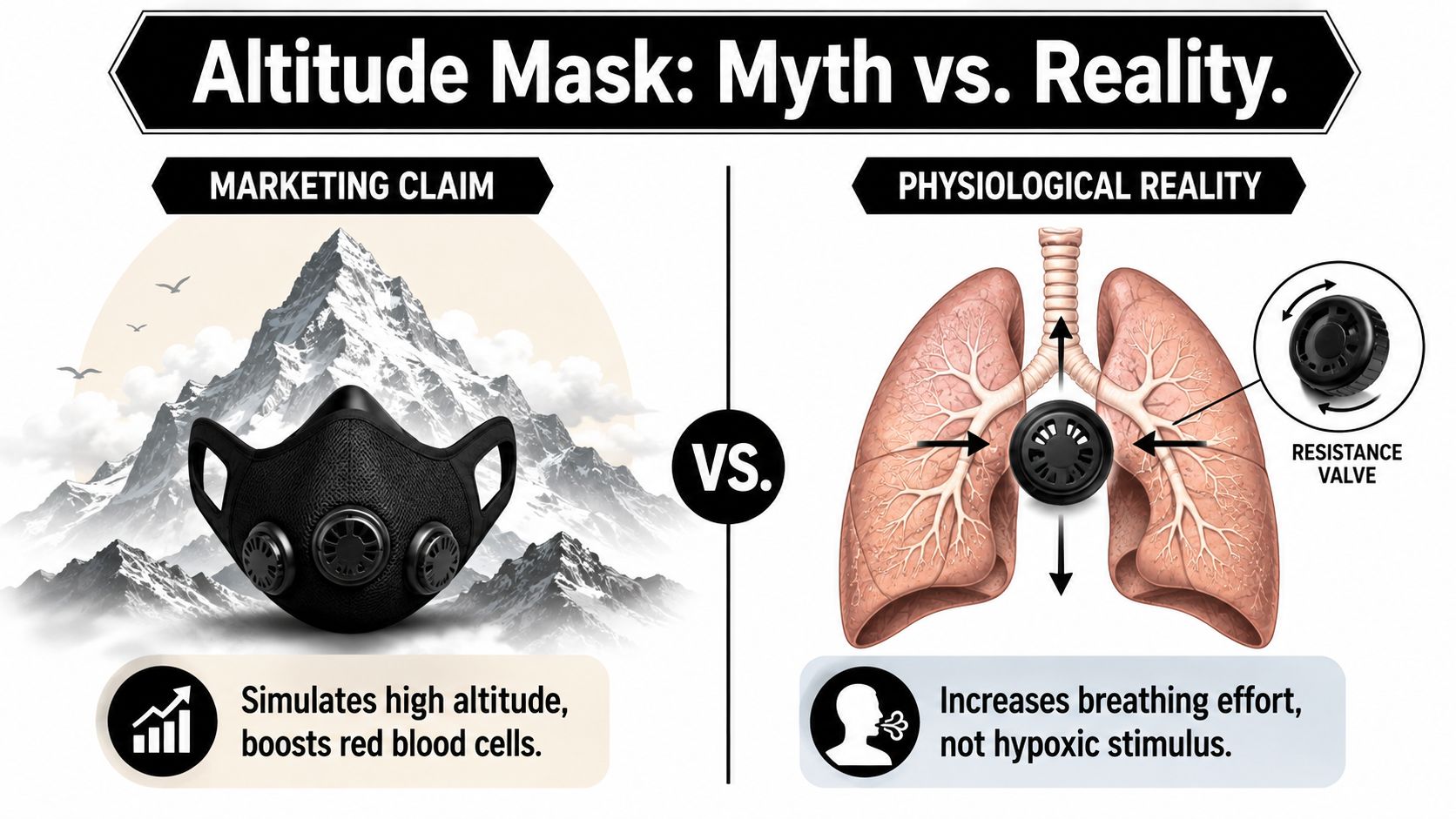
A silicone mask cannot turn a sea-level gym into a mountain environment. True altitude lowers barometric pressure, reducing the partial pressure of oxygen reaching the lungs. That shift can activate oxygen-sensing processes linked to hypoxic adaptation, including signals that influence erythropoietin and later hematological responses.
An elevation-style mask creates a different stress. Its valves restrict airflow, making inhalation more demanding and often producing intense breathlessness. Feeling short of breath isn't proof that the blood is experiencing the same oxygen pressure found at altitude. The sensation reflects added mechanical work by the breathing muscles, not a reliable simulation of mountain hypoxia.
If the goal is more red blood cells, higher hemoglobin, or genuine acclimatization, controlled trials do not support treating a consumer mask as an altitude substitute. The practical question is whether added inspiratory resistance has value within the athlete's existing program.
The useful part of the confusion
The mask is often bundled with a legitimate training method, respiratory muscle training, or RMT. RMT loads the muscles responsible for ventilation, including the diaphragm and intercostals. That work may help when breathing mechanics limit performance, but it does not expose the whole body to the oxygen pressure or systemic conditions of altitude.
The device functions more like a resistance implement for breathing than an altitude simulator. It can require greater pressure generation during inhalation and may help athletes practice ventilation under load or tolerate the discomfort of restricted breathing. Those are narrower training effects, and they should be assessed against the athlete's actual limiter.
A mask therefore belongs in the breathing-resistance category, not the acclimatization category. This distinction prevents a strong respiratory sensation from being mistaken for a hematological adaptation and gives athletes a clearer basis for deciding whether the tool fits their program.
How Restricted Airflow Actually Works
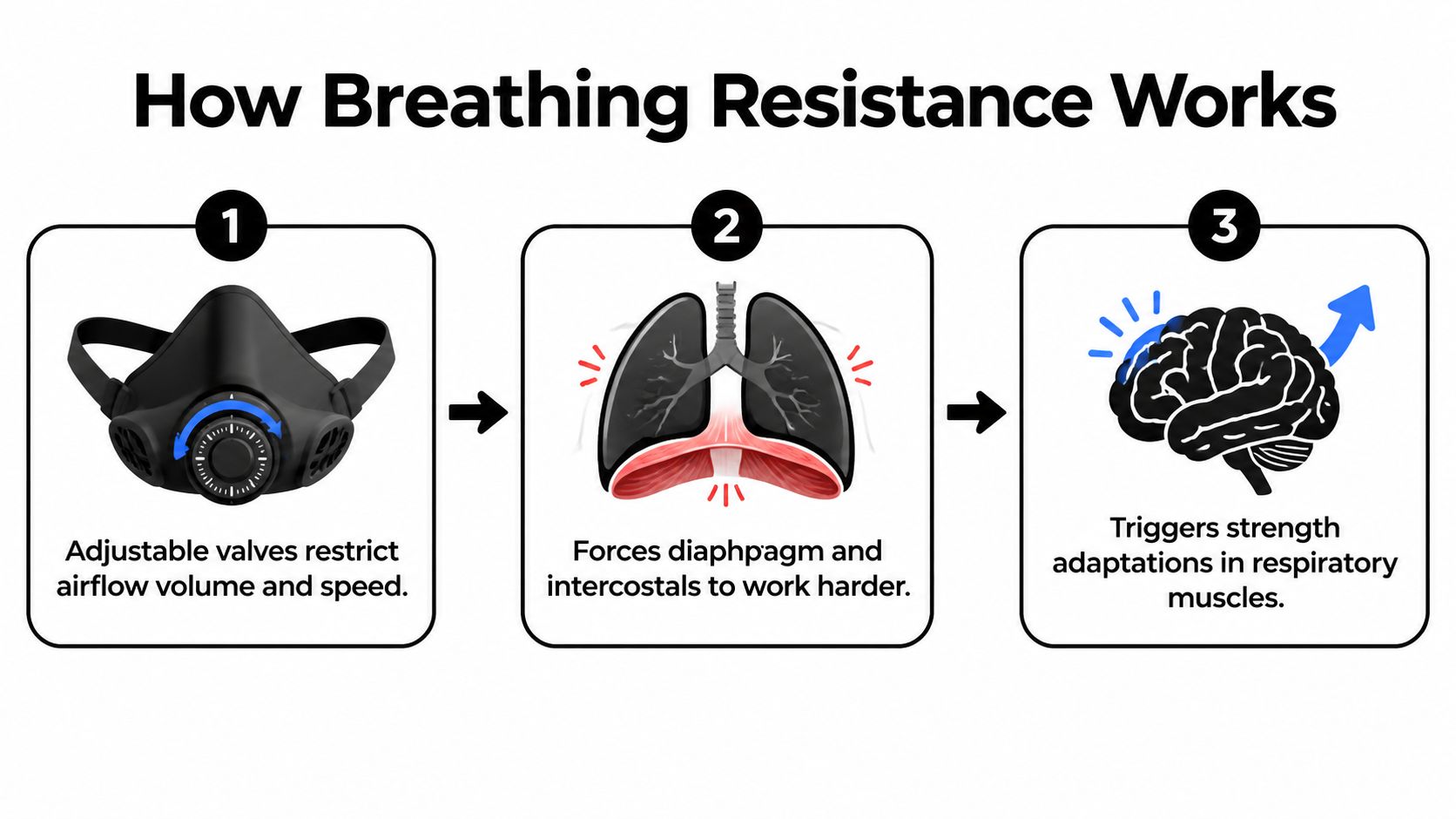
An altitude training mask changes the mechanics of inhalation. Adjustable valves narrow the available pathway, reducing airflow volume or flow rate and forcing the respiratory muscles to generate more pressure. The diaphragm must contract against greater resistance, while the external intercostals and accessory muscles contribute more when ventilation becomes demanding.
The simplest analogy is a narrow straw. Breathing through it can make each inhalation feel strenuous, much like adding load to a barbell makes a lift harder. But breathing through a narrow straw isn't the same as climbing Mount Kilimanjaro. The mask changes resistance, while true altitude changes the pressure gradient that moves oxygen from the atmosphere into the blood.
Resistance is not hypoxia
The key variable in altitude physiology is oxygen partial pressure. A review of the mask's mechanics explains that airflow restriction doesn't reliably reproduce the reduction in arterial oxygen partial pressure associated with genuine altitude, so the device is better understood as a breathing-resistance tool than as an altitude substitute (review of elevation-mask physiology).
That difference also explains why the mask can feel severe without creating the expected hematological response. The air you inhale hasn't been transformed into mountain air. You're working harder to draw it through a restricted pathway.
During hard exercise, athletes may notice higher perceived exertion, altered breathing rhythm, and earlier respiratory discomfort. Depending on the design and fit, rebreathing exhaled air may also influence how the session feels. Those sensations can change pacing and autonomic demand, but they don't automatically indicate the oxygen-desaturation stress required for altitude-style adaptation.
A 2022 study using a respiratory training mask set to a manufacturer altitude resistance of 6,000 feet, or 1,800 meters, found no resting effect on metabolic variables, ventilation, or SpO2. During exercise, the mask blunted respiratory rate and minute ventilation, pointing toward changed breathing mechanics rather than a true drop to hypoxic levels (2022 respiratory-mask study).
If you want broader background on how airflow and indoor air quality tools differ, a separate passive air purifier guide can help clarify why changing air movement isn't the same as changing the air's chemical composition.
What the Research Shows About Performance Gains
The evidence supports a narrower conclusion than the marketing. An altitude training mask creates respiratory resistance, and some protocols may improve respiratory muscle performance. It has not shown consistent superiority over normal training for whole-body endurance outcomes.
The controlled 2016 trial detailed earlier provides the clearest comparison. Both groups improved after six weeks of structured high-intensity cycling, but the mask group showed no statistically distinct advantage in VO2max or blood measures. Hemoglobin and hematocrit did not increase, weakening the claim that the mask reproduces the central, blood-based mechanism of altitude exposure.
Acute studies point in the same direction. A 2021 high-intensity exercise study found no significant difference in metabolism or heart rate between masked and unmasked conditions, leading the authors to question whether the device creates a hypoxic environment or mimics altitude (2021 acute-exercise study). In an earlier controlled protocol, the mask was set to simulate 12,000 feet, approximately 3,600 meters. The study found no significant differences in heart rate, blood pressure, blood oxygen saturation, blood lactate, or perceived exertion at any measurement point (acute 12,000-foot mask study).
The evidence in one view
| Study / Year | Duration | VO2max Change | Hemoglobin Change | Respiratory Muscle Strength | Key Takeaway |
|---|---|---|---|---|---|
| Controlled 2016 trial | 6 weeks | 16.5% with mask, 13.5% without | No significant group difference | Not established as a distinct advantage | Training improved both groups, without evidence of altitude-style adaptation |
| Acute 12,000-foot simulation study | Acute session | Not reported as a training adaptation | Not reported | Not established | No significant differences in key acute physiological or perceptual measures |
| Acute high-intensity study, 2021 | Acute session | Not a training intervention | Not a training intervention | Not established | Mask likely didn't create a hypoxic environment |
| Respiratory-mask study, 2022 | Acute and resting measures | Not reported | Not reported | Breathing mechanics changed during exercise | Main effect was altered ventilation, not resting hypoxia |
Small samples, short interventions, and different mask settings limit direct comparison. The studies also test two different ideas: wearing a mask during exercise and training the inspiratory muscles with controlled resistance. Those methods are not interchangeable. A strong breathing sensation during a workout therefore does not establish a durable performance gain.
Practical reading of the literature: the mask's most defensible benefit is respiratory loading. Its least defensible promise is reproducing the blood and oxygen adaptations of altitude.
For athletes preparing for steep terrain, that distinction affects programming. A structured climbing endurance training approach still needs muscular endurance, pacing, and movement economy. The mask may complement those qualities by adding inspiratory resistance, but it cannot replace the training that develops them.
Which Athletes Benefit Most From Breathing Resistance
The right question isn't, “Does this mask work?” It's, “Is respiratory loading relevant to my limiting factor?” A tool that challenges breathing muscles can make sense for an endurance athlete whose ventilation deteriorates late in an event. It offers much less to an athlete whose bottleneck is force production, technique, or acceleration.
Four useful athlete profiles
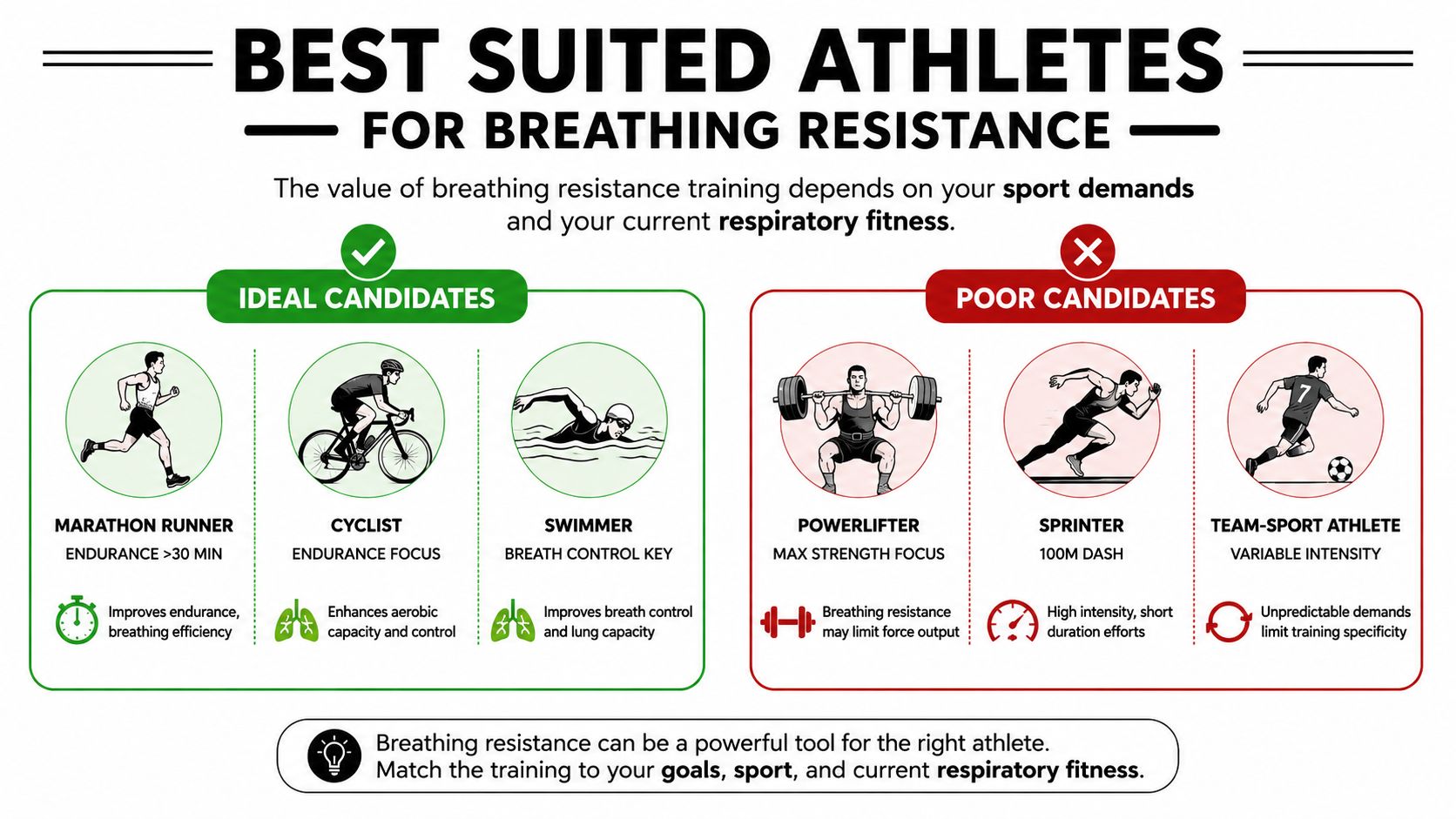
Endurance athletes: Runners, cyclists, and swimmers working continuously for extended periods may have the clearest reason to experiment with respiratory resistance. The mask can add breathing load to an easy conditioning block, where the athlete can maintain safe movement and observe whether breathing control improves over time. It shouldn't replace normal aerobic work or be used to force intensity when the athlete's legs are already overloaded.
Combat athletes: Boxers, mixed martial artists, and wrestlers must produce force while managing breathlessness, trunk pressure, and incomplete recovery. A short, controlled mask block may rehearse the sensation of breathing under duress. It can't reproduce the technical, tactical, or contact demands of a late round, but it may provide a simple way to practice staying composed when ventilation feels constrained.
Tactical professionals: Firefighters and military operators already work in environments where respiratory equipment affects communication, heat management, and breathing comfort. For them, the mask may have functional relevance as a controlled exposure tool. The transfer still depends on task specificity, and general conditioning must remain the foundation.
Pure strength athletes and sprinters: Powerlifters, Olympic lifters, and short-distance sprinters rarely need extra breathing resistance during the movements that define performance. A mask can interfere with bracing, bar-path control, acceleration mechanics, or rapid technical feedback. For these athletes, the opportunity cost is usually more important than the novelty.
Match the tool to the session
A climber might use a mask during a controlled bike or incline-walking block, then remove it before grip-intensive movement or technical climbing. A boxer might use it during a low-skill conditioning interval, not while sparring. A cyclist can assess breathing control without allowing the device to distort cadence or posture.
The same principle applies to expedition preparation. A training plan for climbing should prioritize uphill capacity, loaded movement, and recovery between efforts. Breathing resistance is an accessory, not the central program.
If removing the mask improves skill quality, pacing, or force output, removing it is the performance decision.
Safety Concerns and Who Should Avoid the Mask
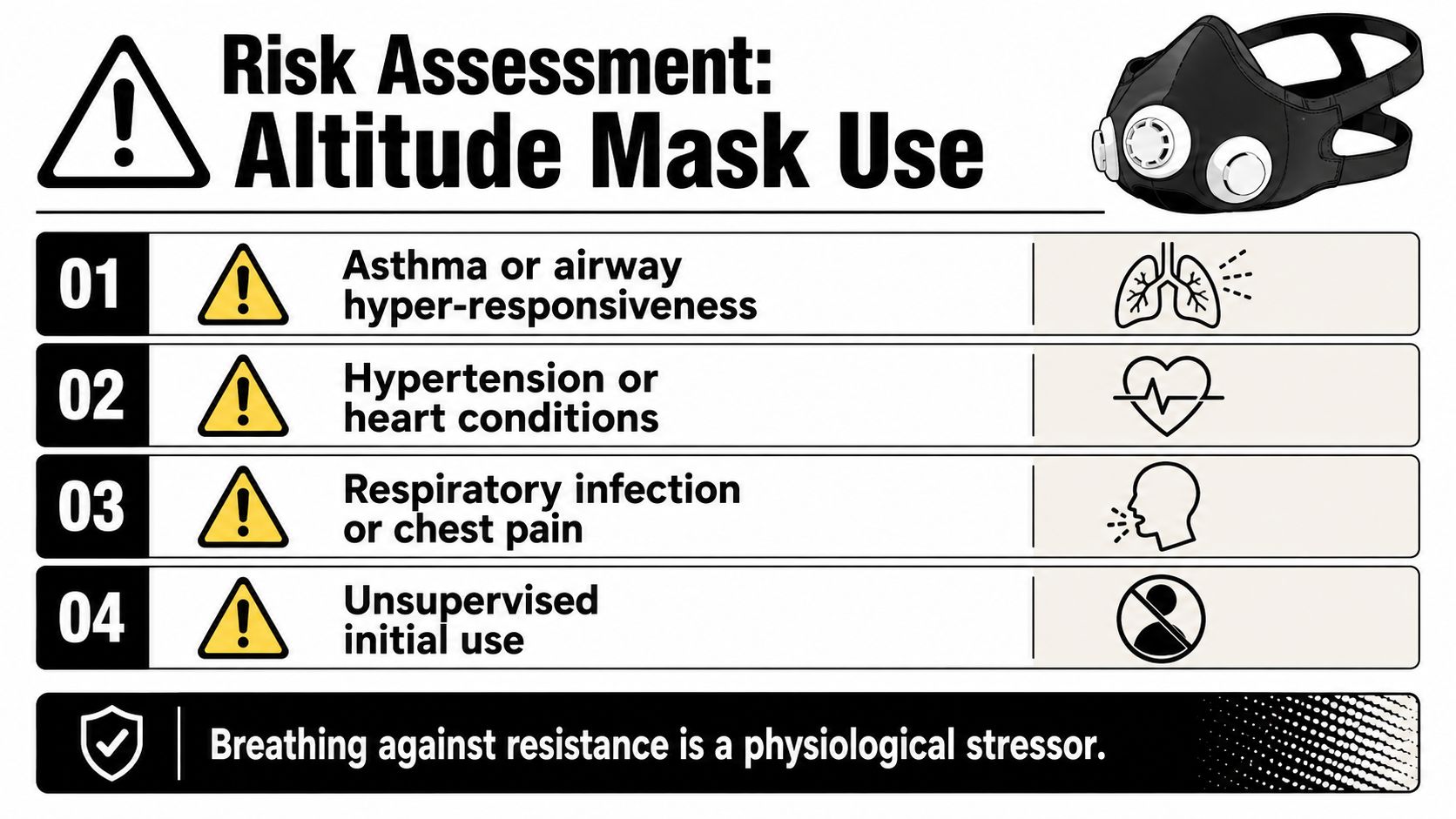
Breathing against resistance is a physiological stressor, not a harmless accessory. The mask can increase breathing demand, alter ventilation, and make recovery feel harder. Recent clinical safety discussion has raised questions about cumulative exposure and cardiac risk, while emphasizing that the device's hypoxic claims remain unvalidated.
Athletes with asthma, exercise-induced bronchoconstriction, or other airway limitations should not experiment casually. The same caution applies to people with cardiovascular disease, uncontrolled hypertension, exertional fainting, or unexplained chest symptoms. A clinician familiar with the athlete's medical history should decide whether respiratory loading is appropriate.
Stop signs matter more than toughness
Hard training can feel uncomfortable. It should not impair awareness, movement, or control.
- Remove the mask for lightheadedness: Tingling extremities, tunnel vision, or a sudden feeling that you might faint require an immediate stop.
- Stop for chest symptoms: Chest pain, unusual pressure, palpitations, or disproportionate breathlessness require medical attention, not a lower valve setting.
- Protect movement quality: If posture collapses, foot placement becomes erratic, or a lifter loses bracing, end the set before fatigue creates a technical risk.
- Avoid solo testing: Initial sessions should take place under supervision, with a clear path to remove the mask and sit or lie down.
Coach the response, not the branding
A coach should monitor breathing pattern, coordination, verbal responsiveness, and recovery between efforts. Heart rate provides useful context, but it does not prove that the mask is producing altitude physiology. The acute high-intensity research found no significant heart-rate difference between masked and unmasked exercise, so a dramatic subjective sensation does not guarantee a matching systemic response (acute high-intensity research).
Use the lowest resistance that creates a clear, manageable challenge. Keep the athlete away from maximal technical work, and remove the mask as soon as warning signs appear. Its plausible training value comes from inspiratory resistance, not simulated altitude, so safety decisions should follow the former rather than the marketing claim.
How to Integrate the Mask Into Your Training Program
Putting on a mask for a normal workout is a poor progression model. It can reduce output, distort technique, and make it impossible to tell whether a session trained the target system or just created avoidable fatigue.
Start with a dedicated conditioning block. Use low-intensity steady-state exercise, the easiest resistance setting, and a short exposure. The athlete should be able to speak, maintain posture, and remove the mask without assistance.
A six-week onboarding structure
Weeks one and two: Use the mask during easy cycling, walking, or another stable modality. Keep the session brief, around 10 to 15 minutes, and record perceived exertion, breathing rhythm, and heart-rate response. Don't use it for lifts, sprint starts, climbing technique, or contact work.
Weeks three and four: Add time only if the earlier sessions produced no compensatory breathing or form breakdown. Keep resistance unchanged at first. The progression target is control, not maximal discomfort.
Weeks five and six: Increase resistance cautiously, or extend the conditioning block, but not both at once. If the athlete can't recover normally before the next planned session, the mask has added more fatigue than the program can absorb.
The device belongs after technical practice or in a separate conditioning session. It may fit an easy recovery-oriented block for an experienced athlete, but calling any mask session “recovery” doesn't make it restorative if breathing stress remains high.
A workable weekly template
- Day one: Normal strength or technical training, no mask.
- Day two: Easy aerobic conditioning with the mask at low resistance.
- Day three: Recovery or mobility work, with breathing drills performed unmasked.
- Day four: High-quality sport session, no mask.
- Day five: Optional mask conditioning if breathing and movement remain controlled.
- Weekend: Longer sport-specific endurance work without using the mask as a substitute for terrain or pacing practice.
Nasal breathing drills and controlled CO2-tolerance work can complement the program, but neither should become a contest. The athlete needs repeatable breathing control, not dizziness.
Programming rule: never let the mask take priority over the session's primary adaptation.
Athletes building a demanding obstacle-course or tactical benchmark can use a structured Murph training plan to organize running, calisthenics, and loaded work first. The mask should only occupy a small, clearly defined place around those priorities.
Making Your Final Decision on Altitude Training Masks
An altitude training mask makes sense only when you buy it for the effect it can plausibly deliver. It doesn't simulate altitude, and the available controlled evidence doesn't show the hematological response associated with genuine hypoxic exposure. It can, however, provide inspiratory resistance and a controlled way to practice breathing under load.
Use four questions before purchasing:
- What limits performance now? If breathing control or respiratory fatigue limits long efforts, resistance may be relevant. If the limiter is strength, skill, tissue tolerance, or pacing, another tool deserves priority.
- Does the sport reward it? Endurance and tactical athletes have a clearer use case than sprinters or powerlifters.
- Can you monitor it? You need a stable exercise mode, a conservative progression, and a way to track output, perceived exertion, and recovery.
- What are the alternatives? A dedicated inspiratory muscle training device may offer more controlled loading. Simple breathing drills may be enough for a recreational athlete.
A verdict by athlete type
Endurance athletes can treat the mask as an optional accessory for marginal respiratory conditioning, not as an altitude shortcut. Track a relevant performance measure, such as sustainable power, pace at a fixed effort, or recovery between intervals, and keep the mask only if it improves training quality.
Tactical professionals may value the equipment-specific breathing challenge, particularly when the training environment already involves restrictive gear. The transfer should be tested against real operational tasks rather than assumed.
Recreational lifters will often see minimal transfer. Normal progressive strength training, sound bracing practice, and conditioning without movement interference are usually better uses of time.
Check return policies before buying, start with a trial period, and compare masked and unmasked sessions under similar conditions. The mask earns a permanent place only when objective tracking shows that it contributes something your existing program doesn't already provide.
Evermost LLC offers clean, high-performance grip solutions for athletes training across strength, climbing, gymnastics, and conditioning environments. If you want reliable grip while you test breathing tools without adding equipment mess to your sessions, visit Evermost LLC to explore EVMT Liquid Chalk.